

Access All Areas / Words Mark Gidley
Metamorphoses
The new album sees Jean Michel Jarre changing; re-emphasising his music and, taking a broadside at his own ‘mystique’, not only by singing, but by appearing clear, present and palpably human.
01/Feature
Metamorphoses - the rehabilitation has begun ...
Jean Michel Jarre has been laying clues to the direction that he may take for his new album for a couple of years now. As Jarre explains himself, experiments such as Odyssey through O2 and Electronic Night were necessary for him to produce his latest composition. If you were expecting an album in the mould of Oxygene 7-13 or Chronologie, you should think again. Metamorphoses is unlike any album that Jean Michel Jarre has ever produced.
However, if you are about to write this album off, stop where you are right now. Whilst it may be described as a radical change of direction for Jean Michel Jarre, he has re-invented his sound for the start of the next millennium and has done something that we never thought he would do - he’s gone vocal.
As soon as Je Me Souviens starts, you know this is a new chapter for Jean Michel Jarre and his music. Throughout this edition of the magazine, we hope to give you insight to the album, why Jean Michel Jarre has gone in this direction and who he has worked with to achieve this brand new sound.
There are changes in technique too. For Tout Est Bleu he uses the stuttering electronic hi-fi interference of a mobile phone to underpin the rhythm track. While Miss Moon builds around a sample of a chattering automatic lawn sprinkler in its Bladerunner-esque Vangelis landscape.
Millions of Stars is, perhaps, closest to the Jarre’s Oxygene-sound, but like Spiritualized’s 100 Bars announces the notes about to be played to spine-tingling effect.
Jean Michel started work on the album in September 1998, just after his last live performance at Apple Expo in Paris. At the time, he was in discussions with the Egyptians to stage the Millennium show and so it seemed a natural direction for him to explore - and C’est la Vie was born.
The album was originally planned to be released in October 1999, but was pushed back into January 2000 to allow for both longer promotion of the album, as well as taking into account Jean Michel’s commitments to the concert in Egypt. It was released January 31st 2000.
Photographs by Francois Rousseau, Mark Gidley and Ebru Yildi.
Collaborators
Jarre has called upon the services of a wide variety of artists for this new album, again breaking with tradition. Laurie Anderson makes a welcome return after her collaboration on Zoolook, alongside the likes of Natacha Atlas, Sharon Corr from top Irish band The Corrs, Dieirdre Dubois from French trio Ekova, as well as a multitude of session musicians. Check out our special section for more information on who Jean Michel Jarre shared his studio with over the past 18 months.
The First Single
There has apparently been much discussion over the past few months about which track would be chosen as the first single to promote Metamorphoses.
To many people, Hey Gagarin was the natural choice, inspired by Jarre’s link-up with the MIR space station during his concert in Moscow. However, C’est la Vie was finally chosen, for reasons explained by Jean Michel Jarre himself in our exclusive interview in this edition.
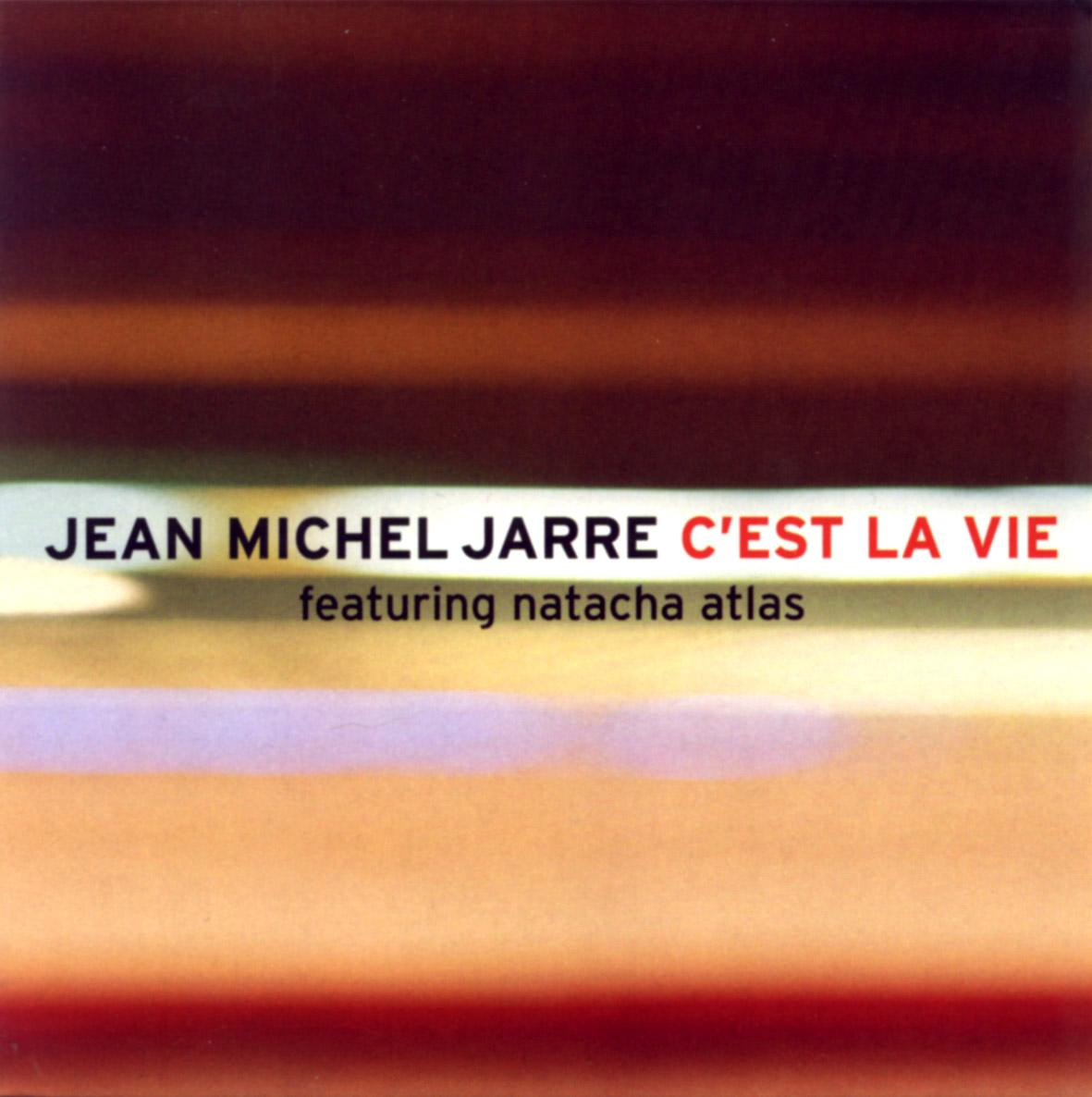
The first single will be released throughout Europe at different points in the following months. The UK seems certain to see a release on Monday January 17th 2000, whereas mainland Europe will probably not see the release until February. France is most likely to see a release prior to the turn of the Millennium, in the first two weeks of December 1999.
A number of mixes have been produced by prominent artists such as Hybrid and Futureshock. See our feature on the first single in this edition.
Acetates of the C’est La Vie mixes were distributed to well-known club DJ’s in London such as Pete Tong and the resident DJ at ‘home’. So popular were the mixes, the DJ’s started swapping DAT copies of the mixes amongst themselves !
A promotional video, featuring street scenes in Paris, was filmed on Saturday November 6th, which saw Jean Michel Jarre link-up with Natacha Atlas, who was on tour in France at the time.
The original concept was mysteriously titled ‘Life of a Sofa’, and was to be shot in London, but the plans were changed at the last minute to the new storyboard.
Two of Jean Michel Jarre’s favourite tracks are Hey Gagarin and Rendezvous a Paris and at least one seems likely to see a single release next year, as well as Give me a Sign and possibly Tout est Bleu. The later was picked up on a possible single by Sony representatives across mainland Europe, such as Germany, Holland, Spain and Italy.
If Give me a Sign is produced for a single, it is likely to be heavily re-produced, with the possibility of a new vocalist. The track was originally composed by Jarre with Kate Bush in mind.
The UK single release was pencilled to feature unreleased track The Sun (3’34). The track will be premiered during the Egypt concert and is said to feature bagpipes !
The UK Maxi CD is also likely to be a multi-media edition, which will contain the C’est la Vie promotional video.
The Artwork
The cover artwork went through a number of iterations before the final design was agreed.
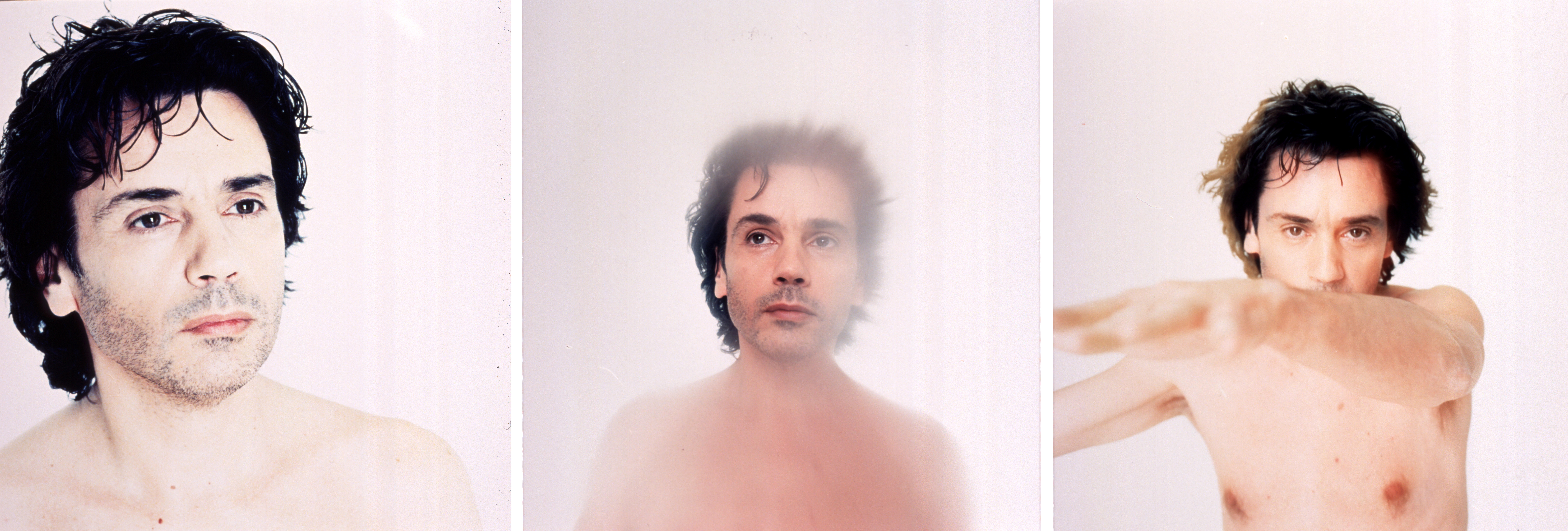
The final version features a photograph taken on a boat on the river Seine with time-lapse photography.
The Promotion
French radio started playing the first single in November and created a buzz about the new sound of Jean Michel Jarre.
Due to the timing of the Egypt concert, Jean Michel Jarre undertook a brief media promotional tour in November for long-lead publications. To accompany him, a promotional sampler featuring six tracks from the album was pressed onto CD and given to journalists (reference JMJ2000, featuring Je Me Souviens, Hey Gagarin, Gloria Lonely Boy, C’est La Vie, Bells and Give me a Sign).
Jarre travelled across Europe, making stops in Denmark, Italy, Spain, UK and France.
He spoke with magazine Future Music in Spain; Mediaset television in Italy; Keyboard Magazine France (January edition); Mixmag, Mail on Sunday Night and Day supplement and the Daily Express newspaper in the UK, to name but a few.
A full media tour is planned in January to further promote the album, on the back of the concert in Egypt.
The Web
Although it seems to have laid dormant for a number of months now, the official Jean Michel Jarre web site is set to rise again, with a completely new design to help launch the new album.
It is likely to feature new technology but as we went to press, the site was still very much at the planning stages. It will be launched in time for the release of the new album.
A Metamorphoses web-ring is also being planned, where a number of companies in France will each host a track from the new album. The idea is that they will use technology such as RealAudio, which doesn’t allow the sound to be saved.
Companies such as M6 and France Telecom are due to take part in the web ring, which will be launched in the New Year.
02/Interview
Jean Michel Jarre
Jean Michel Jarre is on a promotional tour and desperately behind schedule. What else can we do but join him as he hurtles across London.
Jean Michel Jarre's press agent is juggling everything today. He's trying to chase up a lost C'est la Vie acetate, fielding calls from a photo studio anxiously awaiting the arrival of the French musician as well as trying to coax said musician out of a locked room where he has been for the last half an hour, discussing his forthcoming album with UK newspaper The Mail on Sunday.
We are on the seventh floor of Sony Music's offices in London, waiting to interview Jean Michel Jarre who, today at least, seems to have lost his self-confessed personal battle to be on time. We while away the time by listening to the new mixes just in of C'est la Vie, trying to ignore the video of the MTV Europe awards preparation which seem to be on a constant loop and generally catching up on everything happening in the hectic world of Jean Michel Jarre.
Our original slot was cancelled two days prior as Jean Michel Jarre decided to stay in Italy where he was conducting interviews with the Italian press. Having stopped over in Spain the next day, he is now in London. and he has already spent time with the likes of The Express newspaper and Mix Mag. We were next up, hopefully. However, he is rapidly running out of time as he still has the photo shoot to do, involving lasers we are told, and has two evening appointments, including a meeting with Mike Mansfield to discuss the filming of the Egypt show. He is also due to fly back to Egypt in a couple of days, to film a special broadcast for French channel RTL for transmission in December.
Release Plotting
Across the room, representatives from Sony and Francis Dreyfus Music are plotting the release of Metamorphoses as well as the formats for the first single. It appears that the cover artwork has finally been completed, after a number of iterations, and the release date for the album and single are now as firm as they are likely to be at this stage.
Eventually, we recognised a familiar voice down the corridor, and Jean Michel swept into view and came to greet us. With his schedule in tatters, it looked like we were not going to have the opportunity for much time with the Maestro, but he had other ideas - "You can interview me in the car on the way to the studio!"
Laser beams
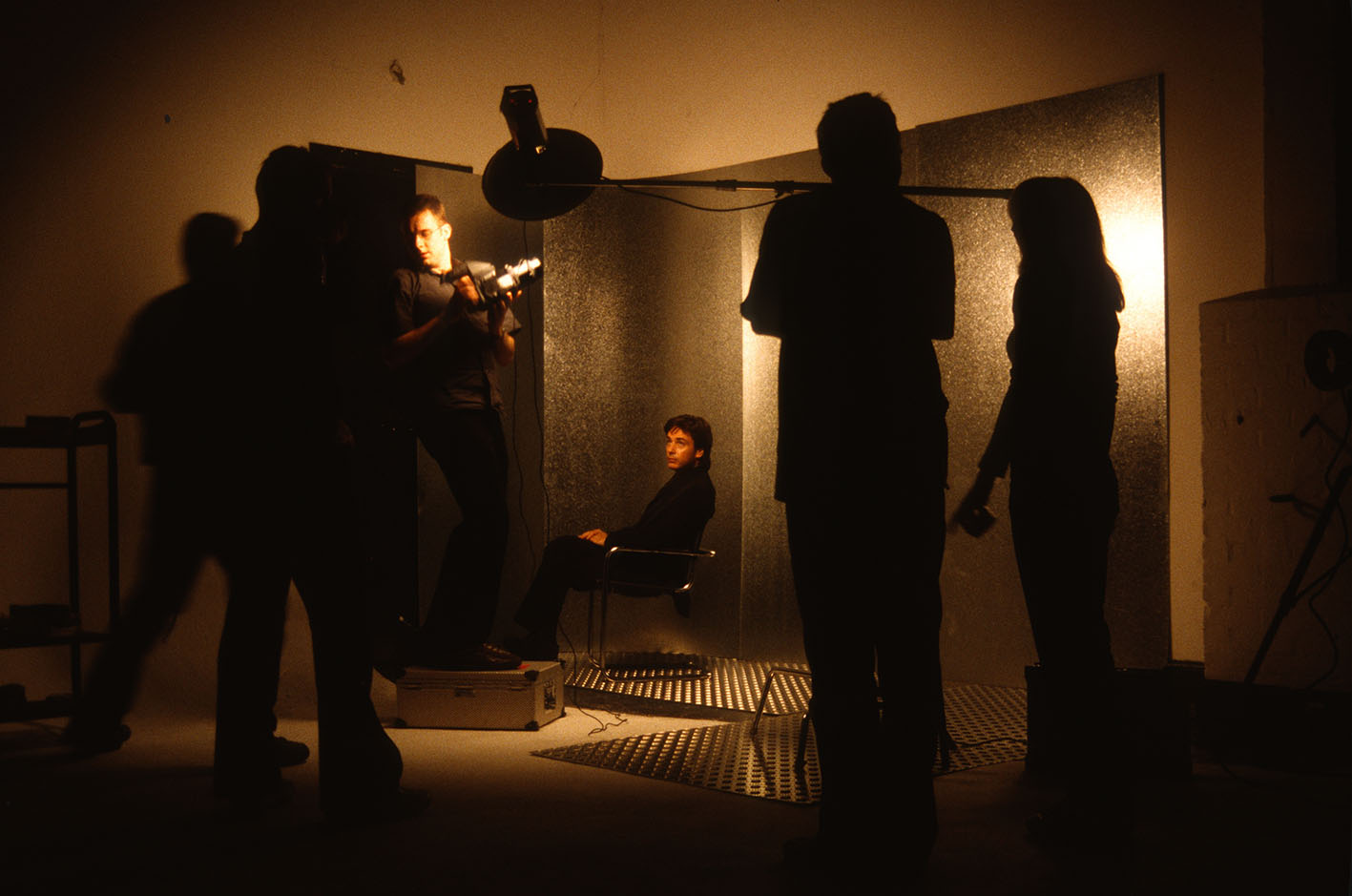
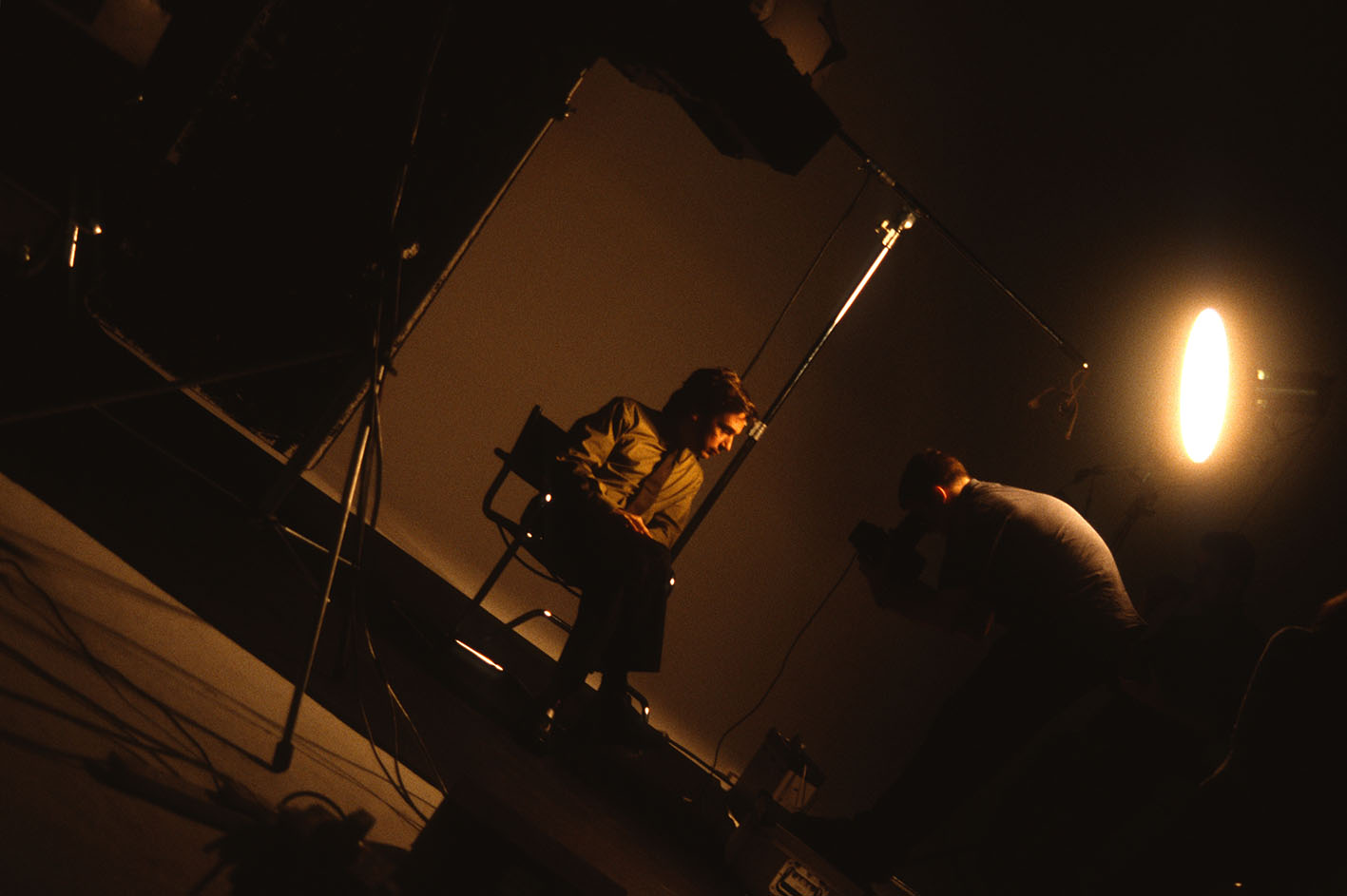
So, alongside Jean Michel's press agent and Francis Dreyfus Music representative, armed with a change of clothes for the photo shoot and a take-out from Yo! Sushi, we take the lift downstairs. As the day turned out, we ended up chatting with Jean Michel for longer than we had expected and had the pleasure of spending the later half of the afternoon in a photo studio with him. And, strangely enough, the photo shoot did involve shooting a laser beam into the lens of the camera, to give a very spectacular effect.
And so it was that we were invited into Jarre's waiting black Mercedes for a thirty-minute trip through the centre of London, during which he shared some of his thoughts on Metamorphoses and the forthcoming Egypt project.
Metamorphoses is a radical departure from your previous albums. Would you agree with that ?
Yes, I think that in a sense the title of the album is quite appropriate. After having done Oxygene 7-13 where I wanted to revisit my past, I got this idea of starting a new chapter, opening a blank page and trying really to explore a different way of approaching sound design. I wanted to take care of something that I didn't really take too much care of in the past, such as the drum tracks and parts of the groove. So it is the reason why I experimented over the past two or three years with DJ's and the club scene. Sometimes people didn't understand exactly why I was doing those kinds of experiments and music but for me that was a really necessary contact with the electronic scene. But on the other hand, the ambition I had with Metamorphoses was to try to bring something new, related to what is going on today.
So it is for this reason that I went on my own to the South of France for two or three months about fourteen months ago. I just went on my own with my dog, just to write some music. I think I wrote about twenty-four songs and by experimenting with the groove and drum tracks and also this idea of using vocals. As we know, instrumental music is more about dealing with soundscapes, landscapes, being more descriptive about music. Vocal tracks are more about ideas, concepts and stories and so it is more direct and sometimes more personal as well, if you are using your own voice. So I decided to use my own voice and also involve some guests such as Natacha Atlas and Laurie Anderson.
You said Metamorphoses is personal change for yourself, but are there any other themes in the album?
Yes, the theme of changes and metamorphoses, plural is certainly the theme of the album, in various ways. Involving someone like Natacha Atlas, which gave an oriental feel to one song, is for me, one way of talking about metamorphoses in our countries. I mean, one of the metamorphoses in Europe is the oriental connection. Like in France, the North African influence, in this country the Indians or Pakistanis, in Germany the Turkish connection. So all this now is part of our day-to-day life, it is not a kind of world music statement. I've always been cautious about world music, it is always a very Eighties attitude of being ethnic or being trendy.
So I wanted to have this kind of oriental feel because it is part of our day-to-day life. Part of the change of our society in Europe is that we may not be able to succeed being together. We may be able to succeed by some outside influence and this something could be the oriental feel, being like the glue, coming from the Middle East or Far East. So Natacha Atlas is a good symbol of that, a good illustration because she is half-English, half-Egyptian, she has a Belgian passport and she speaks with a slight accent when she speaks Arabic.
Another way of understanding Metamorphoses is in Gloria. This song is about transsexuals and transvestites. I got this idea having seen a Pedro Almodóvar movie and I thought that these people are really carrying the idea of metamorphoses in their every day life. I wanted to go with a song that could be a mixture of two states, very biological, very impure and very strange. This song also has a real symphonic orchestra but processed, with a heavily processed drum track, with my own voice between Vocoder voice and an opera voice. All these are 'in-between' atmospheres.
Another track called 'Millions of Stars', that could be linked with Oxygene as well.
Who would you say influenced you in the making of Metamorphoses?
The music from people such as Underworld, the Chemical Brothers, Orbital or even Leftfield really convinced me to make this album, I mean with a different approach and I hope that this album could have some influence again to some people. I think we are all part of a chain where we are all thieves, being influenced by somebody else and I'm glad to have part of this influential chain. Certainly Metamorphoses is the result of this. I don't think Metamorphoses is a techno album or a dance floor album but it certainly has that sort of dance-feel that I like so much.
Of the twelve tracks of the album, most of them are vocals, maybe only two instrumental tracks and even in those, we have one or two words.
Is this the start of a new era for you and did you find it easier to write vocal songs than to write pure electronic music?
It is like I am turning a page, but in no way am I rejecting what I've already done, but just having a blank page and trying something else. Trying particularly to have a close relationship with what I've done in the past but also trying to consider the music I like today and the musical approach that I would like to share with the audience.
I think it is a different approach. For this album, I didn't even want to cross fade between songs, to make the statement that it was separate songs.
When did you come up with the idea to move towards a vocal album, rather than an instrumental one ?
Maybe it came when I did the introduction for Odyssey through O2 and I used some words with my voice. I didn't realise at that moment but when I started to work on Metamorphoses, suddenly, in a natural way, I thought it would be interesting to use vocals.
But not like when you are writing a song, but more using vocals as an ingredient, not only like an instrument, but also using the colour of the vocals. Not just the vocal of a single singer, but also vocals of singers from one song to another and when you listen to the whole album, suddenly you have a diversity of vocal statements, that I think is probably the core of Metamorphoses.
Looking back now that the album is finished, I'm really attracted to involving women who are quite special, quite different. If you take a close look at Laurie Anderson and Natacha Atlas, they are definitely very special, they do not have a clear image, they're all 'in-betweens'. In between cultures and art forms, it is not clear who they are, it is what I like.
This album is very different from every single one of your previous albums. By including vocals, do you think you will open up your music to an even wider audience?
I really don't know because in my opinion it is the most electronic, processed album that I've done for years. It is really very electronic, more electronic than Oxygene 7-13 as I worked more on the sounds themselves. I processed everything much more, even the vocals. So I have no idea really, I truly hope that this record will be understood by the audience, in the way that I felt it.
In the past, you've worked mainly in solitary in the studio but on this album, you've called a number of collaborators and also a co-producer. Do you consider this a different approach to previous projects?
I worked first with Joachim for Odyssey through O2, when he was doing the post-production before the mastering, by linking the tracks together. We got along together very well and after the Apple evening, he sent me a letter saying that he would like to work with me, and he could really bring something interesting. He is basically a sound designer and he has an excellent approach to ProTools and all this software that I really wanted to work with.
The new one is changing my perception of how to make music entirely. So, obviously to be able to work with a different system, with a different perception fitted exactly with the direction I wanted to take with the new album.
However, the work I've done with Michel Geiss or with other people in the past was not so different, but for different projects.
You say you initially wrote about twenty-four songs, how did you get it down to twelve for the final album?
Some tracks where interesting but I couldn't develop them properly so they stayed more or less the way they were and they've been eliminated by themselves, it was quite obvious.
I also kept one song that I've done which is called The Sun. It was not written for Egypt but I'm keeping it for Egypt, because it was not working with the ambience of the whole album. I kept it for the stage and it is quite melodic. In fact, I've kept two original songs for the Egypt performance.
Each track on Metamorphoses is a distinct song, with no cross-fade. Was it difficult to decide the order of the tracks?
Yes, that is an interesting question. I really considered the order for a long time and then by having a running order when we were working in the studio, step-by-step I've kept the order as it is on the album at the moment. Although last week I changed the order again of two songs, C'est la Vie was number four in the album and I changed it to number two. And Hey Gagarin was number two and I put it to number four, just because I felt the pace when you listened to the whole thing was better this way.
Everyone who works with you remarks that you are a complete perfectionist. Do you find it difficult letting go of an album?
Yes, very difficult!
So how do you decide when you consider the album complete?
It is because of the deadline of the record company otherwise I would still be doing changes now!
This is the first time that I've been able to remix and retouch the album entirely. It was supposed to be finished at the end of June, when I made the presentation to Sony as a finished project but then the release was postponed to the end of January. So I took a few days off my holidays and decided to remix the whole thing as I was not happy with the sound and that changed the whole thing. So, for instance, a song like 'Je me Souviens' is now exactly the way I wanted to hear it. It was not like that for the first mastering.
There is somebody I really like and didn't have the time to thank him and that is John Davis from Whitfield Studios. I did the mastering first in New York at Sterling Sound and it sounded a bit old and dated, a bit rock and roll sound. So I did the mastering with John Davis in London and I've been really happy with it and the level of energy he's been able to put into it. The mastering process is a very important and interesting step.
I also was changing the record cover last week. If you haven't seen the cover, I'll show it to you later. Even the Sony people haven't seen it yet. I am very pleased with the cover, it is a straight picture but showing metamorphoses and it is quite contemporary.
Why did you choose C'est le Vie as the first single?
I had in my mind to have an edited version of Hey Gagarin, produced slightly differently. The choice of C'est la Vie came from Sony, particularly the Germans who were very keen on C'est la Vie, for various reasons, which I've been convinced by.
First of all, they thought the song was very strong. Secondly, it was quite unexpected from me, and it was interesting talking about metamorphoses from me. And also, the kind of oriental feel and it is growing all over Europe and that people such as Sting, who is releasing a single with Cheb Mami, are producing similar tracks, suddenly makes sense not to wait too long to release this track.
And finally, the obvious link with Egypt and the oriental feel. I accept this, but maybe by myself, I would have chosen Hey Gagarin, but that is not a problem, as we can release it afterwards.
As well as Hey Gagarin, Give me a Sign also stands out as a possible single. Do you have the second single lined up already?
Yes, that's a problem. 'Give me a Sign' is Richard Ogden's favourite [head of Sony Music Europe] and he is really on my back about this! Originally I wrote this song for Kate Bush and unfortunately she was just giving birth and she was not able to do it at the right time. I really, really regret it but maybe I will try to do a version with her later on.
I even did a version that maybe I'll put on the Internet, made with my vocals. I was so frustrated and I did one with processed vocals, a kind of 'Buggles' sound and I liked it, but it was not the same feeling. So I went back to this young, talented singer who did the first demo track. It is something we are going to re-produce for a single version.
When we last spoke, you talked about not touring straight after the release of the album, but leaving it around six months. Is this still your intention?
Yes, I really would like to experiment with some outdoor festivals, such as Glastonbury, Tribal Gathering or Universe. Just to get the outdoor feel but also to be part of the electronic scene.
I'm going to change my band, still working with Christophe and Francis, but reduced to about three or four people, then adding guest musicians.
I'm meeting tonight with a drummer that used to be with Pink Floyd, playing in the cage. Joachim is going to take care of the live ProTools process effects on vocals and also some loops.
I would like to mix festivals and an indoor arena tour.
You are well renowned for your spectacular events. Did you have to turn down many offers for the millennium?
I had a project in Australia, in Russia again and France, but I thought they didn't mean so much in terms of the millennium.
Obviously, if there is one place to celebrate the Millennium it is at the pyramids. It is a great honour and a great privilege to be chosen because I've been commissioned by the state of Egypt and obviously they are very attached to their own traditions. I was very honoured.
You talked about only having chance for your concerts such as in Paris, Houston and Lyon. The turn of the millennium must be the ultimate 'one chance'. With a potential live audience of two billion, do you feel any additional pressure with this show ?
I'm trying not to think too much about that. I am so busy trying to make it happen, in terms of logistics and technically it is a very tough production to put together. So, for me, I'm not thinking in those terms and I'm just trying to make it happen and do my best.
How do you think the Egyptians will react to your new album and the concert ?
I've no idea, actually. They know my music but I think this project is going to be really astonishing for them as it is a mixture of really modern music but involving a lot of Egyptian musicians. Also, for instance, I will perform existing music such as Oxygene, Equinoxe and Revolutions and I would really like to involve Egyptian percussionists and Egyptian soloists, just to give an Oriental feel to the whole thing.
I also have the opportunity to have the Symphonic Orchestra from the Cairo Opera House, so I'm going to have real symphonic versions of Rendez-vous 2 and Souvenir of China, with a full orchestra, which is going to be great.
03/Feature
Track by Track
Jean Michel Jarre gives us an insight into each of the tracks of Metamorphoses
Je Me Souviens
It is a very minimalist track but so rich just by the various emotional angles which she puts in each word, it was exactly what I wanted. She is probably my favourite American artist, she's a painter, video artist, really a sign of our times.
Hey Gagarin
This whole track being a kind of dance track, quite positive, is saying hey Gagarin I would like to fly like you. I can walk, I can talk, I can move, I can eat and maybe one day I can fly like that. As a song it is very simple, it is just a tribute somebody I think we all admire. Not only that, but it is a tribute to someone who is presenting the idea of the greatest escape.
Rendezvous a Paris
I've been really impressed by The Corrs, this mixture of being very ethnic, doing Celtic music but in a very universal way, by digging deep into their roots they are able to share these special roots with anyone. In the song Rendez-vous a Paris, not linked at all with Irish influential exactly the reverse, I like the element of surprise that Sharon is creating in this piece. In the last part of the track, she suddenly starts to play and this kind of contrast is very emotional and I think it is also very feminine. Her performance in this song is very sensual and I really enjoyed working with her.
C'est la Vie
At the beginning I wrote this piece of music as an instrumental piece. I realised after having done it, that the tempo was really close to the oriental feel. It is fast but you can also play at different speeds, which is similar to lots of oriental songs, which are based on this principal.
Millions of Stars
This is probably the closest track in terms atmosphere to Oxygene or the music I've done before. It is really an idea got in Egypt when I saw the sky above the pyramids. The light is actually incredible at night and you have all these millions of star, almost like they are falling down onto your head.
Tout est bleu
The song is an idea I've got from listening to weather girls every day, most of the time giving dull information about weather. If you don't see the screen, sometimes you could consider it as information about your own state of mind. I got this idea of having lots of different voices of weather girls from different countries, announcing really dull and boring weather conditions and having a chorus of five guys saying don't worry because everything is blue in your eyes. The contrast of this silly, redundant chorus in contrast to these rather dull forecasts seemed an interesting idea to do a rather positive and dynamic song, in the end.
Love, Love, Love
This song is about nymphomaniacs and you have the verse with vocals that I've created and processed entirely from a Macintosh computer. I'm singing the choruses and complaining about the fact that my cat has seven lives, my dog has seven wives and I can see in her eyes, so many guys. It is just a silly song about nymphomania.
Bells
The track Bells is named because I used bells for the theme. This is one of the few instrumental tracks on the album. I love the ritual aspect of what the sound of bells means for everybody around the world.
Miss Moon
Miss Moon is a song that has a kind of oriental feel but a feel coming from somewhere else, linked with the atmosphere of the desert, in a sense. The whole beat has been made with the sound of a sprinkler, which you find in your garden. I think the idea of expressing the idea of a desert with the beat being created with something linked with water is quite fun.
Give me a Sign
Give me a Sign is structured as a love song and it is a song about a girl talking to someone who is dead, or someone who left her, and trying to reach this person again. It is a rather sad and sombre context but structured as a pop song.
Gloria, Lonely Boy
I thought that one of the moving state of a metamorphose is the life of a transsexual or transvestites. I thought that an album called Metamorphoses could not exist if one song was not dedicated to the life of a transvestite or transsexual. This track is something very special and creates, I hope, a empathic feel about what it is like being both sides and no sides, in a sense.
Silhouette
This is actually just a chill-out kind of song. I like the idea particularly after Gloria, Lonely Boy, which is a heavy song. I like the idea of having a short song just to land somewhere, with a Turkish vocalist, a girl called Ozlem Cetin and she had a very haunting voice. A song for coming back to the beginning of the album.
04/Feature
The Collaborators
It is common practice for Jean Michel Jarre to shut himself away for months on end to create his musical masterpieces. However, in keeping with the title of the album and the overall theme of change, Metamorphoses was somewhat different.
Jean Michel Jarre called on both well-known artists, up-and-coming artists, as well as session musicians for his new album.
Two of the most well-known names are Sharon Corr from the top Irish band The Corrs and American multi-media artist Laurie Anderson, who worked with Jean Michel Jarre way back in 1984 for the Zoolook album.
Also featured on the album are Natacha Atlas, a vocalist of Egyptian descent, and Dieirdre Dubois, from French Ekova.
Some of the lesser known vocalists included Lisa Jocobs (Millions of Stars), Veronique Bossa (Give me a sign and Millions of Stars) and Ozlem Cetin (Silhouette). Lisa teamed up with Cullard Xiangquiam and Ute Eckerfield especially for the album to ‘form’ The Weather Girls, featured on Tout Est Bleu.
Natacha Atlas
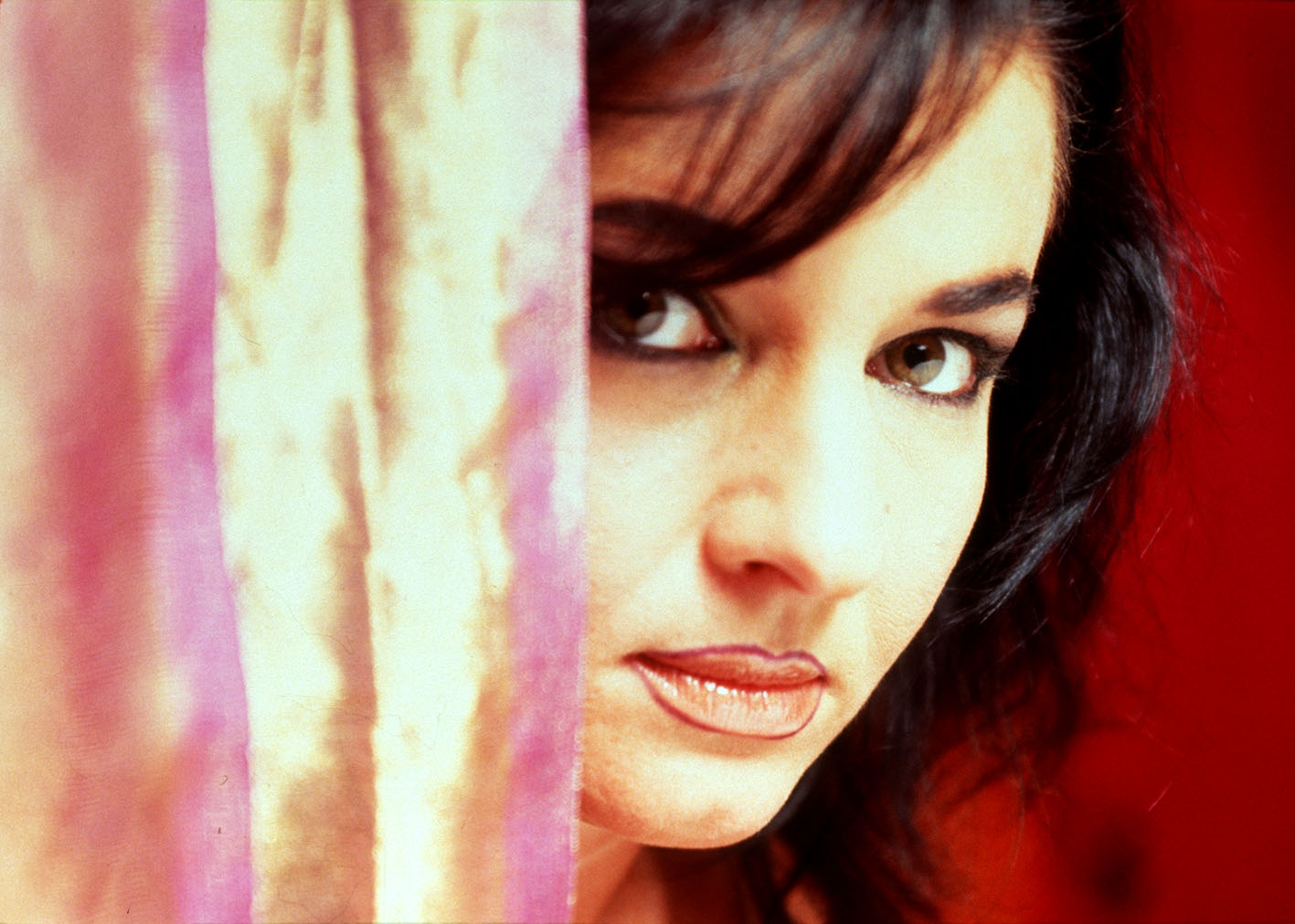
It is arguably C’est La Vie which provides Metamorphoses with its centre-piece. Seven minutes of breathy desire from Natacha Atlas, C’est La Vie is Jean Michel’s spellbinding take on the cross-pollination of Middle Eastern and Parisian cultures. And provides a clue as to why he has decided to perform his Millennium live spectacular at the Pyramids.
So why did Jean Michel Jarre chose Natacha Atlas to sing on this originally instrumental piece ? He explains, “She's partly English, Belgian, Egyptian and she's also on the fringe of both cultures. In her voice and in the way she approaches her work, it is this mixture of East and West and it gives her her strength. To convey such an idea as C'est la Vie, it means you need somebody who is able to express happiness, despair, solitude, generosity, and fragility. I think what makes this track so special is that she's been able to express this all in one track.”
Once, during a stressful and exhilarating trip to Israel, Natacha Atlas described herself as ‘a human Gaza strip’. She was referring to the complex melange of influences - both genetic and environmental - that have shaped her both as an individual and as a performer.
Natacha grew up in the Moroccan suburbs of Brussels, becoming fluent in French, Spanish, Arabic and English, immersing herself in Arabic culture, and learning from childhood the raq sharki - belly dance - techniques that she uses to devastating effect on stage today.
Even more striking than Natacha’s dance moves, though, is her voice, which swoops and soars, blending unfettered talent and the complexities of Arabic musical theory into a burst of sound that is thrilling, immediate and evocative.
Natacha will be seen by Jean Michel Jarre’s side a number of times over the coming months. She completed filming of the promotional video for C’est la Vie in Paris in November and will join him for rehearsals for the Egypt concert before flying to Cairo for the actual show itself.
Security for the show is expected to be extra tight now that Egyptian President Hosni Mubarak has confirmed his attendance, which will put extra pressure on Natacha. C’est la Vie will be the showcase track for the concert, as it will be performed whilst heralding in the new Millennium. Watch out for Natacha !
Laurie Anderson
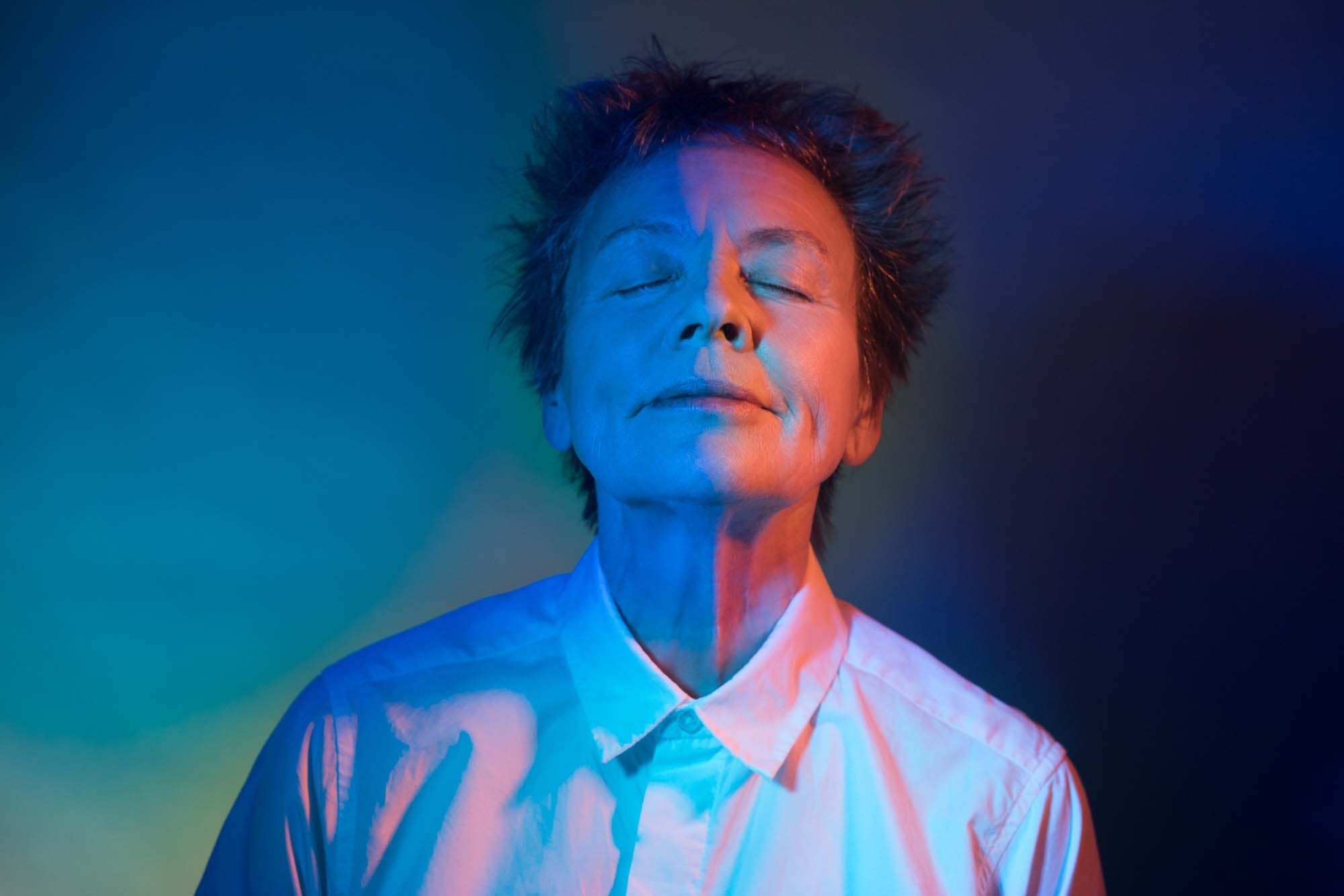
Laurie Anderson has been described as America's multi-mediatrix and so you may expect that she would be close to the performances of Jean Michel Jarre, but she freely admits, "I've never seen one of his performances".
Laurie Anderson's O Superman launched her recording career, rising to number two on the British pop charts and started her rollercoaster career, which would take in music and visual arts. In the world of Jean Michel Jarre she is renowned for contributing to the Zoolook album in 1984 and has now linked up with him again on the first track of his new album, Metamorphoses, for Je me Souviens.
The initial collaboration on Zoolook involved not just Laurie Anderson but also Marcus Miller and Adrian Belew, all well-known musical experimenters. At the same, she explained, "It came right out of the blue. When Jean Michel called me and asked me to appear on the album, I wasn't familiar with any of his previous work at all, but I listened to some tapes of what he'd finished of Zoolook at that time, and I thought that a lot of what he was doing - especially the way he was sampling voices and manipulating them - was very beautiful, so I agreed to do it.
"The first thing he asked me to do when I started work in the studio was to sing completely out of range, which I wasn't really prepared for. But he talked me into it, and after we'd recorded everything I just left him to change and manipulate my voice as he wanted to. And actually, I'm very, very happy with the way it turned out."
Jean Michel Jarre noted at the time, "She's so much more than a musician; she's really a multi-media artist. I've admired her work for quite a long time from a graphic and conceptual point of view, as well as from a musical standpoint. I enjoyed working with her enormously - she was always subtle and delicate, and the way she talks, moves and performs reminds me of Japanese words after her tour there, and we mixed them into other sounds."
For Metamorphoses, Jean Michel Jarre asked Laurie for far more recognisable vocals than those on Zoolook. He explained at the time of Zoolook, "I asked her to sing something as if it had been written by aliens from another planet - the idea was that she wouldn't be able to understand the meaning of what she was singing, only the emotions behind it. She did it all beautifully."
But with Je me Souviens, Jean Michel was looking for Laurie to express feelings within the verses, explaining, "Je me Souviens with Laurie Anderson is probably the track that illustrates most what I wanted to achieve with this new album. It has a very organic, sensual approach to the sound and the song is structured where words are really as minimalist as possible, without sentences or verbs or adjectives, where I say 'Je me Souviens' in choruses.
"I asked Laurie to do the verses, with the idea of using generic words like audio pictograms - like the house, the child, the fish, the flesh, the tree, but your tree or my tree are different, as we know, but still a word that everyone can understand. So I asked her to give a different emotional response or content to each of these words, which she did beautifully. The whole song, without talking about love or nostalgia, carries the idea of love, nostalgia, hope, despair, sadness and joy - the metamorphoses of feelings."
With this new track, the two of them relied much more on the understanding they developed almost fifteen years ago, as Laurie notes, "We weren't even in the same room this time, so it was a bit abstract."
Over the years, Laurie Anderson has also contributed music to films by Wim Wenders and Jonathan Demme and dance pieces by Bill T. Jones, Trisha Brown, Melissa Fenley and others. Recognised worldwide as a leader in the ground-breaking use of technology in the arts, Laurie Anderson is currently devising new creative tools, including the Talking Stick.
For the millennium, Laurie Anderson will not be in Egypt alongside Jean Michel Jarre, explaining, "I'd love to, but I'll be in Morocco."
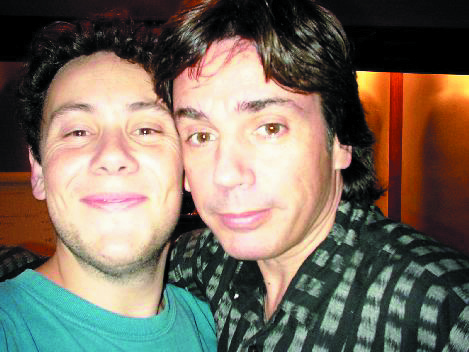
05/Interview
Joachim Garraud
Co-Producer
Step forward the co-producer on Metamorphoses
Joachim Garraud is a new name to the list of Jean Michel Jarre’s collaborators. However, it is name that we will be seeing mentioned often over the next few months. He has co-produced Jarre’s latest album, produced a number of remixes of the track C’est la Vie, and is working closely with Jean Michel Jarre on the music for the concert in Egypt. He spared us a few moments in November to tell us more about himself and his exciting collaboration with Jean Michel Jarre.
Born in Nantes, in the West of France on the September 27th 1968, Joachim studied Piano and Percussion at the Conservatoire de Musique.
He started his professional career as a DJ and radio presenter in 1985 and then in 1989, moved to Paris and became a producer for a radio station called "Maximum", which was the first station to be totally dance music orientated.
In 1992, he set up a company called Square Prod which makes jingles and sounds for television stations (TF1, Canal +) and radio stations (Europe 1, Fun Radio, Voltage FM, Skyrock etc).
You’ve worked with Jean Michel Jarre in the past. Please tell us about that and how you came to co-produce his new album?
Jean-Michel came to Square Prod to link together and remix the tracks for Odyssey through O2. We got on well and Jean Michel asked me to get involved with the Apple Expo Show in 1998.
I later came up with some three pages of ideas which I put to Jean Michel regarding working together on an album. He went off to St Tropez for a month to write some melodies, and I went down one weekend to listen to what he had created. Since then, we have worked together on around twenty different tracks, of which twelve will be the new album Metamorphoses, which will be published on the January 25th 2000.
Do you feel nervous being involved in such a radical step for Jean Michel Jarre?
Yes, but that was part of the challenge which I accepted from the start when it was decided that I would be co-producer of this album.
So you’ve worked on his last two albums, but were you aware of all his previous albums?
No, I knew his most popular tracks, but I did not know about the rest of his work which I later discovered through my involvement with him. I have since come to realise that most of today's electronic music has been influenced by his work.
You worked with Jean Michel in a purely digital environment, how did you find working together?
It has been a real pleasure because Jean-Michel is an absolute genius. He is overflowing with ideas and he works for 18 hour days without tiring. He is an absolute perfectionist and he was very excited to be working for the first time in 100% digital, using Protools which I have been experimenting with since 1992.
We've heard tracks like Gloria, Lonely Boy and Give me a Sign, which were very different from what we've come to expect from Jean Michel Jarre, where the vocals are far more prominent. Did these go through many variations before the final version?
There were many different versions, around five versions of Gloria and a total of seventeen different mixes. There were eight different versions of Give me a sign and seventeen different mixes.
You have produced four remixes of the first single for C'est la Vie. One extended mix and three completely different styles - Trance, House and Ambient. Why did you chose the three different styles and how did you approach the remixes?
I remixed C'est la Vie in different styles so that there was something for every taste. Today, remixes allow a single access to different types of audience. It is also a question of tailoring different versions to the requirements of the different types of media and location where the song may be played.
I remixed everything on Pro tools, in the case of C'est la Vie keeping just the voice of Natacha Atlas and the base melody from Jean Michel. I rebuilt everything else around this with new arrangements, percussion etc.
You will be in Egypt for the Millennium?
I certainly will be as I am responsible for producing the audio side of the concert. I am remixing Jarre's older tracks so that they fit in better with the new pieces from Metamorphoses.
I am also looking after the timecodes which will ensure that the produced elements fall exactly at the right time (like midnight!). That's why I shall be by Jean-Michel's side throughout the night of the December 31st.
I believe he has asked you to work on re-arranging some of his older tracks to fit in with the new material on Metamorphoses for the concert in Egypt? How did you approach this?
That's correct. I have remixed the older tracks and adapted them so that they fit in perfectly with the tracks from the new album, as well as with the oriental pieces which will be performed on the night. Basically, I am remixing the tracks, and adding in some local pieces which will give the whole thing a new, original sound.
What have been the biggest challenges in preparing the music for the Egypt concert?
Planning three and a half hours of concert with a timing that must be exact to the second, so that the sound design falls exactly as planned at midnight.
One of the biggest issues facing the team are the fact that a lot of the voices are processed by Protools on the album, so I must adapt the effects that I have produced to be able to re-create them live.
This piece is about