
01/Feature
Oxygene Tour 1997
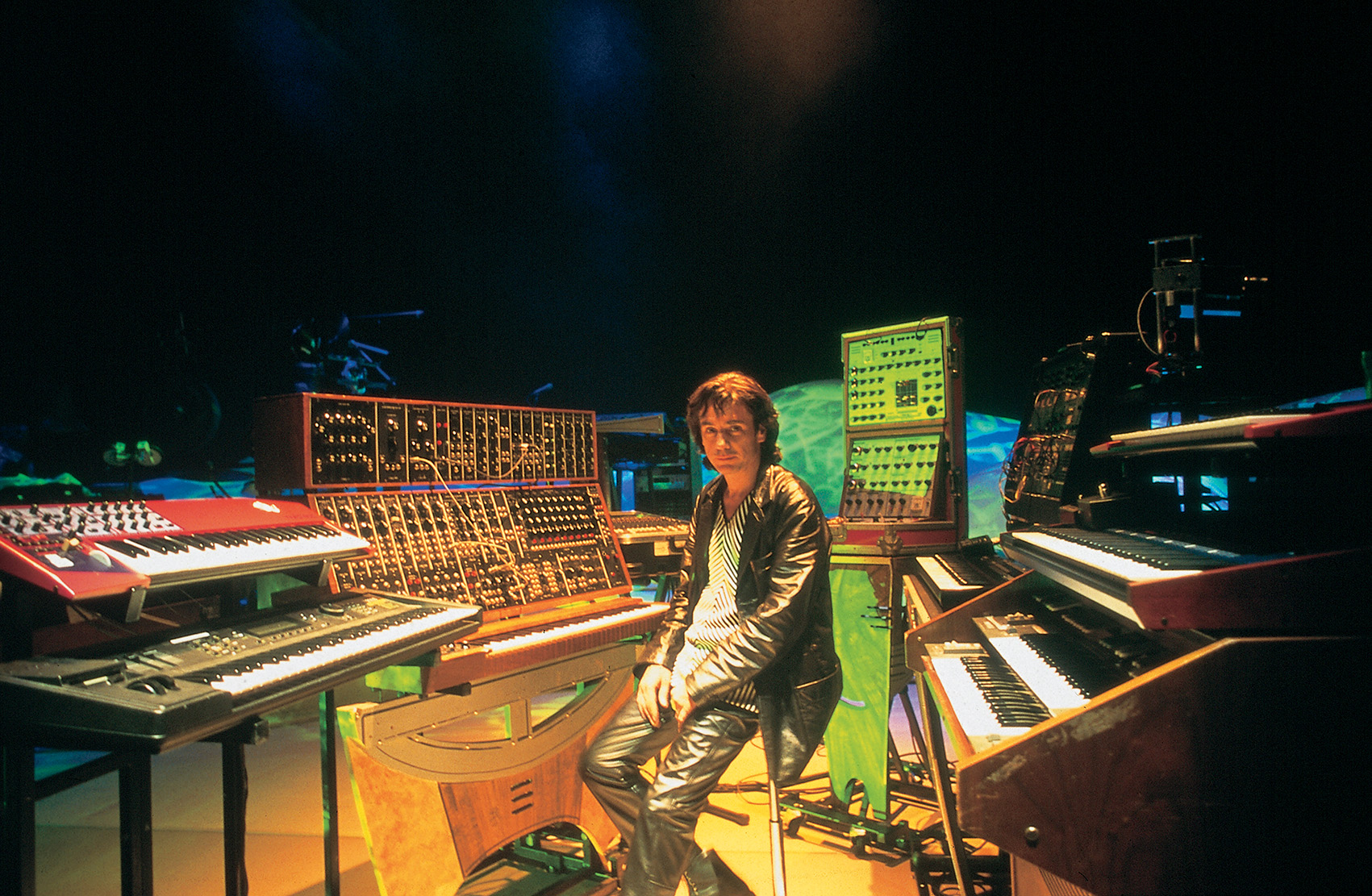
When Jean Michel Jarre announced he was releasing the continuation of his Oxygene album, he also declared his intention to tour the world with a brand-new style of show, the Oxygene Tour.
He has performed in countries that thought they would never see a Jarre concert, transfixing thousands of fans with live renditions of his Oxygene tracks. Jean Michel explains the reasons behind the tour, what he thinks is unique and how the reaction of the fans differs from country to country. Roll on the next stage!
On why the move to indoor shows?
This is going to give me the possibility to play in a totally different way with new instruments, a new decor around me and new lighting effects that I’ve never been able to do before. For many years I’ve been honing my performance and style for outdoor events and for a long time I’ve been considering indoor concerts. This tour has finally given me the chance to live out that dream.
On why choose to rehearse in Toulon?
I find the Zenith arena is very comfortable to play in, it is well designed for musicians and very modern. It is a comfortable size, it is somewhere between the theatre and the larger concert halls in France, such as Bercy in Paris. The big advantage for me is that it is an average hall in terms of layout and it therefore allows me to experiment with a lot of the techniques that I’m going to use during the tour in a very neutral environment. It can therefore be used to model a lot of the other concert halls throughout Europe.
The majority of French musicians only ever play in French halls and get quite used to them. However, in this case we’ll see that my second date in Copenhagen, for example, is a very large room.
Later on in Sweden we go for the ‘dome effect’, but this location in Toulon will allow me to try out a lot of things and if I can get them right here, things will go a lot more smoothly later in the tour.
On what the Oxygene concert will look like
The idea of this tour is to really present the various pieces from Oxygene, the old and the new, in re-arranged versions and also I want to re-introduce some old favourites which the public know and indeed expect from myself.
What you’ll see on stage is something different to what I’ve done before. First of all, you’ll see the percussion side and instead of having just one drummer, which is the traditional way of doing things in a rock concert, we’ll have two people on the percussions set out in a percussion ‘area’, rather like a DJ in a rave. They will have a number of unusual percussion instruments from electronic pads and big drums, to gongs and bells and the two will play together in their area and will bring a certain rapport between the audience and the people on stage.
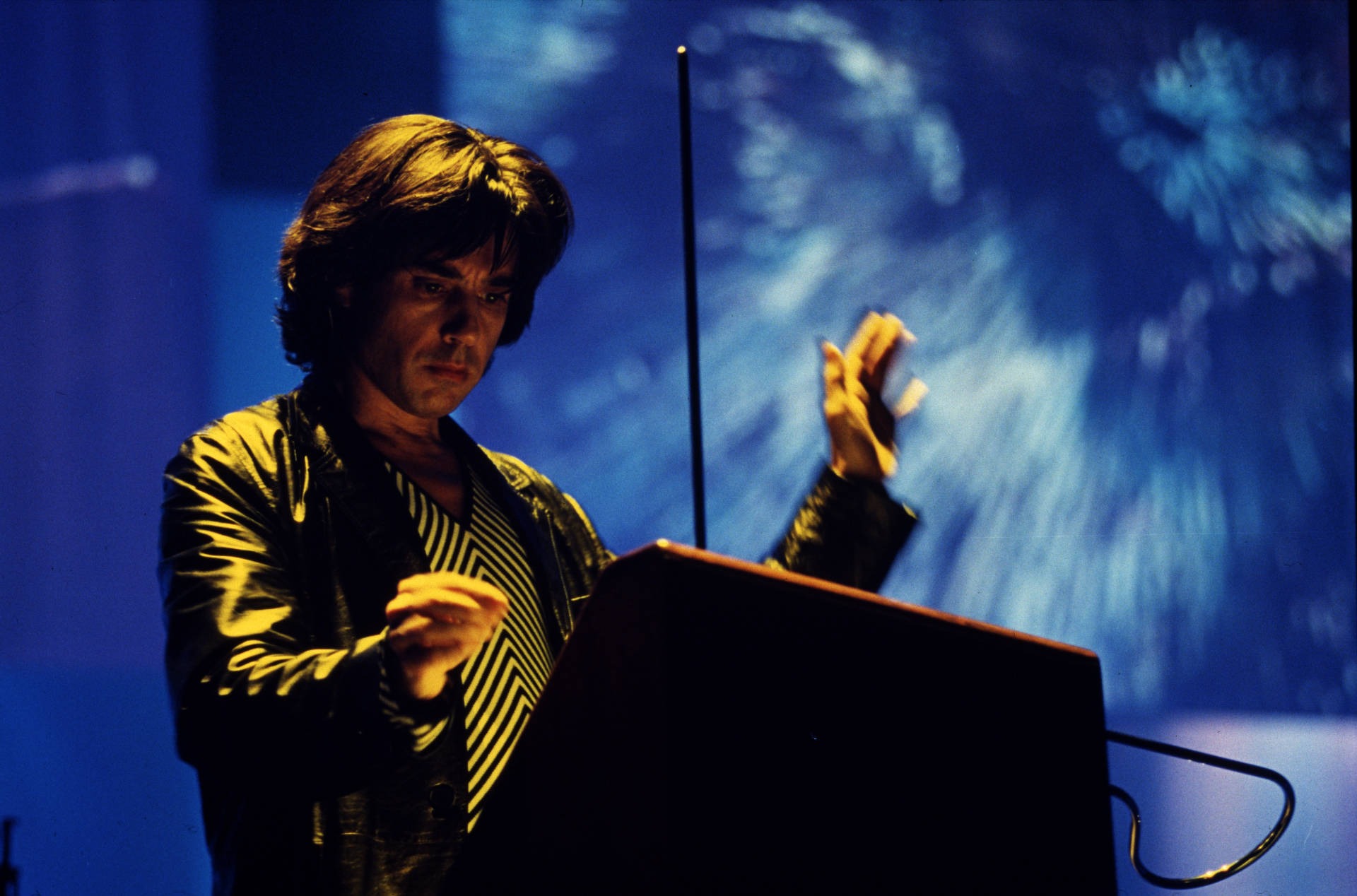
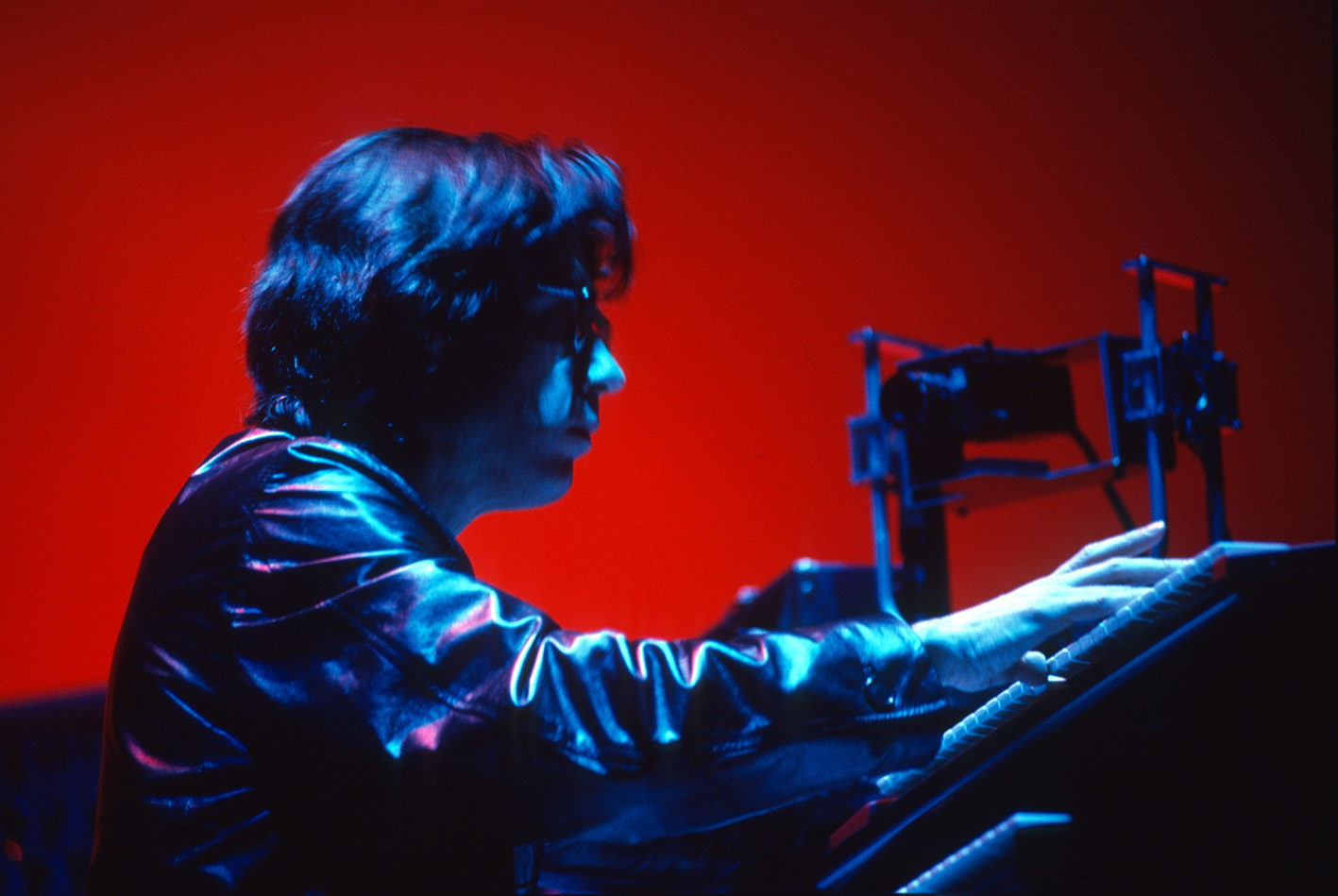
We also have a new bassist from Germany, the other musicians are all French. Then there is myself and I’ll have a certain number of unusual new instruments including probably the first electronic instrument, which is from Russia, the Theremin.
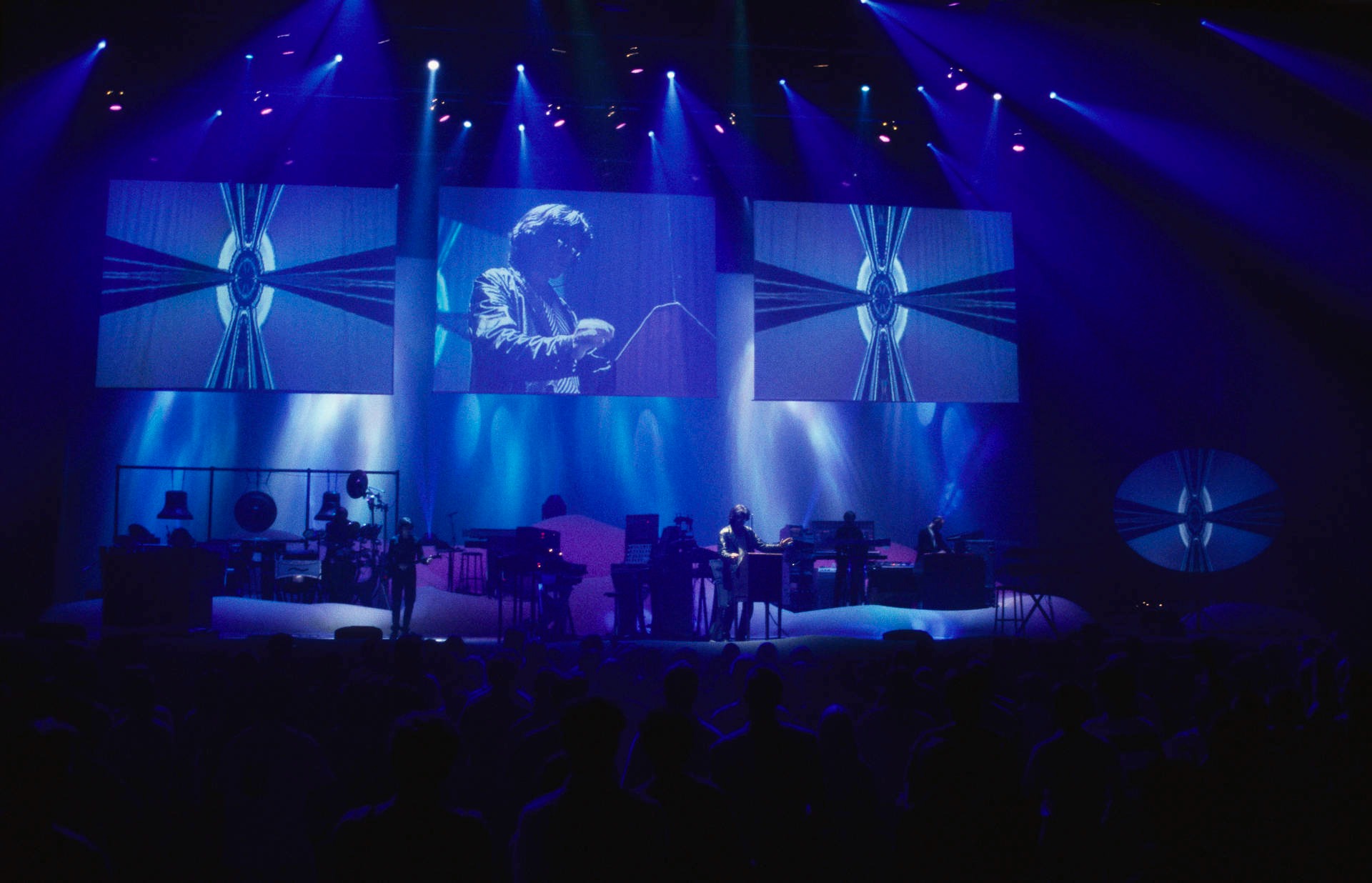
The way I’ve worked on the lighting and the overall visuals is that I wanted everything to be an integral part of the music. What that means is that instead of having lights and videos and other effects supporting the music, the idea is for it to combine into one ensemble. I wanted light, in fact, to be an additional instrument.
The stage is somewhat different, I think, to any stage before it. It has been designed so that there is not a single straight line in it, it is more like a cloud or a sea-scape or a sand-scape. When lit from above, it will look like sand-scaped ‘dunes’ and when lit from the inside, it will look like a skin-effect, a living organism.
I have a new lighting designer called Roy Bennett who I’ve wanted to work with for many years. In my mind, he’s the greatest designer of our time and he’s worked with The Cure, Depeche Mode, Madonna, David Bowie and others. We have both wanted to work with each other in the past, but it has never been possible. Now, for the first time, I’ve managed to bring him along with us and he’ll be working on the entire tour. So, I think what we’re going to see tomorrow is going to be pretty astonishing, well it will be if we finish everything because they’re going to be working all night and all day tomorrow and it may well be that we end up starting ten minutes late.
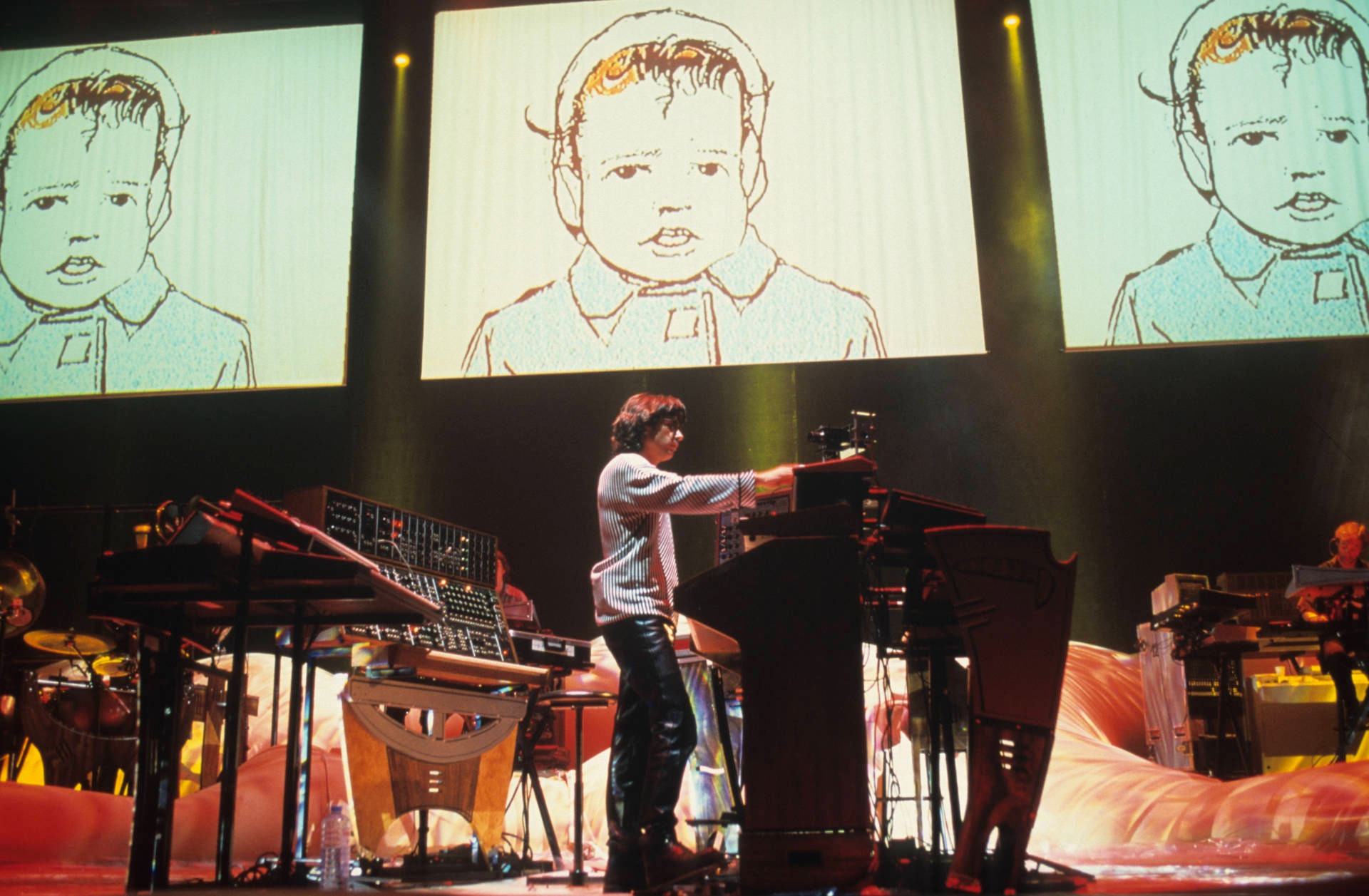
On top of this, there will be three video screens which will be able to transmit live video. We have a new technique which allows musicians on keyboards to play sounds, to play music or to play video effects. So, we are to trigger live effects during the concert and what this will give us is the chance to make things different every time. It will be like the guitarist improvising every time and making a concert special.
I’m looking very much for a minimalist effect overall. I want to rediscover the simplicity of the melodies that I put together in Oxygene. I don’t want the visuals to detract from the music and in fact, I think today one of the best ways to listen to music is at home, particularly through the evolution and development of compact disc technologies.
I think the big difference today between music for our parents or grandparents and nowadays is that when they went to a concert, they went to LISTEN to someone, to HEAR somebody. Whereas today we say we’re going to SEE a group and that’s the big thing today. If people make the effort to come to a show, you need to be able to present them something a little bit different to what they are able to get at home with their CD player. So that’s why I like this attitude that the visuals and lighting must not be there to detract from the music, they must be there to optimise the viewing pleasure which the audience is getting.
On the length of the tour
Yes, it will be at least a year, maybe eighteen months. The way we’re planning things at the moment is for the last concert to be at the beginning of the World Cup in 1998.
On the different audiences across Europe
One of the big differences you see in Europe is that people from North Europe, where it is a lot colder, when they go out, they do it to have fun and enjoy themselves. You find that when they go to a concert, they are a lot more open and enthusiastic than the audiences in Southern Europe. I’m lucky to have a very faithful audience in Northern Europe and I know for example, in Oslo, the concert was sold out within an hour and a half of tickets going on sale. It is very much the same in Norway, Sweden and the UK.
Photographs by Christine Ferreira, Mark Gidley and Sigrid Colomyes
02/By the numbers
Show facts
- 16
- countries
- 29
- concerts
- 8
- trucks used to transport the set
- 40
- tons of equipment
- 1100
- flight cases.
- 75,000
- watts of power per show.
- 90
- minutes to sell-out a show
- 65
- tour personnel
- 80
- local crew
- 74
- moving lights
- 6
- hours to set-up the show
- 3
- hours to dismantle
- 26
- keyboards
03/Interview
Christian Bourret
Show Director
Show director Christian Bourret talks about his work on the Oxygene Tour
We first spoke with Christian Bourret after the show in Oslo, in the hotel bar, accompanied by a number of the musicians and technical crew. They were hinting that here was the big boss, the guy who put together the whole show. Christian had previously worked with Jean Michel on the shows in La Concorde, Houston, Lyon and the Eiffel Tower, as well as his own projects such as the Albertville Olympic ceremonies.
At 1am in the morning in Oslo, it didn’t seem quite the place to conduct an interview, so we exchanged contact numbers and promised to be in touch. He explained he wouldn’t be joining the rest of the crew after the show in Gothenberg so we’d have to call him.
In fact, it was easier than that because during the London shows, Christian had paid a visit to see how the show had progressed. It was one hour before the second show was to start and Christian had a number of people to talk to, including Jean Michel Jarre himself. After a little hanging around, we managed to sit down in front of the video mixing desk and probe Christian about the Oxygene tour and his next project for Jean Michel Jarre, the concert in Moscow.
ON HIS role in the production of a show like the one at the Eiffel Tower or the Oxygene Tour
My role is to work on the artistic direction with Jean Michel Jarre and my main aim is to find ways to bring his ideas alive. He has an idea and we work on the ways to realise it, we make a proposal to Jean Michel and if he agrees, we continue and make it. We normally work together from the beginning of a show or any kind of artistic construction he wants to do and we work on the development. So in fact, he designs everything and I try to put all the pieces together and arrange it.
ON THE TIME IT takeS from conception of an idea to the finished show
It depends. At the beginning for Houston, for example, we had to learn a lot of things because it was a completely new kind of show. So, it took nearly eight months to create it. But now we have experience, it doesn’t take so long.
There are differences between outdoor shows and indoor shows, like this one, because it is not exactly the same. It is not a problem of difficulty; it is just not the same story. For outdoor shows, we have to deal with a lot of problems on site and we have to work with the site. For indoor shows, we can actually ‘create’ the site because we start from scratch, with nothing. Outdoor, you have a building or something to incorporate into the show, so it is quite different.
For the Oxygene tour, which was a premiere for Jean Michel Jarre because it is the first long indoor tour for him, it took four full months of work. We are now working on the 850th anniversary of the city of Moscow and we began at almost the same time as this show but I think if we put together all the elapsed time that we’ll work on the show, it should take three months to create it. This is because we have more experience and also because Jean Michel is on tour, which is working very well, and so we can use the musical arrangement and so we don’t have to create the music again.
ON THE CONSTRAINTS PRODUCING SUCH A SHOW WITH JEAN MICHEL JARRE
Yes, it is very difficult. Jean Michel is very much in charge of this tour and he is always working on the music, on the tour, on the press and so he is very occupied.
ON MEETING Jean Michel Jarre FOR THE FIRST TIME
In 1979, I worked for a company in France, Hold-up and at this time it was the only company in the world to make these kinds of giant projections. Jean Michel wanted to make a show on July 14th, his first outdoor show ever and this was in Place de la Concorde. He wanted animation outside of the stage so that a large audience can have something to see and have very new experiences. So, he asked us to make these projections. I worked with Jean Michel for the first time for this show and after that I got to know him better during a show at the Centre George Pompidou. I asked Jean Michel if he would work with me on the music and he agreed. After that he asked me to work with him on the Houston show.
ON PRODUCING THE SHOW IN HOUSTON that would be a turning point in the history of concerts
When we made the show for Houston, we knew it was going to be a really big show. When I arrived for the first time in Houston, Jean Michel showed me the ‘stage’, he said, ‘It is here!’. I said, ‘Wow, that is incredible!’. At this time, we had no doubt we’d make it, this surprised us afterwards. It was new things at all levels, lighting buildings, giant projections, the biggest screens in the world, everything was completely new, but we were young and we had no doubt at all that we would make it. It was very funny because during these preparations, we had helicopters that would go to the top of a building with materials and in our minds, we didn’t realise all the importance of this. It was like the city was ours. We needed to put something on a building, we had a helicopter, the police closed the roads around it because it is very dangerous, we put the thing on the building, incredible. Sometimes we would stand back and think, ‘This is incredible!’
ON CHRISTIAN's FAVOURITE SHOW SO FAR
The first show Houston was perhaps not the best that we’ve done but it was the most emotional of all the shows. It was the beginning of a story, and I got to know Jean Michel very well. I worked very closely with him and like you know, he is a really incredible guy. I have this sentimental feeling about it, we learned a lot and so for me, it was the most impressive show. But actually, I haven’t made all of Jean Michel’s shows. He has performed other shows which I haven’t worked on, like La Defense, and so for myself, from outside, I think La Defense was really great. I haven’t seen the shows he did in South Africa, in Switzerland (Zermatt) but I really think La Defense was great.
ON Where Inspiration COMES from
It is very difficult to know. From speaking with Jean Michel, speaking with other people who are in charge of different creative aspects of the shows, like the lighting, with Marie-Jeanne Gauthe. Jean Michel has very precise ideas, he knows what he wants and he is normally right all the time. The whole idea really does belong to Jean Michel. Like him, I don’t know where he gets all his creativity. I don’t think it is from a deep culture, it is more something from your spirit. I don’t know exactly! We have an idea, Jean Michel agrees, it is a good idea, we make it, people love it, we’ll continue like this.
ON the future of concert productions
At the beginning we didn’t have computers, programmable lights, the images, slide effects but it was still very nice. Jean Michel loves this human action on the show, live. Most of the people don’t realise that Jean Michel wants everything to be live. Very often, because of the quantity of the things to do for the images, lights, videos, it is necessary to program the sequence of the images to go into the timing of the music. If we can make the images live, Jean Michel prefers that.
So, I don’t know if the future will be in a technical way or in a new development. Maybe in the sensation that we can give to the audience through a new media that can be much freer.
Something like the new video system we have on this show, this is the type of thing that Jean Michel likes a lot, video that we can play live. This is maybe the future of concerts. I think in the future, the giant slide projections can be replaced by giant video projections or something like this, with LCD screens in front of a big projector and we can have live action on this, maybe some pictures from the stage or an artist walking on a board that will be sent direct. Something like this would be great.
In fact, we have the problem with the technology now because we need to synchronise everything and so we need computers to avoid having 200 people to control the projectors!
ON THE BIGGEST CHALLENGE FOR STAGING THE OXYGENE TOUR
It was to make the stage seem almost white. Almost all rock and roll stages are very black or dark so it is easier, with only one light, to focus on a particular musician. And when you light some piece of the stage, you don’t have remanents of the light everywhere, so the challenge of this tour was to prevent this.
We have created a new style of thing because we used all this soft staging, which no-one has done before. We have all this texture that no-one has managed because it was a black stage with a hard corner, so you cannot have this moving texture. This was definitely the biggest challenge.
ON INSIGHTS TO THE FORTHCOMING SHOW IN MOSCOW
I want to use very big video screens near the stage and also three very wide 35mm screens to use all this Russian cinema from the Communist era from a great director who had to make reportage about the war etc rather than films. All these pictures in black and white are really incredible and artistically made.
The stage will be an outdoor stage, not the same as the Oxygene tour stage, we cannot use this soft stage because of the wind, for example. We will have the Red Army choir, so we have a lot of people on stage, and so the stage will be bigger and nearer the size of the Eiffel Tower stage. But the stage itself is not very important, the design around the stage is more important. We are working on it and so we haven’t finished it yet.
ON THE LIKELY AUDIENCE SIZE IN MOSCOW
The capacity of the area is maybe two million, maybe three million. It is very big. The show will be able to be seen from everywhere in Moscow because it is on top of a hill and it is a great place. I think it will be a very, very impressive show. The building itself is very nice, with lots of towers, very impressive.
ON EMBRACING NEWER TECHNOLOGIES FOR SHOWS
People think that when they see a beam of light now, it is a laser. When they see a beam, ‘Ahhh! Laser !’. A laser can be a little old-fashioned, clichéd. Too many people have used them for bad effects. So, for both Jean Michel and myself, lasers are not very important. However, animations in laser are interesting for Jean Michel but not the beam effect, like you can see in clubs.
In Russia, I’m not sure if we’ll use animated laser images because the quality of the building does not make it easy. There are a lot of windows. So maybe we won’t use them, but I go to Moscow next week to see exactly what is possible.
Fireworks on the other hand are very important for outdoor shows. They can be seen from very long distances, and it comes from the stage or the buildings, and you can have a bigger picture than is possible with anything else. You can have two or three big bombs that explode to a size of 500 metres wide so you can light over 1 km easily. It is impossible without fireworks. But we need to have an artist who can make use of the fireworks because we don’t make Bastille Day every day, we want them to fit with the pictures. They must fit into the concept.
When we make a show with Jean Michel we don’t speak about fireworks like a finale effect for each song but during the song, we decide where we can use them. For example, in Houston, we had a picture of a Colt pistol which turned, stopped and then a firework shoots from the top of the building. So, it isn’t a firework for the sake of it, it is completely embraced in the story taking place.
04/Feature
Cameras, Cameras - I-Spy
The Oxygene Tour is a haven for anyone interested in the latest use of video technology. The technical crew have pulled out all the stops to bring together some of the most innovative techniques.
In order to bring the whole stage up close for the entire audience, the three giant screens above the stage are used to project images of the musicians, and of course, Jean Michel Jarre.
So where are all the cameras ?
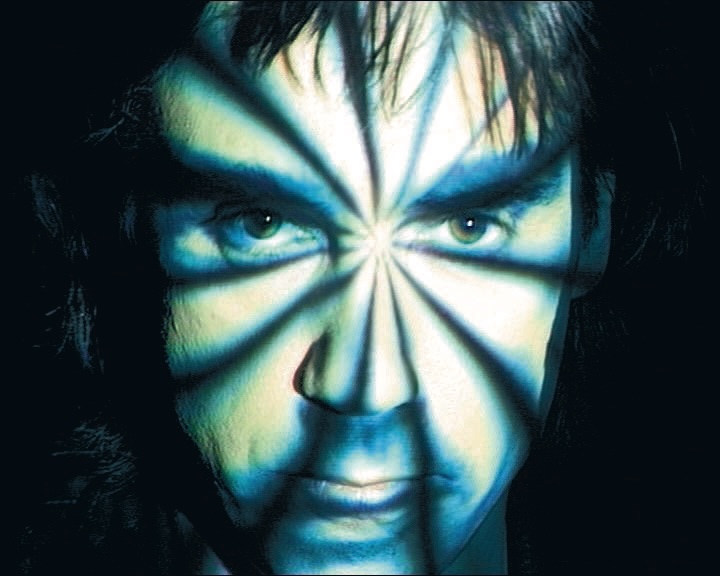
The first, and most innovative was a tiny miniature camera mounted on the side of Jean Michel’s glasses. This sent highly effective images back to the main vision mixer. In fact, it is so light that Jean Michel apparently keeps forgetting to take it off when off stage. Jarre enthused, “This is my most sophisticated piece of technology. They look like regular specs except that the outer rim has a reflective cover.”
He later joked, “They are excellent for keeping an eye on the crew behind me.”
Jean Michel emphasised his movements whilst the camera was in use, staring direct at the keys one moment, glancing round behind him the next. The second was the so-called JarreCam, a camera on top of one of his synths that could turn a full 360-degree circle. By using a remote-control positioned at the video mixer, the camera could be turned and tilted, following Jean Michel around or focusing on one the musicians.
There was also a standard video camera, manually operated, in front of the stage that concentrated on Jean Michel but was also used to great effect during Revolutions when it panned the entire audience, focusing on the more exuberant people !
As the tour goes on into the Autumn, the team will be experimenting with new techniques such as transmitting live video over the Internet and will explore other interactive possibilities. For example, fans may be able to send in their own images to be played during the concert.
05/Interview
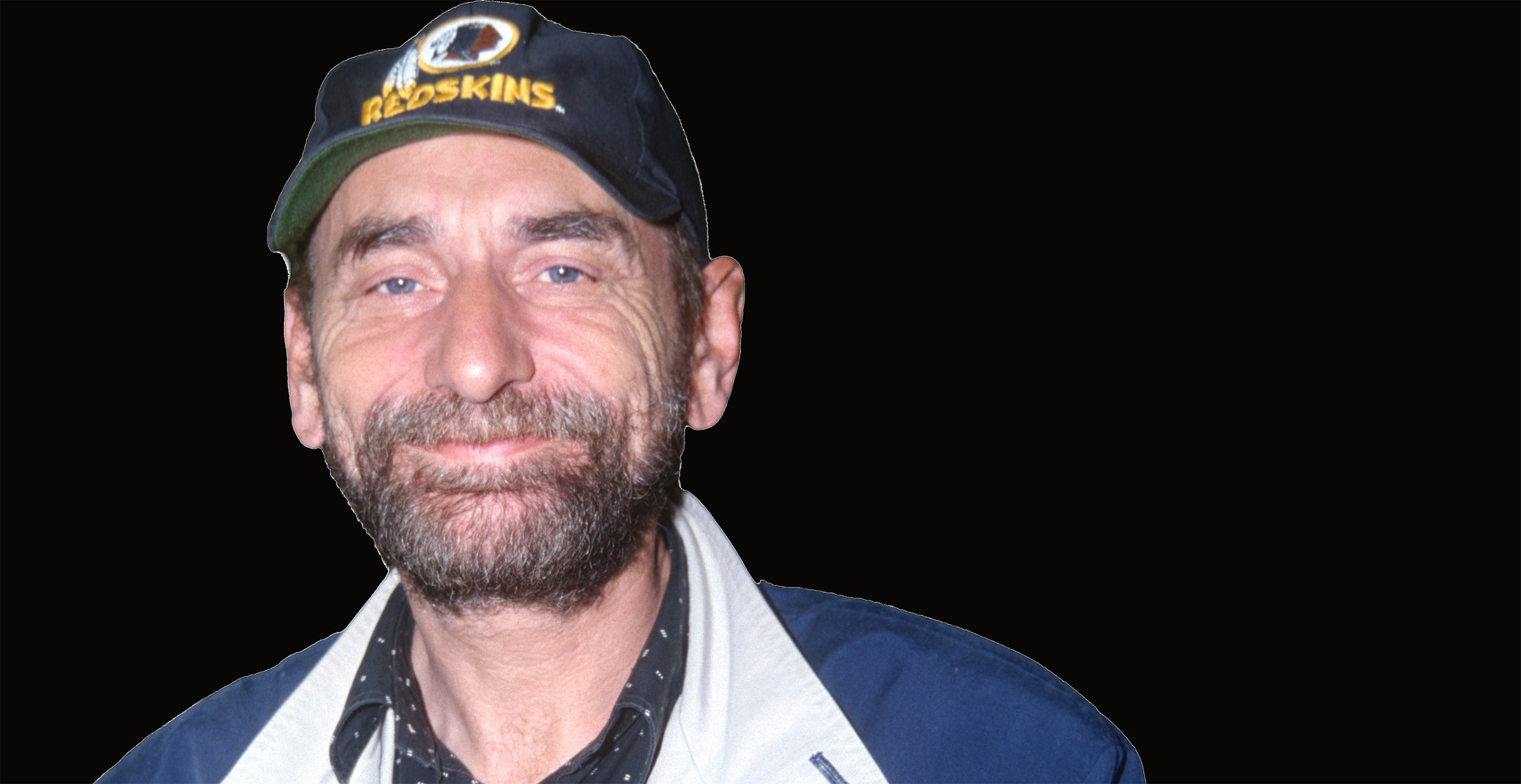
Jessie Deep
Video DJ
Self-confessed technology freak, we tracked down the man behind X<>Pose
During the Oxygene tour shows, Jean Michel Jarre explained that ‘some guys backstage are playing video live like we are playing the keyboards on stage’. So that’s where I headed to find them ....
One of the technical highlights of the show was the premiere of the X<>Pose MIDI-controlled imaging system. If you were at one of shows, you could not fail to be impressed by the marvellous effects that were created during Oxygene 10 and Oxygene 11 on the three screens above the stage.
Using basic images and video, effects were being applied in real-time with the music, bringing the audience even further into the show. Tunnel effects, fade aways, colour blends, crystalizes, you name it, they had them.
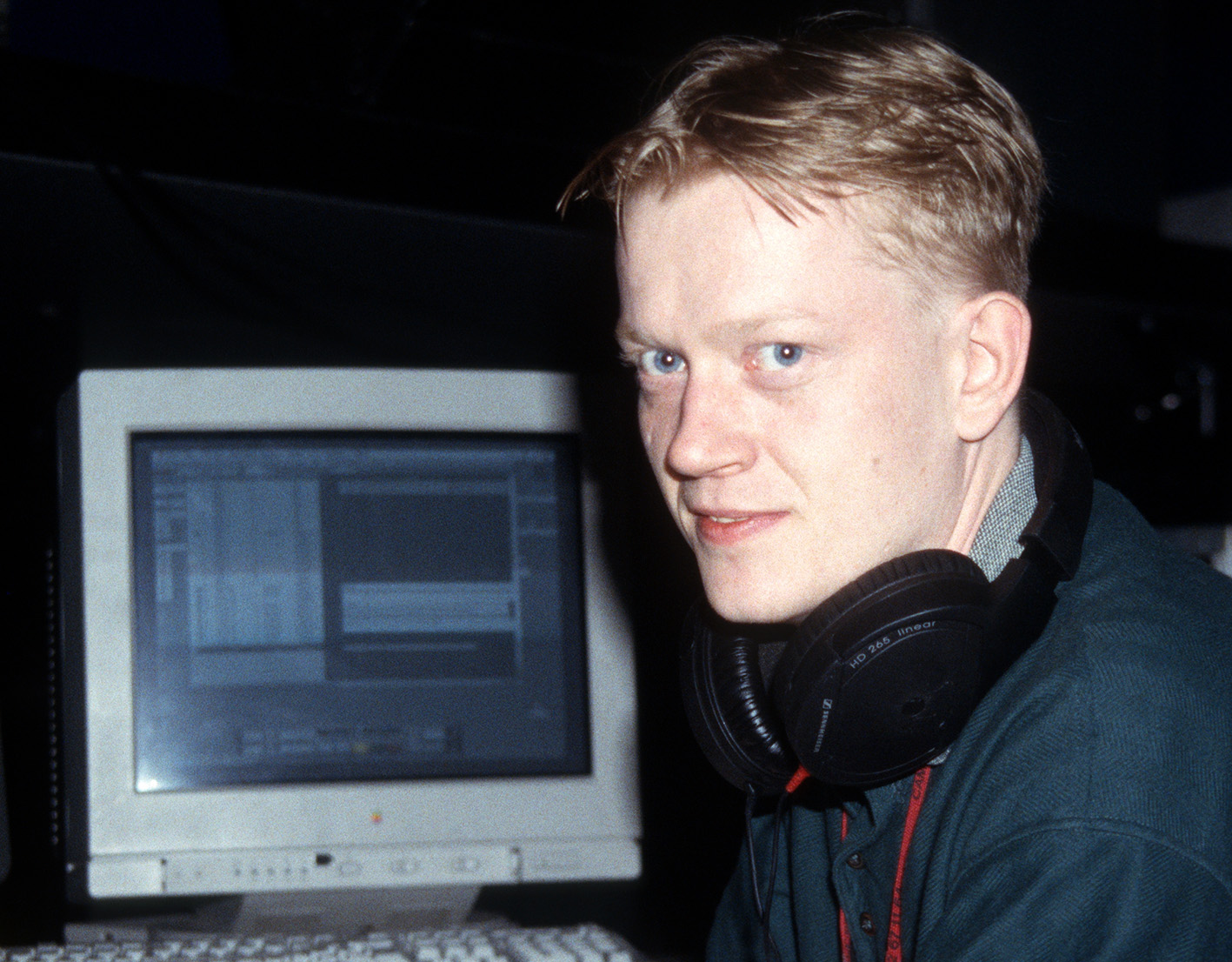
Belgian Jessie Deep was the man behind these wonderful images and works for the company that produced X<>Pose, Arkaos. We met up with him backstage during the soundcheck for the Manchester concert where he was preparing for the night’s show but he was happy to spend some time demoing the X<>Pose setup and how he gets images into the system.
His setup included a MIDI keyboard, two Macintosh computers, one running CuBase and one running X<>Pose, as well as one of Sony’s new Digicams.
X<>Pose is based around a MIDI-keyboard interface and for each note on the keyboard, it is possible to assign an image as well as an effect. So for example, one note would have the image of Jean Michel Jarre’s face with an associated effect of embossing the image. Jessie held some of the effects for the show under bizarre names like Turbulenz, Wooferbump, Skull Freak and Alpha Funk!
Jessie had a complete ‘palette’ of effects that he could apply to each note by simply dragging them from the palette onto the selected note. He then had a preview monitor where he could see the final effects. It was a very impressive display.
All of the images were held digitally and so it was possible to include new effects into the show very quickly. Both Jessie and Jean Michel Jarre carried one of the new Sony Digicams with them throughout the tour. They were able to take digital ‘photographs’ of things they thought would be interesting to include in the show the same night and Jessie was able to download the image into X<>Pose and use it.
So, for example, during the Glasgow show, Jean Michel Jarre took a picture of the iron gates outside Glasgow station and that was incorporated into the evening’s show (five giant silver rivets).
One of the difficulties that Jessie faced was the fact that he was positioned behind the stage and could only watch what was going on through a video monitor he had behind his keyboard (you may have spotted the camera at the back of each venue). He hoped that for later shows he would be able to work in front of the stage in the lighting area and so be more involved with the show.
As well as Jessie, there were also video technicians whose job it was to produce the real-time video mix during the show. As well as the output from X<>Pose, they had images coming in from various cameras positioned around the stage (see opposite) and mixed these live onto the giant screens above the stage.
When we left Jessie to prepare, he dashed round to the front of stage to get some shots of the entire stage, either to use later or send to the Jarre web site. This was Jessie’s other role during the tour; Tour Reporter for the official Jean Michel Jarre web site. After each concert, he would send back a selection of images to be included on the web site. He ‘grabbed’ the images by hitting a particular note on the keyboard when he saw a particular shot that he liked.
He hit a problem in Eastern Europe - he couldn’t connect his lap-top to the phone system so the images were delayed until he returned to ‘civilisation’!
By the end of the first leg of the tour, Jessie will have accumulated almost 3 Gig of images (almost five CD-ROM’s worth). A single CD-ROM with some of the best images from the show may be released as a souvenir of the tour.
The future looks bright for Jessie. After the end of the tour, he spent two intense days with Jean Michel Jarre, discussing future collaborations for X<>Pose. He will ‘perform’ in Moscow, with the X<>Pose images on screens on the stage and will be seen most effectively via the proposed live TV broadcast. He is now working on a new setup for the rest of the tour.
ON HIS INTRODUCTION TO JEAN MICHEL JARRE
I remember, I was about 12 years old when Oxygene came out. I was totally fascinated by the album at that time, but I lost contact with his music after Equinoxe or so.
On the X<>POSE system
Actually, we have been working on this technology since 1992. The software was written by Marco Hinic and we decided to set up the company in February 96 and closed a worldwide distribution contract with the famous German music software company, Steinberg.
Originally, Arkaos was a small team of four complementary guys coming from different parts of the music industry. The basic idea of X<>Pose is to use the MIDI standard to trigger images and/or apply real-time effects to them. We all come from the music world, so we wanted to create a really intuitive image tool for musicians. That is still our main challenge. Everything you hear, you can see. And the other way around!
So, X<>Pose allows you to play with images like you would do with a piano, trying to give a musicality to the images. Everything is 'real-time'; you can't imagine playing a piano chorus and waiting fifteen seconds before you hear the sound....
The originality of X<>Pose is that you are using your MIDI sequencer, like the famous Cubase VST, as a video time-line. You are now able to create your video clip in the same time as you can create music. Without quitting your musical environment!
ON WORKING ON THE OXYGENE TOUR
Jean Michel Jarre called us ten days before the start of the tour. He read the review of X<>Pose in Future Music Magazine. The article began with something like ‘Jean Michel Jarre without projections is like a pizza without cheese.’ The editor even ended the article with ‘So, Jean Michel Jarre, are you ready for the big shot?’
We went to Paris and gave him a demo of the software, and I was immediately engaged for the big journey. I think he loves it because it is something totally new and flexible. Jean Michel is also giving some input from his new Sony digital camera. He can give me some great snapshots of the day, and I directly integrate them into the show. The idea of having something totally different on the screens every show seems to fit very well into the tour philosophy.
On his set-up for the tour
During the show, I sit backstage with my keyboard and play the images 'live' that I have prepared during the day. I use one computer for the Cubase VST (sometimes synchronised with the general SMPTE code network) and the other computer is dedicated to X<>Pose.
Every concert is completely different to the former one as I am updating my patches with new images and new plug-in effects. Marco always keeps me updated with new plug-in effects and enhancements via electronic mail. It is a continual ‘work in progress’. That's an exciting part of the job.
On the the most impressive technology on the tour
I am really impressed by the ICON lightning system. In every moving light there is a 68k processor mastered by a very impressive console (like a Supersupersuper Nintendo!). It's really interesting.
On his work on the JMJ web site
I proposed the idea to Jean Michel Jarre. I wanted to choose the best snapshots I took during the concert and send them the same night to the Sony site. The very talented web master at Sony updates the Jarre site the morning after. I take an average of 100-150 photos every night and it is sometimes difficult to choose which to use.
On whether the inspiration for the camera glasses on stage came from Mission Impossible
It was another great idea from Jean Michel Jarre. I don't know if he was inspired by Mission Impossible. It gives quite good results except in some venues, the HF reception can be bad. I think we are going to go further in that way; the audience will be able to follow the incredible performance of Jean Michel Jarre on stage. I think it is really worth the look!
On the reaction to Arkaos from the audience
I think Arkaos is part of the whole effect. The overall impression from the audience is simply magic. And I have the impression the crescendo is getting greater with every show.
On the best souvenir from the tour
So many. In Budapest, myself and Serge, another member of Arkaos, talked with Jean Michel until 8am in his hotel suite. We brainstormed until the early morning, with the sun rising outside, a marvellous experience, a wonderful souvenir.
06/Interview
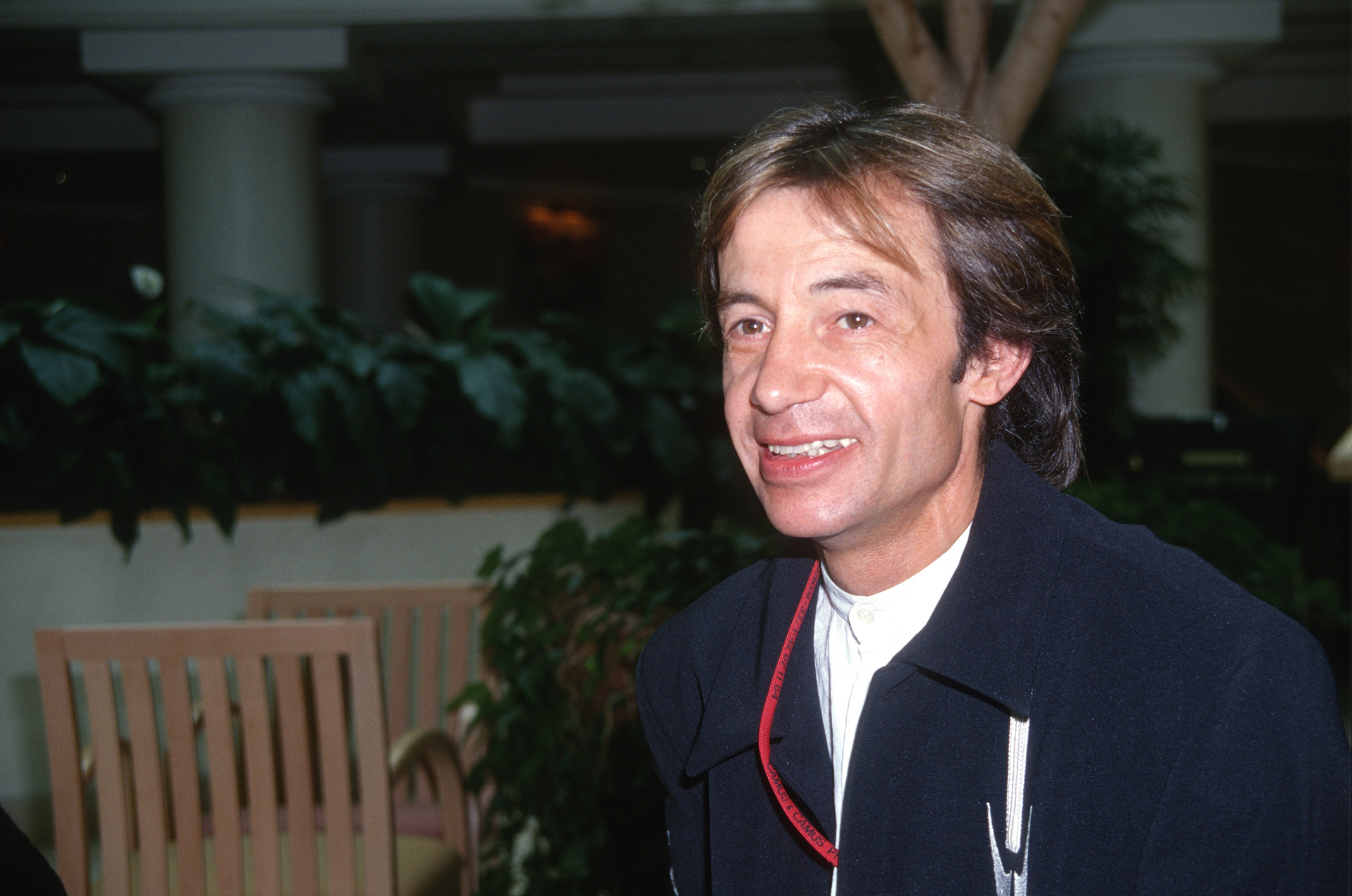
Dominique Perrier
Keyboards
ON HOW JEAN MICHEL JARRE's MUSIC hAS EVOLVED
There is far more live now. It is more interesting. It is not anything new for some people, such as Laurent on the drums, but for the keyboard players it is a major evolution.
ON HUGE SHOWS OR INTIMATE TOURS?
I prefer to tour, because you get the chance to refine the concert every night that you play. When you do a single concert, you only get one chance.
ON CHANGING THINGS DURING THE TOUR
It changes by itself. Our challenge is to take what is happening and turn it into an enjoyable experience for the public. Every audience, every stage, every atmosphere is different. I like to see the public and I like it when they are enjoying themselves. What I don't like is people having to sit down in concert halls. It kills the atmosphere.
ON WHETHER HE FEELS HE HAS NOW COME FULL CIRCLE GIVEN HIS FIRST EXPERIENCE ON THE HISTORIC AND GROUND-BREAKING CHINA TOUR IN 1981
Not only have we come back to my first experience with Jean Michel, but we are pretty much using the same synthesisers as we were then.
I am from the same generation as Jean Michel and we are both more comfortable and used to dealing with analogue instruments than with digital ones. To be honest, I didn't really like the years that we spent with digital equipment. On stage, I have an Eminent which is rather temperamental. Sometimes, it makes sounds all on its own. You have to treat these old instruments like old cars.
The Eminents belong to Jean Michel, as far as I know. Otherwise, I think that they have been bought or rented especially. If they break down, we have Patrick [Pelamourgues]!
ON HOW THINGS HAVE GONE ON THE OXYGENE TOUR, 20 CONCERTS IN
It is going fine. It is hard work, but we are getting a few free days next week and I'm looking forward to getting back to France.
ON FUNNY EVENTS DURING THE TOUR
Well, you know how it is. You have to have a laugh, when you are stuck together for such a long time, away from your family. We have some crazy times.
ON HIS EXPERIENCES OF DIFFERENT VENUES DURING THE TOUR
What changes the most is the sound quality. I remember Geneva when we just couldn't get it to sound right. There were resonances everywhere and echo.
ON HOW JEAN MICHEL JARRE's MUSIC HAS EVOLVED OVER TIME
I have now realised that Jean Michel has returned to his roots. For a few years, he moved towards techno, but he has realised that his original style wasn't bad either. Over time, you realise where your strongest areas are.
ON MEETING JEAN MICHEL JARRE FOR THE FIRST TIME
I studied music, from five to fifteen at the “Conservatoire” for the theory and then during the rest of my life for the practical! I met Jean Michel Jarre during the recording of “Paradis Perdus” by Christophe. My first involvement with him directly was on the album “les mots bleus” where I wrote the music and Jean Michel wrote the lyrics.
Before meeting Jean Michel, I had written many arrangements, such as “ASTURIAS”, played by Laurent Perrier, my brother, and several albums for the group “Il etait une fois” and I was also a producer for EMI in particular. Next, I worked for a number of other artists including the Gypsy Kings, for whom I wrote the music for Bamboleo.
ON WORKING WITH JEAN MICHEL JARRE FOR PAST FIFTEEN YEARS
Jean Michel Jarre is a supreme hard worker. Having locked himself in his studio for the last twenty years, his visionary ideas have pushed back technical boundaries. He has managed to overcome so many problems, to convince the best technicians to build him incredible prototype instruments, unheard of at the time, but which are seen as indispensable now.
He calls himself a “modern organ-grinder” (I would have said organ-grinder of the future). At the time when the sequencer and the sampler did not exist, he invented them by carefully measuring off lengths of magnetic tape and sticking the parts back together again. Today this would just be a mouse-click away...
As regards his musical development, this was always the result of his openness to other styles. Marcus Miller for Zoolook, Hank Marvin for Revolutions and others such as Laurie Anderson, the steel drums on Calypso and so on. Always seeking originality, he has travelled the world for ideas.
ON HIS MEMORIES FROM THE CHINA TOUR IN 1981
The team was small, but extremely competent, particularly as regards the technical requirements. The key people were inventive and extremely practical - capable of repairing a computer or a laser on site.
The feeling of being new in the team never lasted very long with Jean Michel, as his kindness and patience meant that even the timidest new member felt immediately at home. The Concerts in China were a good illustration of this.
The problems in Peking came from every angle, but the key ones were related to communication. For example, I ended up in a different hotel to my wife who had a tourist visa while mine was a worker’s one! I have to add that in Peking, the workers were far better housed than the tourists.
ON THE CHINESE PUBLIC REACTION TO THE CHINA TOUR
The public looked like they thought that a flying saucer had landed. After the first show, it was pandemonium. Everyone was clamouring for a signature on the end of their ticket. It must have been like the first rock concerts in Europe.
The concert halls were packed, except for the concert in Peking where the room became half empty just before the last track. It was time for the last bus to leave for the soldiers which filled half of the seats.
ON THE LIVE MUSIC DURING THE CHINA TOUR
The music was TOTALLY LIVE, no backing tapes. Of the six concerts (China, Houston, Lyon, Docklands, La Defence, Eiffel Tower), China was the only time that we held an indoor event. In fact, there were really four Concerts in China, two in Peking and two in Shanghai, if I remember rightly.
The sound system was entirely flown out from France, as was the rest of the equipment, instruments, lasers etc. Our Boeing 747 was full to the brim. There were no fireworks, but the lighting and laser effects were superb. To this day, I have not seen such good lighting. Journalists still talk about it, fifteen years later.
ON THE CHINA TOUR VIDEO
To me, the video is a souvenir of a great event, because it shows the Chinese how we knew them and learned to like them. Of all of the Concerts in China, the first concert in Shanghai was my favourite.
ON HIS ROLE DURING THE OXYGENE TOUR
I now have fewer and fewer technical responsibilities on stage with Jean Michel, but am more involved in the artistic side of the choruses and transitions. It is good that I enjoy improvisation! My responsibilities also include rehearsals with Jean Michel to define his parts and to work with him on the more difficult parts.
ON PROBLEMS DURING THE BIG SHOWS
I have not had any unpleasant experiences during any of the concerts, except perhaps a serious attack of the nerves at La Defence. No doubt I was afraid of playing in front of the Arc de Triomphe. Luckily, the Eiffel Tower and the previous tour have completely cured me of this. I felt totally at home at the Eiffel Tower, particularly when Jean Michel kicked off on the accordion - I love that sound and feel good with it. Mind you, I also adore a street organ under a waterfall of gold...
ON HIS FAVOURITE JMJ SHOW
The concert at the Eiffel Tower was the greatest. If there were any problems, I wasn’t aware of them. Everything went well, magic!
ON JMJ's ATTENTION TO DETAIL
All of Jean Michel’s concerts are conceived by him, prepared by him for months beforehand, day and night. He never gets tired. His greatest pleasure is the “final straight” where he checks every tiny detail one after the other, like checking each rivet on a ship that is about to be launched.
Having said that, at the Docklands concert, that comparison nearly became reality, as the floating stage became detached from the rest of England during the concert. Added to that, we had been strongly advised not to be on that point of the Thames at that time of year.
ON HIS FAVOURITE JMJ TRACKS and OTHER ARTISTS
My favourite album is the Concerts in China, and my favourite track is Souvenir of China, of course. However, I sincerely think that Zoolook is the most ground-breaking work.
My favourite musicians are Count Basie, and Quincy Jones and Gainsbourg for music and lyrics respectively.
ON YOUR PERSONAL CAREER
I started a group called Space Art, we have had three albums with the drummer Roger Rizzitelli whom I also met during the recording of Christophe’s Paradis Perdus. I enjoy playing in a group.
The synthesiser is a fabulous instrument, the instrument of the 20th century. I am delighted to see Jean Michel turn back towards analogue instruments as they are my background. We are the same age - despite appearances, I am not his father! Mind you, I could (almost) be Patrick Rondat’s. I admire him greatly and am glad that he joined us. He brings with him a more personal feel to the music, the “real time” element. He plays at a speed we could not match, it is very stimulating!
ON PLANS FOR THE FUTURE
I have a great number of projects, several are alongside Jean Michel. Of course, I love Jean Michel’s current work, but each time, it is through the fact that he is so obstinate that I get involved in his projects. Each time, he talks through his ideas with me, from my initial “do you think so”, “but there is a risk that”, “it will be difficult to” and “what for” to “yes, I guess so, OK, if you look at it like that !”
07/Interview
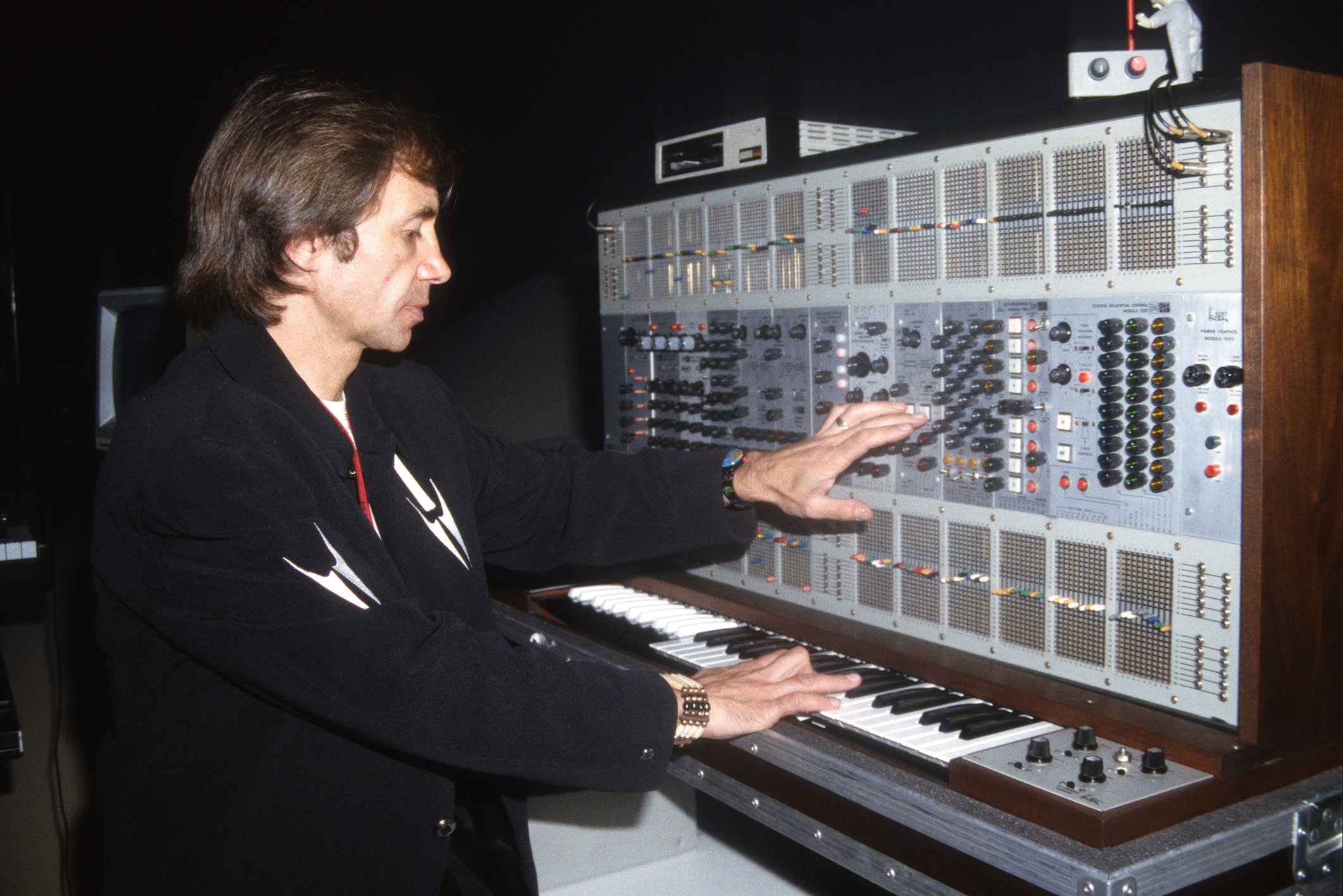
Francis Rimbert
Keyboards
ON special memories from the tour SO FAR
Ah, memories I can share with you here in public? Maybe not. No, well, Berlin was an especially magic concert. The thing is that we are still too much involved in the whole experience to be able to pull special memories from the tour. There was Jean Michel's coat which kept on playing the laser harp on its own every time there was an air current.
My worst problem is people who think that it's clever to bring laser pointers to concerts. I don't mind lighters, but if people find it fun to point these laser pens in Jean Michel's eyes it can be a real pain. One evening, there were loads of them in the audience.
ON THE REHEARSALS
Well, the first show was an extended rehearsal, but in fact we started preparing for this tour during the recording of the album.
Genuine rehearsals started two months before the tour. They took place in two different rehearsal studios in Paris. It is the first time that we have carried out our rehearsals in specially chosen rehearsal studios.
ON REHEARSING OUTSIDE A STUDIO
The main thing is that because they are specially designed for the purpose, everything is ready. They are set up to give us the maximum playing time and the minimum amount of hassle. Everything goes a lot quicker.
ON PREPARING FOR THE TOUR DURING THE OXYGENE 7-13 CREATION
Every time Jean Michel was working on a track for the album, he was wondering how he was going to play it on stage. Don't misunderstand me; he did not record the tracks just to play them live, as it was in the case for Revolutions or Calypso for example. Oxygene 7-13 was always designed as an album in its own right, but we were all aware that the Oxygene tour was coming, so we frequently thought about how to best interpret it on stage. He knew that we were going to be playing analogue synthesisers, and that was where the nightmare began!
ON CHALLENGES DURING THE TOUR
All we ever have is problems, which is what makes life interesting. What is so good is that we are dealing with machines which are not perfect. With computers, (and maybe if I repeat myself enough, someone someday will understand that I don't like computers) the situation is crazy. Digital equipment is never perfect, so each time, some boffin comes up with a gadget that will overcome that problem but will introduce a new one. You never get to the end of it. In the analogue world, you learn to understand your instrument, and you come to appreciate it and use it in a creative way to overcome any perceived weaknesses. On tour, that's what makes it so fascinating. Every concert is different; you have to use the analogue instruments to their full potential. By analogue instruments, I am talking about the ARPs and about Jean Michel's Moog which can be a bit difficult to keep tuned when being played.
Despite what you would think, the equipment is quite reliable. You need to make sure that they are properly warmed up beforehand, but otherwise, we haven't had any enormous problems. Well, not yet.
ON THE IDEA FOR THE TOUR
Jean Michel wanted to play indoors. That was his key aim, which was pretty new for him. Then there was Barry Marshall who took control of things, and it has become the tour it now is. I have to say that right now, it's getting a bit much for us all. It just keeps growing!
ON THE MUSIC SELECTION
It was always planned as the Oxygene tour. Jean Michel decides himself which tracks we are going to play. Then we have a first rehearsal and we sometimes realise that certain tracks just don't fit together for whatever reason and he has a re-think. What is played is very much his choice, but of course, we do discuss it as a team. As there isn't a track by Jean Michel which I don't like, I'm always happy!
ON HOW Jean Michel JARRE's music has evolved over the past 20 years
A lot of people say that he has closed a loop by coming back to Oxygene, but I don't agree. I think that he set off in a certain direction with the original album and that he is still pushing back the boundaries today. Of course, on stage we still play some of the old tracks. Jean Michel is a star, and he has his fans who expect certain things. If we are still touring in 10 years, we'll probably still play Oxygene 4, which does not mean that he has not progressed. I do, however, think that Jean Michel has returned to his roots. It is difficult to talk about the career of someone as great as Jean Michel. He has experimented with a lot of things during his career so far. When you see what he is doing with the Theremin today, it's fantastic. I think that he's going to use the next few years to get back in touch with his musical roots and perhaps distance himself from the trap that a lot of musicians have fallen into which was to put too much importance on technology. I feel that he is currently reaching new heights of excellence.
ON THE EVOLUTION OF PLAYING ON STAGE FOR JEAN MICHEL JARRE OVER THE YEARS
It is totally different. It has nothing in common with what we did together before. First of all, we are indoors and we can see the audience which is great. The second thing is that there is a real feeling of team spirit on stage between Jean Michel, Laurent, myself, well, all of us. In the past, everything was so much on a larger scale that we were lost to each other on stage. Here we are free to work together and express ourselves live on stage.
ON SCOPE FOR IMPROVISATION
Loads! A lot of it is in reaction to unexpected things which occur during a live set, but right from the start we have been given the freedom to express ourselves, and we're not shy! Even Jean Michel is the same. When you listen to his introductions, for example, they are never played the same way twice. What often happens is that when we get together after a concert, Jean Michel, who has an incredible ear for these things, will come over and say "what was that you played?". And then if it was good, we may do it again; if not, we'll try something else next time.
ON WHETHER THE MUSICIANS ON STAGE CAN COMMUNICATE WITH EACH OTHER DURING A SHOW
No. We had thought of using a headphone system, but we have played together so much that we know exactly what is needed without speaking.
Laurent and myself just have to make a couple of signs to each other, and we know exactly what we mean. One thing that you will notice from this show, which is very new, is that Jean Michel turns towards us a lot. In the past, it was always Jean Michel in front of the audience, and we were somewhat in the background. Now, he spends a lot of time communicating with us during the concert.
ON WHAT HAPPENED IF A MUSICIAN WAS ILL FOR A SHOW
There would be no show. It would be a catastrophe. Each musician has a role and without that person, we could not go ahead. There is no way around that.
ON the biggest difference between one concert and the next for you
Firstly, there is the audience. For example, a Swedish audience reacts in a completely different way to an English one. Secondly, there is the hall which you are playing in. What I dislike most is halls where everyone is sitting, right up to the stage. It greatly damages the atmosphere, and we have had much easier concerts when there has been standing room at the front.
One thing which I love to see is the progression which the audience goes through during the concert. At first, when Jean Michel appears, it is all excitement and adrenaline. Then, a certain magic comes over the public and bit by bit they get drawn into the event. You can see it in their eyes, it's amazing.
ON WHETHER THE TRACKS ARE chosen in a certain order to take the audience on this ride
Yes, completely, but sometimes we get it wrong. We got it a bit wrong at the beginning of the tour, so Jean Michel re-worked the track list to get to the one we are working from today.
ON THE DIFFICULTIES OF PLAYING INDOORS
There are two major problems - the first is making yourself heard properly to the audience and the second is hearing yourself properly. We are lucky enough to have Renaud Letang as a sound engineer, as he is probably the best sound engineer in France today. Being able to balance the sounds in not enough with Jean Michel. The sound engineer has to be able to understand what we are doing on stage and then react extremely quickly to what is going on. That is not easy with someone who's as much as a perfectionist as Jean Michel.
The second thing is to be able to hear what we are playing ourselves. We have some ear monitors, and a different team of sound engineers is responsible for giving us each our own individual sound balance so that we can hear enough of what each of the others is playing to be able to perform. The problem with the traditional wedge monitors in the stage is that you can’t hear yourself properly, so you play louder just for yourself. You can't do that with ear monitors, or you would kill your own hearing!
ON BEING AWAY FROM HIS FAMILY FOR SO LONG
I do find it quite difficult. We are away from our families for long periods of time and we have to get on as a team for the same period. Luckily, we get along fantastically, and I don't say that lightly. We are very lucky to have Jean Michel who is a "good guy" which helps a lot.
08/Interview
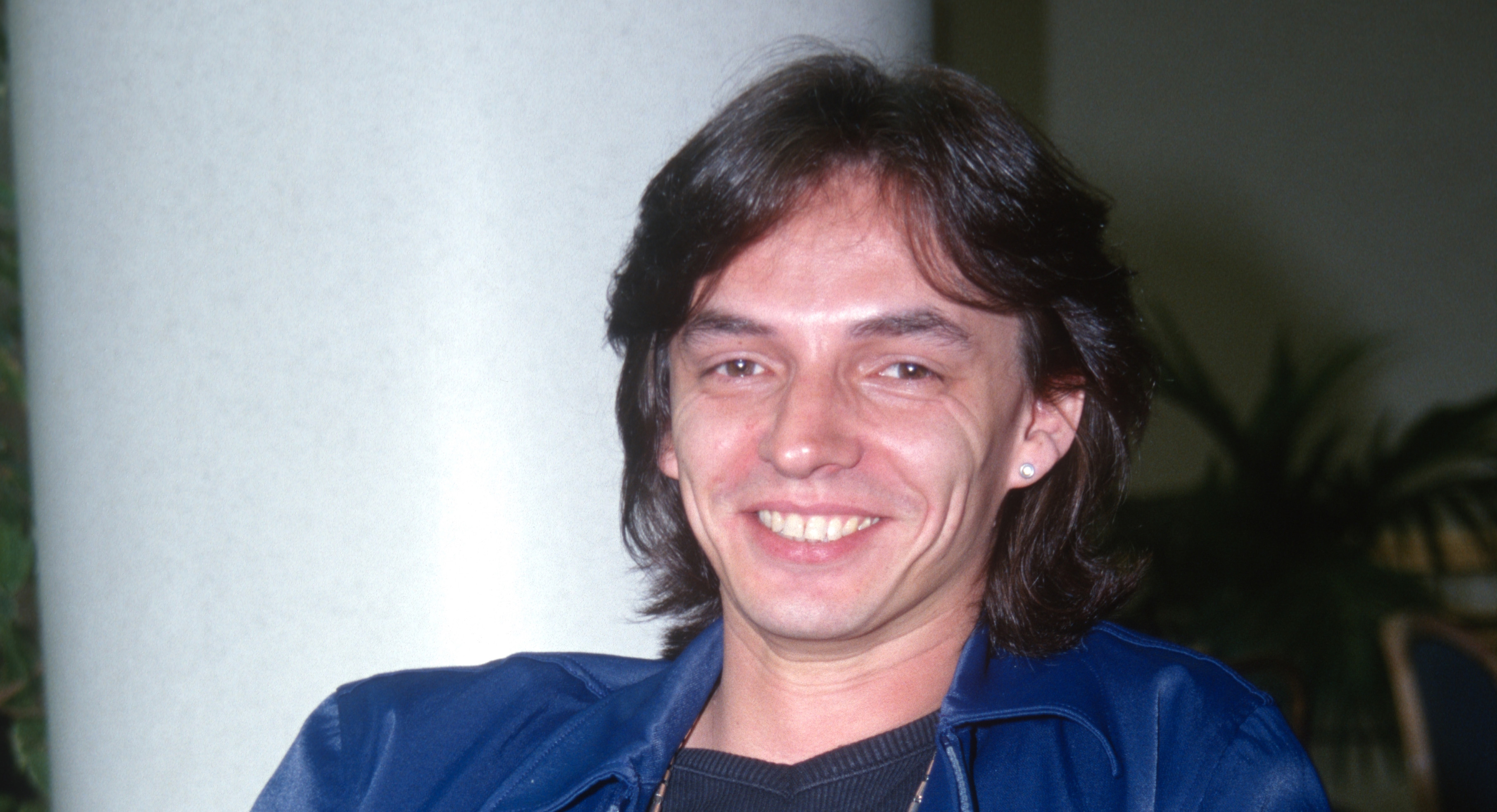
Christophe Papendieck
Bassist
A new style of show and a new face in the team.
When we first enquired as to the line-up of musicians for the tour, a couple of months before it was due to start, we found it difficult to believe the entry under bass player. It said, ‘To be confirmed’. Surely the choice could not be left this late?
After speaking with the eventual choice, Hamburg-based Christophe Papendieck, it turned out to be true. We met up with him in Birmingham and quizzed him about his work prior to the Oxygene tour.
ON How YOU GOT to work on the Oxygene tour
Well, that came very suddenly. I was working with a friend of mine in Germany, as a keyboard player and also starting to work as a composer/producer. I was working with Pascal Theos, one part of Resistance D, who made remixes for Oxygene 10 and 7. So they met Jean Michel in Milan and Pascal said, ‘I’m looking urgently for a bass player and I’ve already called several agencies all over Europe, maybe you know of somebody in Germany?’ and he said, ‘Well maybe I know of the one you are looking for.’ Jean Michel called me and said, ‘We have a TV special in Vienna and maybe you’d like to come and meet and then we talked in Vienna, I played the TV show, and everything was quite a harmonic understanding. He said that I should come to Paris next week, which was two days later! So, I flew back to Hamburg, packed my stuff into my car and drove to Paris the next day.
That was how the whole thing started and we did a couple of days rehearsals and right after the first day Jean Michel said that it worked fine, ‘Let’s continue.’
ON AwareNESS of Jean Michel Jarre’s new Oxygene project and tour before he called you
Oh sure, everybody is. Sony Music did a very good promotion for the new album and tour so I was aware of the whole new Oxygene development in Germany. I thought it was very interesting and thought I’d like to meet this guy. A week later he called me!
ON What you HAVE been working on for the past few years
Until 1995 I was part of a band project called The Land and we recorded in Bath in Peter Gabriel’s studio. That was the longest time I have spent in England, about two months. We did three records and toured around, this took around 4-5 years. I’ve also accompanied a number of singers in Germany and touring around, some studio work but I play live mainly.
ON WHETHER IT WAS difficult to drop everything to join the tour
It was a little bit difficult because I’ve just started a project with two singers and Pascal, and I was producing with them. We love this project very much and we were putting all our free time into it and trying to let it develop. So, I’ve had to stop all this for 2-3 months and hopefully when I get back in the Summer, I will continue the work.
ON apprehensions about joining a tour where all the other musicians knew the music so well
Sure, I was nervous. When I drove to Paris I had the tape in my car and I was listening to Oxygene parts 1-13 for nine hours. We started to rehearse and it was a developing process, but we changed a couple of songs, so it was not clear which parts I’d play. We developed different drum parts, different bass parts, different arrangements and for the first few days I was really excited. After that I became more relaxed and concentrated more.
ON WHETHER you find the French language a problem
I have just started to learn a little bit. Earlier this morning I took my French lessons in my room! I’m understanding more!
ON IMPROVISATION DURING THE SHOW
There isn’t so much space to improvise. There are little breaks after sixteen bars, like all drummers do their own personal fill and as a bass player, you can do some fills but there are not that many parts. Except a little bit in Souvenir of China, you can play around a bit because there is more space.
On THE CLOSE PROXIMITY PERFORMANCE During Oxygene 6
It is great, it’s fun. We developed it in a rehearsal session. We didn’t know what to do with the song and suddenly we were standing close to Jean Michel and everybody was discussing. Jean Michel said, ‘I like this atmosphere, having everybody around, we should keep this on stage.’
ON nervEs before each show
Not as much as I expected, especially for the first concert in Toulon. Usually, I’m very nervous before a show but in this case, everything was so well arranged and prepared, we have had very serious, concentrated rehearsal sessions for three weeks. During the rehearsal sessions in the hall in Toulon, I was really relaxed. For my side, I felt nothing could go wrong. You are always a little nervous, but I thought I’d be a lot more than I was.
ON WHETHER you enjoy the performance
Oh, absolutely ! We had two very nice shows in Rotterdam and Brussels, fantastic audiences with a lot of enthusiasm. Stockholm and Oslo, where we met, were also great. The Globe in Stockholm was fantastic. Frankfurt was fun. There was not one bad show but there were highlights.
I hear the English audiences are a little different, so we’ll watch out! You can see a big difference between Scandanavia, Germany, Switzerland, Austria. I hope England will be as good as Rotterdam because that was really good.
I appreciate audiences much more when they stand. In some cities it is not allowed, such as in Vienna for example. I think that for the public, it is quite nice to just watch the show being seated because you should have the choice if you don’t want to dance.
In Rotterdam they were standing really close to the stage and that makes a difference. You get into the whole thing, they move and they can react differently, they get more excited.
ON PLAYING SO CLOSE TO THE AUDIENCE
Not difficult, but the challenge is performing in a smaller hall when you can see the people. You can watch the eyes!
ON PERFORMING THE NEW HIGH TEMPO VERSION OF Magnetic Fields 2
It hasn’t been a problem, but we couldn’t find the right arrangement for the first show. We needed a few more soundchecks to get into it and to play around with it. Now I think it is fine.
ON WHETHER you toured before
Oh sure. It is great, it always depends on the bunch of people you are with. Most of the time I’ve been really lucky because I’ve had either close friends or very nice people. These guys are very nice! That is the most important thing so I’ve been very lucky.
ON WHETHER YOU ARE exhausted yet
No, but I’m always wondering when the point will come. You fall into a lag when the tour stops because you are on the road three months. When you get home, for the first 2-3 days, you cannot settle down. You cannot arrange things. It really takes a week to come down again; it is very strange. I don’t know why because you should be comfortable at home, but you miss the guys, you miss the travelling.
ON HOW YOU unwind after each show
I’m still pretty excited after the show, perhaps more so than before the show. So many things you have to talk about. We sit in our dressing room talking very loudly and confusing everybody. Jean Michel comes and asks how we found it. He talks with everybody about what happened on stage.
ON WHETHER you get the chance to influence anything in the LATER shows
Either we feel there is something that can be changed or usually Jean Michel or someone close to us does. We note, for example, this break was very long, maybe we find a little interlude, something different for this and that, so we discuss that. We may want to change some sounds.
ON YOUR favourite tracks in the show
Souvenir of China is a big track for me because I have my solo. Revolutions is real fun to play and it is really grooving; we are all having fun together.
09/Interview
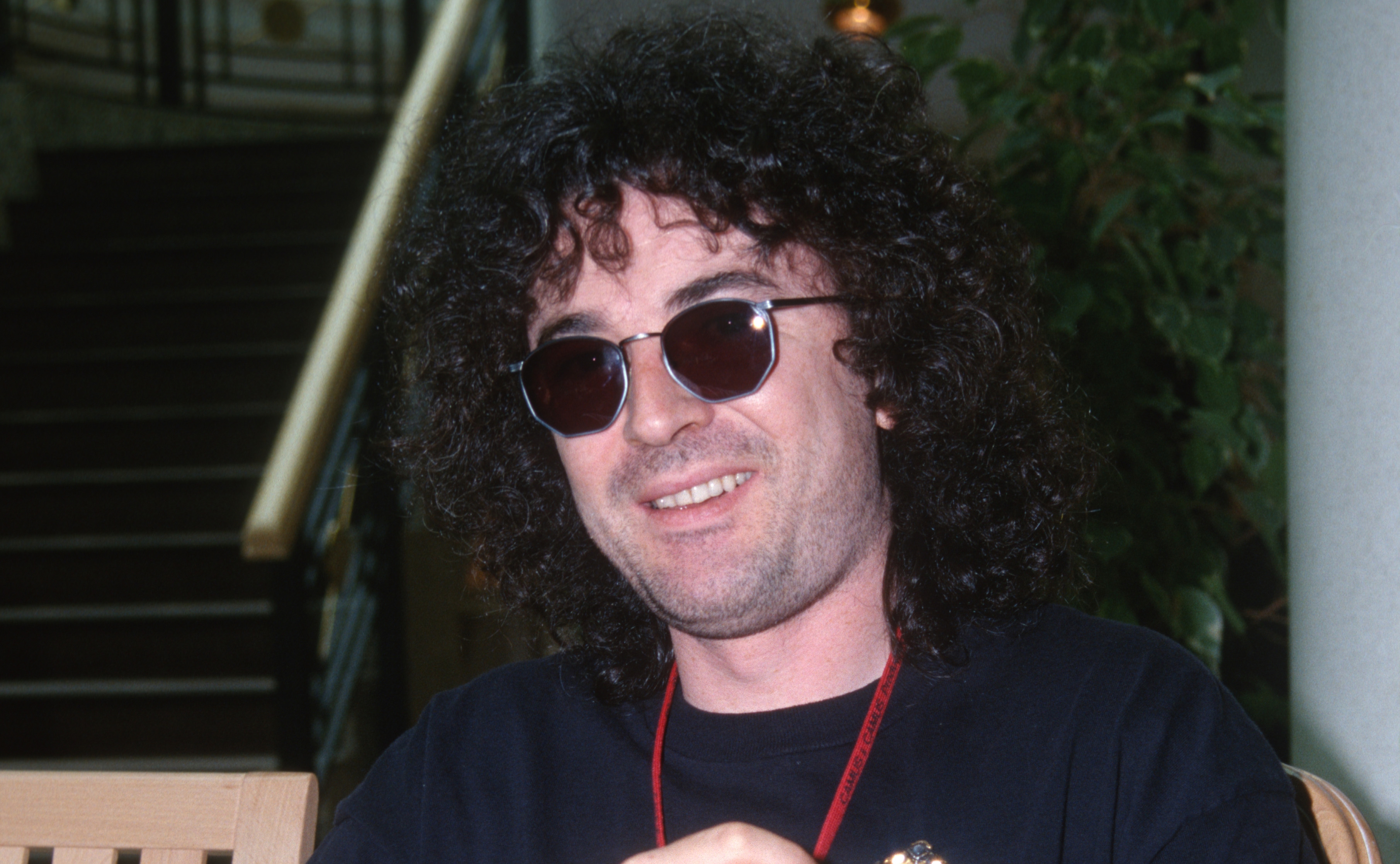
Laurent Faucheux
Drums
ON HOW you gOt involved with Jean Michel JARRE
I am principally an acoustic drummer, but I have been interested in electronic music and digital techniques for many years, long before I got involved with Jean Michel. I already had quite a lot of electronic equipment and had therefore gained a great deal of experience with it. I don’t know if my being chosen to work with Jarre had anything to do with this, but it must have worked in my favour.
ON WHETHER you prefer playing on drum pads or on real instruments
I like both. They are both quite different. This year, I am rediscovering the sensations that I normally get from acoustic drums, on drum pads. I have a new sponsor, Clavia, who have given me some new equipment called the D-drum. It is without doubt the best equipment on the market and is the closest to an acoustic drum set. I am very happy to be able to bring this on stage with Jean-Michel. It gives me all of the advantages of a real drum kit but with the possibility to use a whole range of sounds.
ON How you find playing on stage with Mahut in the percussion area
It’s great. The ideal situation for a drummer is to be very close to the percussionist and to the bass player and I can use this to the full on this tour. Having Mahut on my right and Christophe on my left is a very comfortable situation for me. On top of that, the whole team is tight-knit and has been ever since I joined five years ago. That is so important when you are on a tour like this and you have to be able to stick together. We have a real laugh away from work because things go so well when we are working. We have nothing to worry about.
ON PERFORMING FRONT OF STAGE DURING Oxygene 6 with the rest of the team
Getting all of us together on one part of the stage was something which we tried to do originally for Europe in Concert. We had got together a small electronic drum kit for me and I was going to play the drums for Oxygene 4 at the front of the stage with Guy Delacroix. It was a good idea, but it didn’t really work because I needed this simplified drum kit which proved rather limiting. Here, it’s a bit different because Oxygene 6 is a very different track and we launch a loop and I just have to manage the filter effects. It is therefore far easier, from a technical point of view, for us all to be together. It also fulfils one of my ambitions to be able to play at the front of the stage, close to Jean Michel. I am glad that he proposed the idea because it means a lot to me.
After having seen the concerts, we also have a lot of people in the audience who tell us that they found it very moving, which is exactly what we were looking for. In the past, we have always all been lost on a huge stage, and here, for the first time, we have the chance to show the more human side of the team. I always love it when artists move on stage and come and see the musicians; here it is even better, the artist invites the musicians to come and see him on stage!
ON WHETHER it IS particularly difficult to integrate drums into electronic music
I use a mixture of analogue sounds and distorted drumbeats to integrate the different types of tracks which we play. One thing that I do think, however, is that since the Eiffel Tower, we should use more acoustic drums. In fact, I am thinking of suggesting that I have a second, acoustic drum kit on stage to complement the pads. It would make a nice contrast.
ON WHETHER Jean Michel IS open to suggestions
Yes, of course. In fact, it is something that we have already discussed a bit. We decided originally that we would only use electronic kit, but as the tour has progressed, you realise that there are areas where things could be changed. In any case, it is always good to start a tour with a base configuration which you know will evolve over time. Jean Michel knows exactly what he wants to hear but is always ready to listen to new ideas.
ON How you rehearse before each night
We always do a sound check a couple of hours before the concert, which will last for around an hour. After some 20 concerts, things are pretty well settled down, but we need a chance to get used to the new surroundings and we also usually take the opportunity to change a few things in the music. Tonight, in Birmingham, I am going to change two or three sounds in Magnetic Fields II which I need a chance to try out before we are live on stage.
ON WHAT HAPPENS After this first part of the tour
We finish at the end of June. After that, for me I will be returning to work on my other projects because I am rather behind. After that, perhaps I will take a holiday as I haven’t had one for several years. I am sure that the concert will continue to grow during the winter, so I really must take the chance for a bit of a rest.
ON WHETHER a lot of the work on stage IS very impulsive
The big thing with working with Jean Michel is to be able to react very, very fast. You have to understand what he is trying to achieve and do it within two seconds or so. If you don't, he'll hear it.
This piece is about