
Access All Areas / The Making of Water for Life / Words Mark Gidley
Sahara Desert 2006
An intimate concert amidst the dunes of the Sahara desert at Merzouga, Morocco under the auspice of UNESCO to highlight the International Year of Deserts and Desertification by the United Nations General Assembly.
01/Feature
Overview
Water for Life was the theme UNESCO Goodwill Ambassador Jean Michel Jarre chose for an exceptional concert among the sand dunes of the Moroccan Sahara on December 16th 2006. The concert was one of the highlights marking the end of the United Nations International Year of Deserts and Desertification and part of the UN Water for Life Decade (2005-2015).
Using his hallmark state-of-the-art visual and sound technology, the French composer/musician stressed the importance of protecting and properly managing the planet’s limited freshwater resources and halting the advance of desertification.
“We want this concert to be a wake up call. We want to make people more aware of just how precious water is and the critical need to look after what we have,” declared Jarre introducing the concert. “If everybody understood just how little water the earth has, or how many people are going without it – and dying as a result – or how much of it is being wasted, we might be able to find better ways of managing and sharing it. The problem of desertification is intimately linked to this situation and also requires urgent action.”
According to the UN World Water Development Report published by UNESCO in 2006:
1 billion people do not have access to sufficient quantities of drinking water;
2.6 billion people have no access to basic sanitation;
6,000 children die every day because they lack drinking water or insufficient hygiene;
In Africa and Asia, women travel an average eight kilometres daily to access fresh water;
The average African lives on less than 20 litres of water a day, while the average European consumes more than 150 litres daily and North Americans, 300 litres.
Four million hectares, or about one third of the planet’s land surface, are threatened by desertification.
Desertification affects the lives of more than 250 million people and threatens another 1.2 billion in 110 countries. An estimated 60 million of those affected in sub-Saharan Africa are expected to move towards northern Africa and Europe by 2020.
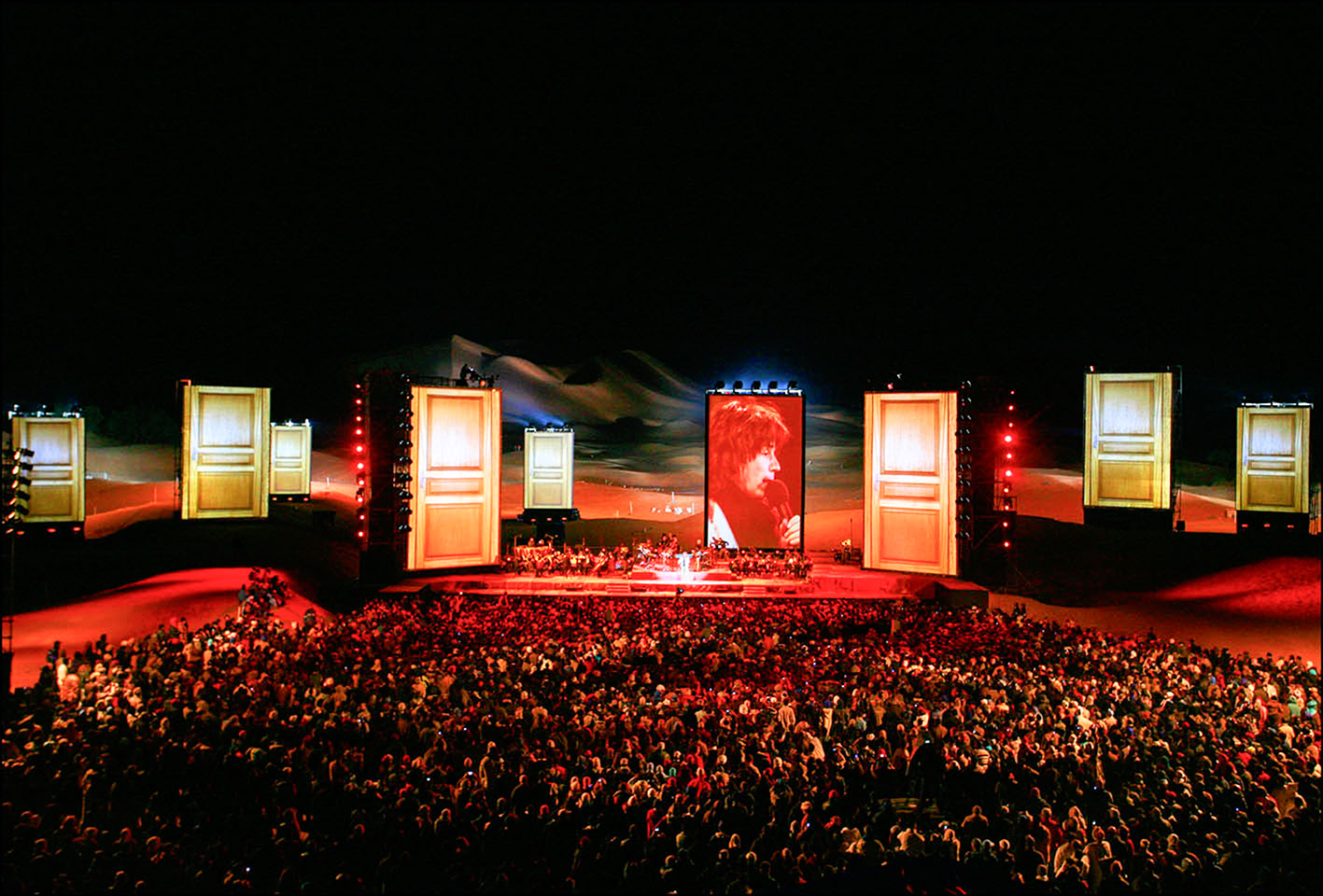
The Modern Arab Orchestra of Casablanca, the Morocco Philharmonic Orchestra and a number of eminent soloists joined Jean Michel Jarre on-stage for this unique concert which took place at Merzouga in Morocco. It was filmed in high-definition and broadcast live across the region by Moroccan public television and to the rest of the world via satellite and on HD channels. A post-production version was made available for broadcast by international television channels after the event.
The concert was organized with the support of the Kingdom of Morocco and was held under the auspices of UNESCO, the lead UN agency for the International Year of Deserts and Desertification.
Jean Michel Jarre’s spectacular concert-events have attracted record live audiences of millions around the world. Since his nomination as UNESCO Goodwill Ambassador in 1993, he has used these international events as a platform to raise awareness of UNESCO’s missions. Highlights of his work include his Millennium Concert at the Pyramids of Giza in Egypt and his Concert for Tolerance at the Paris Eiffel Tower, commemorating UNESCO’s 50th Anniversary.
Extracts from the book "Jean-Michel Jarre - The Making of Water for Life" (ISBN 978-1903527252)
02/Interview
Jean Michel Jarre
The choice of the Moroccan Sahara was a natural one. Apart from the fact that I have a strong attachment to the country, its welcoming people and its rich culture, HRH King Mohammed VI shares my preoccupation regarding the global problem of scarcity of soft water and advancing desertification.
My role as UNESCO Ambassador is to highlight, when possible, key world programmes and attract the media and general publics’ attention to certain global issues tackled by the UN. 2005-2015 is a dedicated Water for Life Decade; where better to raise the alarm than in the heart of the desert…
I think music and artistic creations can certainly help raise public consciousness because they attract audience and media attention, giving artists a platform to voice their opinions. Musicians and artists can therefore have a political role given their exposure.
Things have evolved so quickly in the last century on our planet; we went from one billion people to six billion people in such a short space of time. Everything went so fast that we must now urgently take a little time to assess and to be conscious of the problems caused by our evolution and progress. I believe for a lot of issues that are at our reach as citizens, that instead of waiting in the sidelines for governments or others to take care of us and our future generations, we should take action ourselves as responsible occupants of this beautiful planet that we will hand-down to our children.
Concerning this crucial issue of scarcity of soft-water, we can, each of us play a huge active role immediately to contribute to bettering the catastrophic situation; saving water on a personal level is quite simple actually. It only requires a different way of thinking and adopting new good habits day-to-day; by rationing the resources that we take for granted - only because we have never been informed of the damage we are creating by waste - collectively, we can really make a difference.
We are all dependent on water to survive – a child dies every two minutes in the world from lack of clean drinking water … while wars are waged in the name of petrol.
This concert was called “Water for Life” and it was part of a very important programme spanning over a decade and driven by the United Nations. The problem of scarcity of soft water is probably the number one problem on Earth today and the Kingdom of Morocco has been very active on this crucial issue. The problem of desertification is intimately linked to this situation and also requires urgent action.
My interest here in the cultural context of Morocco is the same as whenever I have the opportunity to work in different countries, to merge the local traditional music with my electronic music. The result, I think, reflects the spirit of Morocco today: anchored in its rich cultural heritage while open to welcoming influences and harmonising with other cultures. I, for my part, have always been an amateur when it comes to the musical abundance of Morocco and this concert was a possibility for me to make an innovative musical and video creation.
03/Feature
The Making of Water for Life
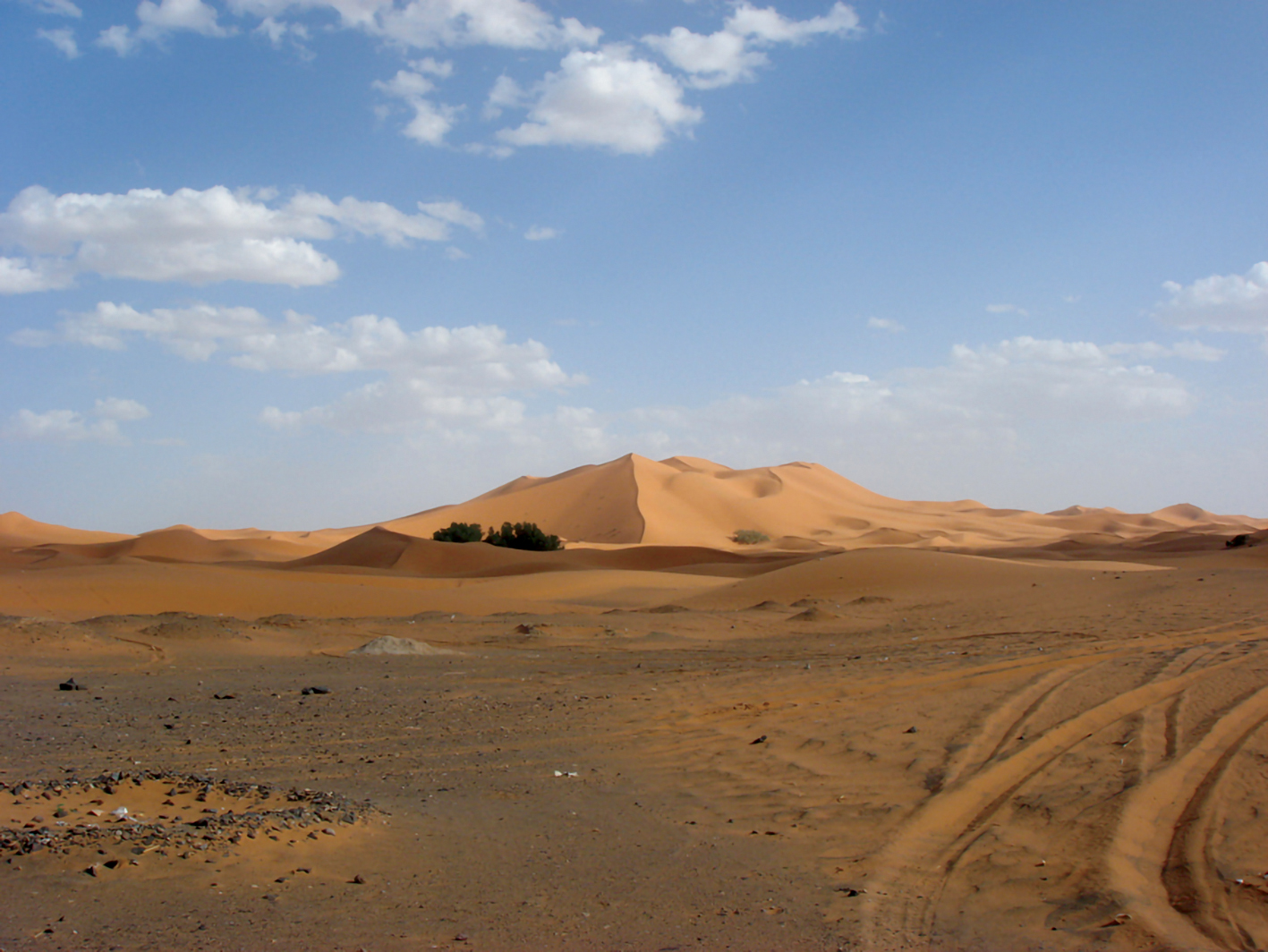
Watching the sun rise or set over the sand dunes of Merzouga is normally the most spectacular experience you would have on a trip to Morocco. The Erg Chebbi, the name of these sand dunes in the Sahara Desert, is said to have some of the highest dunes in Morocco.
However, when it was announced at the end of October 2006 that Jean Michel Jarre would perform one of his spectacular concerts in Merzouga on Saturday 16th December 2006 under the title “Water for Life”, a few people started arranging travel to this distant tip of south-east Morocco for a very different experience.
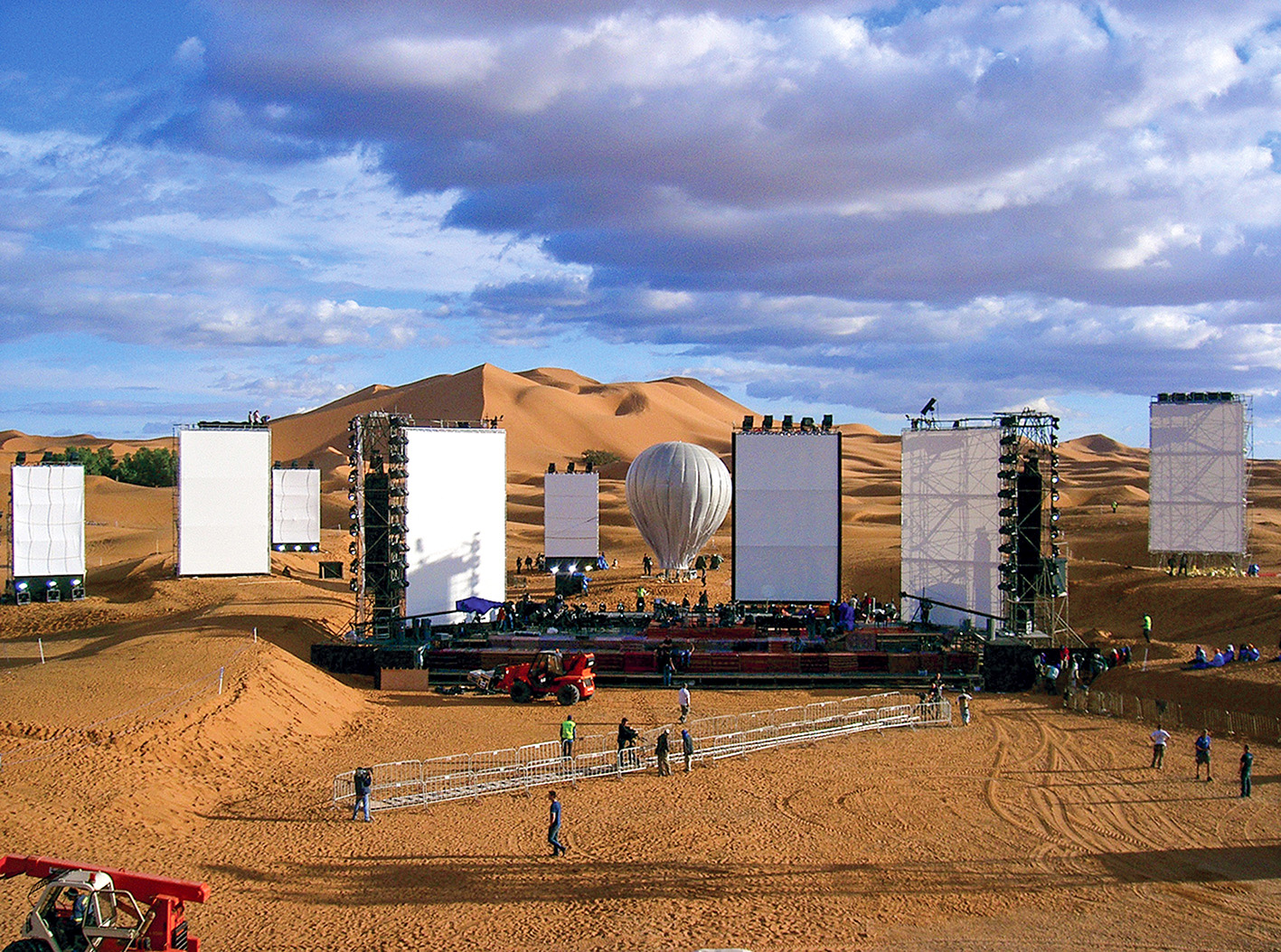
The Location
The French musician is renowned for conceiving and performing large-scale concerts utilising the cutting edge of modern technology in some unique landmarks. He has staged his signature shows far and wide around the globe including locations as diverse and challenging as the Akropolis in Athens, Greece; the shipyards of Gdansk, Poland; the downtown city skyscrapers of Houston, USA; the Docklands area of London; England; Tiananmen Square and the Forbidden City in Beijing, China; and even the Pyramids of Giza in Cairo, Egypt for the Millennium. However, the show in Merzouga, among the dunes of the Sahara promised to be something extra special and challenging.
Merzouga is situated within the Sahara Desert which stretches over 9 million square kilometres and far from the comforts of western civilisation. In fact, it is probably a bit further. It is so remote that a hard road was only built from Rissani (the nearest town) to Merzouga in the past couple of years. For Jean Michel Jarre’s show, this road was upgraded and extended down to the site of the concert to allow easier access. It is hard to imagine any other artist daring to stage such a large-scale concert in a more remote location.
The only hard building near the site was the Auberge Merzouga, which the production team took as their headquarters.
As the location was remote, the local production company asked Atlas Voyages, a renowned Moroccan travel agency to partner in order to offer a show tour package to both Moroccans and international travellers. Under normal circumstances, the nearest airport to Merzouga in Errachidia (Moulay Ali Cherif Airport) has only one scheduled flight per week. However, for the event the national airline Royal Air Maroc laid on two large planes to transport people to and from Casablanca, the country’s largest city and primary port. Over 100 4x4’s (each seating six people) were used to drive the guests from Errachidia to Merzouga, which took around two hours, with an overnight hotel in Erfoud (about one hour from the concert site).
The Communication
The concert was officially announced to the world’s media in a press conference held in Paris on Thursday, November 23rd at the UNESCO Headquarters. There the international press were introduced to the concept of the show by Jean Michel Jarre and the production team and the news hit the newspapers and the Internet the next day.
As seems to be common now for Jean Michel Jarre’s big shows, there was a dedicated web site for the event which was produced by A3 Communication, the local PR agency covering the event. This kept the public and media up to date in French on the plans for the show, and even included helpful advice on the weather and what clothing to bring.
Jean Michel Jarre embraced the video sharing internet technology of YouTube.com and asked one of the crew, Thomas Alsina, to produce a series of daily short videos (each around one minute in length) about the production of the concert. Some of these appeared before the concert and helped to whet the appetite of those people travelling to the event and also those trying to catch a glimpse of the show via the media. Thomas first started working with Jarre for the Paris iMac show in 1998, when he pioneered a unique 3D live video effect. The YouTube clips received an impressive 20,000 hits in the three months immediately after the event.
For the local promotion, Jarre featured on many news bulletins and newspapers in the days leading up to the event. Posters and banners were erected across the Kingdom to publicise the concert to the local Moroccans – buses were also laid on to the event especially for the local people.
A second press conference was staged on the evening of the show at Auberge Tombouctou in Merzouga, where Jean Michel Jarre answered the media’s questions in French and English. Ever in his struggle against time, the conference was delayed as Jean Michel Jarre had decided to record some tracks on stage during the preceding sunset for the post-production video.
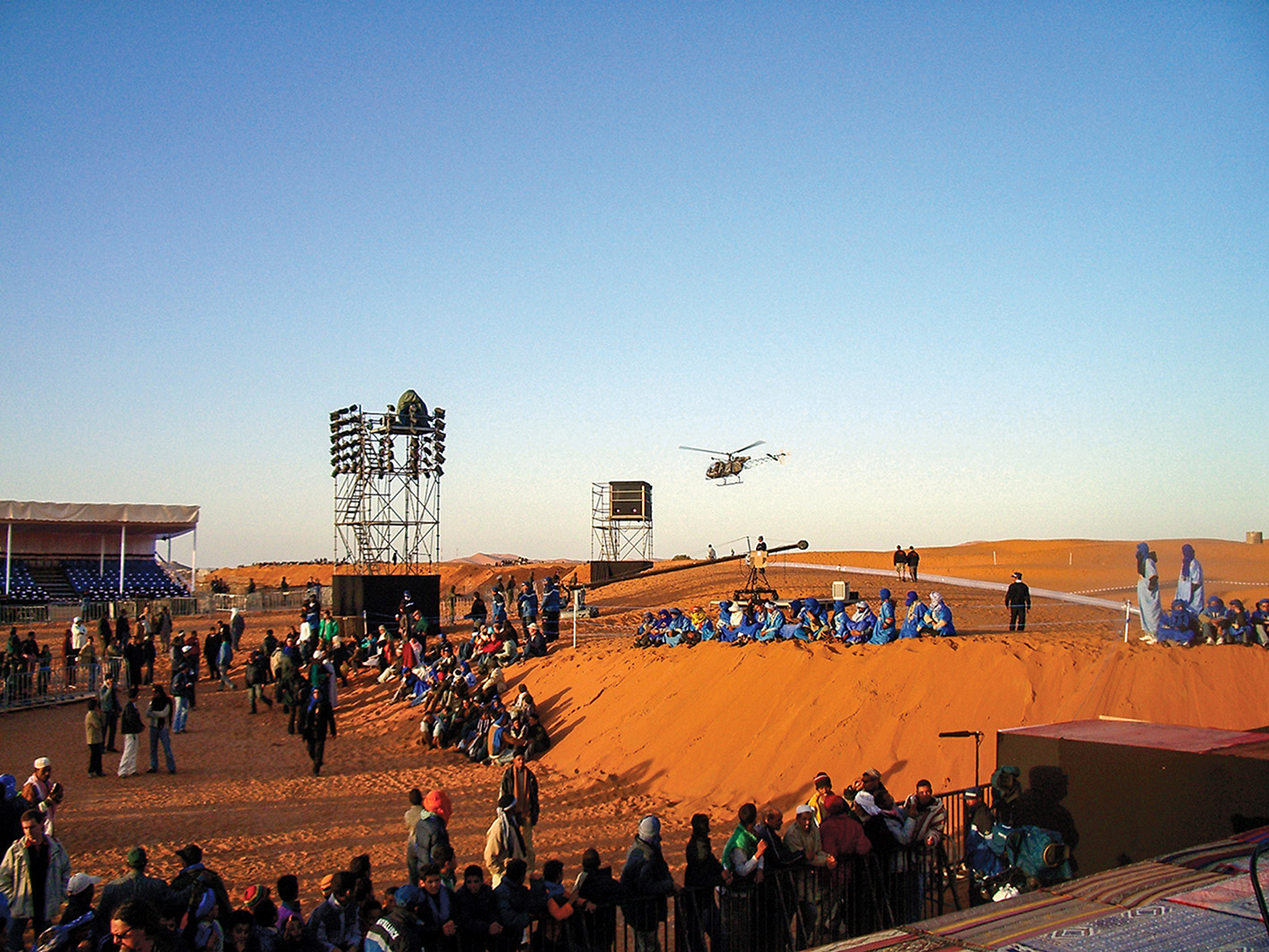
The Construction and Rehearsals
Jean Michel Jarre and his production company, Créations Productions Management (CPM), assembled roughly the same crew that had worked with him on most of his shows since the Forbidden City in 2004. The local production company, Rezo Productions were responsible for the domestic production in Morocco and were instrumental in ensuring everything ran smoothly on the site.
Since July 2006, three trips were made by key personnel to assess the site and to work out the logistics for the show. From there, the site preparation started on Saturday November 10th, which started with the creation of the amphitheatre that the audience would attend in and the preparation of the foundations for the staging.
In addition, several structures were constructed for the show, including the normal towers for sound and lighting and two platforms for video and press photographers, as well as tiered two stands at the back of the natural amphitheatre for VIPs and guests. A private walkway was constructed for the guests to arrive independently from the main audience, which had an avenue of atmospheric flames on the night of the show. Several tents were also constructed outside of the main concert area for the locals to rest before the show. an intense security search was set-up at the entrance of the concert area due to the visiting dignitaries in attendance.
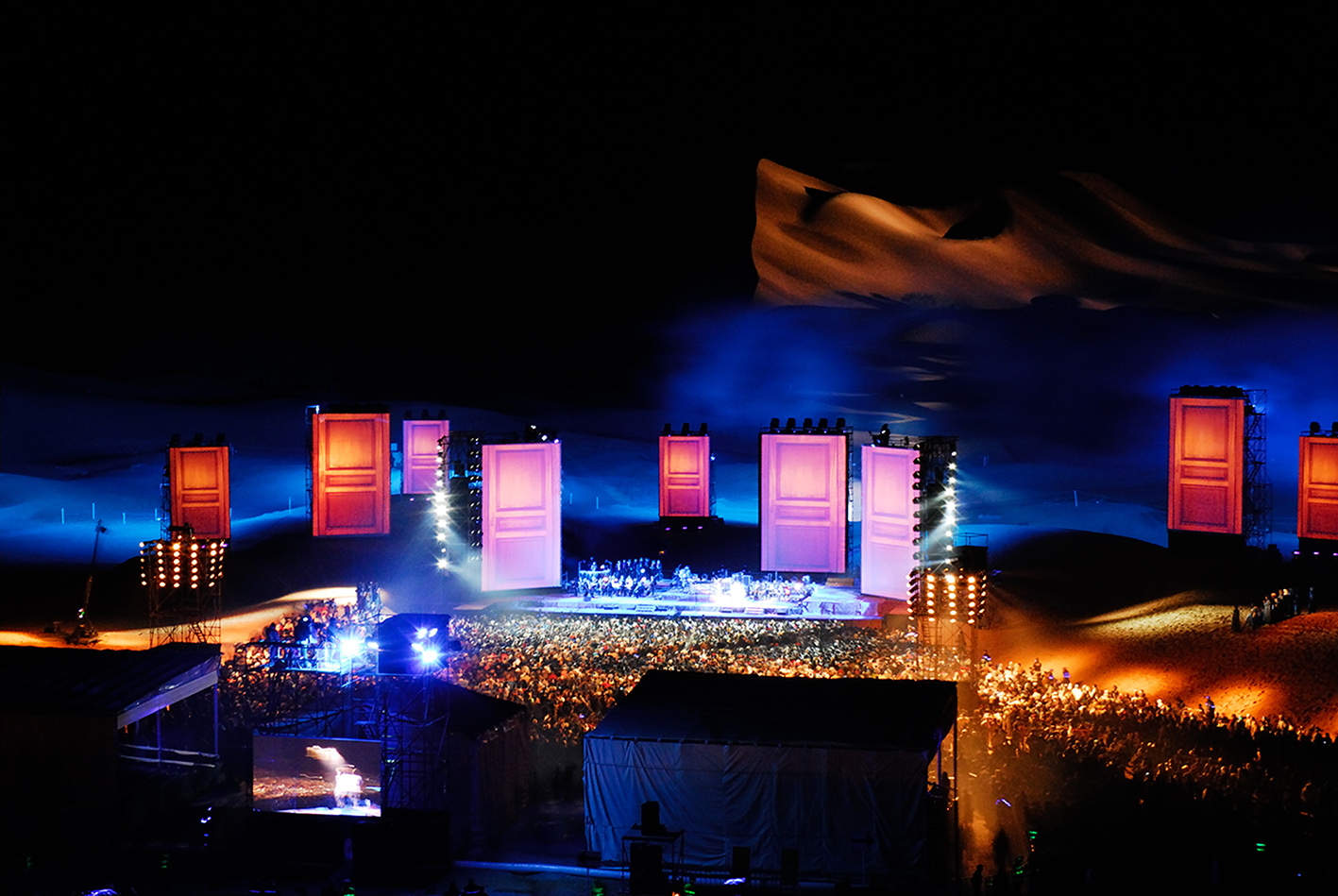
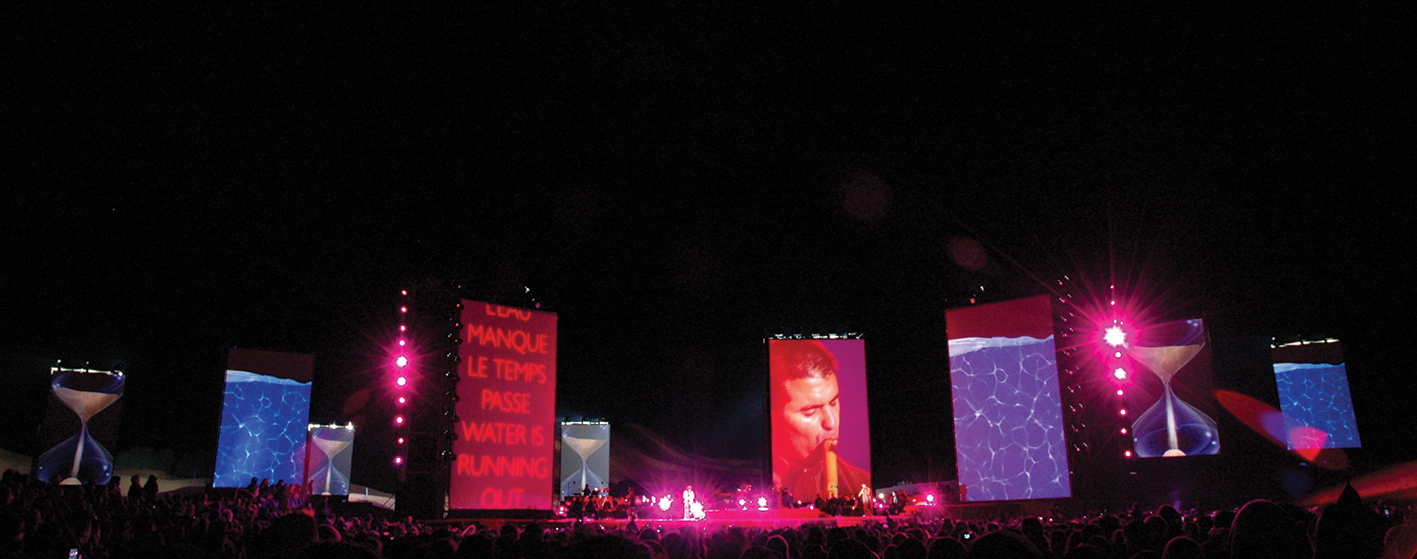
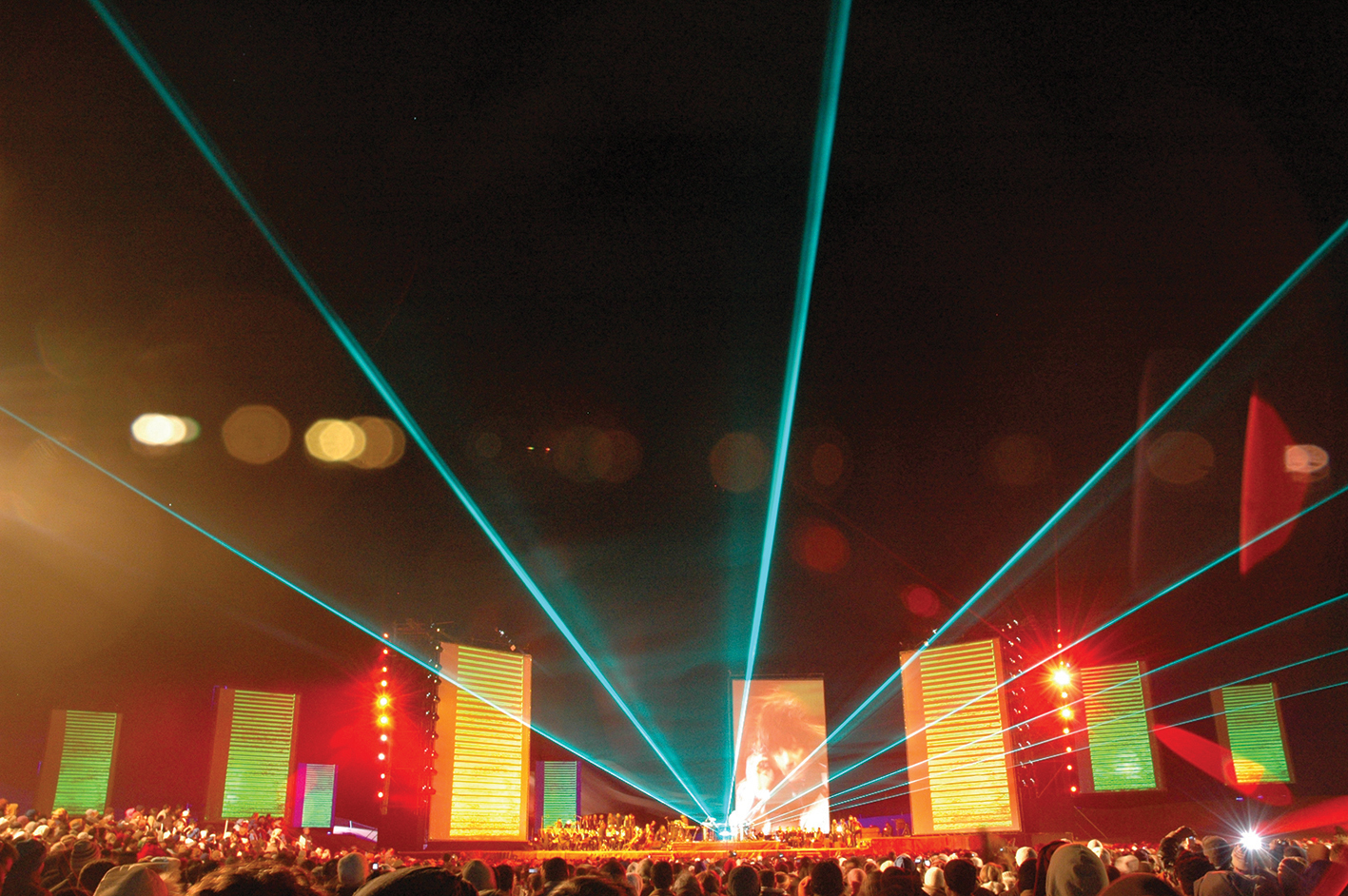
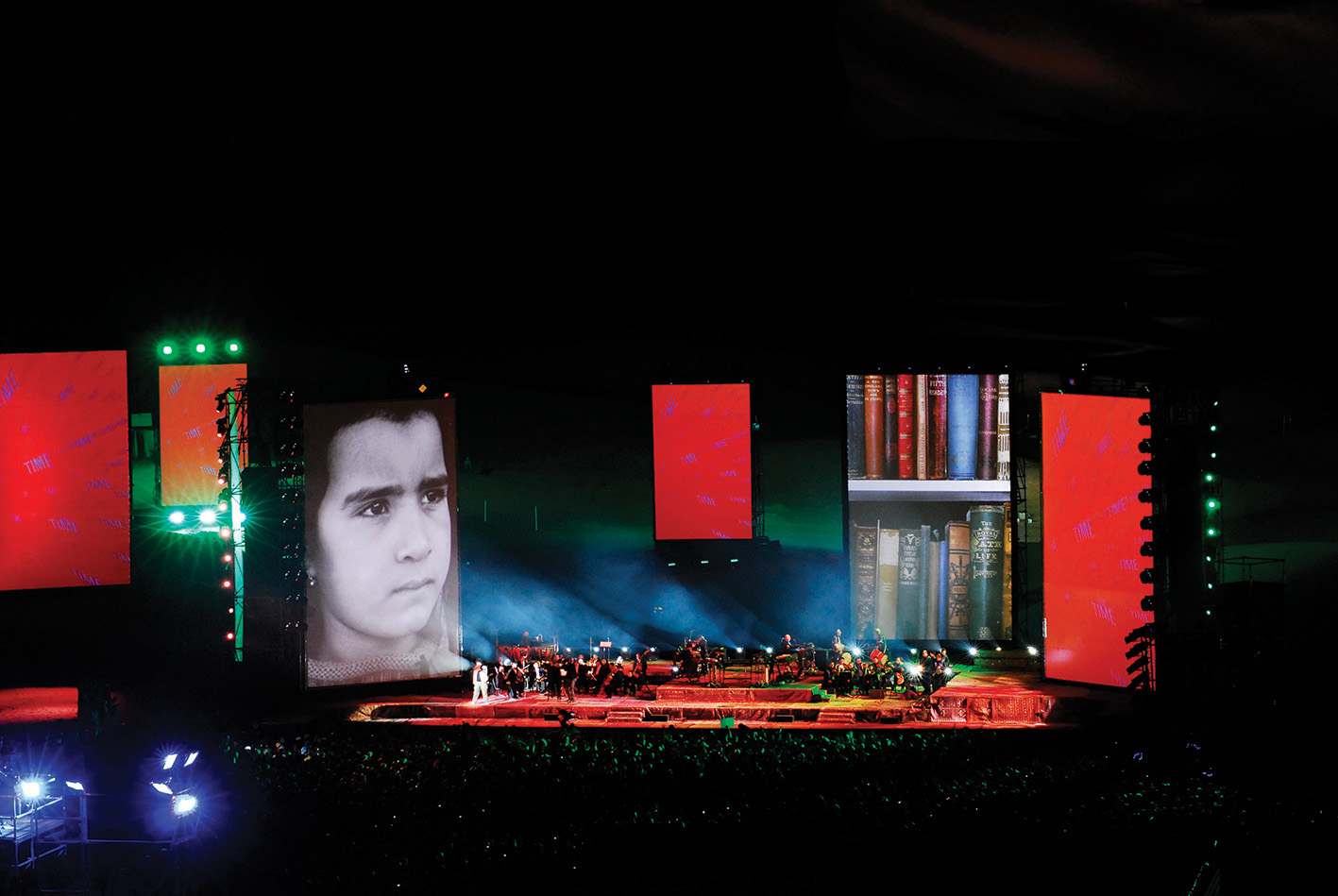
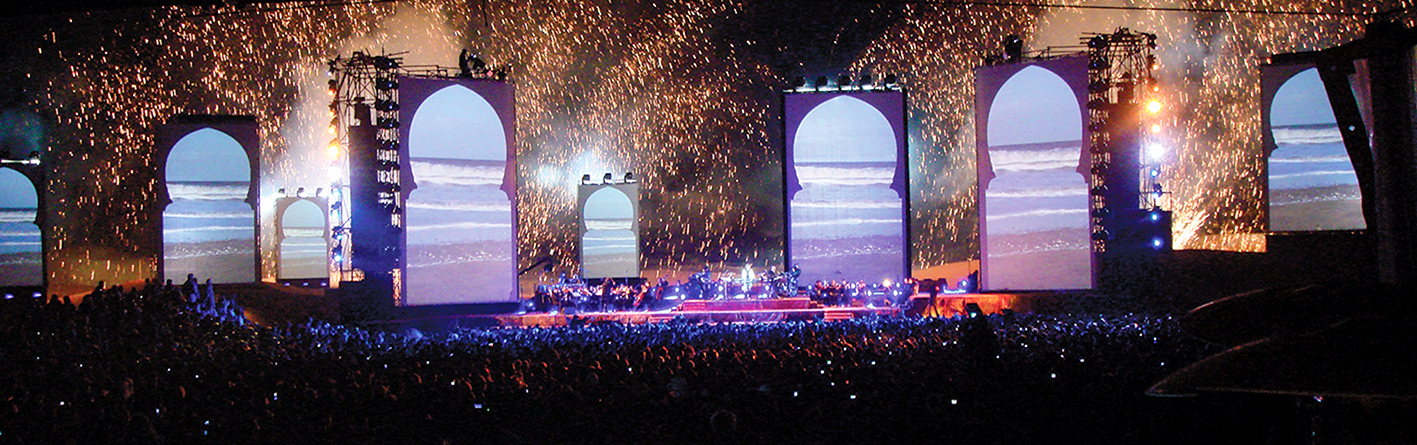
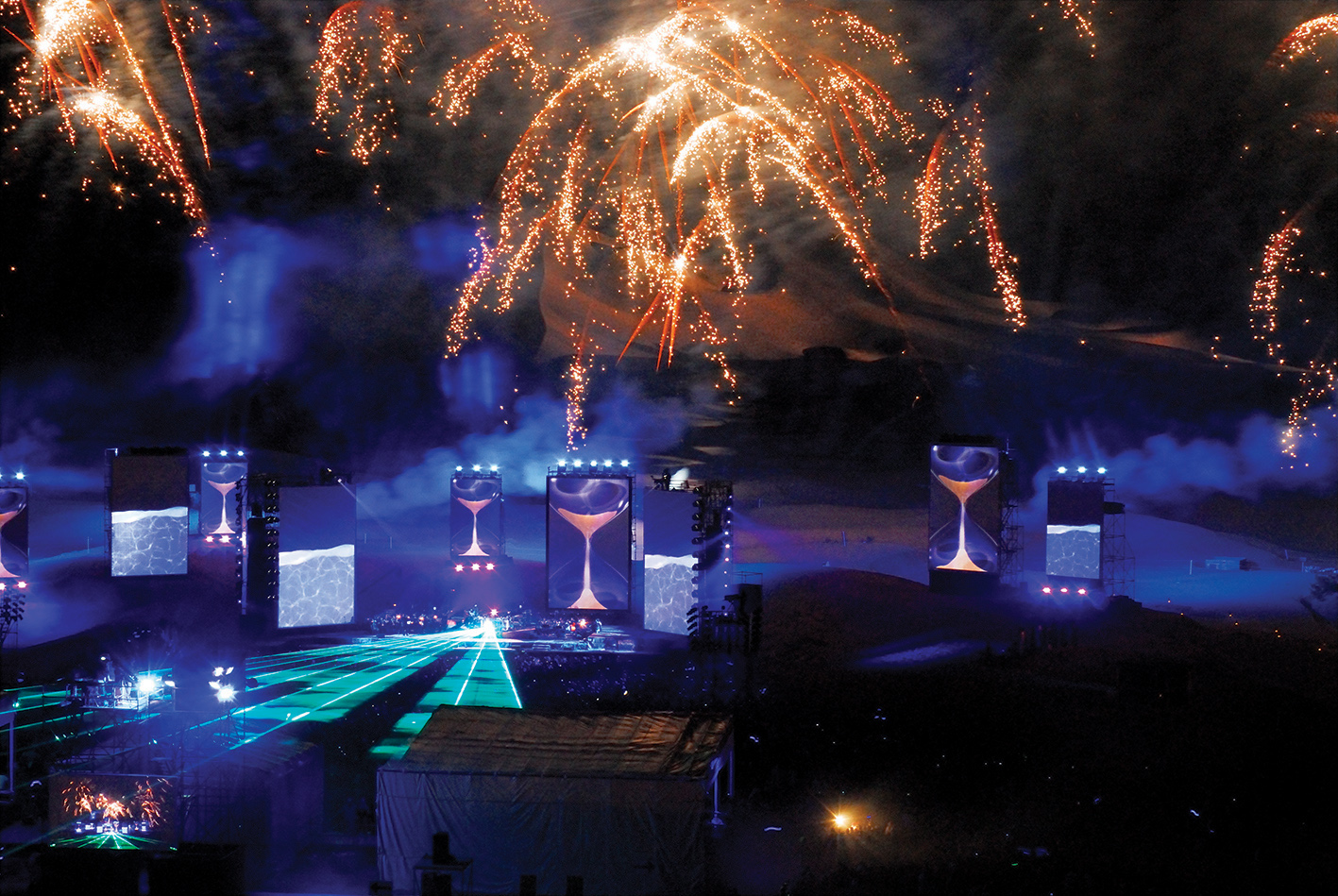
Once constructed, the stage was surrounded by nine vertical screens (some were 14x7 metres high and some were 8x5 metres high). These were used to project high-definition video images for the show and were intended by Jarre to symbolise “doors onto the desert”.
Various rehearsals were staged for several days prior to the concert, including a full dress rehearsal the night before the show. This was recorded for back-up purposes.
One unique element planned for the show was a huge helium-filled balloon (about 10 metres in diameter and 20 metres high) which housed a projector inside it, upon which various images were going to be projected, and which was a prominent part of the artwork for the concert. This featured in the rehearsals all the way through to the final dress rehearsal, but Jean Michel decided to cut it from the actual show as it didn’t quite meet his expectations. The view of the dunes from the stage once removed was much clearer and it was a good decision.
The show featured many local artists and musicians – totalling over 60. This included two orchestras (symphonic and modern Arabian), a choir, a number of musicians playing local instruments and several vocalists and dancers. We have featured the full line-up later in the book. In the leaflet and poster literature promoting the concert to the local community, the local contribution was quite a large selling point.
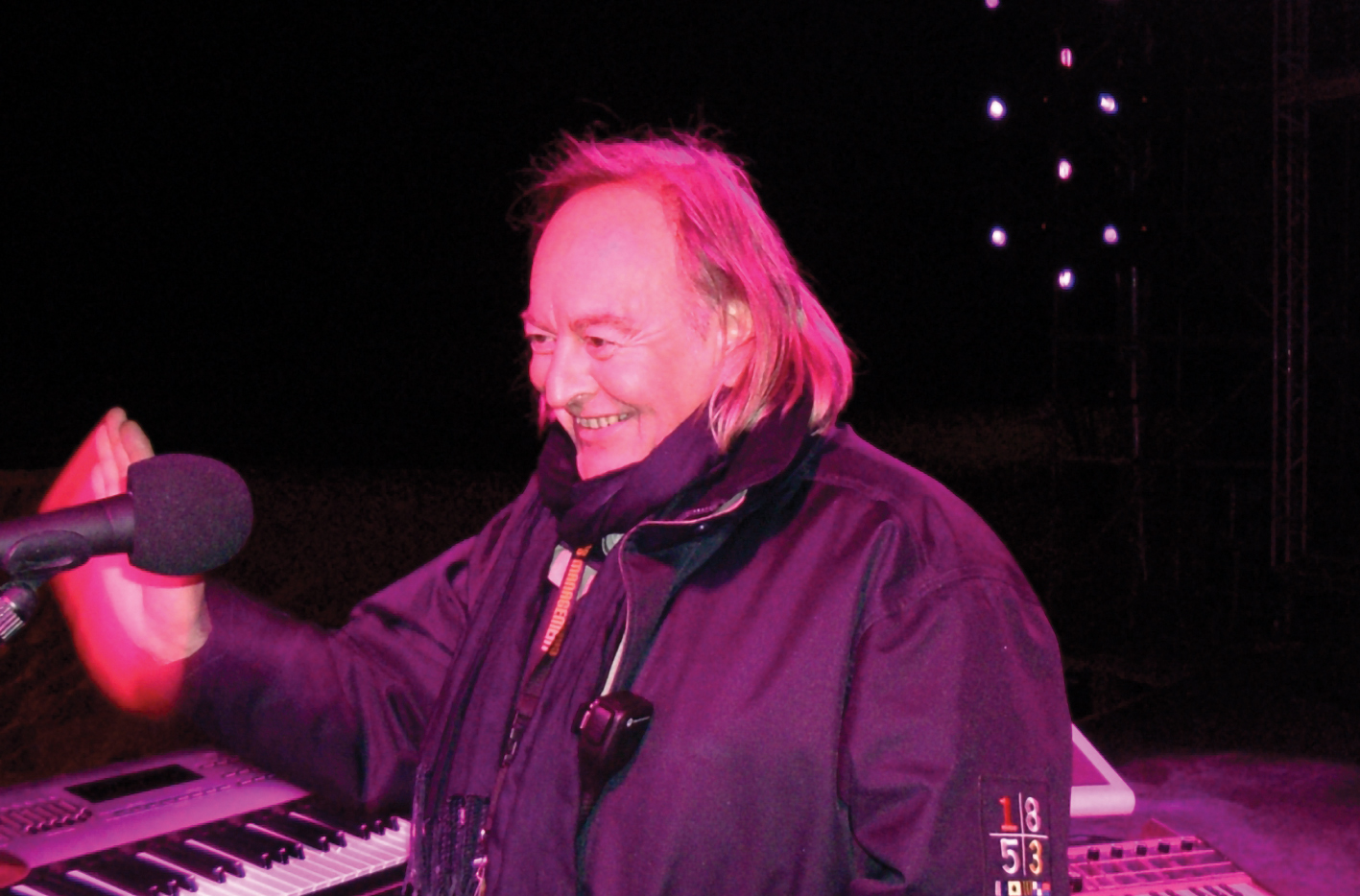
Jean Michel Jarre was also joined on stage by Claude Samard, in his established role as the Musical Director, as well as his long-time accompanying musician Francis Rimbert.
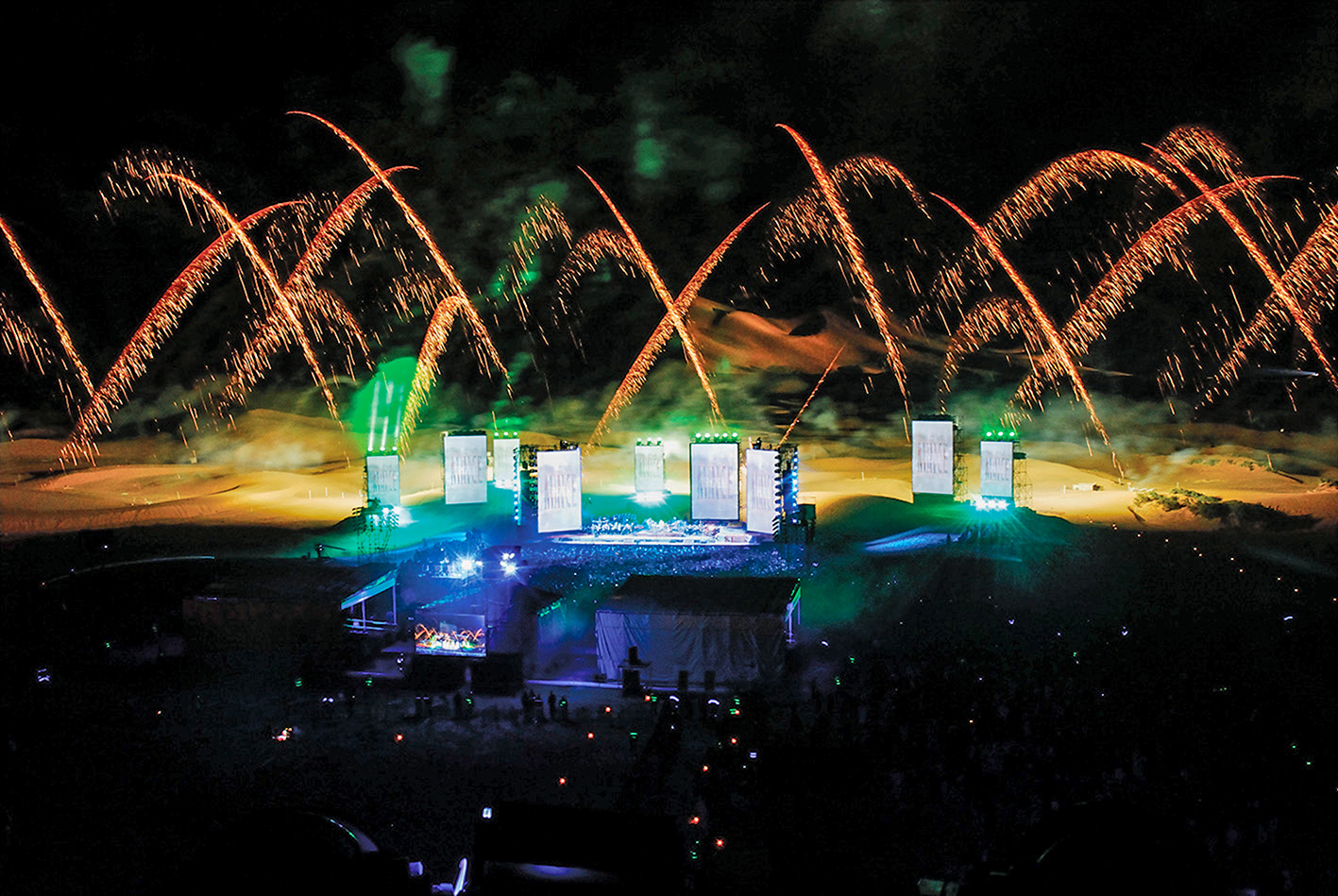
The Show
The show on December 16th 2006 had a unique atmosphere, due to numerous factors, including the setting, the integration of the show with Moroccan culture, the truly wonderful local and diverse international audience and the scale of the event.
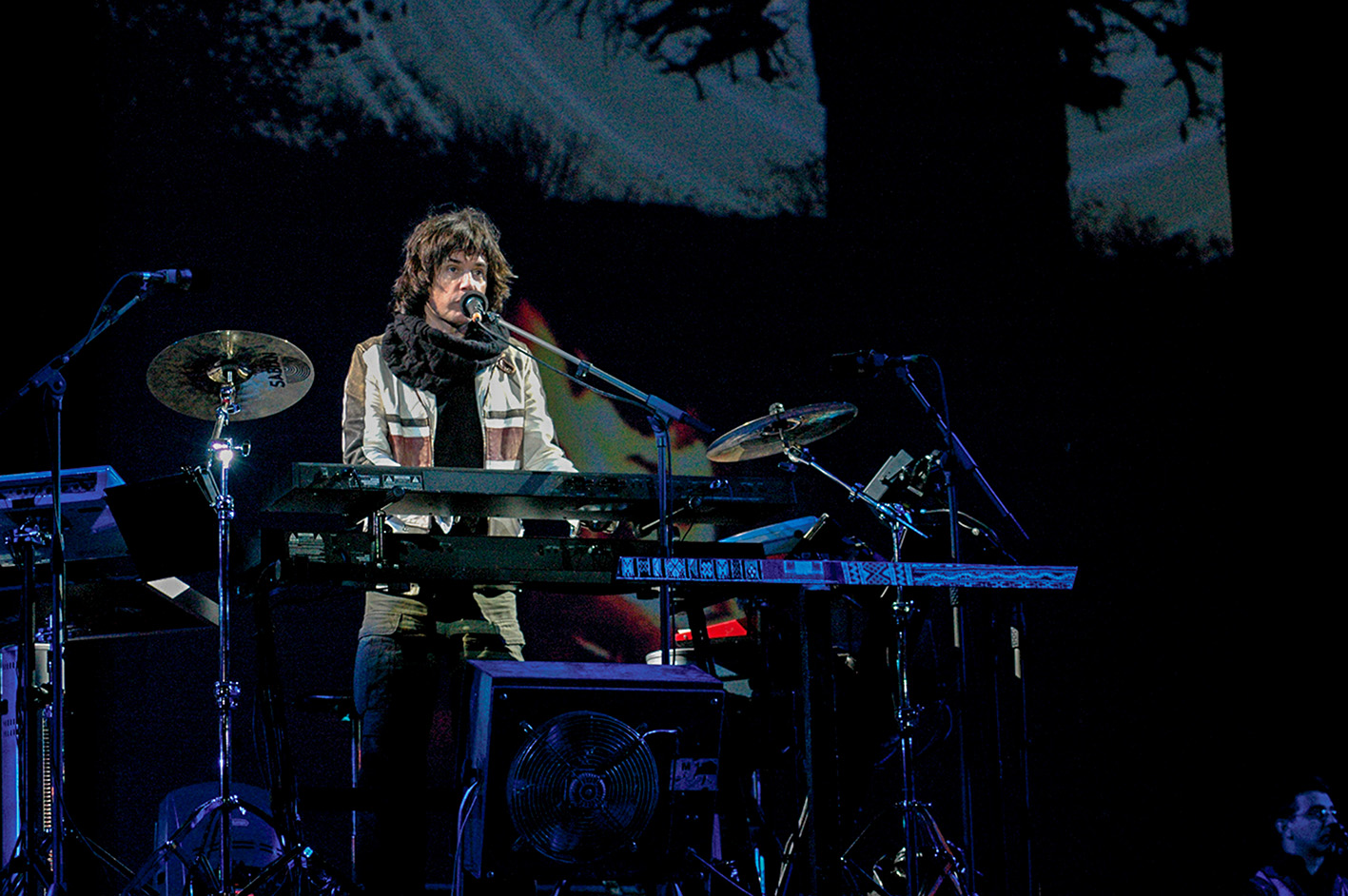
People who turned up early to secure a place were rewarded by Jarre as he decided to unexpectedly perform the first 5-6 tracks at sunset, to capture the sunset over the dunes. Jarre brought with him his usual “bag of tricks” including his laser harp, the Theremin, his flute and his vast array of keyboards and symbols, positioned in a bank-formation from which he performed (like his shows in China and Gdansk).
The show itself lasted just over 2 hours and was watched by an estimated 15,000 spectators. Several video screens were set-up behind the VIP stands where overflow spectators could also enjoy the performance.
The show had several highlights, which included a fantastic version of Miss Moon, the new Intro Saturée (an edit of a track featuring on Jarre’s new studio album being released in March 2007) and the remix of Oxygène 7, to name but a few.
The concert was filmed in high definition by Alfacam, the company who have filmed the latest concerts in Beijing and Gdansk and the LinX event. It was broadcast in standard definition live across the premier local Moroccan channel (TVM) as well as by satellite via El Maghribiya, network UER (broadcasting to Bulgaria, Portugal, Finland, Denmark, Belgium, Greece, Cyprus) and around the Arab region via the satellite ArabSat PP (Jordan, Bahrain, United Arab Emirates, Tunisia, Algeria, Saudi Arabia, Sudan, Syria, Republic of Djibouti, Sultanate of Oman, Iraq, Palestine, Qatar, Kuwait, Libya, Lebanon, Egypt, Mauritius, Yemen).
A post-production version (2 hours 15 minutes) was edited and broadcast on the HD-1 European channel on January 20th 2007. This edit included highlights from the tracks that Jarre recorded at sunset.
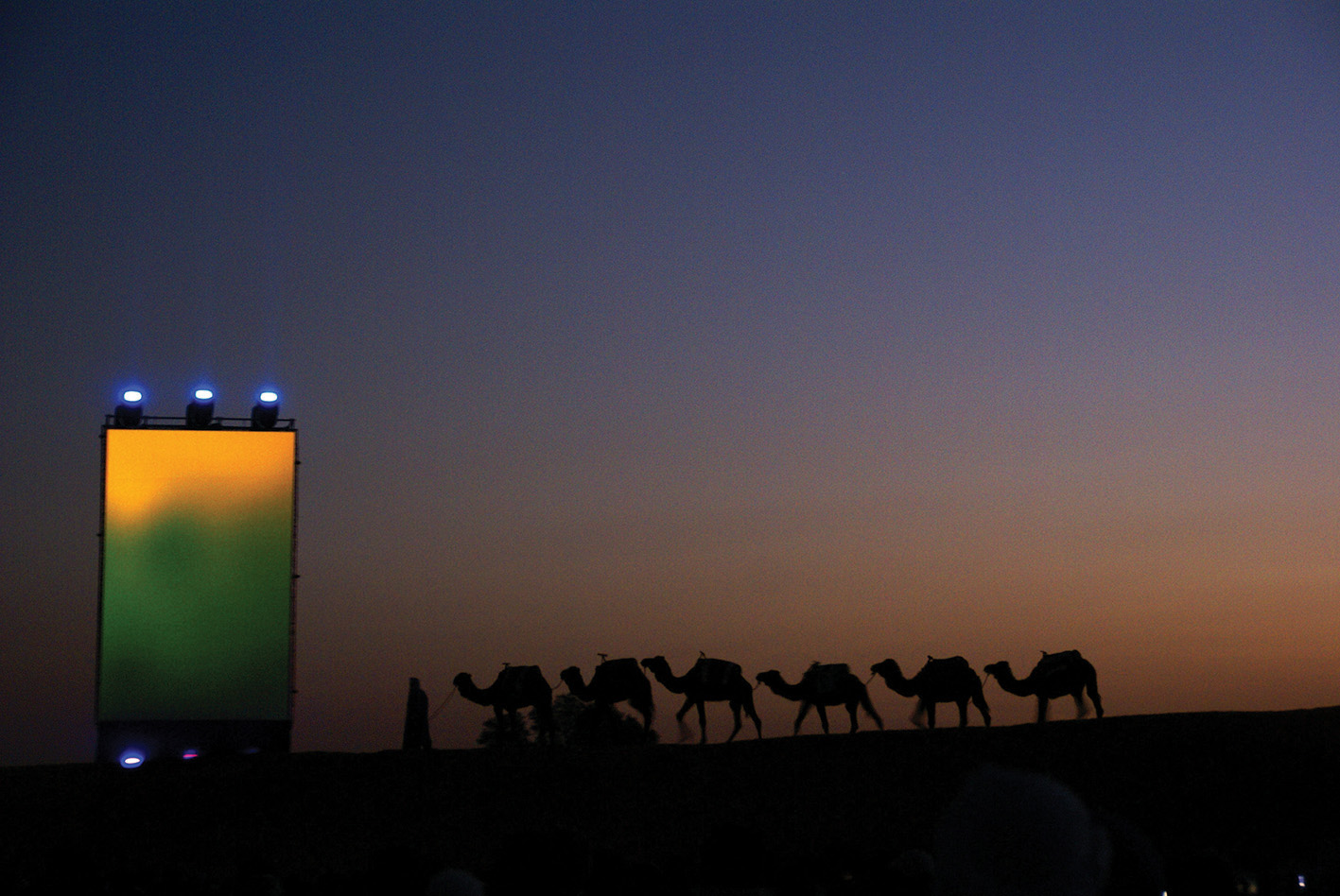
And Finally
The show brought back real memories for those people who had travelled to Egypt. This event felt a lot more intimate than the Millennium show and to the onlooker, didn’t appear as fraught with problems. And of course, the weather smiled on Jarre on the concert day and he had clear skies and no sign of fog ….
04/By the numbers
Show Facts
- Free
- event
- 15,000
- audience from around the world
- 60
- Moroccan artists participated in the concert
- 1
- huge balloon (10m in diameter / 20m high) equipped with a HD video projector requiring 1000 cubic metres of helium
- 125
- person production team
- 50
- person local production team
- 100
- local people worked on preparing the site from November 10th 2006
- 42
- trailers in total drove to the site, including 22 trailers with equipment driven from France and Europe
- 7
- power generators, brought in from France and Morocco
- 9
- vertical screens ranging from 8x5m to 14x7m high
- 0
- concrete used to secure the screens in the sand
- 40
- tents built for dressing rooms and catering for the production teams
- 80
- buses arranged by the local government to transport people from the entire region
- 5
- drinking-water fountains installed for the occasion and remain on-site as a lasting legacy
- 11
- cameras filmed the show in full High Definition
- 2
- grandstands erected on-site for audience
05/Feature
Supporting Artists
The show featured a number of supporting artists from around the region, giving the production a unique feel.
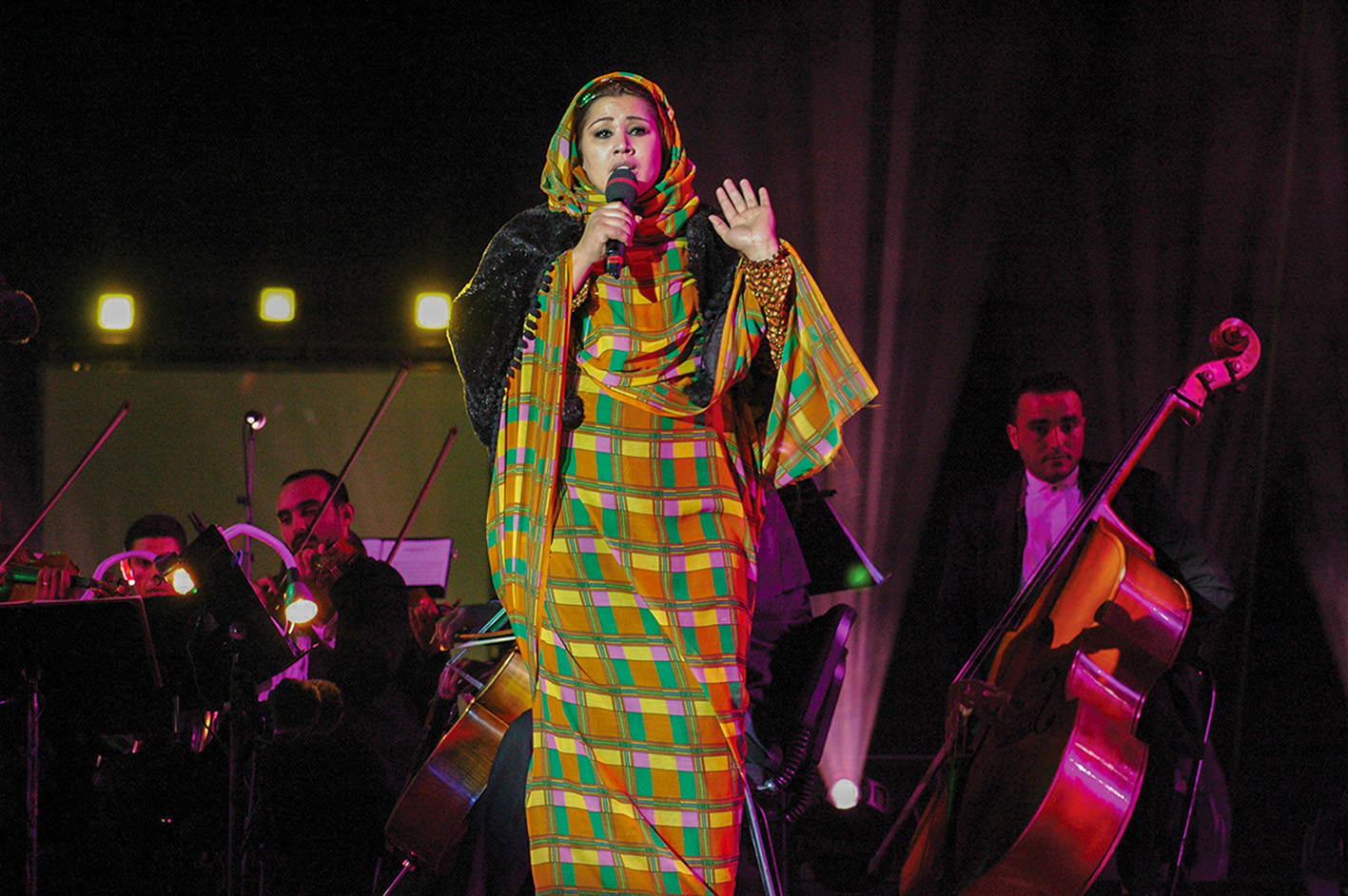
Saïda Charaf (Moroccan singer)
Saïda Charaf was born in Laâyoune and is a Master of Arab Literature. Before becoming a singer five years ago, Charaf worked as a journalist at the main Spanish TV channel TVE. Singing is, however, her real passion for which she is known throughout the Arab world. She has participated in numerous festivals, amongst others, Festival des Fées and Festival of National Music in Jordan with her famous “cherki” repertoire (oriental music). She has been awarded a Royal Tribute by the King of Jordan.
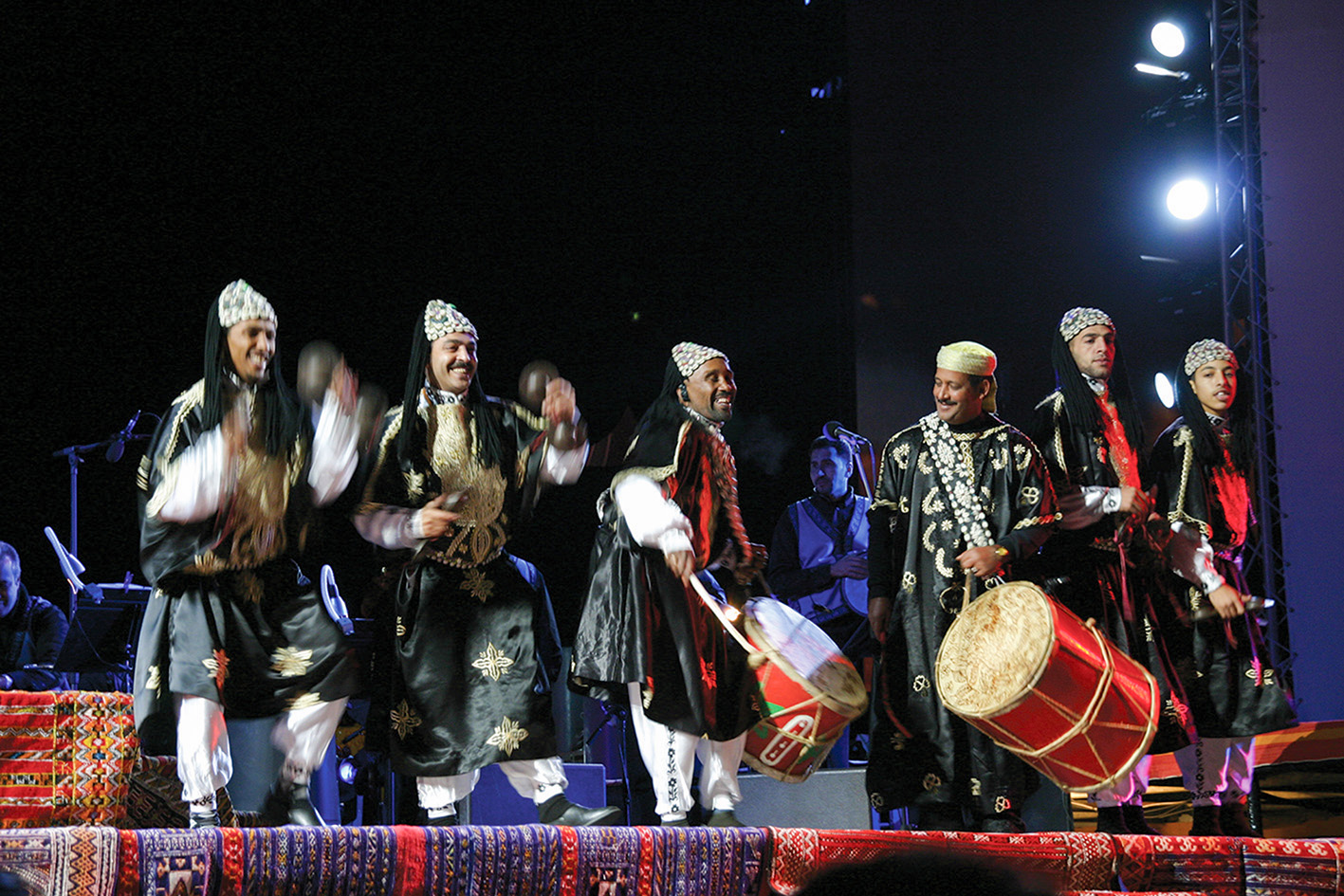
Hamid El Kasri (Gnaoua Music)
Born in 1961 in Ksar El Kébir, Northern Morocco, Hamid El Kasri is one of the most talented Maâlems (Gnaoua Master of ceremonial rituals) of his generation. He was discovered at the Festival of World Music in Essaouira. He is mainly known for his merging of Gnaoua music from north and south (Gharbaoui, Marsaoui and Soussi) and for his unique voice that makes him one of the best acknowledged Maâlems. Hamid El Kasri and his group have toured Europe several times to wide international acclaim.
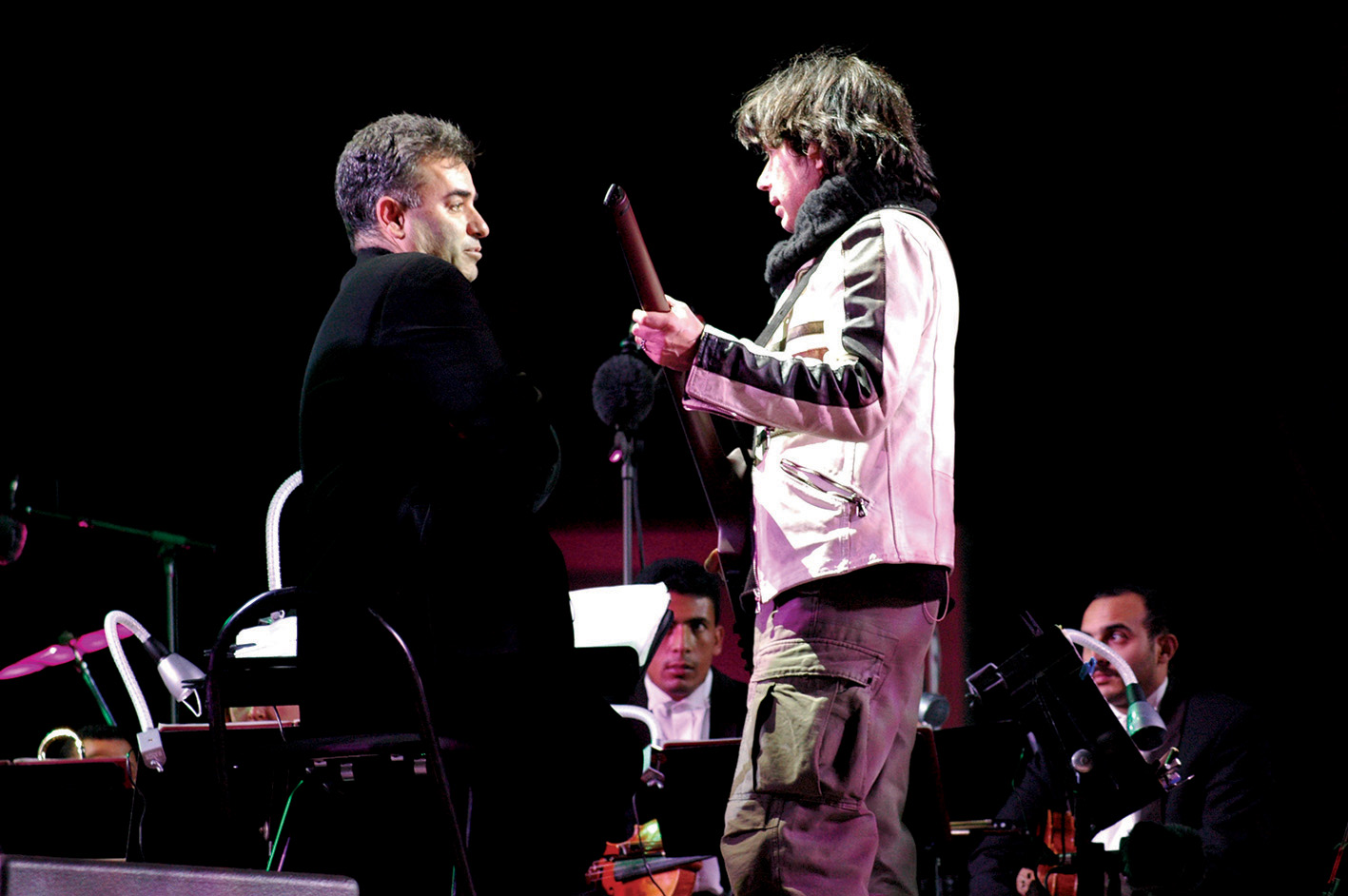
Moroccan Philharmonic Orchestra
The Moroccan Philharmonic Orchestra was founded in 1996 and is composed of 80 musicians, men and women united by their passion for “the great music” – some are part of the military orchestras or teachers at the Conservatoires. The orchestra is a non-profit organisation and in ten years they have given 145 concerts in Rabat, Casablanca and Marrakech.
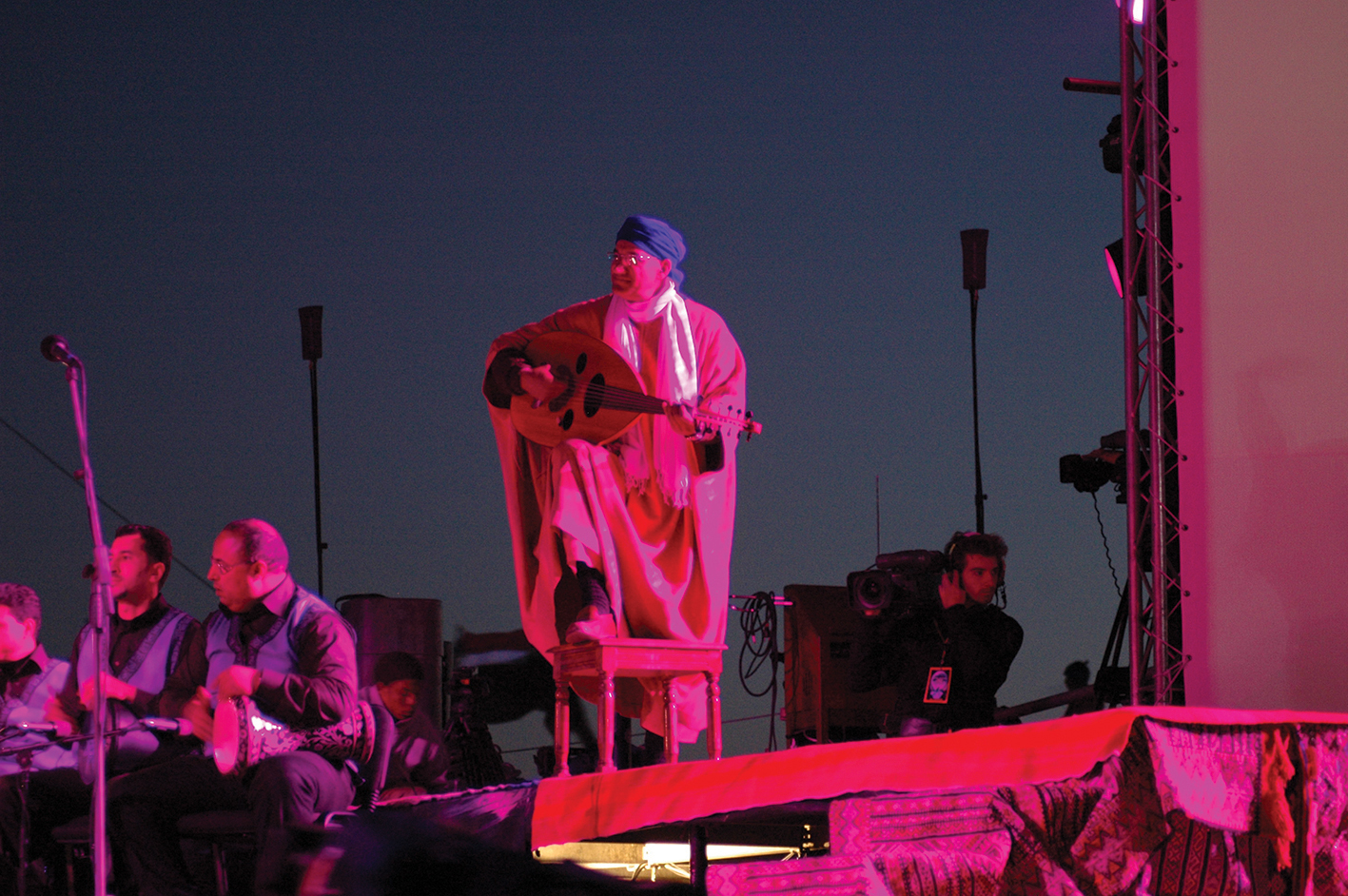
Haj Youness (Lute)
Haj Youness won the Grand Prix of Lute Virtuosity and Interpretation at the Conservatoire of Casablanca in 1971 and was a teacher of lute from 1980 until 1995 at the Conservatoire in Casablanca. He is particularly known for his exceptional interpretation of traditional lute and in 1983 he formed the first lute quartet in Morocco, with whom he has toured in Morocco and around the world. HRH King Hassan II awarded him a Medal of Honour and The Gold Lute in 1983 and appointed him Official Composer at the Royal Symphonic Orchestra of Rabat, Morocco.
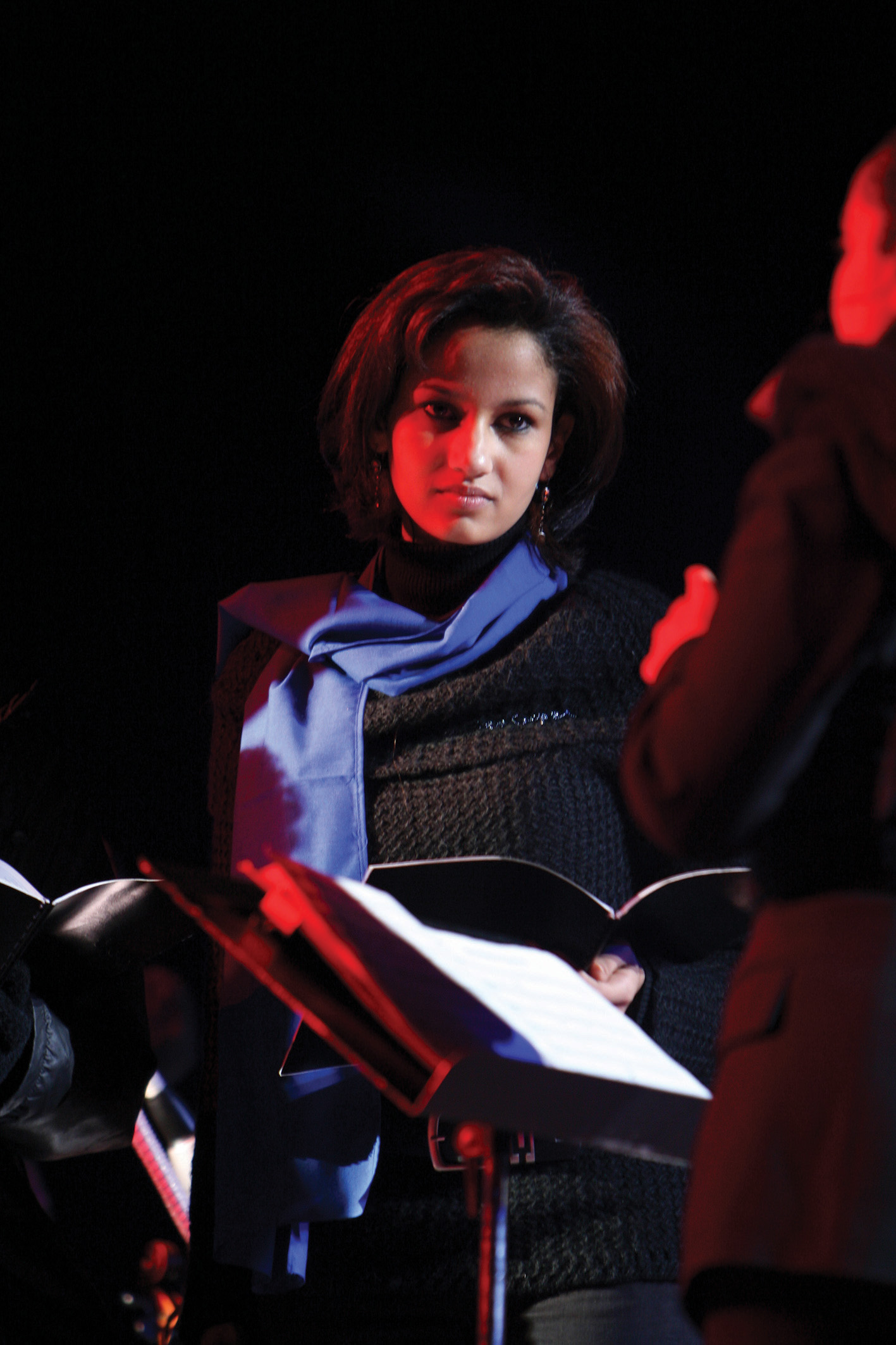
The Alizés Classical Choir
Born in the wake of the Academy of Choir Music and Festival of Young Talents of Choir Music in Essaouira, Morocco, the choir consists of young semi-professional Moroccan singers and is conducted by Jalila Bennani. For a number of years they have constituted the Moroccan element of The Three Cultures Choir, with whom they have performed numerous acts, such as Rossini’s “Petite Messe Solonelle”, Mozart’s “Requiem” , “Les Chichester Psalms” by Bernstein and “Carmina Burana” by Carl Orff.
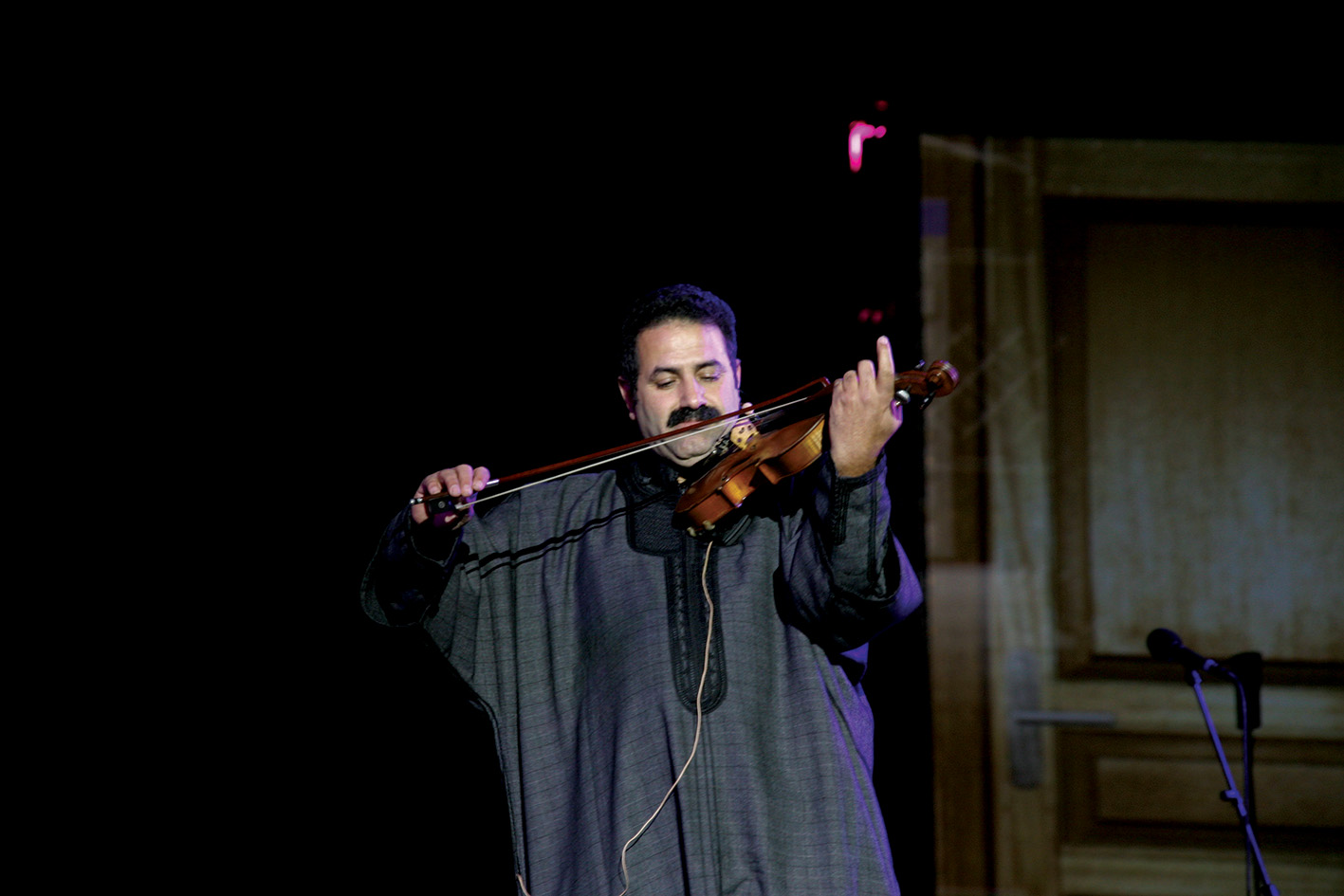
Abdellah El Miry (Kamanche, Arab Violin)
Abdellah El Miry is Professor of Violin at the Conservatoire of Casablanca, Morocco and a conductor. Multiinstrumentalist, he also masters the guitar, the lute and the guembri (the traditional instrument of Gnaoua) and is the creator of a new musical style: Country Gnawa. He participates in a number of national festivals, such as Festival Gnaoua, World Music in Essaouira and Festival de Casablanca as well as international festivals in Italy, Spain and Germany.
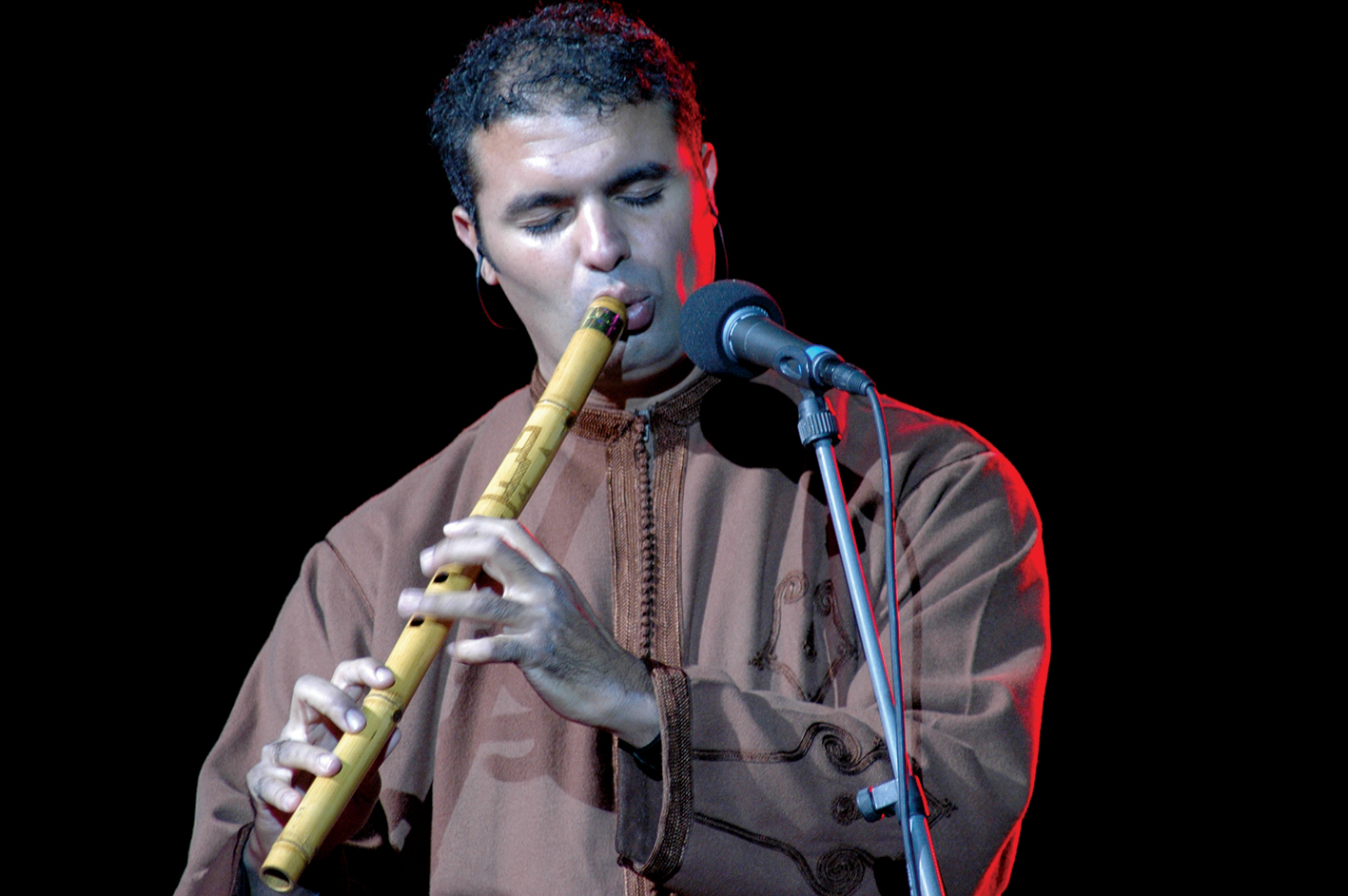
Rachid Zeroual (flute, ney)
One of the only artists in Morocco to master the oriental flute (ney), Rachid Zeroual is highly respected by a large number of musicians in Morocco with whom he often plays. His deep breath emphasises the mystery of this instrument. After meeting the guitarist Majid Bekkas recently, he has opened up towards new musical styles such as Blues and they are now playing a mixture of Gnaoua and Blues.
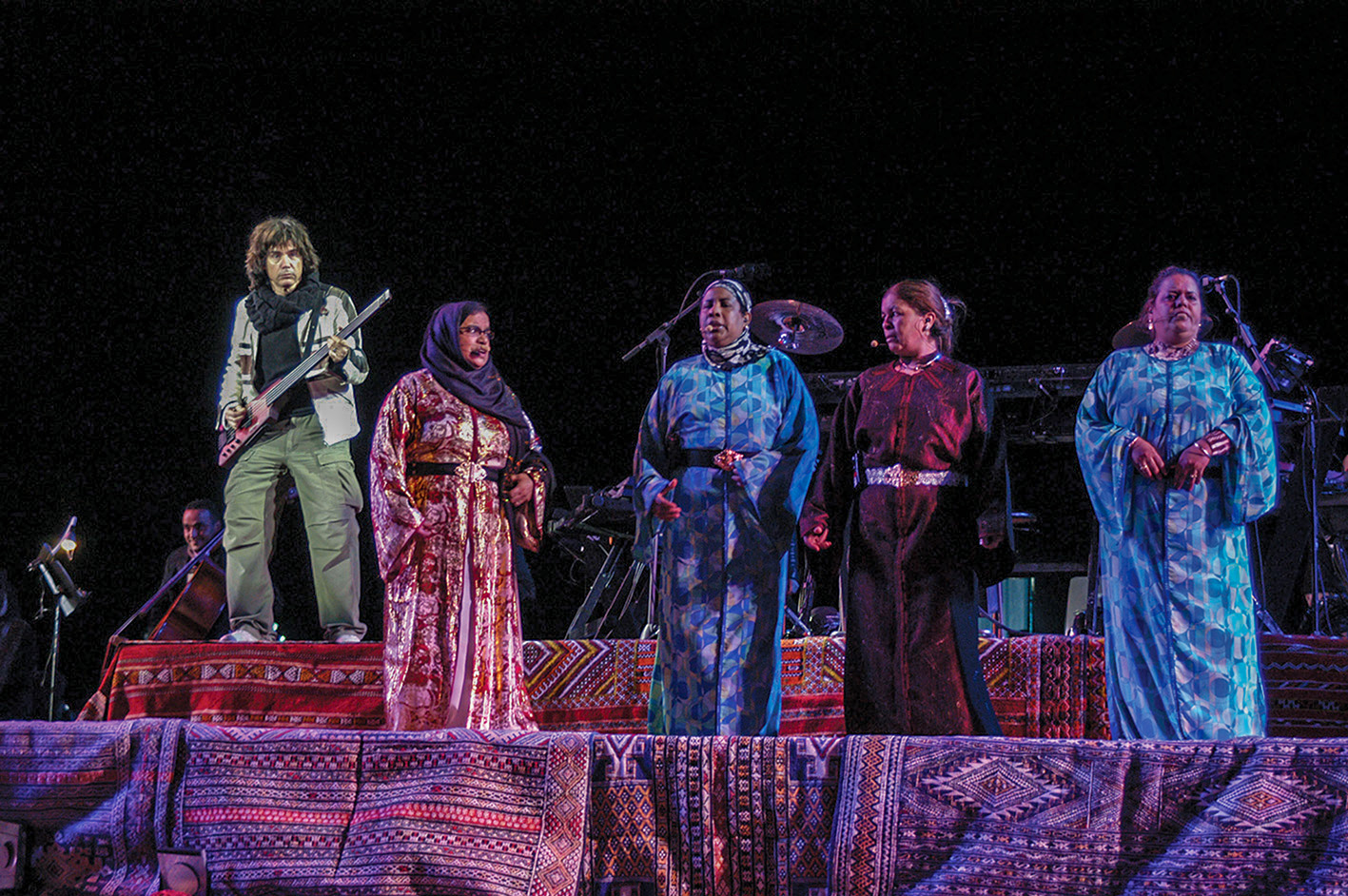
B’net Marrakech (traditional choir)
This choir was born out of the less favoured parts of Marrakech and the Berber Community in the Houara Region, south of the Atlas Mountains. The singers, who are all female, claim to be free women and have been singing together for 15 years and their inspiration comes from the traditional Berber way of singing, chaâbi and Gnaoua trance rhythms. They use their glowing vocals to interpret a capacious repertoire and use only traditional instruments such as percussions, lute and the Berber violin.
Ahmed Alaoui (solo violin)
The violin soloist Ahmed Alaoui was born in 1969 in Casablanca. His father, who was a musician and a lute player, taught him to play music at the age of seven. The young prodigy decided to focus on the violin; his harmonious and perfect interpretation has made him an appreciated artist, who has become famous by playing in the Oriental Orchestra of Casablanca. Ahmed Alaoui won the first prize at the Festival of Moroccan Songs in 2004.
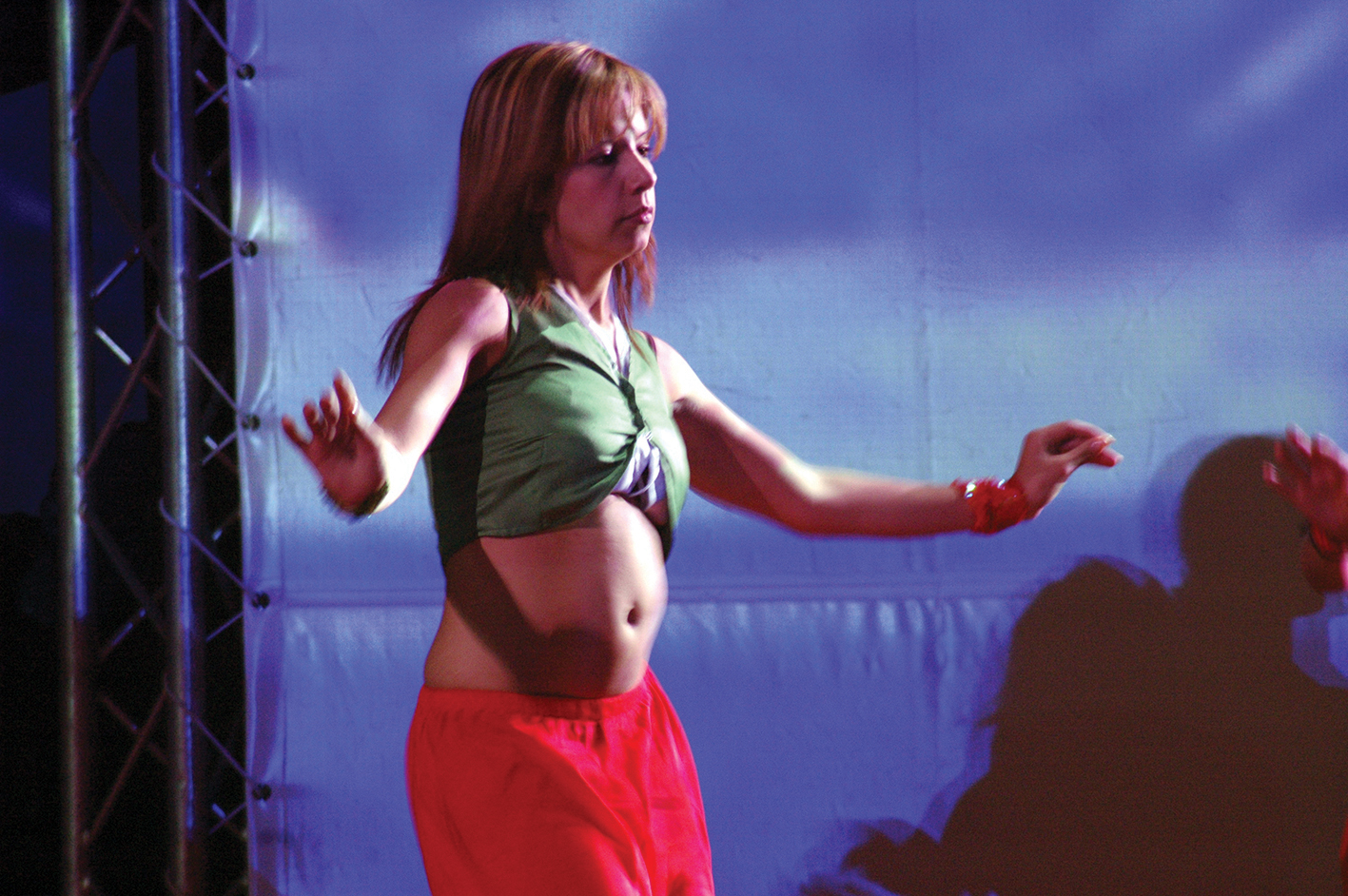
Charaf Dance Troupe (Oriental Dance)
Charaf is a young dancer and choreographer with a passion for creative performance. He premiered in classical dance and later moved on to form an oriental dance troupe in 2003. Today, the troupe are 7 dancers - 3 women and 4 men - who have a broad repertoire such as modern dance, jazz, hip hop, latino and African dance.
Modern Orchestra of Arab Music
This orchestra was founded in Casablanca in 1996 by the brothers Saïd and Abdelouahed Aloui and is comprised of 24 musicians and 16 chorus members. Their repertoire is composed of Arab-Andalousian pieces and “Mouachahets” (singing). The orchestra accompanies renowned Moroccan and Arab singers. For Jean Michel Jarre’s concert in Merzouga the formation consisted of 7 violinists, 1 cellist and 4 percussionists.
06/Feature
Show Time
If you’ve visited the village of Merzouga, it would likely occur to you that it was doubtful that any of its inhabitants had ever heard of Jean Michel Jarre, let alone been to a concert event of any magnitude. In what appeared to be a remote village of few hundred Moroccans, with a single street filled with storefronts and cafes, Merzouga looked to this outsider as just another tiny, generally poor, south-eastern Moroccan village on the edge of the mighty dunes of the Sahara Desert.
The concert location was at once intimate and grand, with nine skyscraper-style screens dotting the landscape. We had to drive for five hours through the vast emptiness of central Morocco to get to Merzouga so compared to the surroundings, the stage and set loomed large, while at the same time being dwarfed by the immense sand dunes far behind the stage.
As I stood in awe of the stunning contrasts of desert, multimedia, poverty, technology, Europe and Africa, I tried to think about how all of this would look and feel to the locals who lived in Merzouga, and indeed, any Moroccans who were able to afford to make the trip to see this concert.
As the crowd drifted in from the outlying villages and waited for the sun to set at the concert site, we were treated to a pre-concert rehearsal at dusk. Then, at 9pm, the lights dimmed, the crowd began to cheer as the stage and set sprung to life.
Concert recollection by Jon Deutsch
INTRO SATUREE
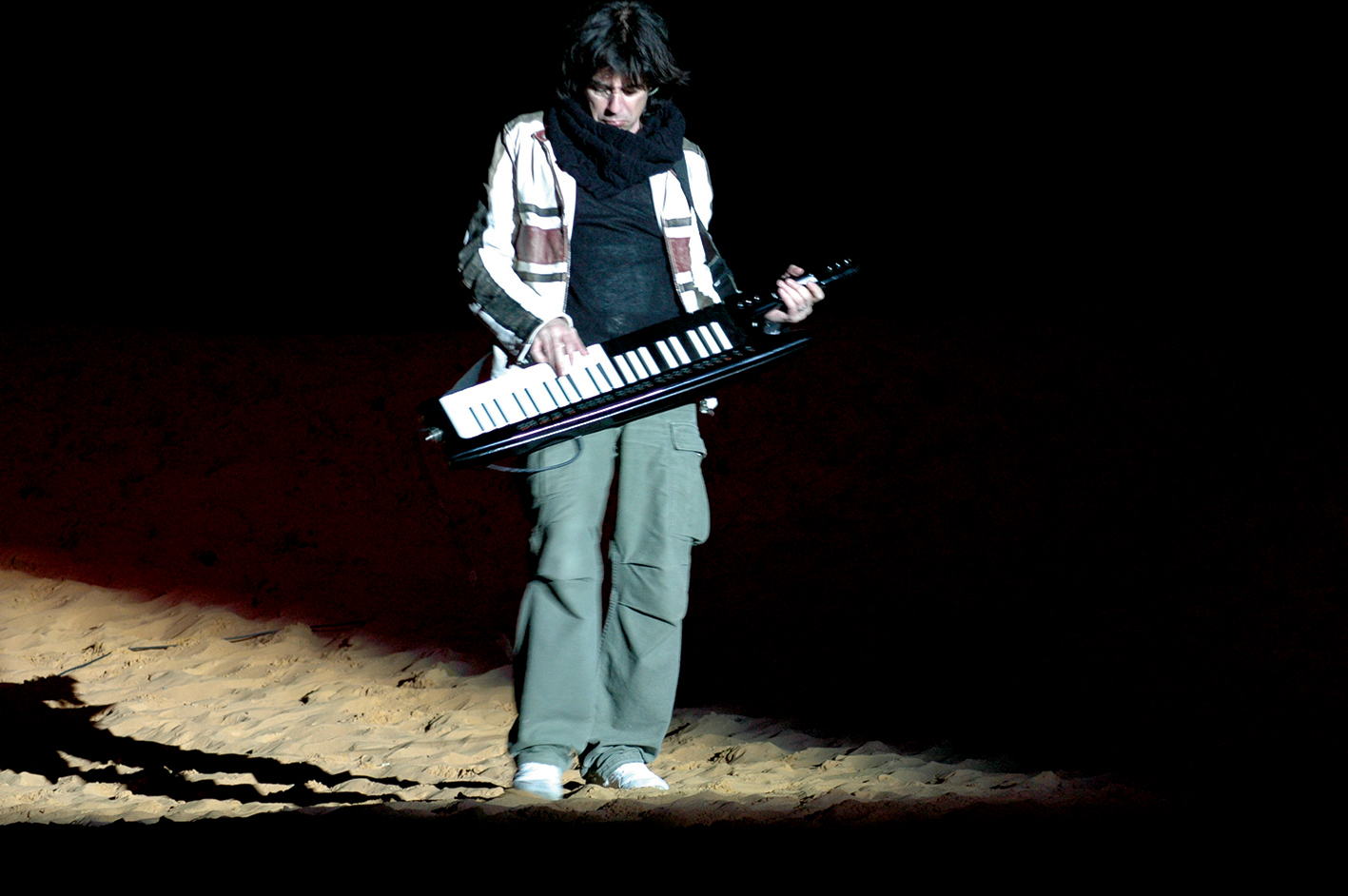
The screens light up with simulated television static … as if to tune into the Water for Life theme from this remote region of the world. Eventually, the screens begin to “lock in” onto the signal and – backed up by electronic and African percussive stabs – begin rapidly flashing large keywords tied into the UNESCO message of Water for Life. The flashing messages are tightly synchronised with the percussion stabs to great effect, building up a sense of excitement and anticipation that this concert is going to be something special indeed. The primary beat kicks in, a spotlight shines stage left, and Jean Michel is standing to the side of the stage, on the sand, armed with his AX1, clapping over his head to get the audience into the mood. A sombre topic, perhaps, but Jarre clearly wants people to have fun as they ponder the serious subject at hand.
Jarre begins jamming and improvising the theme of the tune and walks onto the stage as the images and words on the skyscraper screens continue to flash at rapid intervals. You get the sense that the political messages add a level of significance to this concert.
This track has got to be one of the best introductions of any concert by Jean Michel Jarre.
SUITE FOR FLUTE
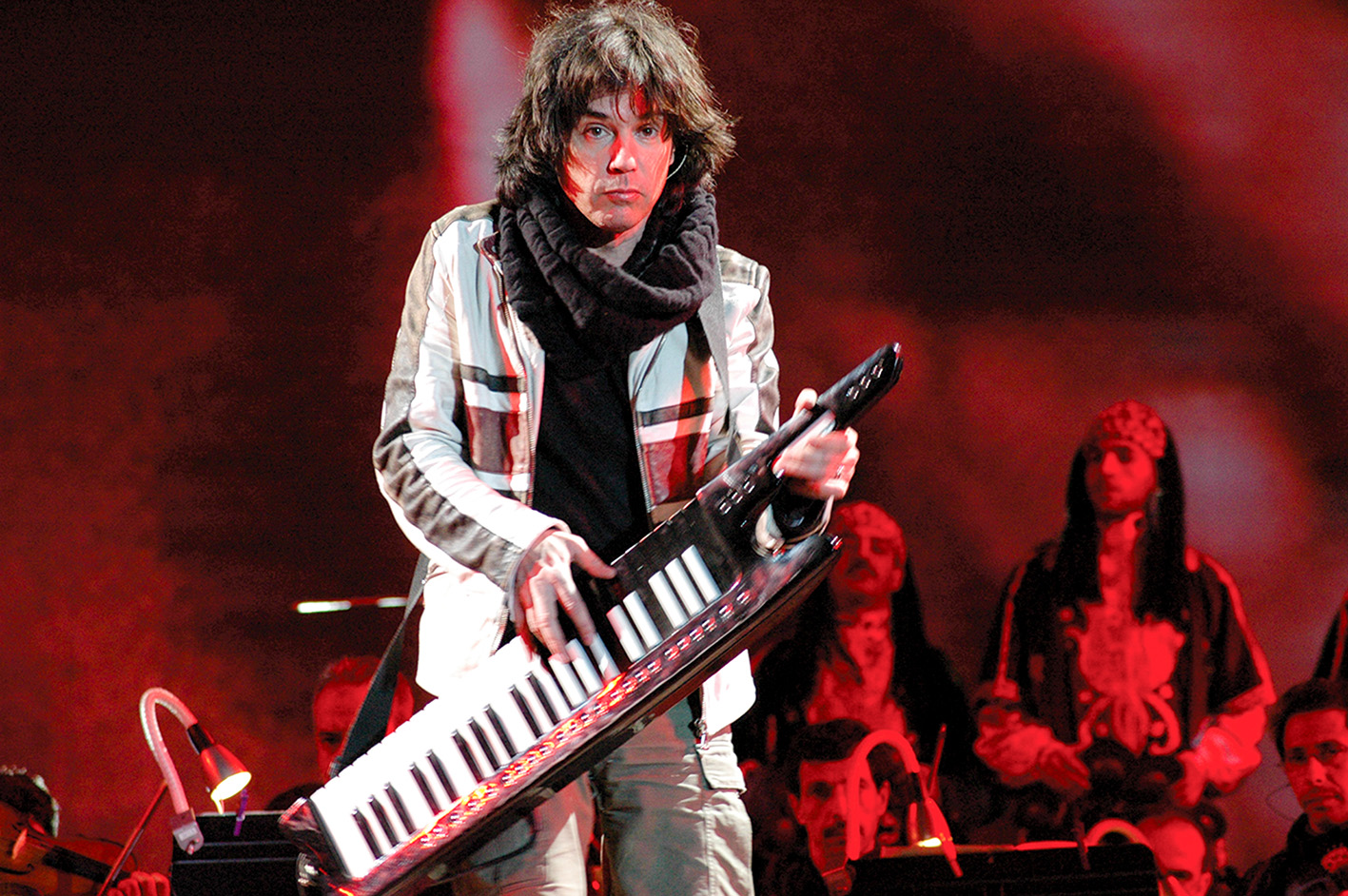
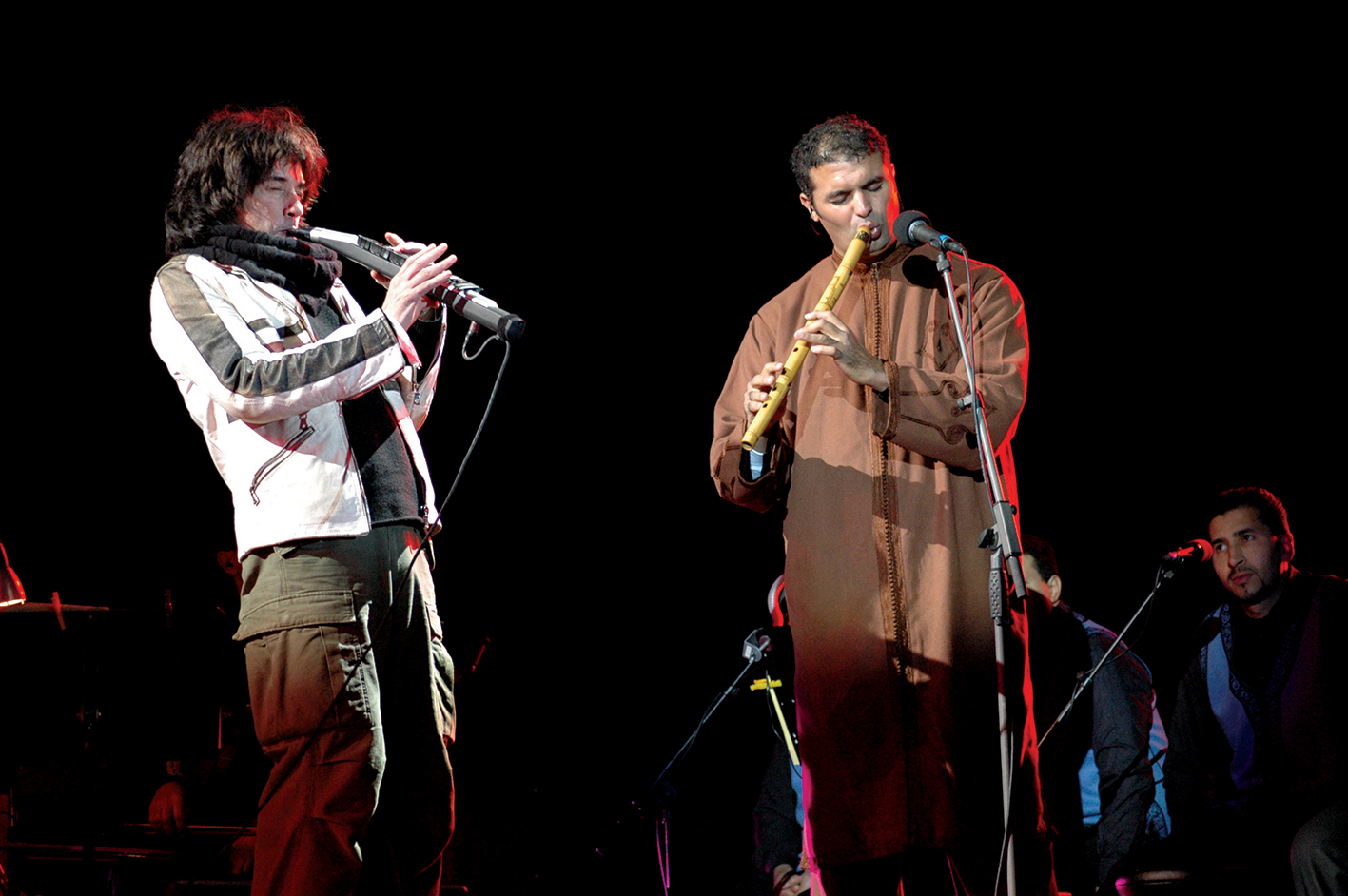
As if to ensure that his audience also understands the depth and importance of the message of the concert, Jarre contrasts the energetic opening with a sombre “duelling flutes” piece. While neither man is playing a western-style flute, Jarre is playing an electronic wind instrument and Rachid Zeroual is playing “sumthin’ like a flute” – the ney.
As they “duel” by alternating solos, huge sand-filled hourglasses are displayed on some screens, with oceans of water on others. As the hourglasses and water slowly but steadily drain themselves of their contents with liquid-like animation, conveying a sense of urgency surrounding the vital need for clean water around the world. In addition, Water for Life messages scroll up and down the screens, interwoven with live close-ups of the two musicians. This piece helps to set the concert’s dimensionality between high-energy fun and reflective, thoughtful concern.
OXYGENE 2
As the duet concludes, a silhouette of a penguin unveils itself on one of the skyscraper screens, and the Moroccan string section begins playing their analogue arpeggios, which then superimpose on synthetic arpeggios, and then Oxygène 2 begins. The imagery includes the penguin on one screen, and a silhouette of a man in a doorway on the other screens.
This song gets the crowd going: there are people on one another’s shoulders, clapping and swaying along to the song. During the second half of the song, Rachid Zeroual comes back to jam. There are some cool moments when Rachid goes staccato and adds a new rhythmic complexity to this classic.
MISS MOON
As the show transitions to the next song, the great “doors to the desert” arrive on the screens, as if to let us into this part of the concert. A great and welcome surprise – not since Twelve Dreams of the Sun in Egypt six years ago has Jarre included Miss Moon in one of his live concerts. Bearing in mind that this concert is simply on the other side of the Sahara Desert, it makes sense that the music he arranged for the Egypt concert would resonate well in this location. The Moroccan musicians, instruments, and vocalist gave this track distinction, depth, and real global music flair.
This piece was punctuated with a caravan of camels crossing behind the stage, a belly dancer from the Charaf Dance Troupe, synergistic images of cloud-covered skies with hints of sun peeking through, and Water for Life messages swimming up and down the screens.
Combined with the earthy and modest imagery, this Arabic-Ambient song provided depth and warmth to the concert. It was mesmerizing by design.
OXYGENE 7
Jarre starts off by welcoming Moroccans far and wide for joining us and pauses whilst his trademark “laser harp” opens across the stunned audience. The laser harp for this show was something special. It’s not the first time it has been oriented to stretch over the crowd, but based on the size of the event and how the crowd has assembled, the laser harp ‘strings’ essentially spanned across the entire crowd, while the desert mist and smoke filled in the gaps between the ‘strings’ to give us laser-inspired clouds that made for a mystic experience.
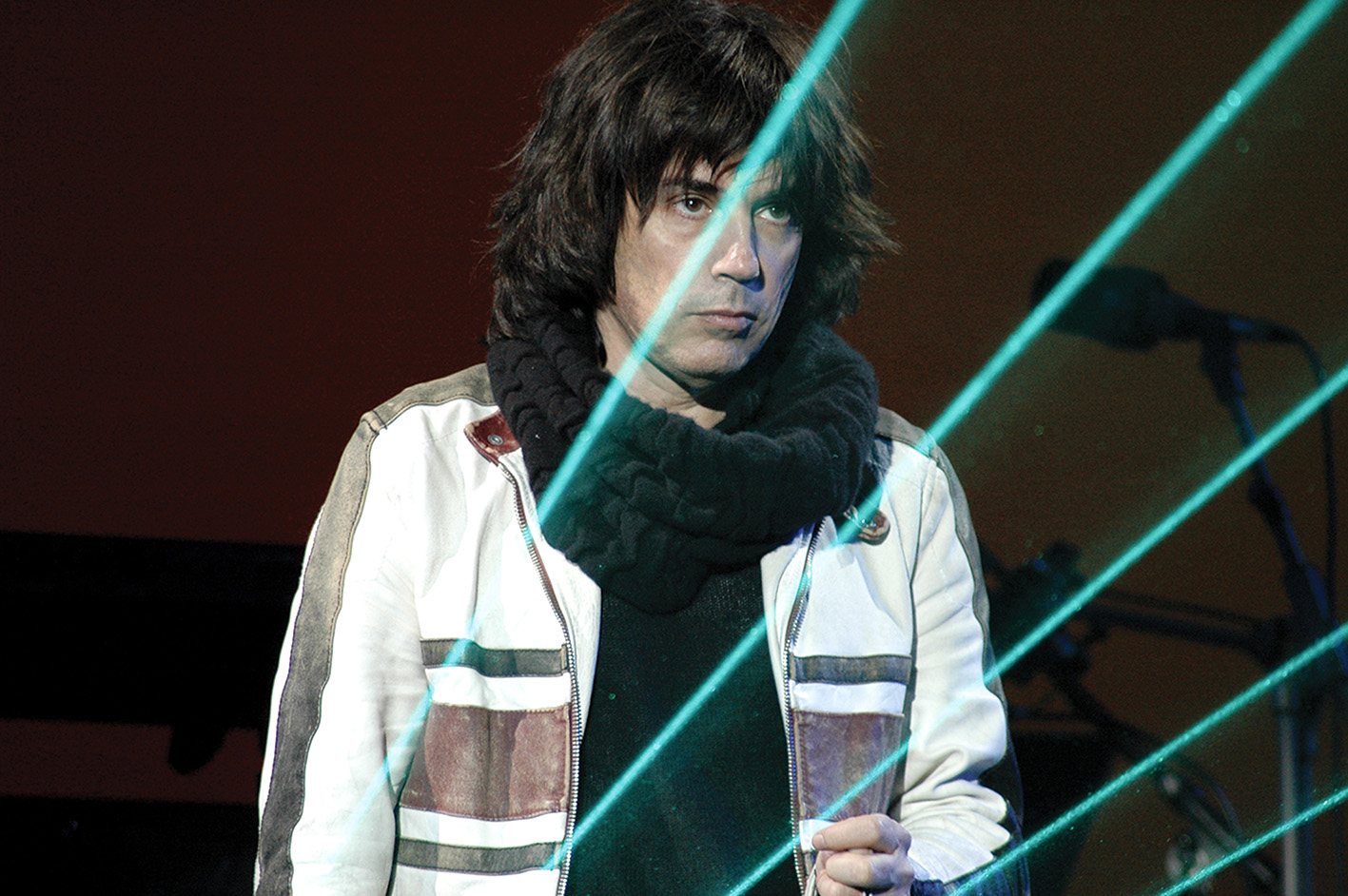
Most concertgoers could look straight up and see the harp in action. The locals decided they couldn’t let this unique opportunity pass them by and so many of them lost their coats and jackets as they flung them into the air, trying to break the laser strings and contribute the odd note or two to the event. They may have been regretting it later as they trekked back home through the cold desert, but at that moment, it added to the fun of this show.
Oxygène 7 had very colourful and vivid imagery for this concert, which consisted of animations of wildlife and brighter-thanlife butterflies fluttering through fields, interchanged with Water for Life messages scrolling up the screens. A pleasant surprise for this performance was an updated beat, which had a slightly less electronic and more Moroccan instrumental feel to it. Subtle but effective. This arrangement also highlighted the Moroccan orchestra again to great effect, and the violins really added colour and an authentic Moroccan feel to this otherwise very electronic, hi-tech song. Jarre must really enjoy contrasts – he created many compelling instances of contrast throughout this concert.
SPACE FOR FREEDOM
Switching back to another Jarre-inspired genre – jazz/ambient – he slows the beat down for March 23, where he plays his electro-flute, which plays back the trademark trumpet sample. The imagery is stark: on the one side, we see the lights and notorious water displays of Las Vegas, Nevada, while on the other side, we see the shadow of a woman carrying a casket of water on her head, but the shadow is cast on earth so parched that there are cracks all through the ground.
There was a compelling geopolitical dimension to this event as well. For instance, there was striking imagery of massive water displays being used in Las Vegas simply for entertainment purposes as well as President Bush held up to account for the war in Iraq over oil. As an American who is quite aware of the current international tensions created by my country’s government, it was not that surprising to see the U.S. being used to ignite passions and emotions. It had the desired effect with the audience.
Once again, the live orchestra was well utilized to add a richness to the arrangement. In addition, a guitar player came out for a solo.
CHRONOLOGIE 6
Doors re-appear on the screens briefly, slightly ajar. They quickly disappear as the new trademark opening arrangement for Chronologie 6 beings. Thoroughly enjoyable and imaginative imagery fills the screens, starting with the Sahara sand dunes, transforming into blue skies with puffy clouds, and then to images of the ocean. The ocean theme was complete with fish swimming and sharks attacking. These then transformed back to the Sahara dunes… and then back again.
Moroccan Rachid Zeroual returns on piccolo and interplays arpeggios with Jarre’s accordion solo, again customizing the experience for this concert. Some of these piccolo arpeggios are heavily staccato and really are a fascinating feast for the ears.
Due to the heavy influence of live instruments, and its Metamorphosis-inspired arrangements, this concert musically resembled Twelve Dreams of the Sun more than any subsequent concert.
MILLIONS OF STARS
Fire is the theme for Millions of Stars for this performance. Why fire? Possibly because fire is the opposite of water, and is the companion of water in the context of the ancient elements: earth, air, fire, water. A beautiful ambient song that tends to take you out of your body, Millions of Stars were vocally performed by Jarre himself, which adds an immediacy and intimacy to the experience. This song must have been written with the desert in mind and the Erg Chebbi dunes in the Sahara Desert was the perfect setting.
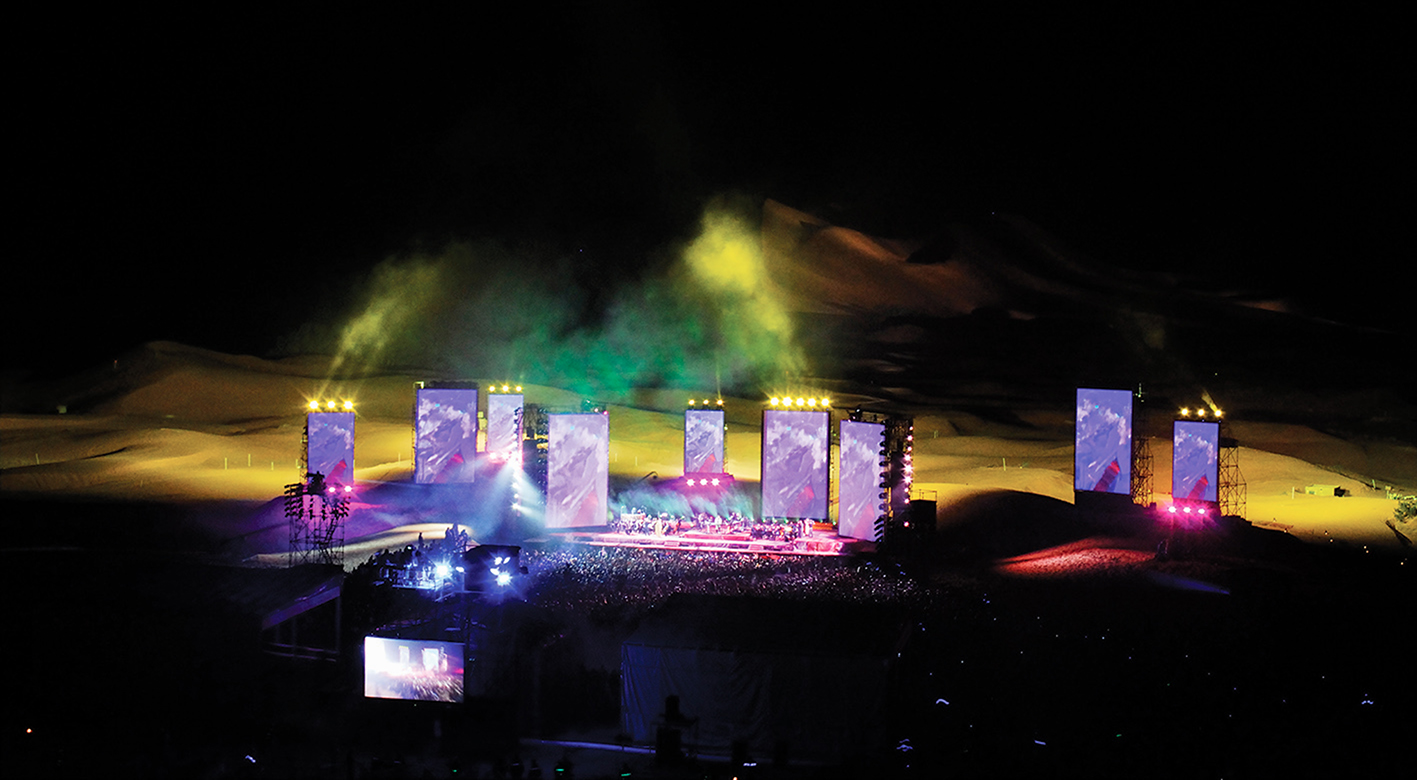
Suddenly, the crowd stirs, as more people spot several small fires emerging from the sand dunes behind the concert set. As far left and right as you can see, there are flames emerging from beyond the concert. Remarkably – and to great effect – the smoke created by these fires begins flowing over the entire concert area, engulfing us in the experience of fire in three dimensions.
And as if that was not enough, soft, gentle fireworks that express themselves as “millions of stars” begin to punctuate the already-existential experience.
Near the end of the song, the Moroccan Philharmonic Orchestra takes over and narrates the serene scene as the fireworks increase in a reserved intensity. All of these elements together create a breathtaking moment. This is magic. This is the reason why I fly around the world to see Jarre concert events. I consider myself lucky to be able to experience moments like this in my life.
OXYGENE 4
The introduction and arrangement of the next song, Oxygène 4, disguises Jarre’s most famous piece and it seemed like the majority of the Moroccans didn’t know what was coming until the world-famous beat started.
Global Warming is the theme for this perennial favourite, as we see large chunks of ice break off and fall from icebergs, followed by billowing smoke from industrial smokestacks, and a variety of other pollution imagery. Some of the imagery had a Koyaanisqatsi feel to them, which helped evoke the political message of life out of balance. It is all the more fitting that Oxygène is the soundtrack, as clean air itself is part of this ecological balance.
EDUCATION
Jarre emphasised that education is the next critical step in developing nations before the orchestra begins playing the Arabic-style introduction of Revolution. Large stacks of books dominate the stage screens, and Jarre is armed with his trademark megaphone. Some of the lyrics from Revolution are altered to fit this specially tailored version of Education. At each break, Jarre exclaims “Education” instead of “Revolution”. Moroccan vocalist Ahmed Alaoui chants along with the live orchestra and electronic beats, giving the song a distinctly Arabic feel.
A couple of new flourishes make the performance of this song distinctive, including AX1 solos in the middle, which led back into jam sessions with all of the live players. It is always good to see Jarre jamming with his fellow musicians in concerts.
GAGARIN
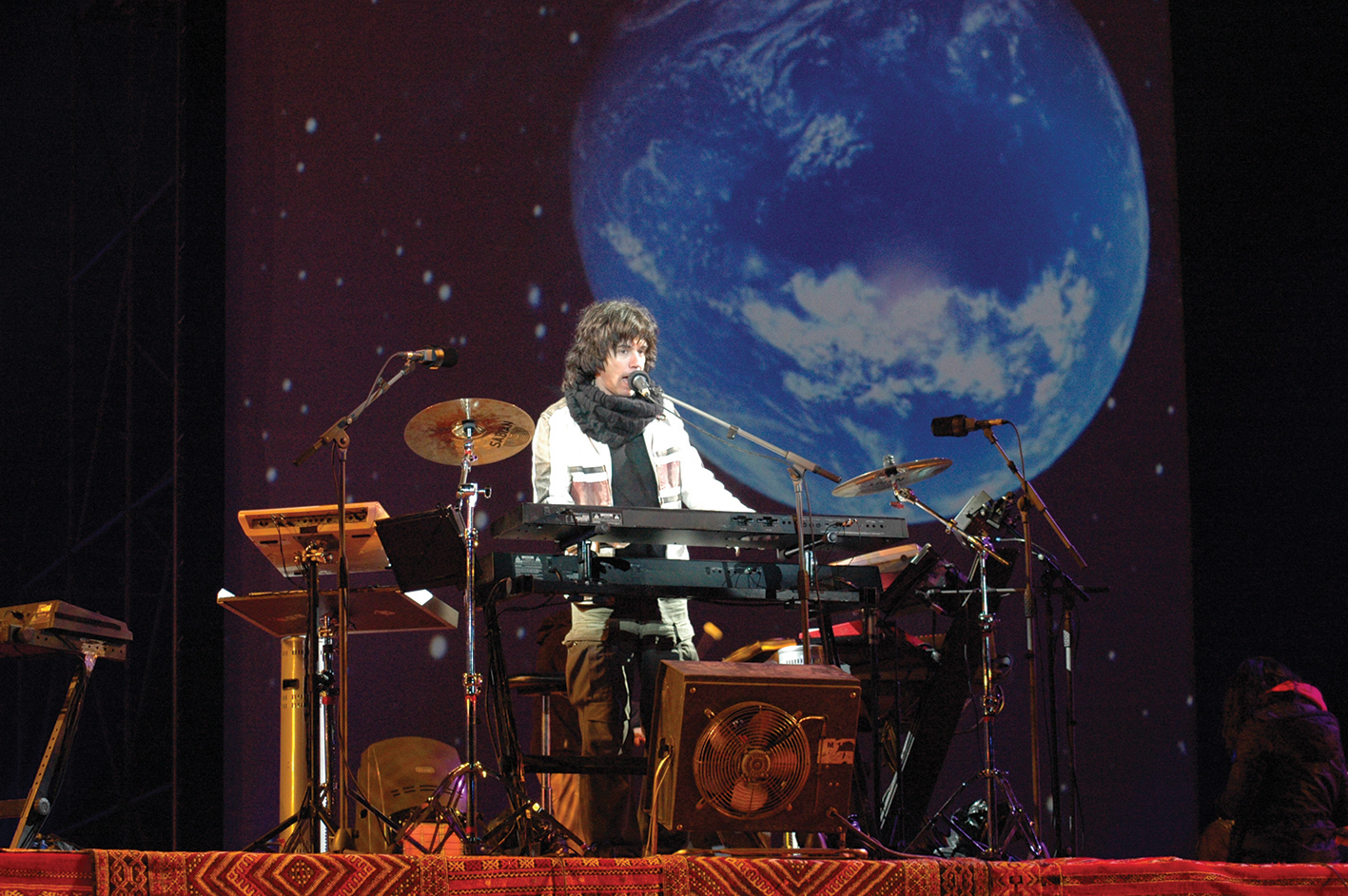
Large yellow vertical bars on a blue background stripe the concert screens as the intro of Gagarin begins. It’s a great feeling to hear this being performed live again, reminding those of us who were also in Egypt of how great that show was, and how we’re simply on the other side of the same desert. It’s like the Sahara Desert now has Jarre bookends.
Jarre gives us a slightly new arrangement of Gagarin, which breaks into the main melody much faster than the album. While it’s easy to tie this space-themed song to images of Earth from space, I believe that there are other reasons for this imagery: to remind us of how beautiful and blue our planet is.
All that blue is water. And all that water allows life.
LIGHT MY SKY
Now the official party song of Jarre concerts, Light My Sky cranks up the energy at the concert, and everything seems to get brighter, flashier and more colourful. The crowd goes wild and it’s an instant rave. Jarre has got to be thrilled that he can still pull off such a scene at his concerts!
OXYGENE 12
The doors re-appear briefly, in the closed position. The party continues with Oxygène 12 and we are treated to animated abstract images of various living organisms morphing in high speed based on wind, time, heat, rain and other natural elements.
CHRONOLOGIE 2
Chronologie 2 is certainly a welcome addition to this already special event. Moreover, we are treated to an arrangement which integrates the live orchestra, with a brand-new beat. This new beat gives Chronologie 2 a completely new, airy, open, and very contemporary feel.
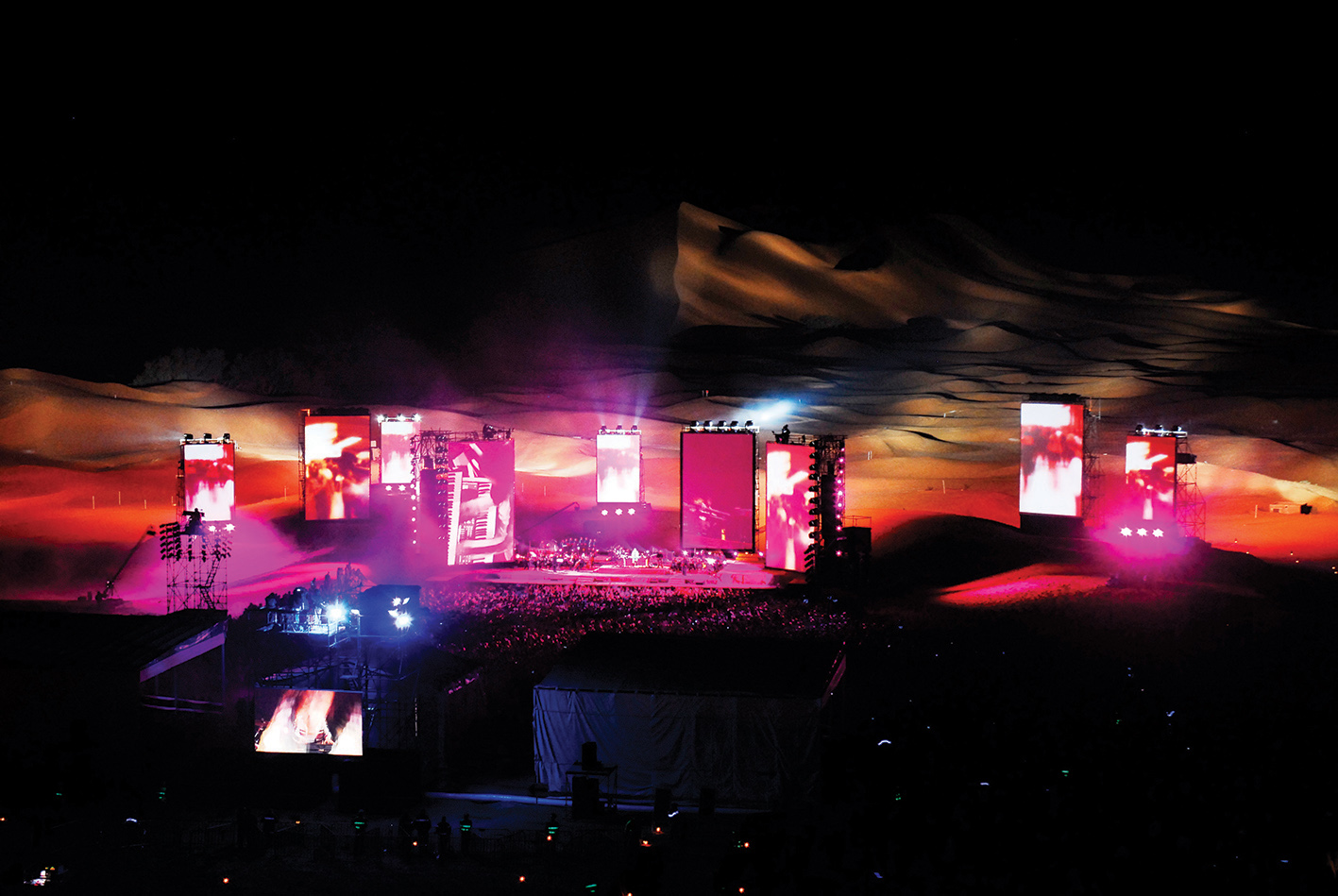
As the audience is treated to this entirely unexpected track with an unanticipated new arrangement, we also get the first “projection” on the sand dune behind the concert. While not a traditional projection, the lights are projected in such a way that it turns the large sand dune in the centre into a huge silk scarf; waving and flowing with the wind – spectacular!
Atop all of this, the Moroccan chorus from the Alizés Classical Choir then kicks in at the crescendo of the song and their sound is just so powerful – the most powerful choral sound I’ve heard at any Jarre concert to-date. They really made this piece exceptional.
C'EST LA VIE
Shades of Egypt once again, as the orchestra kicks off C’est La Vie … another Arab-inspired song from Jarre’s album Metamorphoses. No Natasha Atlas this time; instead we have a local Moroccan Saïda Charaf interpreting the vocals. I love that C’est La Vie is one of the few songs written that has French, English, and Arabic lyrics – truly tri-lingual. This is an important symbol of different cultures working together in harmony. Saïda performed with little more than three days’ notice, so it is easy to forgive some of the slight hesitancy in parts of her performance. The end of the song is punctuated by an amazing array of fireworks that fan out across the stage and get the crowd excited.
THEREMIN MEMORIES
Doors re-appear and transform into local Berber carpets, as Jarre approaches the Theremin. This solo is quite different from Theremin solos he’s played in the past – this one is backed by a light synth pad, and he achieves the sense of real melody that is in harmony with the background synths.
SOUVENIR OF CHINA
Moroccan-style doorways consume all screens, exposing scenes of an ocean. Simultaneously, Souvenir of China begins, and in tandem, fireworks elegantly compliment the song by initially launching a single shot every four beats. As the song continues, the fireworks become more intense, but in a reserved, respectful way – fully complimenting the sombre tone and temper of this moody piece.
This was one of the first songs of the night where the fireworks began to take shape as a virtual extension of the stage and set. Fireworks have always been an exciting and fun component of Jarre concerts, but in Water for Life, the combination of the fireworks fanning out from the ground and how they achieved symmetry – while synchronising with the music – really created a sense of unity between the fireworks, imagery, music, and environment. A brilliant and holistic concert design.
UNESCO THEME
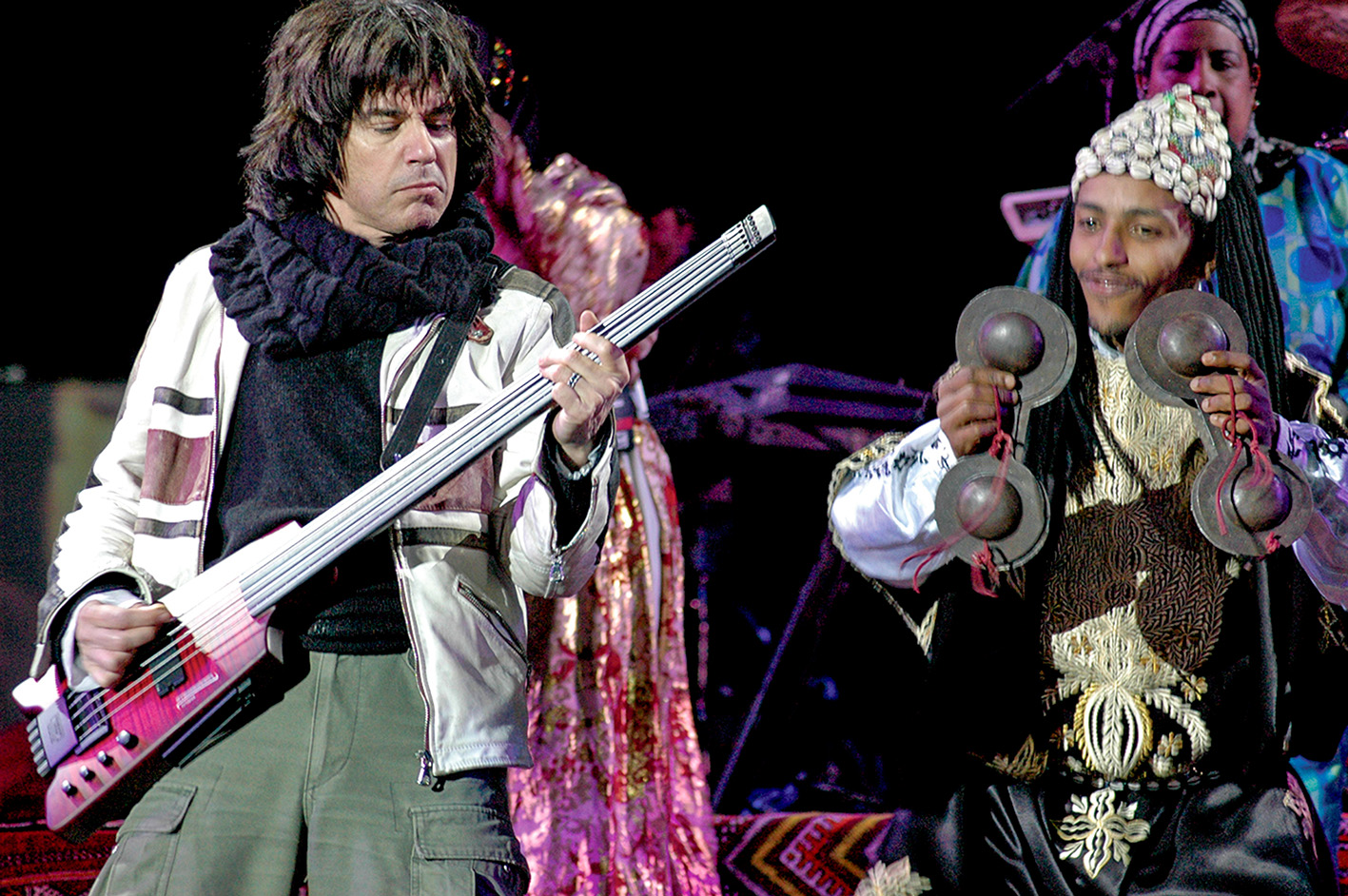
Doors, once again, appear on all screens. But this time, they all open to show us live shots of the energized Moroccan rhythm section - Maalem Hamid El Kasri’s group, banging away at tribal drums to help create an authentic ethnic beat that meshes well with the synthesized rhythm of Eldorado. As the song ramps up, we are introduced to the tribal singing of B’net Marrakech, the Moroccan women beside the rhythm section, as all onstage physically and emotionally embrace the song.
It’s a party on stage, and Jarre is in his element jamming along on his synth bass guitar with the locals. Throughout the song, the rhythm section is augmented by tribal beats, hoots and hollers. Moroccan vocalist Ahmed Alaoui compliments the piece with local chanting and vamping to add additional ethnic colour (or Ethnicolor for aficionados) to the tune.
RENDEZ-VOUS 4
The sound of a helicopter flies overhead, and the finale standard, Rendez-vous 4, begins. The concert is winding down, but the energy is cranking up! All the screens become instant audiencecams showing the crowd dancing and partying to the tune. And it would be downright criminal to not mention the breath-taking fireworks that are launched right through the entire song with reckless abandon.
A word about the fireworks during this song: you’re going to have to see the film to even get a hint of what I mean by an astounding, astonishing, and bombastic display of pyrotechnics. At times, the entire sky was lit up like it was mid-afternoon. At other points, it appeared that there just might be twenty individual fireworks erupting simultaneously across the sky. Fireworks were launched from almost all angles the eyes could see, surrounding us in a light show like none I have ever seen. It was overwhelming in all the right ways!
In this performance, the music took backseat and became the soundtrack to the concert energy and excitement. Rendez-vous 4 is just the right, vivacious and fun piece to do this with.
RENDEZ-VOUS 2
Doors again. Jarre says “good night!” and shockingly, some of the crowd believes him! We see many people start drifting out of the concert – giving the appearance that the coy “encore performance” concept that the West has gotten down to a science has yet to reach this outlying desert village. They stop in their tracks and rush back though as Jarre re-emerges and we are treated to the closing finale - Rendez-vous 2. I’ve heard this piece played several times live, but this was the best performance I’ve witnessed to-date. Why?
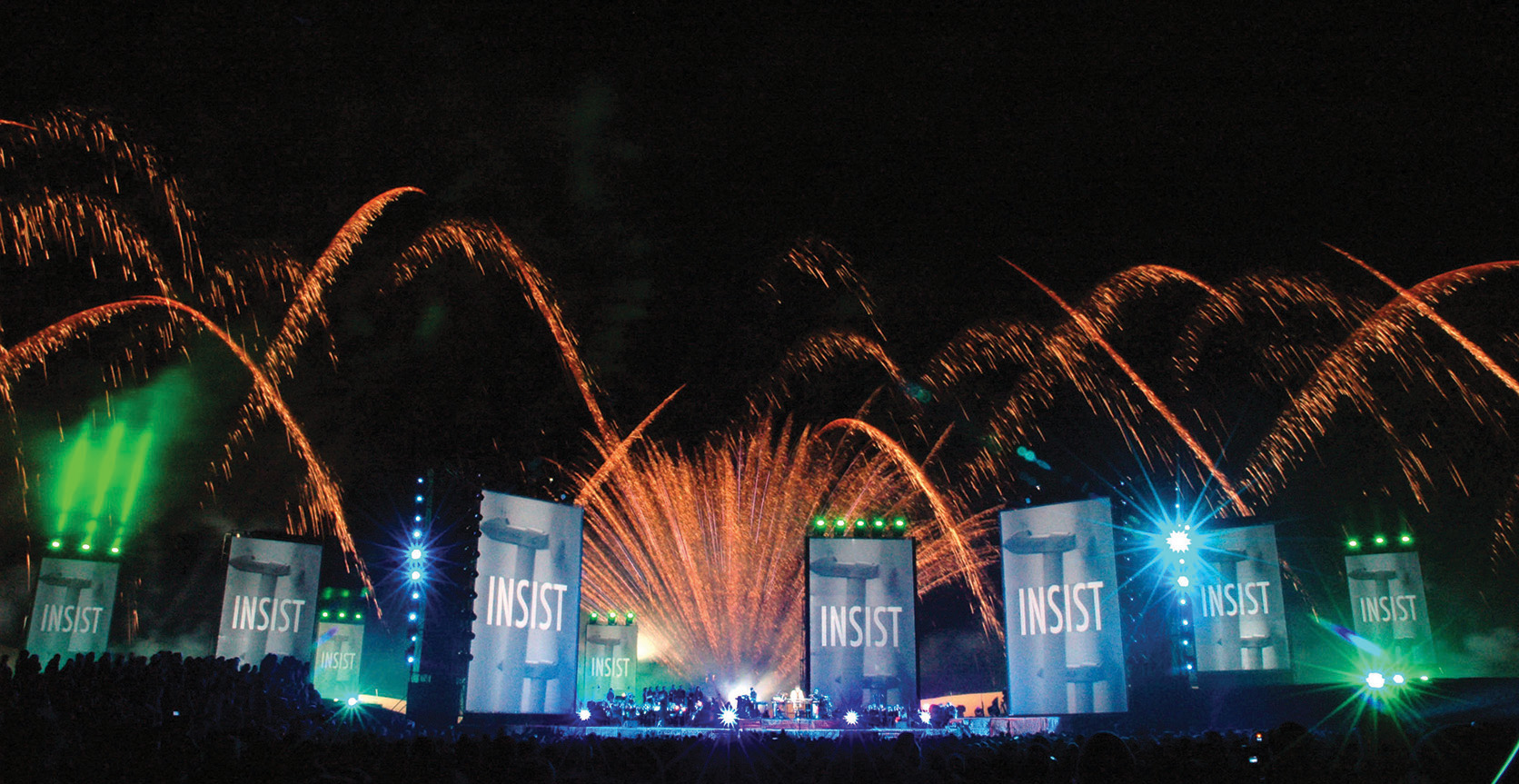
First, the imagery consisted of a seemingly never-ending, rapid flow of provocative words that alluded to social injustice, placed in the middle of frenetic, dramatic scenes that evoked the sense of urgency. During the laser-harp movement of the song, the imagery transformed once again into huge hourglasses filled with sand, slowly emptying, while alternating screens showed us water levels decreasing. Together, the words and the images conspired to send the message of “Time is running out. Help is needed now.”
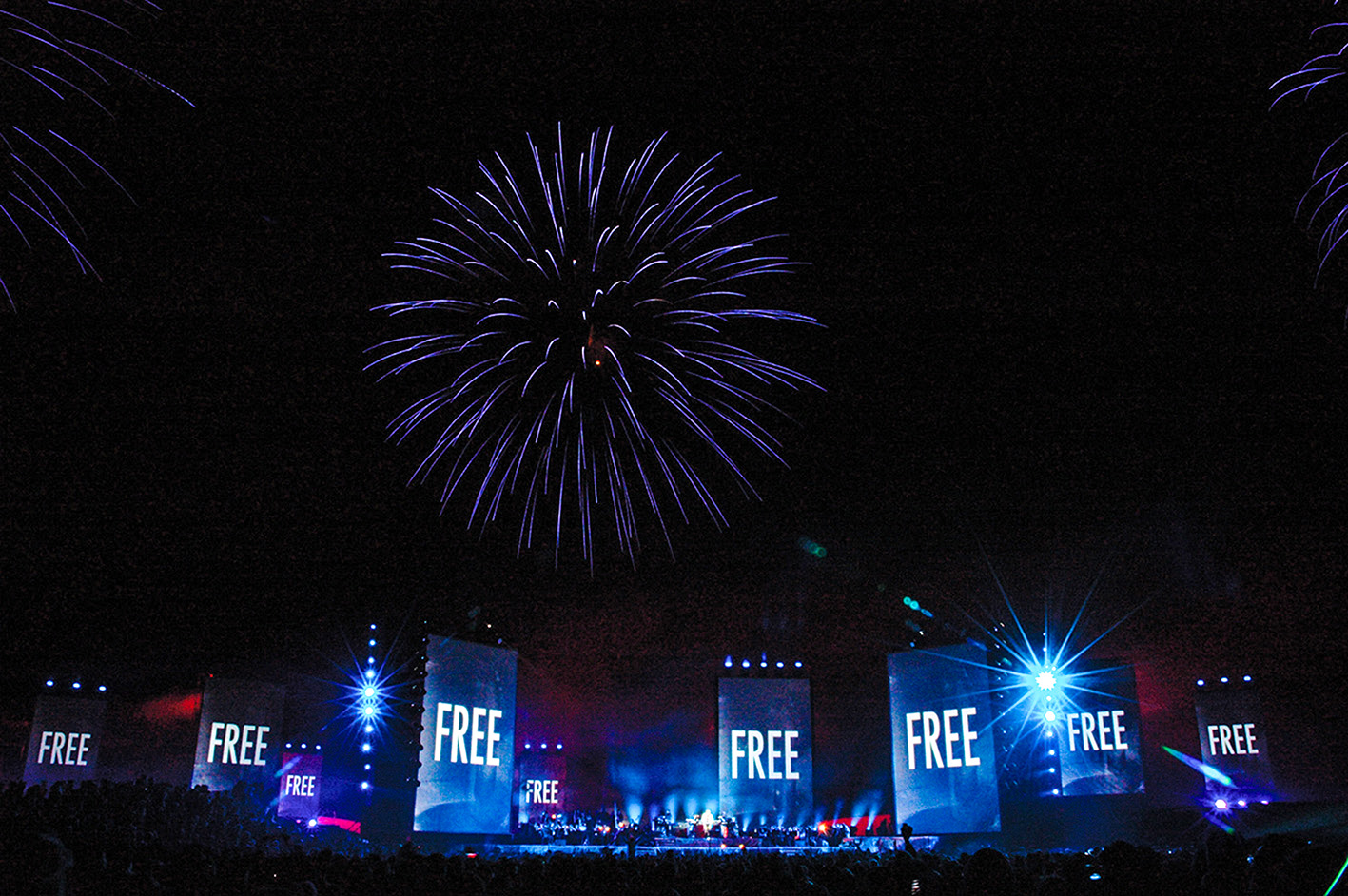
Second, the orchestra was fantastic, and well-mixed. Rendez-vous 2 has always been, to me, the modern equivalent of a movement in a symphony. So, when the orchestra is done right, it allows this song to soar. The feverish violin runs, tympani shots, and horn calls help create an analogue fabric that superimposes brilliantly over the synthesized core.
Third, the Alizés Classical Choir once again exceeds expectations. They were just so punchy, full of soul, and mixed up into at the forefront of the sound, providing us with a sense of closeness to the performers that is sometimes missed when they are mixed behind the synths.
Last, but not least, the fireworks once again exceeded all expectations. The crowd had barely just come to grips with how many fireworks were unleashed minutes ago, when a new set of fireworks emerge. But, unlike the fun/party fireworks of Rendez-vous 4, these fireworks excelled in both their precision choreography and their sheer abundance. Criss-crossed shots, fans, and traditional fireworks all work together to accentuate the stage, extend the set design, and appear as if the fireworks were actual performers in the concert - not unlike the musicians on stage.
The pyrotechnics architect for this event should be extended big-time kudos and receives a vote from this writer to work with Jarre in future concert endeavours.
Water for Life
Most fans can ramble on and on about a Jarre concert; how fantastic it was; how great each track was in its own unique way (see preceding pages for an example…). But, at least in the case for this fan who made last minute arrangements to get to Merzouga from the USA, I was honestly surprised by the breathtaking feeling that this event evoked and emotionally moved by the confluence of the different elements that uniquely and satisfyingly converged at the gateway of the Sahara Desert – in the middle of the middle of nowhere.
While quite challenging to actually plan a trip around, the location was just so Jarre – it’s almost as if he takes pleasure in knowing how hard his fans have to work to see him in more and more remote locales. If true, it’s a brilliant approach, because the more we invest, the more we tend to get out of the event! In fact, a fellow fan and I have a running joke that Jarre’s concerts are all “tests” for his fans: our loyalty needs to be assessed continually if we’re going to stick with him as he works up for his eventual concert on the Moon!
In the end, Water for Life had a very special energy that transcended the facts and figures of track lists, number of attendees and size of stage. The energy was intimate, yet enormous at the same time. There was a palpable psychic connection between the desert, the Moroccans in the audience and Jarre. The sound cut through the desert air with a distinctive crispness. You can’t manufacturer or plan it, but this energy materializes when the right ideas, people and circumstances converge on a single event for reasons that we might never fully understand. I think the French call it “je ne sais quoi”.
07/Interview
Alain Bilowus
Show Producer
Jean Michel Jarre’s concerts at the time were produced by the company Créations Productions Management (CPM), which is based in Paris, France, working alongside Jean Michel Jarre’s management company, Aero Productions. They have been producing his concerts since the historic show in the Forbidden City and Tiananmen Square in Beijing, China in October 2004. Since then, they have organised events for Jarre both large and small, ranging from the huge concert in the Shipyards of Gdansk through to the small, intimate concerts in Monaco in 2005.
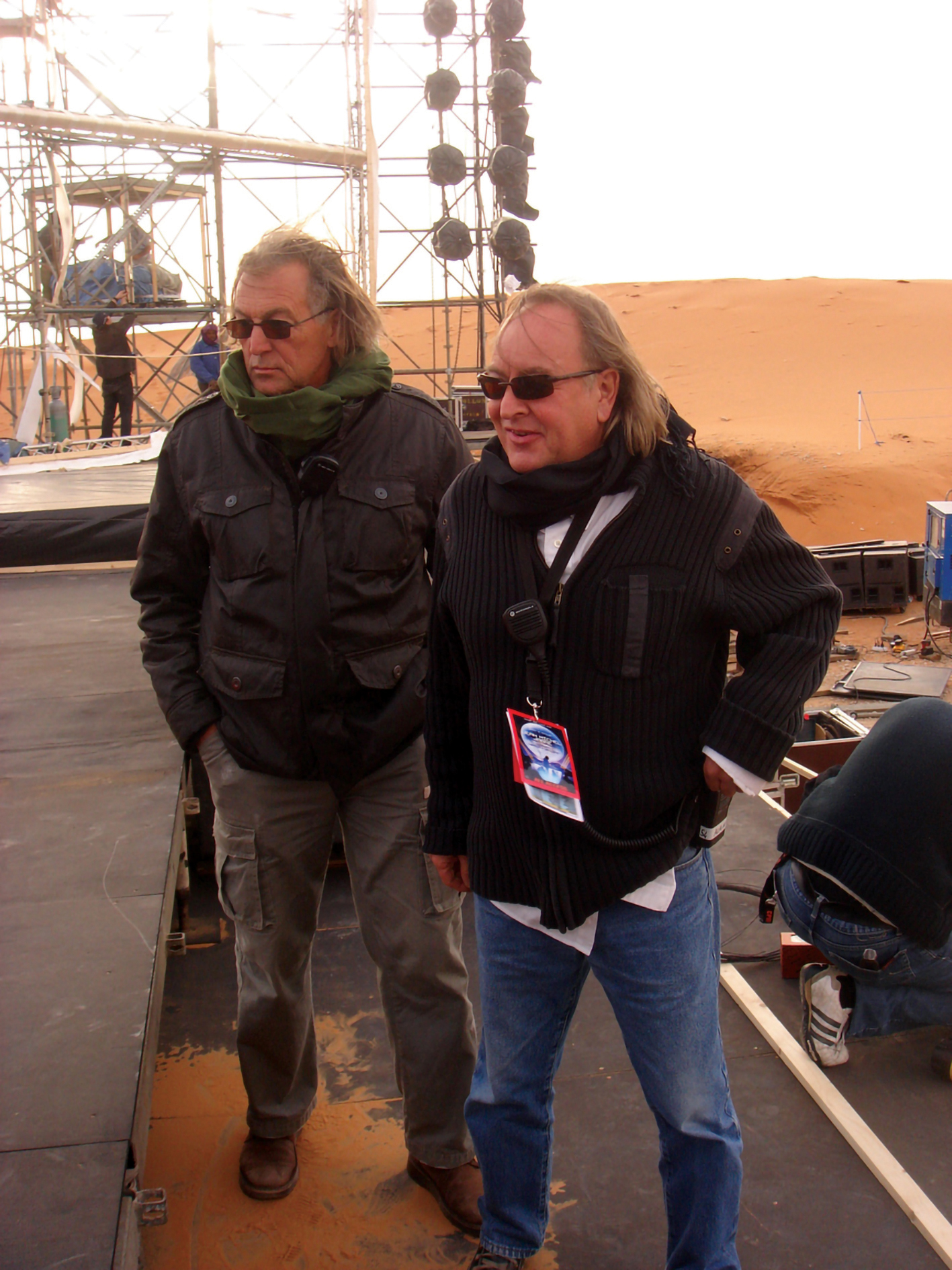
Alain Bilowus is the director of the company and has been the producer for all of Jean Michel Jarre’s shows with CPM. We caught up with him on one of the rare moments that he was not jetting off to countries around the world, investigating the next projects for Jean Michel Jarre.
How was CPM first formed?
I created the company Créations Productions Management in 1991, specialising in the creation, production, and direction of events and concerts of a cultural nature with an international dimension, using the most advanced techniques.
Aside from Jean Michel Jarre, what other projects do CPM produce (both historical and present)?
We have produced many projects in the past. Notable projects include the Emir Cup Final in Doha Qatar (2005); Eiffel Tower, Paris, France (2004) - the architectural lighting for the French Presidential Office; Janadriah Festival in Saudi Arabia (1994 – 2000); Pyrotechnic Show in Jeddah (2001); Madinah Show in Saudi Arabia (1999); Summit of African Heads of State in N’Djamena Tchad (1998); African Festival in Niamey Niger (1997); G7 Summit in Lyon, France (1996); the French-African Summit in Benin (1994); and the Indian Ocean Games Opening & Closing Ceremonies (1993).
In the future, we have a number of projects planned. These include projects in Stavanger, Norway for the Opening Ceremony of the Capital of Culture Year in 2008.
We are also currently working on a project due to take place in Beijing in 2008, in honour of Pierre de Coubertin [founder of the modern Olympic Games], as well as on the Heads of States Summit in Dakar, Senegal and other confidential events that I can’t divulge, I’m afraid.
Where did the link with Jean Michel Jarre come from?
As we share the same artistic values, meeting Jean Michel Jarre was inevitable sooner or later. The occasion arose at the end of 2003 through Fiona Commins when the artist expressed the wish to light the Eiffel Tower in red.
Can you explain precisely what the role of Concert Producer entails?
The role of Concert Producer is a complex one. He or she manages the following fields; research department, artistic conception, technical aspects, logistics, human and financial resources that change depending on the event.
The producer is supported by an important administrative department which includes lawyers, chartered accountants, insurers and banks.
According to the artist’s requirements, the producer chooses the suppliers who will take part in the event. He/she obviously works closely with the artist on the preparation of the project and accompanies the artist on location to manage unforeseen events.
What do you think makes Jean Michel Jarre’s productions unique?
I believe Jean Michel Jarre’s productions are unique because he endeavours to stage the shows with the following unique parameters - the specific locations where they take place; the unique artistic content of each concert; the high-tech technology for each event; and the message that Jean Michel Jarre wishes to communicate.
The first show CPM produced for Jean Michel Jarre was the Beijing show and it drew together a fairly new team for the production. How was it composed?
The team is composed of ‘key people’ like Charles Lambing – Technical Director, Rodolphe Lejeune – Production Director, Claude Samard – Musical Director, Roland Bréand – Stage Manager, Patrick Gérard – Material Logistics Director as well as several crew members who have all been working at CPM since its creation.
It has therefore acquired a professionalism and an international dimension which attracted Jean Michel Jarre.
Was Beijing a baptism of fire for the new team?
Yes, for part of the team. But the team’s ability to adapt, together with the experience of the leaders, enabled the creation of a perfect osmosis between the different nationalities.
Can you tell us how the approach for the concert for Water for Life came about?
Jean Michel had devised the project of a concert in Morocco in 1985 with the late King H.M. Hassan II. “2006 – Year of Desertification” as well as the current environmental issues linked to the lack of water, were at the heart of the production of this concert.
Were other locations considered for the event?
We also considered Laâyoune in the south west of Morocco but for numerous reasons, the original site of Merzouga was chosen.
Jarre’s shows, such a Merzouga, are very complicated projects. Do you have to negotiate with Jean Michel Jarre in terms of what he wants and what is actually possible?
Negotiate is not the right word. I work with Jean Michel Jarre in a permament exchange of ideas. I know that his creativity is overflowing, and so my role is to channel his ideas.
How do you manage this relationship with Jean Michel Jarre without too much tension and how do you manage Jean Michel Jarre’s artistic vision versus the inevitable budget constraints?
Both his and my experience makes our relationship easier; and as I am a rather realistic producer who speaks frankly to the artist, everything runs smoothly.
Why do you think that foreign governments trust Jean Michel Jarre with these types of events?
Each of Jean Michel Jarre’s concert projects are unique and are adapted to the individual country and each site. He respects the social, political and ecological environments of the host nation.
Do the local governments ask to review the content of the show during the preparation?
Yes, some countries do, like China.
What was UNESCO’s involvement in the Merzouga show?
As Jean Michel Jarre is an Ambassador of UNESCO, the organisation supported us and advised us on the content of the concert’s message.
How long does a show like Merzouga take to prepare?
Pre-production for such a concert requires three months of preparation.
What are your worst and fondest memories of the event in Merzouga?
The worst memory: the final sand storm which made five screens collapse, one week before the concert. It almost postponed the event.
The best memory: the show itself – bringing the latest technology into the desert to serve Jean Michel Jarre; and the total success of the concert with a team that once again proved its professionalism.
Was a lasting legacy left in the area and Morocco itself ?
The concert enabled the installation of roads and public lighting from the village to the dunes of Merzouga, as well as bringing five wells into service in collaboration with ONE (Office National d’Electricité de Maroc).
It brought high media exposure to this exceptional and little known site. We have also opened an office in Casablanca, managed by Romain Bilowus. This office will work with big international firms and with government cooperation in order to develop a series of training courses in Morocco in order to prepare and train professionals within the entertainment industry.
Jean Michel Jarre is globally recognised for large scale-events. With the numerous requests you must receive, which do you investigate?
The selection of the requests is done according to the political context, the geographical location of the site, the theme dealt with in the concert and the financial means.
08/Interview
Rodolphe Lejeune
Production Director
For a true insight into the planning and angst that goes into staging any big show, you should talk to the Production Director. And Jean Michel Jarre’s concerts are a scale in magnitude bigger which makes the Production Director a definite “must talk to” person in any account of the concert in Merzouga.
So we caught up with Rodolphe Lejeune in London at the beginning of February, in order to talk at length about the show in Merzouga and what the future may possibly hold for Jean Michel Jarre’s concert productions. It turned out to be a fascinating insight.
What does a Production Director’s role entail precisely?
I must ensure that when the technical and artistic teams arrive everything is ready for them and it is as if they were working in France with everything they need.
So my role includes ensuring that everybody has good accommodation, security and can do their job. I must ensure that all the material gets to the site and organise anything they need during the production with my team.
When was the first visit to the site to determine the possibilities for the show?
Alain Bilowus, our concert Producer and Fiona Commins, Jean Michel Jarre’s Manager and our concert project manager, visited the site in August to decide if it was possible to do a show. After the show was signed, the first main visit to Merzouga was in September with all the technical and artistic directors, about 12 people. The purpose of the visit was for all the key directors to review the site and undertake a review of the various possibilities for the design and also review the technical problems there may be in order to create the show. All the key directors travelled including the artistic director, the video director and of course, Jean Michel himself.
What did you think of the ambience of the location?
The Merzouga location was perfect as the area is very flat for 20-30 kilometres and then suddenly these magnificent desert dunes rise out of nowhere. In fact, they are moving objects as the wind moves them around. As you drive towards the Sahara, there is nothing for miles around and then suddenly these “mountains” appear. If you travel into the dunes, it is completely silent - apart from during the concert production, of course!
But without any infrastructure?
Yes, that was our challenge! When we did our site reconnaissance, we had to decide how we could stage the production. Not just from a staging point of view and what material we needed to bring, but also the basics for a few hundred people to allow them to work together for a month. Logistics such as accommodation, meals and transportation were among the first things we had to organise before even thinking about the creation of the show itself.
So even hotel accommodation was a difficulty in this location?
Normally I always do a single mass hotel booking and I believe it is important for everyone to stay in the same hotel. This allows for the crew to continue to work and share information during meals and time off. However, on this occasion, most of the hotels were full in the area due to a Spanish holiday in the first week of December. We were obliged to scatter the crew across 17 hotels! So I had to work out how to keep the various teams together – video in one, lighting in another, my direct production team was split across three hotels. Jean Michel Jarre, his entourage and close artistic crew had accommodation about one hour from the site.
How do you approach the logistics on a show as complicated as this?
I mainly use my experience. I’ve been working with Alain for 17 years now and it is always a big challenge to take about 120 people with trucks and material outside of France, and ensure they can work effectively for one month - for a two-hour show, in one place, one time, for one day. There’s a lot of stress involved, especially for this Merzouga show.
The organisation was perfect though, as we were working with people that we’ve known for around 15 years and we all know each other well. It is important to understand the personality of each person involved.
Did you set-up the show in France before you travelled to Merzouga?
For a tour, yes, you would normally. For this show, we couldn’t so I would describe the whole thing as “live”! Jean Michel and Alain really created this show in just three months from September through to December and so there was no time for such a luxury! We changed major aspects probably three times. We changed artistic director and lighting designers through the process and so the show had to change in big ways. Jean Michel was hands-on, as usual and it went really well. Jean Michel always knows precisely what he wants…
Surely the short production time meant that some of your key personnel were obligated to other projects?
Yes, it was a big problem. In this case, I missed out on two key people as they were involved with other productions. So, we had to find other people and we were lucky given the very short timeframes. The problem is it is hard to find new people that understand the way that you work and to integrate them into the team.
With new faces in the team and quite harsh conditions, how was the team atmosphere during the production?
In the end, it was a show where we had no problems with the atmosphere within the team. Sometimes you must wake everyone up in the middle of the night because you have a problem that needs to be solved and it is important that everyone is co-operating together to get the show right.
Even if it is difficult and we’ve been working for 25 days, Jean Michel Jarre is the boss and if he wants to change something the day before the show, the team must be willing to say, “ok, we’ll do it”.
The site itself required much more preparation than perhaps any other event, as an example to even build a stage. Can you explain what was involved?
One of the technical assistants arrived ten days before I arrived and arranged for a big bulldozer. They arranged for all the sand to be moved to the side and believe me, there were dunes everywhere. It took all ten days to clear the sand and get the site ready to build the stage. We have never done this type of thing before. The aim was to allow a big truck onto the site to start building the stage. You can see the scale of the task on the overhead images. I have to say that we didn’t know what would happen to all the sand if there had been a big sandstorm though …
What are the first few steps involved when you arrive on site?
We arrived with the first production team, five in all – myself, my two assistants, the technical director and his assistant. I must ensure that the production area is ready for the other key teams to arrive.
I must prepare the site to receive and accommodate the tons of equipment and the rest of the production crew. Power lines, the backstage areas and the technical tent and storage are the main headaches. In terms of set-up, the first thing you start with though is the power. This is always the longest and hardest job on the site, as you have so many cables to lay everywhere, to get all the power points set-up.
We are always independent for the main power. Even if we arrange some spare generators from the local country, we always bring our own power. So we have 80% of the power we need from our own generators. We had one trucked twin-pack 2x900kW generator synchronized with “UPS” (an uninterruptible power system) plus a truck with 500 KVA auto-inverter - the biggest ones you can get in the world.
The second team who arrive are the lighting team and it all starts from there.
How did you transport the materials around the desert?
We had four four-wheel drive “Rhino” vehicles which can travel anywhere with three tons of equipment or six persons on the back, and which are normally used for movie productions in the area. A specialised Moroccan company supplied them with four drivers, including two women, who would drive these vehicles for eight hours a day, transporting all our equipment around. It was the first time they had worked on a “live” concert, and we found them via the local production crew. They were perfect for our needs.
I also had an agreement to only drive the vehicles on marked tracks through the desert, so we didn’t destroy anything; one lane on either side of the concert site. It was a real obligation.
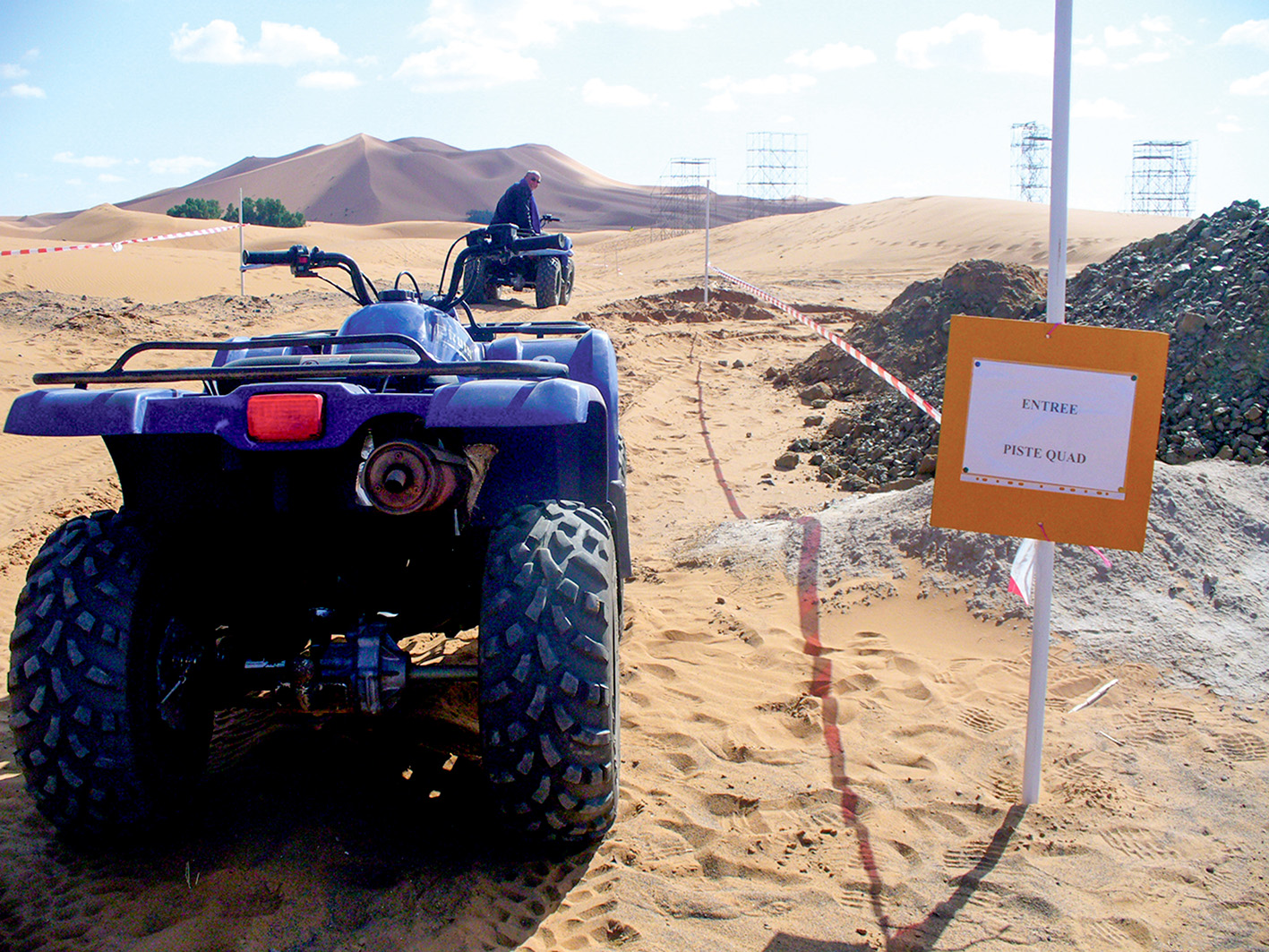
You built many tents to house catering and the like. But you also commandeered the hotel on-site for the production?
On my first recognisance trip, I decided that we would rent the entire Hotel Merzouga [the only “hard” building on site] because if there was a sandstorm we had to have somewhere secure to go and it was the only place close by. It was perfect. In fact, on the first day when the main artistic crew arrived, we had to stay in this building for the entire day due to the high winds. So, we had about 100 people stuck in this small building!
How was the staging sourced and the screens constructed on such an unstable base?
We never bring our staging from France. It costs too much; we always source the scaffolding from a local company. The stage itself was installed on the only rock surface available.
However, we had a challenge to erect the screens on the sand. Charles Lambing [Technical Manager] decided with Jean Michel to set-up the screens in the Sahara itself, some on top of dunes, and of course, we couldn’t dig away the sand there. We had to find another solution.
The sand changes its consistency throughout the day. During the day it is very dry and fine from the heat and blows around. During the night when it is cold and damp, it forms a harder surface. It is kind of like skin, changing with humidity and heat. We used some water to compact the sand initially and then all the screens had a lot of ballast stacked on the base, which was simply sandbags, no concrete at all.
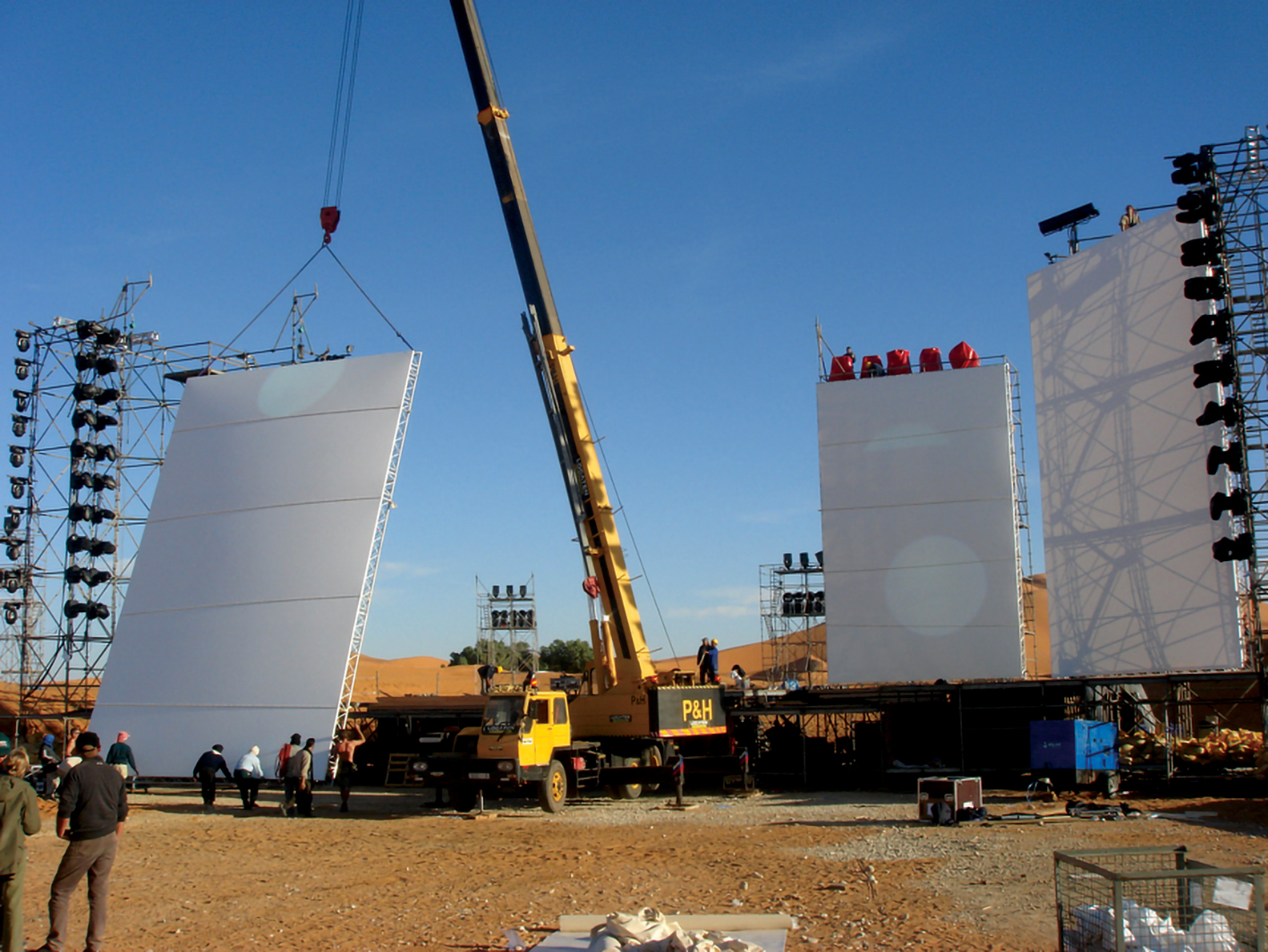
We know sandstorms posed the biggest issue for you. Can you explain what happened?
For the first 10-15 days on site, it was all proceeding too well. We then had sandstorms… Up until this point, the technical set-up was complete, all the technical elements had been working for a couple of nights and we just had to get everything working together artistically – sound, light, video and lasers. My responsibility was to give Jean Michel and Alain the green light that everything was ready, and we were ready to start the artistic process.
On the Saturday before the show, Jean Michel arrived in Morocco, and he was delighted that everything was ready. However, that day the winds started. We really didn’t know if the screens would crash in high winds. We knew that if there was too much wind, there was a possibility that everything would be destroyed, but we didn’t know at which wind speed.
With the budget for show, the nine material screens were fixed and not retractable in high winds. The wind started picking up and several of the crew came to me and said, “We have a problem”. It went from 25-30km per hour which was already dangerous and increased to about 45km/hour. The lighting designer wanted to continue to work as Jean Michel was arriving and he wanted to show him the progress he had made. We had two lighting riggers who were the only people allowed to climb the structures, and I asked them to prepare themselves in case I needed them to protect the lights. The wind kept increasing and got to 50km per hour non-stop and so I had no choice but to clear the stage and cut the power as it was too dangerous. We tried to secure the screens with more ballast, but we really didn’t know what they would take.
The wind continued, it was raining and there was even a little bit of snow! The main screen behind the stage then crashed at 2am in the morning; we were very lucky there wasn’t too much material on top. And then at 5am the screen to the right of the stage tore and was destroyed. We stayed on the site until 8am to be ready for anything else that may happen but then the wind died down.
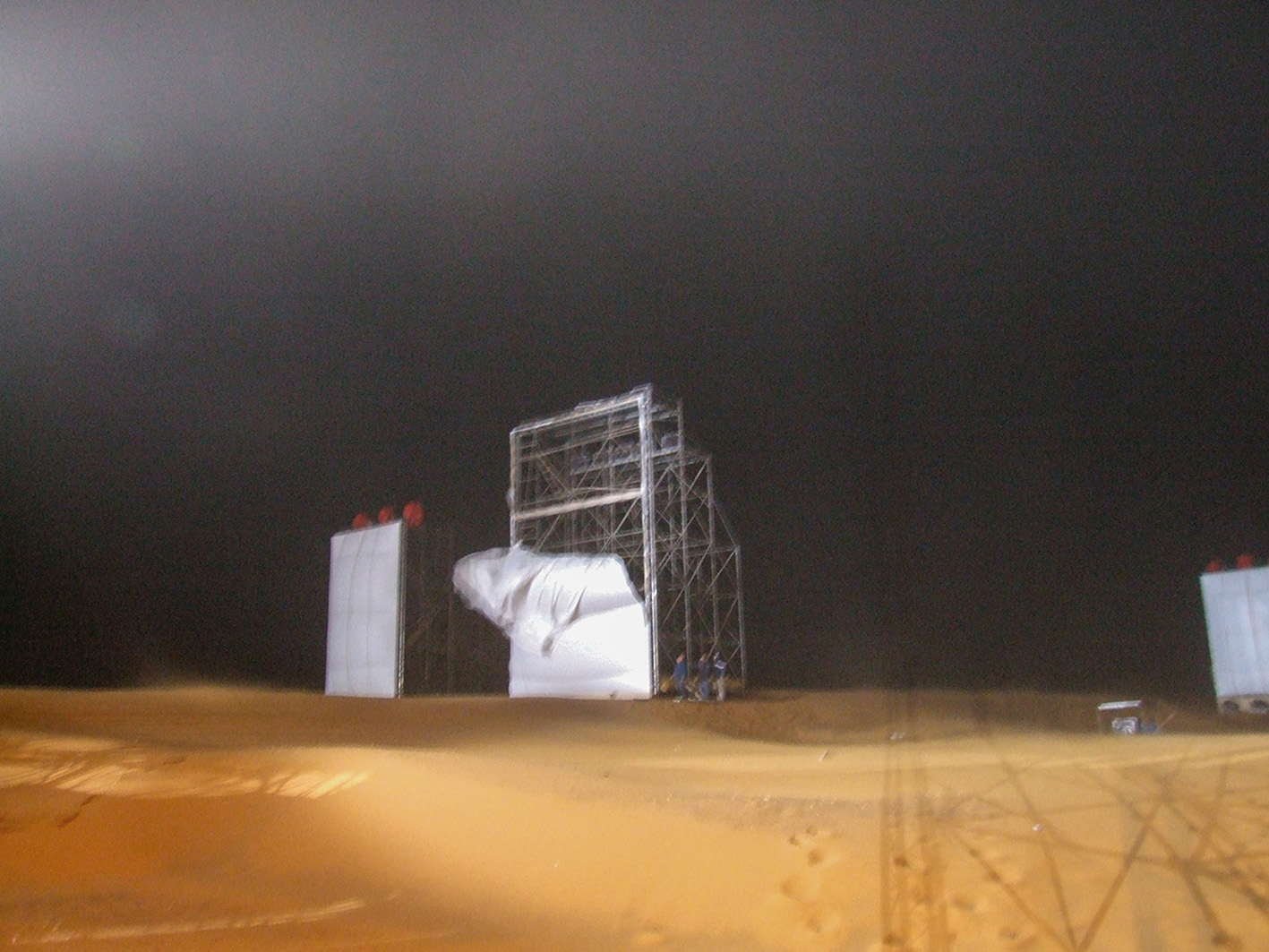
Unfortunately, we had no replacements and so we had to call around many places in order to try to find alternatives. Everybody in the production crew searched through their contacts to find where we could get replacements. In the end we found someone in Casablanca, and they were able to cut new screens to size for us and put the one ton of material on a plane. Within three days we had our new screens. We were very fortunate.
However, afterwards it got worse. The winds started again and they were higher than before. They got to 80km per hour and the actual frames were now bending in the wind. It was impossible to remove the frames in such high winds. We thought the entire structures would crash again or break. My two riggers were ready with their knives to cut the screens, and it was my responsibility to decide whether to do this. In the end, I took the decision to cut and destroy the screens. I was really worried the riggers would be injured but it was clear that it was impossible to climb to the top in the wind anyway. So they started cutting the screens from the bottom. Luckily, everything went well and it took the tension out of the screen frames and they stopped bending. The wind peaked at 88km per hour. So, we were lucky we took the decision when we did.
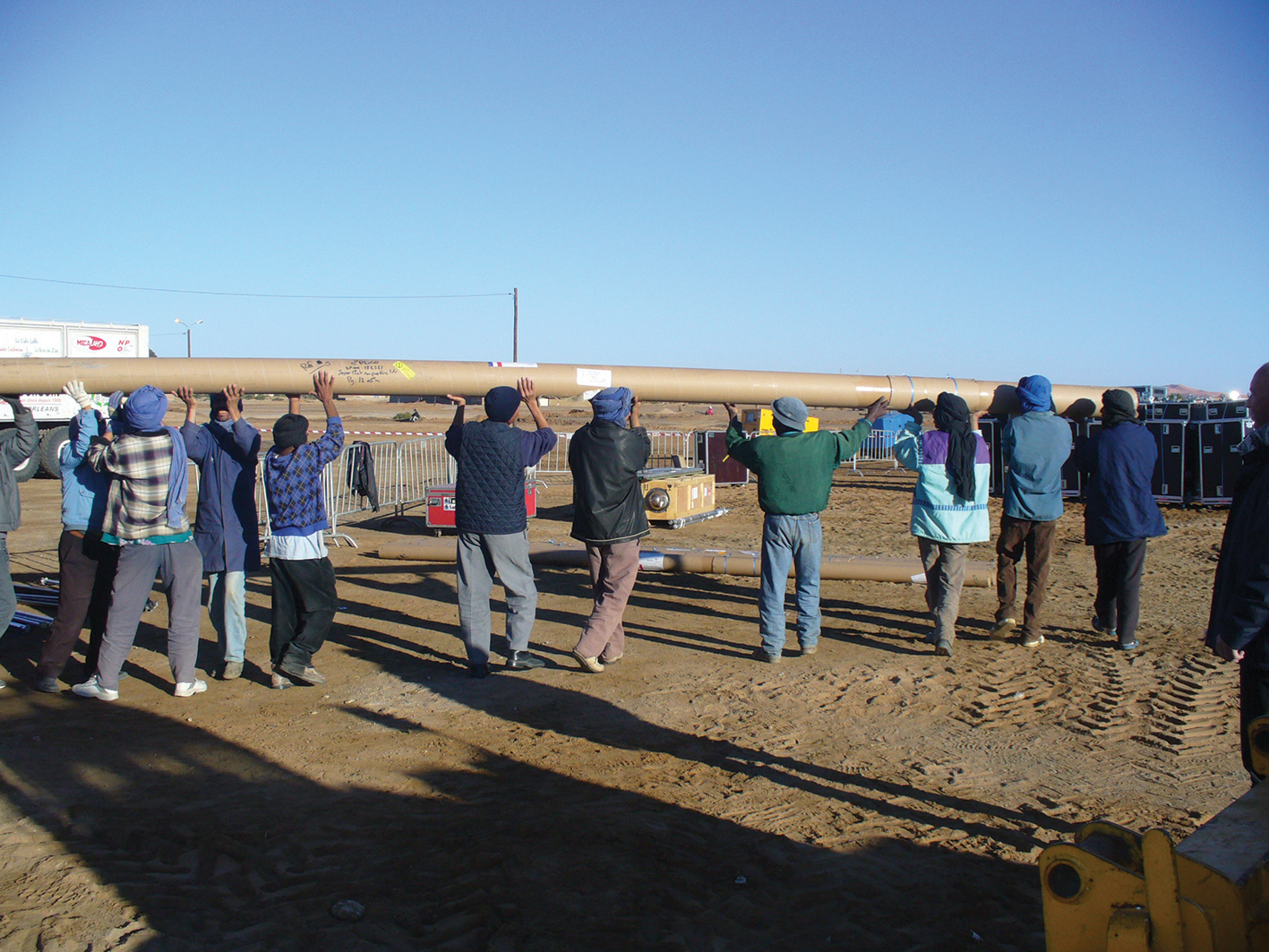
It was the first time in my career that I’ve had to take the decision to destroy such a screen, especially without having a solution to replace them afterwards. But we had to save the show.
The other problem was that the wind dried out the sand under the screens and it started to blow out. So, during the night, we had to shovel more sand under the screens to secure them. We then had to work again to get the new screens onto the scaffolding!
When you left the site after the event, was it a big task to return it to the local people?
We had to make sure that when we left, there was no lasting impact on the environment. When we did leave, it was like we had never been there. We didn’t have to do anything dramatic; we just took away our equipment and material and thanks to nature, within a few days, the sand had blown back to re-create the dunes. I had noticed that for two days during the sandstorms during our preparations, the dunes moved at least 3-5 metres alone!
We paid about two hundred local people to assist us in the preparations and de-construction. In fact, I believe as we cleaned up the surrounding desert before the show, it was cleaner when we left than when we arrived. The desert around the site had quite a lot of rubbish in it beforehand, old bottles and the like, perhaps left behind by tourists.
What was the local company Rezo Production involved with?
We always must involve local production crews. We always need a crew in the country of the production. They can source local people and organise things like forklifts, scaffolders, security men and things like that. Rezo have worked on productions like the Casablanca Festival and so they had experience in building stages - not as complex as in Merzouga, but the same kind of techniques.
At the beginning of any Jean Michel Jarre concert, it is always difficult explaining to the local production company why we need such a huge production, cars for 24 hours a day, food for 200 etc. They normally look at us as though we are crazy. After a few days though they realised why we had asked for what we did and Rezo worked really well with us.
The local company is important as they know the local customs and working attitudes and how to source things.
During the preparation of the show, Jean Michel Jarre was completing his studio album. Did this conflict with the show planning?
We finalised the budget and the contracts in the summer, but Jean Michel was heavily involved in his album and we almost took the decision not to do the show. The album though was delayed and the show went ahead. The show was originally planned for mid-November and then we moved it back three weeks. Jean Michel Jarre wants to control all the artistic content, which is normal, and so he wants to be able to dedicate the right amount of time to any of his creations.
What technology do you use to make communication with the teams more streamlined?
During preparation, we have a special FTP site that the crew can use especially for the concert which has 20GB of space and this is very important for sharing information.
When I arrive on site at a concert, which was the same in Merzouga, I always have the same set-up as at the office. I ensure I have connectivity to the Internet, a special routing system for everybody working on the production, Wi-Fi as far as possible, 2-3 colour printers on the network and a special network-attached hard drive so that everyone can have access to upload and download the latest plans.
I tell everybody that their obligation is to save their latest information on the server so that it is available for everyone else - which I repeat every day. Technology makes it much easier to share information, and it is a key element during the creation of such shows. We must be able to predict as many problems as possible.
In the future I want to increase our use of technology. I want to have Wi-Fi everywhere around the site so that we can use Skype [free telephone calls over the Internet] for our communication, which will help reduce our production costs. Of course, I need to then try to convince everyone to use this technology!
Did you have any predictions on how many people would turn up for the event?
We really didn’t know, it was impossible to predict. We were in the middle of nowhere with no subway nor buses and most of the local population didn’t have cars. I was hoping we’d get at least 3-5,000. In the end it was a big surprise to get 25-30,000 people. Where did they all come from?!
Did you get any reactions from the locals about the show?
The official representatives were very happy. A lot of things happened in the region - a lot of tourists stayed during the event and there was a lot of work for the people in the region. We are even speaking about a possible show in Marrakech very soon.
I understand the event was filmed by two different sets of cameras for broadcast?
It was impossible to record the concert using the same cameras for the DVD as well as the TV production, so we had two teams with two directors. One team was for the live TV broadcast with five cameras and one for the later DVD with fifteen cameras. This was due to the live TV being broadcast in 4:3 and the DVD being widescreen at 16:9. So the DVD will be completely different from the TV broadcast. I think the DVD will be much better. It was also unusual that it was not a local director. The television company normally wants their own director, as they are important for the budget.
CPM are responsible for Jarre’s concert production. What determines which of the many approaches you must get are investigated?
The smallest show we believe we can do, such as the two shows in Monaco in 2005, need a minimum team of 34 persons due to the techniques used, plus the musicians, orchestra and Jean Michel himself.
So the budget is very important in deciding whether a show can go ahead. We haven’t found a solution yet to produce a show for the smaller towns. Each show is unique and there is always a minimum cost. So before we even travel to a location, we try to explain the potential cost and the obligation on them in terms of the time it takes to organise such shows.
We plan to do between 1-2 shows per year and are normally following up on 10-12 projects at any one time. We are travelling all the time, although sometimes for nothing. At this precise moment, we’re following up possible projects in Morocco, Miami, New York, Dubai, Brazil, Mexico, a big one in northern France and Stavanger in Norway next year. We’ll see though!
Do you think you will produce another “city-scale” concert with Jean Michel Jarre, like Houston or Paris La Defense?
Yes. Jean Michel Jarre has many demands. It is just a matter of time. To light a city is a major project. I would think in the next five years, he will do at least another two; there are too many possibilities in the pipeline for one not to happen. We have already been to Istanbul twice to investigate something like this.
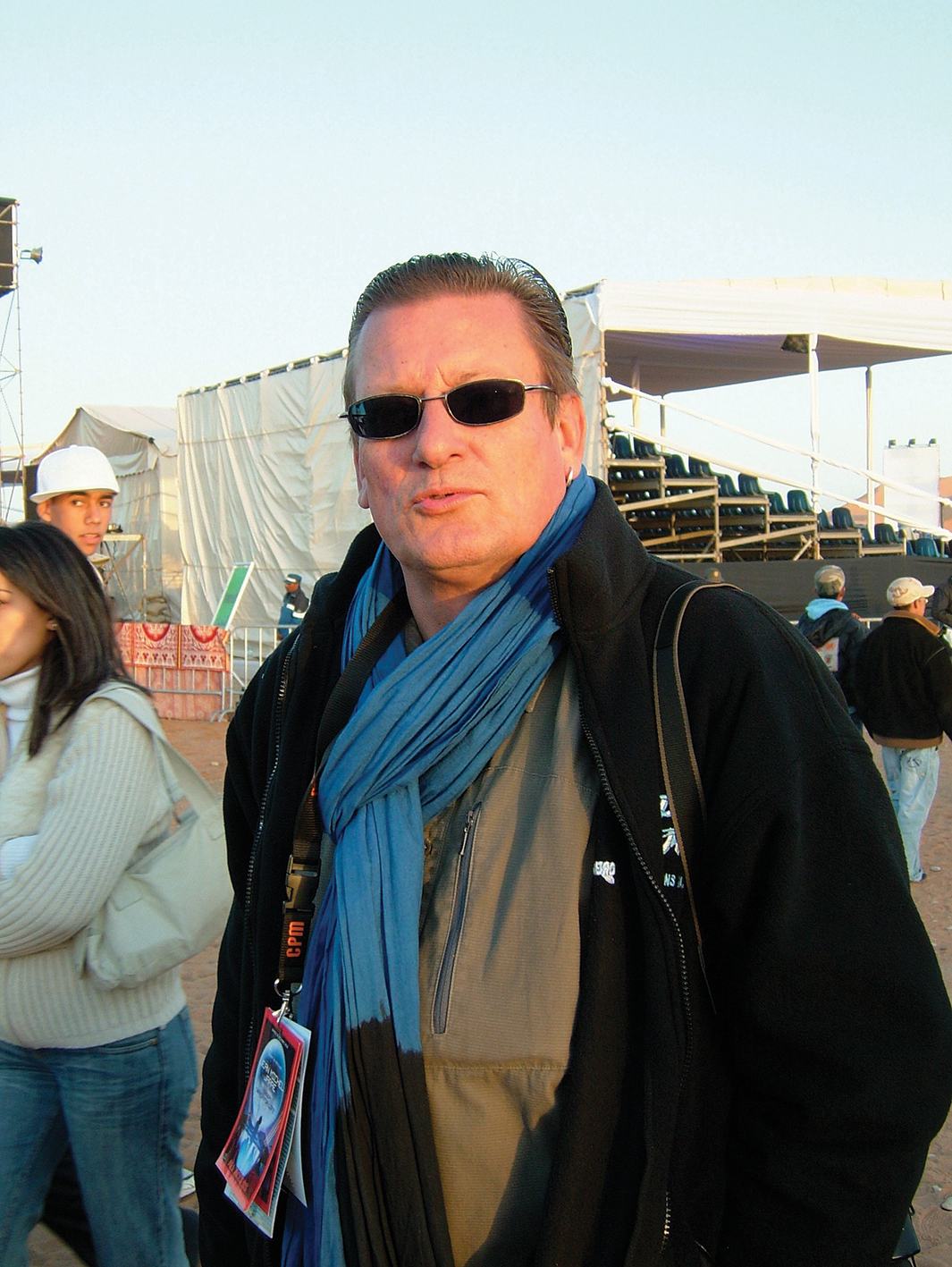
09/Interview
Charles Lambing
Technical Director
This feature is scattered with complex technical plans on the various structures and supports that were necessary to stage this concert in a location with no hard structures to rely on. They were all the work of Technical Director Charles Lambing, who has been generous by supplying a stream of technical and concept drawings for this book. We caught up with Charles to reflect on his work and discover exactly how the various elements were brought together.
What exactly is the technical director responsible for in a production like this?
In every production, the technical director is responsible for all of the various temporary constructions that are included in the design by the artistic direction. The responsibilities then extend to the cabling of the entire location and ensuring that all the various security standards are taken into consideration. So I am involved in all the planning and then overseeing the construction until the end of the show. Moreover, I am in charge of the various technical requirements from everybody involved in the making of the concert, such as the lighting, the sound, the video and the fireworks teams.
What skills do you need for this role?
The technical director needs general skills regarding temporary constructions, such as the structure of the stage and the towers, and a good knowledge of electrics. They also must have a basic knowledge of the different lighting, sound and projection materials as well as a thorough knowledge of all the latest security standards for concerts. Mastering of certain software tools like spreadsheets, Computer-Aided Design (CAD) is a must as well as the capability to analyse and solve problems that are specific to each concert, before and during the set-up on site. It is not necessary to have a degree in engineering or architecture though. Often the constructions and installations are developed by external companies and are provided together with technical notes.
When was your first experience with Jean Michel Jarre’s production?
My first experience of working on a Jean Michel Jarre concert with his current production crew – Créations Productions Management, lead by manager Alain Bilowus - was in Beijing in 2004. I’ve collaborated with Créations Productions Management for a wide variety of productions in countries as far and wide as France, Africa, Saudi Arabia and the United Arab Emirates for almost 12 years, including festivals and some big shows that have required the implementation of technical infrastructures.
Were you aware of Jean Michel Jarre’s previous concerts and are there any in particular that you would have liked to have been involved in? Are these types of event something special to work on in the industry?
Everyone is familiar with Jean Michel Jarre in this business and it would have been a pleasure to work on any concert he has done in the past. What is so special with these events is the use of the latest technology, which is of great interest for every person that is involved day-to-day in the concert industry.
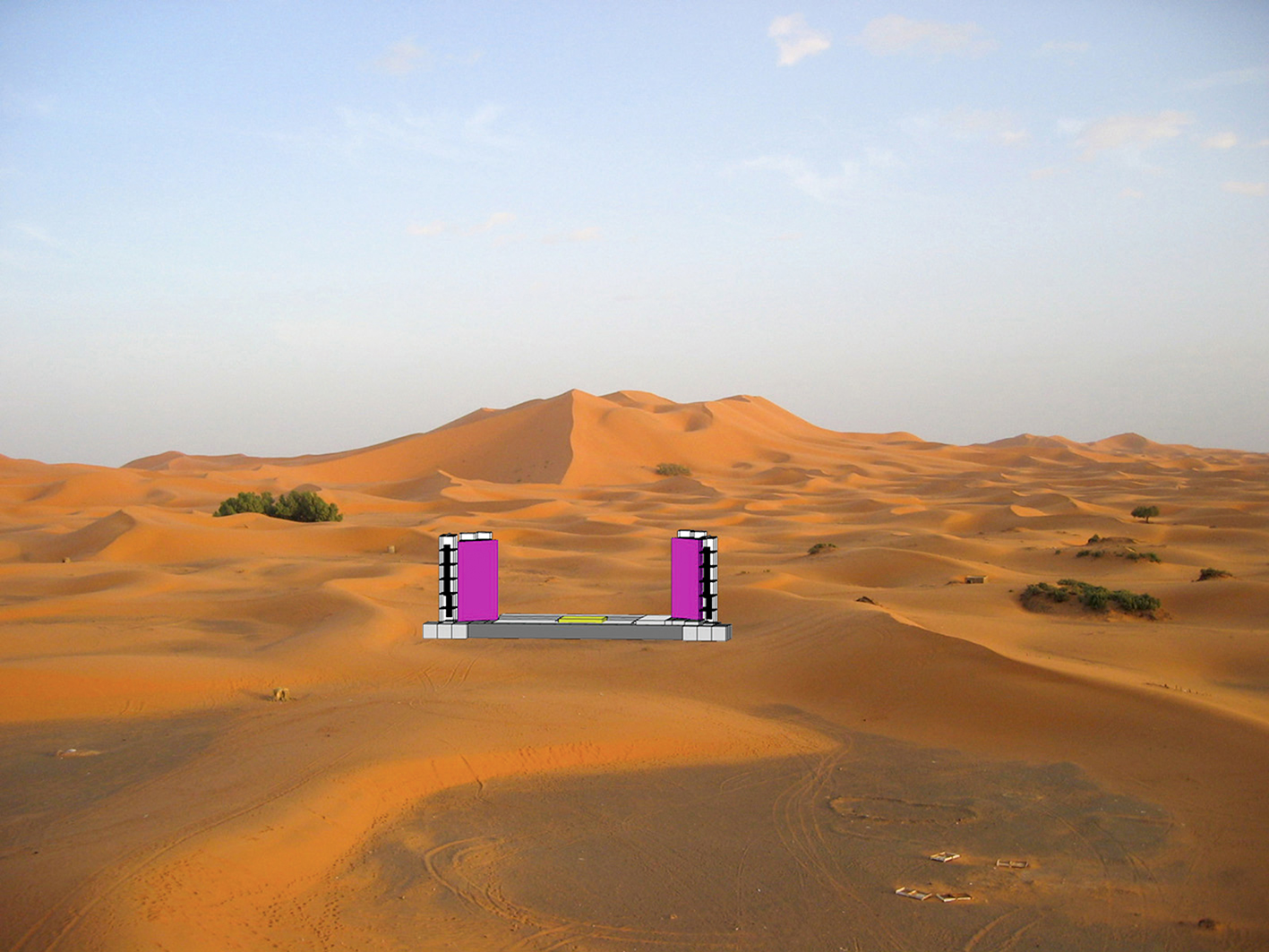
How did the preparation for this show compare to that of Gdansk and China?
It is difficult to compare, as every concert has different requirements to work towards. For the concert in Merzouga we were confronted with problems linked to the environment of the site and the geographical location of the show – such as the nature of the ground and the limited transport access – whereas in Gdansk, without wanting to minimize the technical constraints, we encountered more traditional/classical problems. In China the problems were linked to compatibility between the Chinese and European equipment and it was difficult to find high quality equipment there, which we usually rely on in order to reduce the costs of transporting our equipment. But the worst was to navigate through the jungle of bureaucracy more dense than the most remote parts of the Amazonian jungle!
When you heard about Merzouga, initially did you think it was really possible in such a remote location?
It was only after a very elaborate study by the team that was in charge of logistics that we concluded that it would be possible to make a concert at Merzouga.
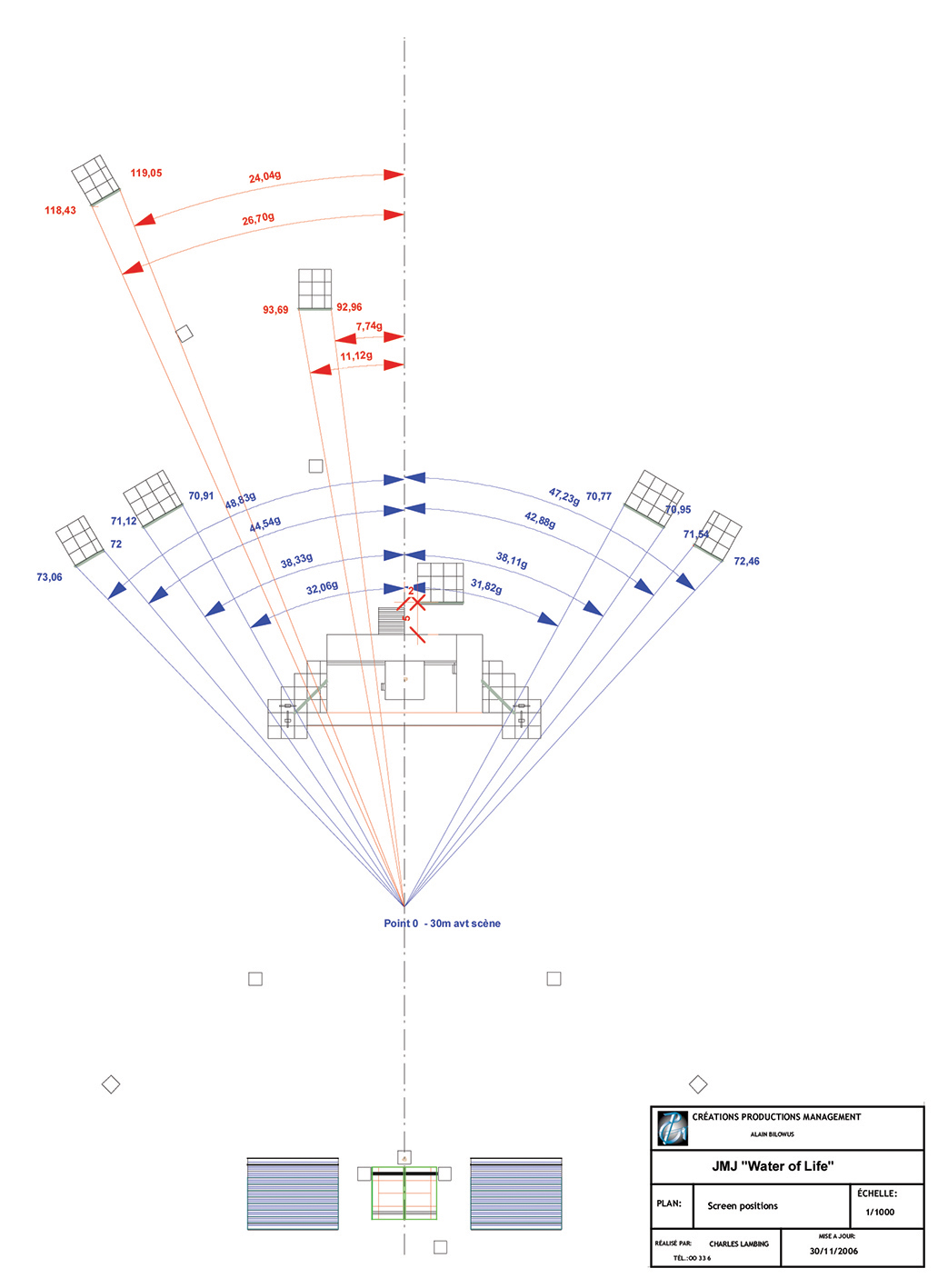
Given the unusual landscape, what site recognisance was required for the show at Merzouga?
We visited the site three times to prepare for the show in Merzouga. The first was undertaken by Alain Bilowus and Fiona Commins from the Jean Michel Jarre production crew in August 2006 and it was an initial view to decide whether it was possible to do a concert within the given timeframes. The second trip was during the month of October 2006 and was undertaken by the CPM Production Crew who were accompanied by various technical members of staff in the fields of light, sound, fireworks, video projections and members of the Moroccan Rezo Production crew. During this site recognisance we decided the location of the main stage, the work that was necessary to the location itself and to start planning the specific technical requirements.
The third trip was made in the beginning of November 2006 by Alain Bilowus and myself from CPM, Chris Demeulemeester (HD TV Production Manager) from Alfacam, Toufik Zenasni (Local Technical Director) from Rezo Productions and William Colaiemma (Video Technician). This recognisance made it possible for us to adjust the position of the different screens in accordance with the plans we had designed and to detect problems linked to the positions of the structures in the sand.
You prepared the various technical drawings for the stage and screens – did the reality match well with your vision?
This was my most important challenge. The reality must match up precisely with the plans. All the artistic and technical implementations - whether it is power, light, sound, video or the TV recording - are defined according to the plans and the error tolerances must be within an absolute minimum. This is especially true at a location like the one in Merzouga where any missing equipment would take a lot of time and cost to transport to the site. The reality was fairly close to the one described in the plans, which can also be seen on the picture taken from the helicopter during the afternoon of the day of the show and the 3D drawings, which was our working plan produced a month before the show.
What tools did you use for preparing the Merzouga show?
The two most important tools I used for designing the technical elements of this concert was the CAD software which enabled both 2D and 3D views for the design and the preparation; as well as a telemeter laser that has an accuracy of +/- 5cm from a 150m distance. It is placed on a rotating tripod with an angular graduation for calculating the positioning of the different structures on the site (such as the supports for the screens, spotlight towers, towers for video projectors, camera towers etc). Another more basic yet necessary tool that was decisive for this location was the shovel – sixty people were digging day in and day out for three weeks!
Can you outline exactly what technical plans had to be drawn up for Merzouga?
The following plans were put together. A plan of the stage and the surrounding screen and sound towers; a plan of all screen supports; a plan of the seating; a plan of the spotlight towers; a plan of the video towers; and a global map of all the previous items together with the trenches for the cables between the different systems.
Separate plans were also made by all the different crews for lighting, positions of cameras and cranes, fireworks and they were then integrated into the global plan.
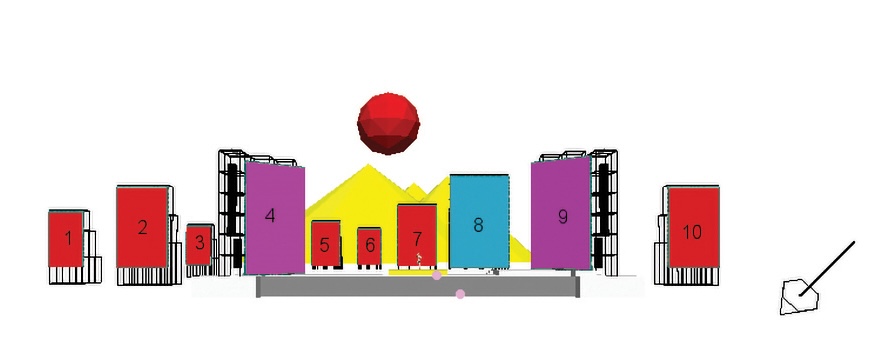
What special provision did you have to make for the location – remote and potentially harsh conditions?
The major difficulties that we encountered were due to the nature of the ground and the complicated transportation of the construction equipment to the stage and beyond. The problem was solved by the local government who provided us with a group of public workers with large trucks. Under the direction of my colleague, Technical Director Toufik Zenasni of the local production team, the ground was flattened and strengthened from the Auberge Chez Saddoq to the stage. In order to respect the environment, which is always essential for Jean Michel Jarre’s productions, it was necessary to use natural materials from the region of Merzouga.
Then to the rear of the stage, for the structures to support the screens, the fireworks, and the different light projectors to illuminate the dunes that were about 900 meters behind, we worked closely with Gilles Gautier and his four-wheel motor bikes with trailers, which were able to carry a very heavy weight over the sand.
How did you line up the screens (they appeared at disparate angles and positions, but were actually positioned perfectly with the line of sight)?
The concept of the vertical screens symbolising the doors to the desert was an idea conceived by Jean Michel Jarre. The size and shape was decided by Jean Michel and Marie Jeanne Gauthé. My job was to suggest a number of solutions for the placement of the screens in the dunes whilst ensuring the absolute right alignment with the axis of the stage. We solved this problem, which was essentially a geometrical one, by using the 3D CAD software, placing the screens according to their front alignment. The choice of angles and field of view was then tweaked to optimize the view for the audience and of course also the cameras. The final decision on the precise placement of the screens was made by Jean Michel himself.
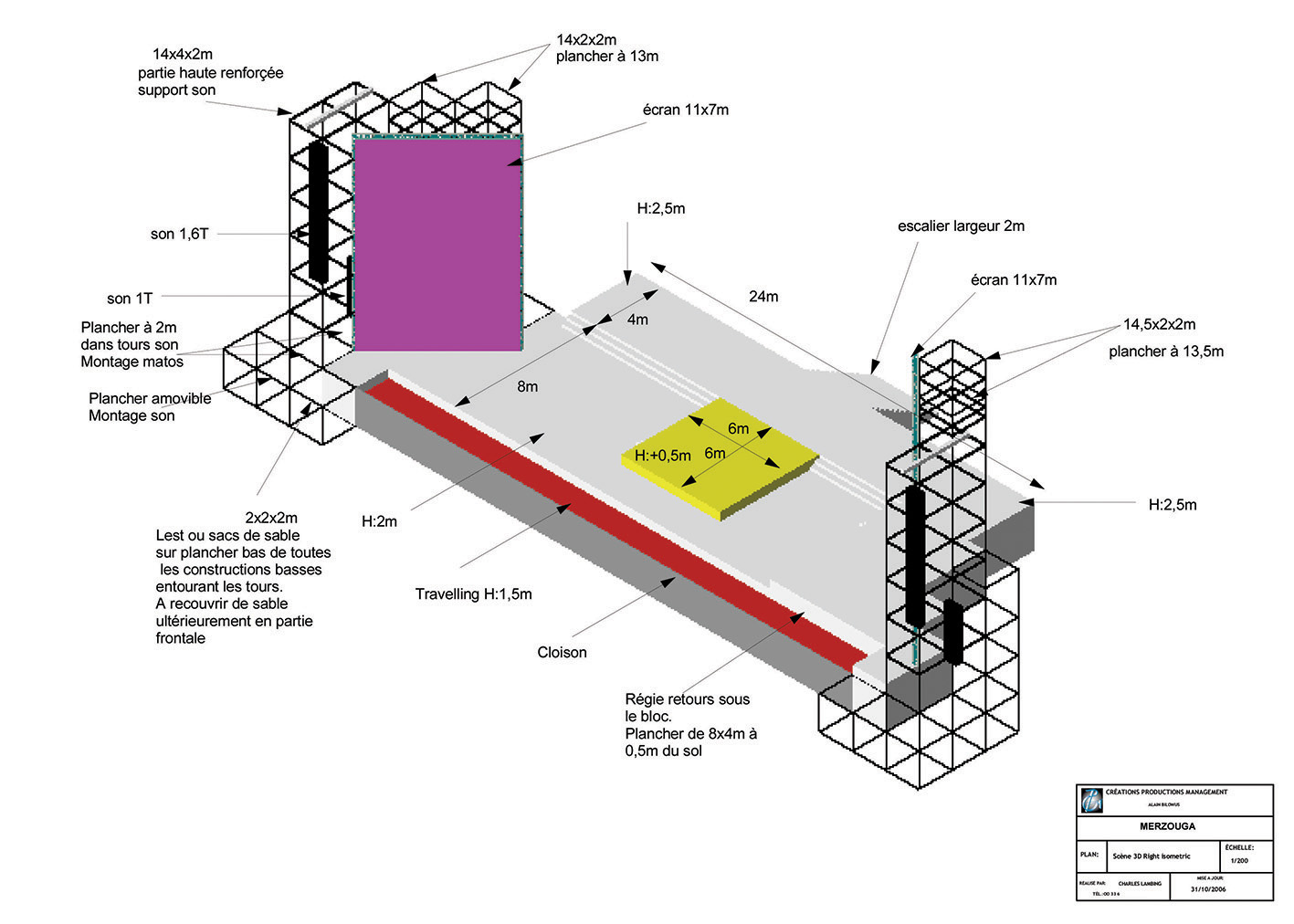
How did you work with the various artistic / technical teams to ensure that their requirements were all met?
The production team is in contact with all the various crews during the design phase of the project and every change in the project is systematically brought to everybody’s attention and the implications discussed. This enables us to prevent problems in advance and solve problems before they impact. The rest is a matter of experience.
Are safety procedures nowadays making concert technical production more expensive?
Security arrangements are an integrated part of a concert preparation and are getting more and more drastic, which is a positive development for protecting the audience. However, this does naturally increase costs at the technical production level.
How do you manage any conflicts between the ideas from Jean Michel Jarre versus what is technically possible?
The production team works in perfect understanding with Jean Michel who is a very professional artist and we have always been able to exchange views and come to an innovative solution.
How do budget constraints effect your planning decisions?
I have been fortunate to work with a production that is not trying to push us to do the impossible!
When faced with a production like Merzouga, is this a dream come true for a technical director, or a living nightmare?
For a technical director every production of this scale seems like a nightmare to begin with. Being a professional, the challenge is to be able to transform the nightmare into a dream and then make the dream come true… Who in this business would not like to be confronted with this kind of challenge?
What do you have planned for the future?
Créations Productions Management has existed for a number of years and does not intend to give up. The magic formula seems to be working and we hope to be able to enchant you in the future. Like any gift, any future project should be a surprise!
10/Interview
Ignace d’Haese
Lighting Designer
Belgian lighting designer Ignace d’Haese is based in Ghent and took up the challenge of lighting the Forbidden City in his first project with Jean Michel Jarre in 2004. He specialises in lighting design and lighting direction for complex projects, and you can’t get much more complex than the Saharan desert...
How did your career in lighting design begin?
I started playing with lights when I was about 14 years old. My older brother had a DJ installation, and I always enjoyed working with him to mount the lighting system. A few years later, we worked on a lighting set-up for our first band and then it all started for real for me! I decided to stop my studies in architecture before I finished, because the opportunities I got were so fantastic I couldn’t turn them down.
Over the years, I did a lot of touring with different bands, and I was also a stage draughtsman for Stageco when they started up. I had the opportunity to experience how big bands create their productions.
Then in 1989, I began my own design company Arf & Yes with partner Giovani de Schampheleire, which is still growing at this moment.
You appear to split your time across different types of media, such as concert type-projects and television – what is your preferred medium and why?
My roots are with concerts, and I still love these the most. However, it is very important to me that I am constantly challenged and therefore I love to do a lot of different things. This includes things such as one-off spectacles, TV shows, architectural projects and fashion shows. Throughout the years, we have worked on the set and lighting design for a lot of shows, which are wonderfully creative to work on.
You have worked with Jean Michel Jarre now on a few projects, including Beijing and now Merzouga. How did you first get introduced to Jean Michel Jarre?
I had a phone call from the production manager of Jean Michel Jarre, and he asked me to come to a meeting in Paris. I thought it was a joke from one of the people I work with in Paris. It transpired that Gabriel Fehervari, the owner of Alfacam, spoke about me while they were searching for a Lighting Designer.
When did you start getting involved in the Water for Life project?
I didn’t visit the location before the actual event. The production team contacted me when the production was on location, and I decided it was something I had to do!
How do you approach “designing” the lighting for a show in such an extraordinary location?
First, you have to analyse all the different factors contributing to the overall concert and make an image for yourself of the resulting picture. You can divide the process into three parts.
The first element is everything on the stage - how the stage is split up with all the musicians – and you always must be aware of how the event is being filmed.
The second element is the audience. It is very important to “feel” the atmosphere of the audience during the film, both sound and lighting wise.
Finally, the third element is the background and around the stage, which in this case was an enormous landscape of sand - the desert. This was the most difficult part, because you must find a solution which fits in with the budget. With Jean Michel Jarre and the director, we decided upfront which parts of the background that we wanted to see and those that we didn’t want to see.
How involved does Jean Michel Jarre get with the lighting design?
We spoke quite intensely several times about the feel of the show during the preparation of the concert. Jean Michel is an absolute professional, not only in musical terms, but he also has an incredible vision of how the complete picture should look. For me this is a big advantage, because we get a lot of feedback about the visual look of the concert. Under normal circumstances, the artist will leave this to the lighting designers, but I remember being extremely impressed about the things that Jean Michel Jarre wanted to discuss. I have never had this before.
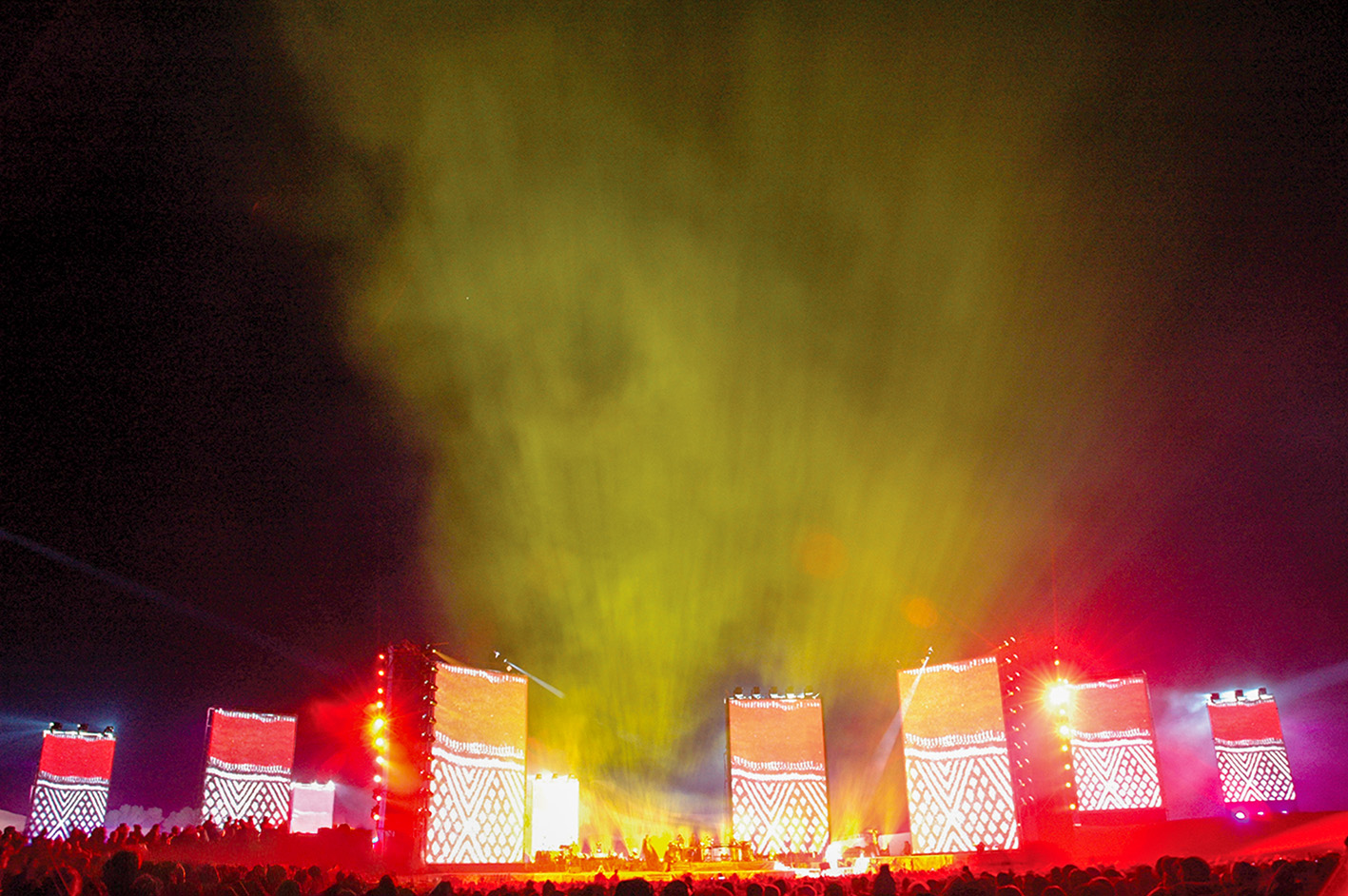
The lighting in Merzouga seemed to be less about “beams” of light (as seen at traditional large rock concerts) and more colour blends across the desert, sky and stage (as can be seen in some of the photographs). Was this is a deliberate design approach and if so, why? It worked very well.
Yes, we wanted to give the show a look that wasn’t “bombastic”, but huge in a minimal way! You can quickly end up with a chaotic result when there are too many elements which you can play with, as there are lights, fireworks and many other special effects. I think it is very important to give a concert a certain character and continue it throughout the performance.
The location must be one of the most difficult ever to stage such a large-scale concert. Did this pose any problems to you as the lighting designer?
It’s always a challenge! The biggest problem you end up with is to fit all the ideas into the budget! First, you have the complete fantasy carousel, then you have to filter the ideas to fit them into the budget. In this kind of event, it can make a huge difference what decisions you make during the planning part of the process.
With Jean Michel Jarre’s shows, you must worry about not only the actual stage lighting but also the surrounding landscapes too?
This is THE biggest challenge there is with this kind of concert!
How would you rate the Sahara Desert as a canvas for your lighting designs?
It was a nice surface to play with. Not only is the colour wonderful, but together with the shapes and the infinity of the dunes, it is an impressive landscape. To see the sunset over the desert is so beautiful for the eye. That’s why Jean Michel started the concert at sunset, because it’s impossible to imitate this in an artificial way. And why shouldn’t we use the sun when it’s there!
The audience was contained in a kind of amphitheatre with dune banks on each side. Was the audience therefore part of your lighting design for the show?
The audience is always a very important element in the result, as I said before. The “feel” of them is necessary all the time, even when there is no light on them.
When designing the lighting for the show, do you work closely with the music?
Of course, the music is the leading element of all the artistic elements. When designing the production, you always think of the general mood of the show, the character, I guess. The finer detail comes later during the final phases, when the complete picture becomes clearer. We tend to leave things open until the final rehearsals on-site, because some decisions are better made when we see them in reality.
However, the design itself of where the various light installations will go cannot change too much on-site. In this kind of concert there isn’t time to shuffle around the equipment. Maybe a few small modifications were made on-site in Merzouga. The result correlates to what I had in mind before we mounted everything on-site, it had to!
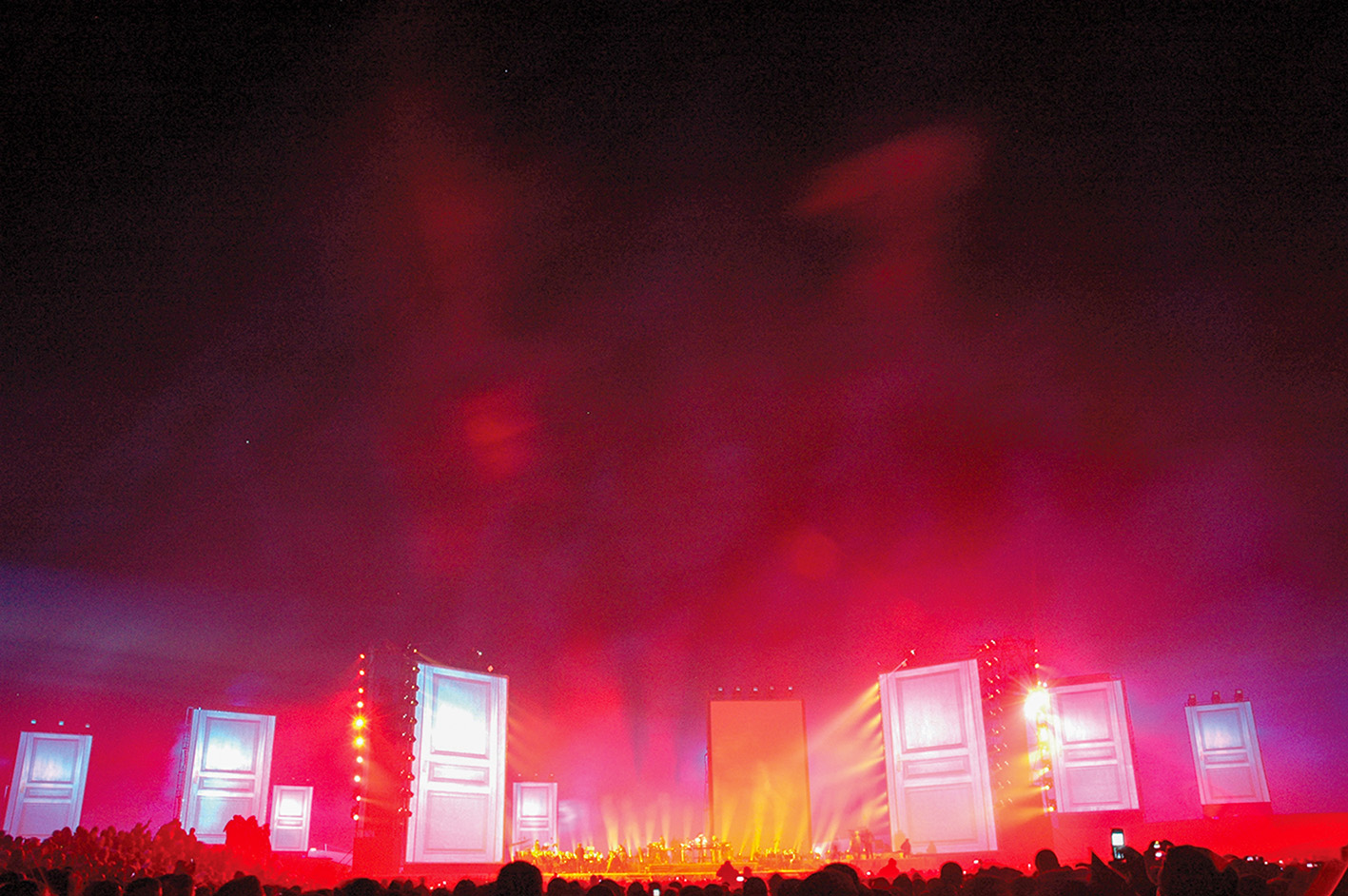
How do you decide which colours to use between your lighting, the pyrotechnics and the video images?
After every rehearsal day, Jean Michel holds a meeting with all the creative directors and teams, and we discuss each track in detail. We discuss what worked best, what looked the most beautiful, and what we should adjust. So it is not unusual to change colours or moods after these meetings.
What memories do you bring back with you from Merzouga?
I have a very warm feeling about this show. The complete team was wonderful to work with and everybody collaborated, which is very important. The local Moroccan people were very friendly and the location was fabulous, so what more can I ask for!
11/Interview
Marie-Jeanne Gauthé
Video Art Director
Jean Michel Jarre’s visual imagery is one of the cornerstones of the various techniques that he uses to create his magnificent, city-stopping concerts. From the stunning “punk” images in London’s Docklands, through the African patterns in the Lost City, to the fabulous opening sequence at Gdansk, these are all creations coming from the imagination and direction of Jean Michel Jarre and taken from the storyboard through to reality on the giant screens by art director, Marie-Jeanne Gauthé. She even lived through the disappointment of a wonderful set of images being “fogged in” at Jarre’s Millennium show in Egypt.
We spoke with Marie-Jeanne to find out more about her work on the Merzouga concert and how the progression of technology has changed the way she works, moving from still art to video art.
Can we start by asking how you first got into this unique industry?
I did my Higher Education Studies at the Arts Deco in Paris with a thesis in Audio Visual for my final project. Then I was lucky enough to be chosen for my first job as a designer in a company called E.T.C which was dealing with the technical projection of images at Jean Michel Jarre’s concert in Houston in 1986. Since then I have remained a specialist in high power projection.
How did you first get introduced to Jean Michel Jarre?
It was during that first job that I created the projected visuals for the concert in Houston and met Jean Michel Jarre through the concept designer who was Jean-Michel Quesne at the time.
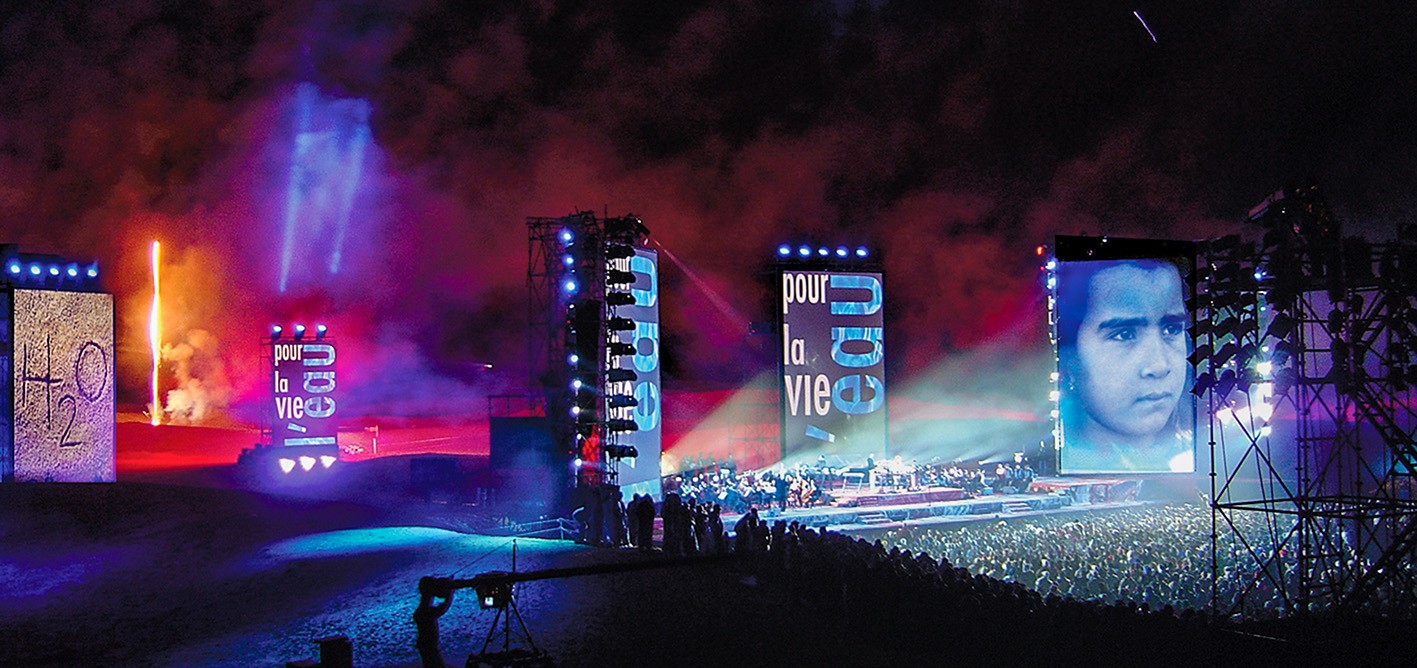
Where do you get your inspiration from for Jean Michel Jarre’s shows, in particular the one in Merzouga and can you talk us through how the design process works for the preparation of Jean Michel Jarre’s show?
The conception work is always done with Jean Michel; he is very much in touch with the meaning of visuals. For Merzouga, we had several messages to communicate - on the theme of Water and of its contrasts when it comes to consumption and also on the dangers threatening our planet etc – all this inspired by the music, which is the first foundation of our creation.
So we started with key sentences and I suggested visuals as a storyboard, which without literally illustrating the theme, supported or enriched it. This was done essentially through the strength of juxtaposition: for instance a woman walking in the desert slowly looking for a well for the entire length of a piece and next to it, the fountains of Las Vegas, excess in the middle of the desert!
We also wanted to make space for the live video input and we chose a VJ who would only ‘perform’ that live video injection, ‘mixing’ the video with the pre-conceived visuals. The idea was not necessarily a flood of images, like in a music video, but the strength of the still image, which takes on a meaning thanks to the juxtaposed image; the contemplation of the sky, of fire or the sea is also a respite in the middle of a concert where one out of two pieces triggers thought.
What technology do you use to create the effects?
Once the concept is approved, the 3D images, the special effects, the coverage and editing are created according to the message we want to communicate. We had computer graphics artists working on 3D Max, Maya and After Effects, cameramen and editors creating the concept with the help of my storyboard.
When did you start getting involved in the Water for Life project and how long does such a project take to create?
I started getting involved in the project ‘Water for life’ about four months before the concert and I had several concept meetings beforehand. The work of producing the images started six weeks before the show, which was late and we had to work frantically but in a focused way.
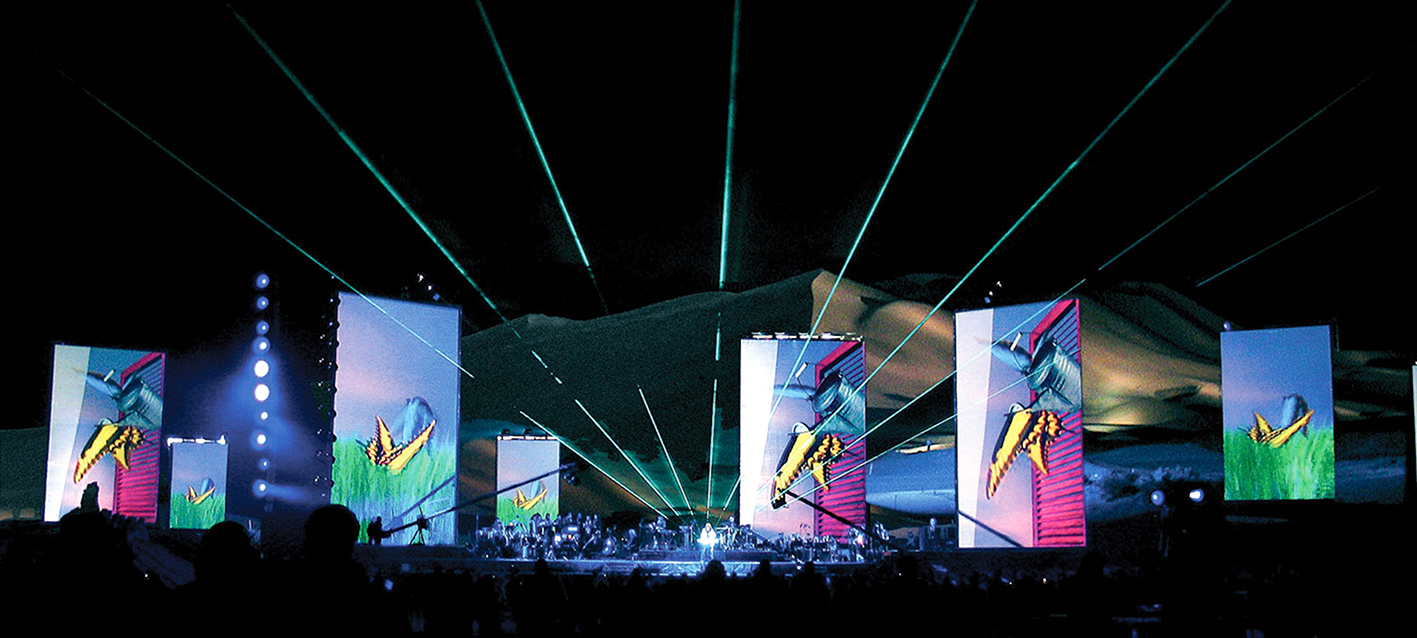
What did you think of the location in Merzouga?
I visited it a long time beforehand, to work with the creative team on the scenography. The idea of doors in the desert, 10 vertical screens, was of course Jean Michel’s, but I worked on their distribution in space, taking into account the video frames as well.
How do you work with the other directors to ensure the show is integrated?
Once again during the conception phase, Jean Michel is the only one who has the global vision of his concept, he co-ordinates the various show techniques and overall artistic direction. Then on location, the entire artistic crew - sound, lights, pyrotechnics and images – come together to share, adapt and think together about the potential changes. It is a small team but there was a real symbiosis for the show; it was wonderful!
When designing the video for the show, do you work closely with the music and if so, how do you approach this part of the design process?
Yes, I use the music as a base to set up the various image-parts, and I play with the rhythm or the choice of an instrument (for example, the trumpet on Space of Freedom to set up a phrase graphically). Or I can go voluntarily against a rhythm to shift the meaning of a visual.
What challenges does a show like Jean Michel Jarre’s in Merzouga bring to you?
The disturbance caused by weather conditions made us lose time in the technical set up of the machines but all went well in the end. Otherwise the work in Paris and on location took place in an atmosphere of trust and the expectation of regular progress, as is customary with Jean Michel Jarre.
How closely do you work with Jean Michel Jarre on the design for your work on the show?
I have been working with Jean Michel for twenty years. From Houston onwards, I have produced the images for all his concerts; his humour and our complicity are always present in our work meetings. He also shares his global approach to the show with me as a whole, and the scenography he has in mind.
How has technology changed the way in which you work on these concert projects?
In the last 20 years the image projection technologies have evolved greatly and I have had to evolve with them. In Beijing we were still using the large projections from E.T.C, the projection of rolling visuals but not animated, which was my specialisation when I started. However, what a pleasure it is to be able to create art with video - the expression is open and the constraints almost non-existent; only financial!
But the school of still image and its constraints taught me to infinitely respect the strength of a static image and I often use it instead of video. But now it’s a choice and not a constraint…
With technology advancements, do you agree that the expectation of the audience increases with the progression?
Yes absolutely, the audience is more and more exposed to video visuals, music videos, adverts, films and they are all very advanced in quality especially with special effects. It could become even more demanding!
But you know the strength of the giant image (ranging from a 45m base in Gdansk through to 250m in Paris, and more if the projectors are multiplied) guarantees emotions if it is well managed. It is not the multitude of special effects that guarantee the success of a show but the content of each image and its strength, which is fortunate as the budgets of these shows are not those for an advert or a film (per minute).
So technologies evolve, which is good, one has to use them wisely and not overuse them. What we are waiting for in particular is the faster calculation of the rendered video images!
Is there a size of projection beyond which the “traditional” slide projection is still the only option?
No, really today video can cover the same surfaces as slide projection. It’s just a question of the number of sources and their distribution. And it’s still going to improve in power! What makes the difference is the price.
How much does the design evolve in the final few days once you are on site with the installation? Was the end result accurate to how you envisaged it “on paper”?
As I said earlier, the conception evolves until the date of the show. However fewer and fewer changes are possible nowadays with the progression to video because of the lack of time for the rendering calculations - High Definition [HD] calculations still take a very long time!
However, in the end we stayed very close to the initial storyboard. What changed most often was the distribution of the media on the different screens, to give more or less importance to either one or another subject, and sometimes the privilege of bringing back a fixed image produced on location (the face of a Tuareg child) to give a badly expressed idea its power back.
Do you keep an archive of the physical slide projections you created for Jean Michel Jarre ? If so, do you have any plans on exhibiting them?
No, I do not keep anything physical except for all the computer image files … and no I have never thought of an exhibition. That could not be done without Jean Michel’s agreement and I think that it should come from him; these visuals are his brainchild ...
You have been working with Jean Michel Jarre on almost all of his concert projects. Can you tell us which is your most memorable and why?
The most beautiful is maybe Merzouga and maybe the most memorable thanks to the unity of the creative team. But maybe I lack distance … so for now I would choose Moscow, for the exoticism of what we lived there and the emotion that came out of the visuals. Of course, Egypt and its pyramids were exceptional … if only the gods hadn’t got angry and drowned us in the fog!
12/Interview
Claude Samard
Musical Director
Claude Samard joined the Jarre “tribe” in 2004 for the Beijing concert, and he has been a regular companion throughout the past two years as Jarre’s musical director.
Claude is a studio musician (guitars of the world are his speciality), a composer and producer with several gold and platinum credits to his name, including Midnight Oil (with Gaia), Patricia Kaas, Jean-Jacques Goldman, Supertramp Roger Hodgson and Rita Marley to name just a few. Now he shares his time between composing and producing, as well as leaving some room to work as a musical director for major live projects – with Gaia as well as Jean Michel Jarre.
He released a solo album “Unplugged Journey” that features a lot of his acoustic world guitars. This album has been used extensively all around the world by musical illustrators (both commercials and movies).
Claude enjoys mixing lo-tech and hi-tech recording approaches in his own Paris-based studio (Studio 124, which is also the name of his own publishing and production company). Claude has composed and arranged several award-winning projects, including movies (“Bo Ba Bu”, voted best music at the Shanghai International Film Festival in 2001), video games (“Rayman”, the famous worldwide hit by UbiSoft and Jim Henson’s “Bear in the Big Blue House” CD-ROM) and many others.
Claude spent just under a month in Morocco preparing for the Water for Life concert, arriving on November 19th and was accompanied by Patrick Pellamourgues. We caught up with Claude after he returned from Morocco and was fresh out of Jarre’s studio, assisting in the production of Jarre’s latest album.
Your role was Musical Director for the show in Merzouga. What exact responsibilities does that entail?
My role is to put Jean Michel Jarre’s musical wishes into practice. This time in Morocco it was a bit more difficult because we were finishing the new studio album at the same time. As in Beijing and Gdansk, I had to help produce new arrangements of the concert pieces, programming the score, meeting and co-ordinating with the Moroccan musicians, helping them to adjust to Jean Michel Jarre’s music and spotting the right places with Jean Michel for them to feature. This was with both the traditional musicians and groups and the classical or popular-trained artists. I then worked with them all during the rehearsals off-site and finally, adjusted the whole process to the real thing in Merzouga itself, having Jean Michel decide what really works in a “live” situation. Patrick [Pellamourgues] helped during the recordings and mixing and Francis [Rimbert] helped with the programming.
When you heard that you would be travelling to the tiny village of Merzouga for a large-scale Jean Michel Jarre concert – what was your first reaction?
My reaction was that of curiosity, but I trusted Alain Bilowus. I knew he had the experience and energy to ensure it became a reality despite the difficulties.
Can you tell us about the approach you took for the music for the concert?
We tried to differentiate this concert from the one in Egypt, using the specifics of the location, the unique culture and the rich musical traditions. I think that this concert in Morocco had a more “rootsy” edge.
Jean Michel is known for his specific ideas on how he wants to present his music (and visuals). How does the musical direction work between yourself and Jean Michel Jarre?
A show by Jean Michel is a total performance. Jean Michel is at the heart of the whole performance, and he has got the complete vision of how things should look and sound. For each area of expertise (video, music, fireworks etc), he has one person in charge to achieve his goals. I oversaw the musical side. Jean Michel gives his directions to the directors and now as we know each other well enough, we understand what he wants after a few meetings. After a lot of brainstorming, I understand what the set list will be, which songs have to be rearranged, which songs should have new bass and drum parts, where we should have “features”, which kinds of “features” (such as vocal or instrumental), orchestral parts and what any new original songs will be like.
You travelled to Morocco several weeks before the actual concert to prepare. Between that time and the show must have been a very creative period. Can you tell us what that part of the preparations entailed and what direction Jean Michel Jarre gave as you embarked on the preparation?
Jean Michel decided on the concert set list and so once I had the precise idea of what should be prepared, I was then able to start work on the new arrangements.
I travelled to Morocco and visited the local musicians, giving them the CD’s that I had prepared with special mixes so that they could train with them. This allowed them to imagine the concert situation as closely as possible. I also gave them scores to work on their parts and of course, discuss the improvisations with them so that they could perform them if they didn’t read music. In addition, I also helped them understand where they should play ... which would have been agreed with Jean Michel Jarre in advance.
This show included quite a few local artists, giving it a wonderful feeling of integration with the environment. How were the artists chosen?
They were introduced by the local producer Rezo Productions based on our requests for the types of artists we were looking for. They were chosen from among the best professionals in Morocco. I personally suggested the four women (B’net Marrakesh) after having seen them at the Satellite Café, the best World Music club in Paris.
Did the Moroccan artists appreciate the music that they were accompanying? I can imagine it was a very different style for most of them?
We all appreciated working with each other. Saïd Aloui (who was the leader of the oriental orchestra) was of great help to me.
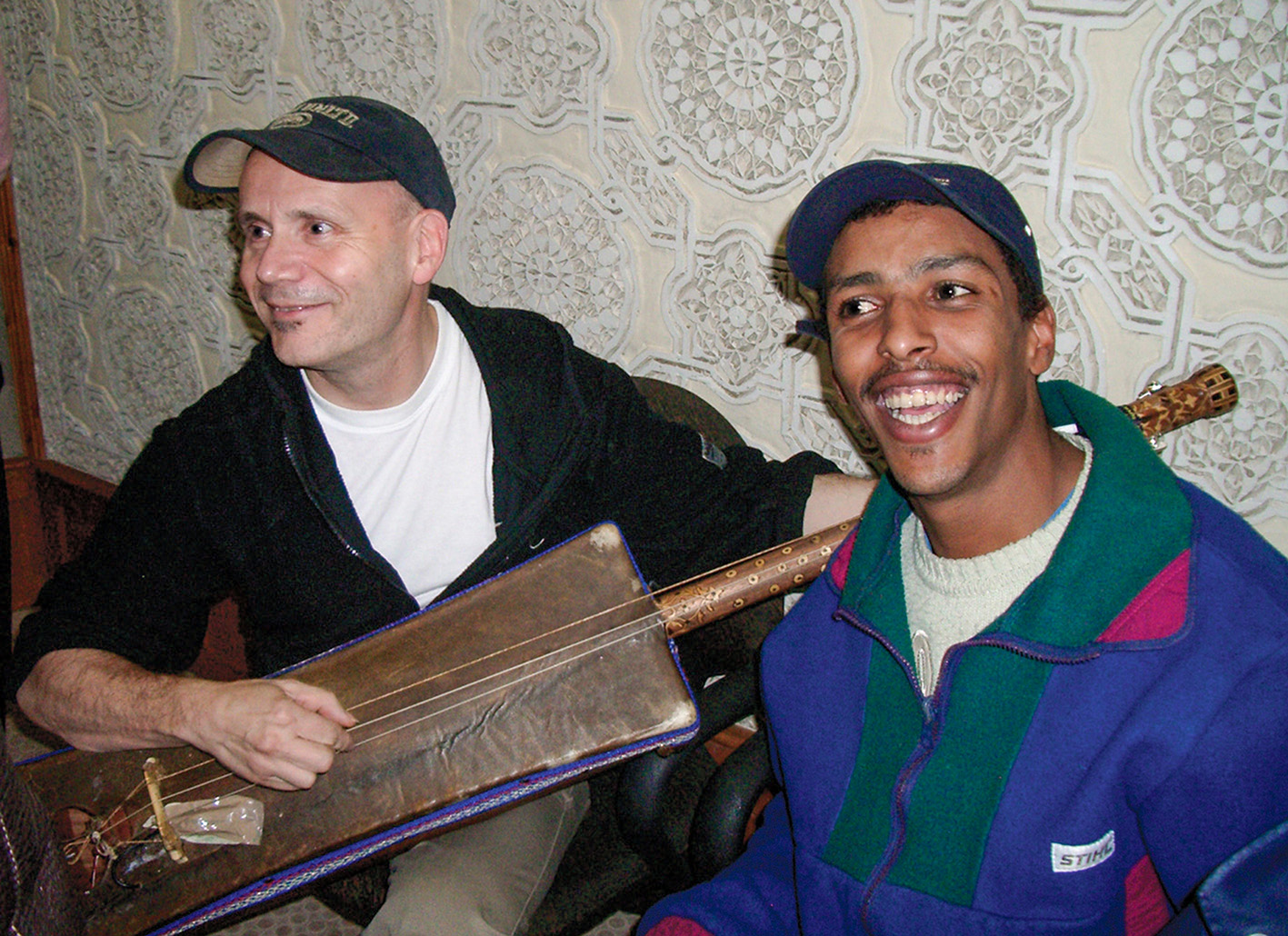
The track listing for this concert contained several classics and also some re-orchestrations. Can you tell us about the overall musical score for the concert and how this was chosen?
Jean Michel decided on the set list and wanted to include some tracks played in Egypt of course. I liked it and aside from a few alterations over the first few days of brainstorming, it was pretty much the actual set that was performed.
Oxygène 7 contained some wonderful new beats between the laser harp sections. Can you tell us how that came about?
It was very interesting to re-arrange that piece. We developed the 6/8 aspect of the original rhythm to such a point, that in the studio everybody was dancing, clapping their hands and they even said it was just as if the song was written there in Morocco. I wrote an oriental string orchestra part, Saïd added his touch and the song was very well accepted by the crowd, thanks to the addition of four local percussionists (two darbukas, bendir and tambourine) who gave the real Moroccan 6/8 rhythmic feel.
C’est La Vie was being continuously practiced during the last couple of days during rehearsals. Was there any reason for this?
Yes, unfortunately the original singer was sick, and Saïda Charaf had just three days to work on it.
Were you influenced by Jean Michel Jarre’s previous concert in the desert in Egypt for the Millennium?
Not that much. I just had a few mixes. And of course, I skipped to Morocco very early in the process! I had some raw material to arrange and on the other hand a bunch of wonderful players, who were all very enthusiastic and so I had to create and combine it all together.
What were the highlights of the show for you, both musically and visually?
I haven’t seen the show as I was on stage! I believe it was emotional, with songs like Miss Moon and a lot of good oriental electro groove in songs like Education. The live ethnic/electro blends in the UNESCO theme were great, with the Gnaoua group together with Jean Michel on bass and of course a great flute duet during Oxygène 2. All that and the fabulous scenery and of course the videos. Jean Michel had a lot of input in the video screen idea, the placement, the choice of images and the underlying text; he worked like crazy on that. Marie Jeanne [Gauthe] did a lot of great work on that too.
How did you find the local audience reaction in Merzouga – they were not your “normal” concert audience?
They were great. They like music, it is part of their culture in Morocco. Music is everywhere, for weddings and a whole variety of celebrations.
Did you bring back any local instruments with you or any other souvenirs?
Some sand in my broken camera, as well as some sand in bottles too. I returned with a bendir (a percussion instrument) and I bought a great gimbri - the bass of the desert - a three-string home-made instrument made by the leader of the Gnaouas who performed with Jean Michel.
You’re now a regular in Jean Michel Jarre’s team, are you looking forward to the next concert?
I’m ready for the next surprise. I’ve been lucky until now. Each place is amazing and it’s our job to make it an unforgettable musical and human encounter and one more unique, awesome, crazy Jean Michel Jarre show!
You had a very flash guitar on stage in Merzouga - where did that come from?
I think you’re talking about my Johnson metal dobro. It is an electro-acoustic instrument that resisted the sandstorm!
And finally, have you contributed to Jean Michel Jarre’s new album ?
Yes, it’s finished now. I contributed on most of the tracks, some contributions were minor additional overdubs and some were more important arrangements. I played some guitar, did some programming and also arranged the strings. Jean Michel gathered a team of five around him (including myself and Francis) who contributed to different extents. Jean Michel worked like crazy on that album, sleeping at night in the studio most of the time ... after finishing at 5am, he was ready to start again at 11am! It was a lot of work, but you’ll feel the energy not the pain when listening to it!
13/Interview
Francis Rimbert
Musician
Francis Rimbert has a long history of working with Jean Michel Jarre for more than 20 years, both in the studio and on stage with millions of people in the audience worldwide. From Rendezvous Houston in 1986 onwards, he has been a constant companion of Jarre’s in his global adventures.
So, you’ve performed at most of Jean Michel Jarre’s concerts around the globe. How did this location compare with the others?
Compared to other concerts this is the first time we had to perform outside of a town, far away from the entire infrastructure you need for a show of this scale. I was very preoccupied by the damage the sand was causing to our synthesizers.
The last two large-scale concerts with Jean Michel have been in two locations which are not renowned for “rock concerts” – Gdansk and Merzouga. The audiences though have been remarkable. Do you agree, and if so, why do you think this is?
Jean Michel Jarre pioneered a new format of outdoor performance, closer to land-art than rock festival. He attracts a larger, crossover audience as he creates a total sound and vision experience in the most improbable landmarks … his trademark is to break boundaries and shake opinions; the public love his audacity.
Having travelled to this show ourselves, we know that the travel and accommodation was most unusual. Were special arrangements made for the team?
Arriving on the site was quite a tough experience as it was raining heavily, the roads were flooded and damaged, and as incredible as it should sound, we had some hail. We were lodged approximately 40 km from the concert location, and our producer Alain Bilowus’ team had to take care of all the logistics in order for us to commute back and forth to the venue.
You were cold up there on stage, how did you cope?
There was a freezing wind on the stage and although we were wearing several layers of clothes, I was very cold. I managed to get some small packs of “instant heat” which gave me some comfort though!
Can you tell us about the technical side of the show’s music – such as the keyboard sets you all travelled with and why you chose the ones you did?
I had the same set of instruments that I usually have. My two samplers Roland S760 and SP700 were linked to an enormous hard disk where I save all my sounds, my Roland JD800 and for this first time I brought a FANTOM. I also had a Roland TR909 and an E-MU XL7.
We rehearsed the basic musical compositions in Bougival, in Jean Michel Jarre’s personal studio. We merely had to adapt our performance to incorporate our Moroccan musician friends.
For the audience, this show was almost a 180-degree “amphitheatre”, encircled by the dunes and pyrotechnics. How does this concert compare to the other concerts you have performed with Jean Michel?
From the stage, I normally only see my synthesizers and the audience. It is only when the concert is broadcast that I get a chance to see the global vision. Therefore, it was a new experience for me to be facing the back stage! Normally I see Jean Michel Jarre and the audience; this time I was facing the screens and, of course, the beautiful dunes, which was in fact rather destabilising.
The track listing for this concert contained several classics and some re-orchestrations. Are there any tracks which you’d like Jean Michel Jarre to include?
I really would like to hear tracks like: Fin de Siècle (Calypso Part III), The Emigrant or why not the whole of the first album Oxgène.
Given the remote and harsh location, did you have to make any musical decisions to compromise to your environment?
No, we did not have any major problems; it was much easier to play this concert than Docklands London under the heavy rain.
What memories do you bring back with you from Merzouga?
The incredible energy of the immediate audience, who were really over-excited, the magic of the Moroccan percussionists, the great and happy mood of my friend Claude Samard who was hitting the pads while dancing and Jean Michel Jarre who, for the first time played a bass guitar, whilst having fun with the local musicians.
Your working relationship with Jean Michel Jarre seems to have evolved over the years from being one of a few musicians in his “band” to now one of his sole accompanying musicians alongside Claude Samard. How has this evolution taken place and does it place more responsibility on you?
I have now worked with Jean Michel Jarre on his projects for more than 20 years. I started out by lending him my own instruments and little by little I started working on his albums and concerts. After years of working alongside him, there is a strong mutual trust and often no need for words to understand each other…
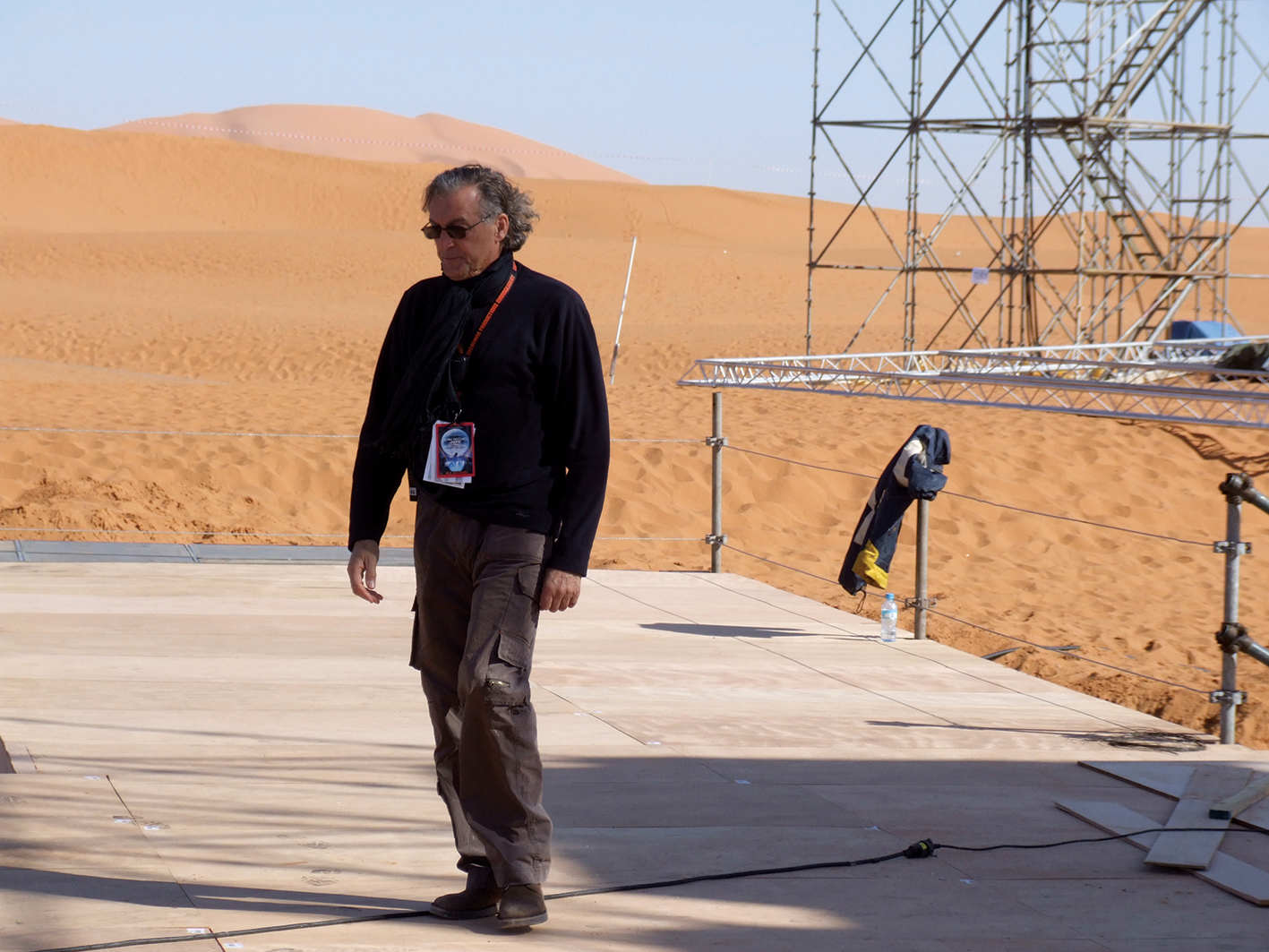
14/Interview
Roland Bréand
Stage Manager
Whilst Jean Michel Jarre’s concerts are full of the latest technical effects and pyrotechnics, the focal point is always the stage where Jarre himself and the musicians perform. Therefore, we felt it important to speak to the man in charge of this element of the show, Roland Bréand.
Stage manager for Jean Michel Jarre since the Forbidden City show in China in 2004, Roland also expands his role into artistic direction, choreography and designer for other artists.
Can you describe exactly what the stage manager is responsible for in a show like Merzouga?
The stage manager for Jean Michel Jarre’s concerts has various responsibilities. I am the link between the different technical and artistic teams and therefore I have to focus on coordinating and making sure that everybody is looked after and able to undertake their job both on stage and backstage.
The priority of a stage manager in a production like Jean Michel Jarre’s is to ensure that the concert is executed successfully and in addition to that, to always be at Jean Michel Jarre’s service for whatever he might need. In Merzouga I had two assistants with me on stage and backstage. I put my confidence and trust in them and so they worked extremely hard to ensure that the stage area ran like clockwork.
Everyone that surrounds Jean Michel Jarre during these events feels responsible for each other and for making the concert a success. Jean Michel Jarre is a great artist and a great professional with a very clear vision of the whole show and the entire production team is like one big family.
Jarre’s show in Merzouga was very complex - how important was the rehearsal schedule for the event and did the outdoor nature of the show impact the schedule?
The concert in Merzouga was certainly not one of the easiest, especially for the technical director Charles Lambing. Jean Michel Jarre and the Moroccan artists had to run through stage rehearsals for four days. Thankfully I already had an idea of the difficulties we were going to encounter because I had participated in the preparations and visited the site earlier, and so I was able to fully prepare myself and my team.
The rehearsals are run to a schedule, and we always rehearse the lighting, sound, video images and other special effects before Jean Michel Jarre starts rehearsing on stage. This allows Jean Michel to fine tune the visual elements before concentrating his focus on the stage performance. The final dress rehearsal is then very important for everybody and we made several changes and modifications to ensure the quality and success of the actual concert.
Sometimes backstage areas for concerts can be small due to the constraints of the building or location. Thankfully in Merzouga we had no restrictions and so the backstage area was comfortable and big. We only had to deal with the cold of the desert, which we did by installing a lot of heaters!
Could you tell us how you use the cue sheets to manage the stage?
I am backstage during the show communicating with the control room (tent). The entrance and exit of the artists on stage is my responsibility and I use the cue sheets to “run the stage” during the concert. These cue sheets are very large and precise, just like Jean Michel Jarre’s concerts. I ensure that the show is progressing to the overall schedule by using a time code on the control screen that I have.
The atmosphere backstage has to be and is very concentrated. The guest artists wait for their cue to be called to enter the stage and the cue sheets are the vital element here to allow me to manage this and ensure the right artists and guests are on stage at the precise right time.
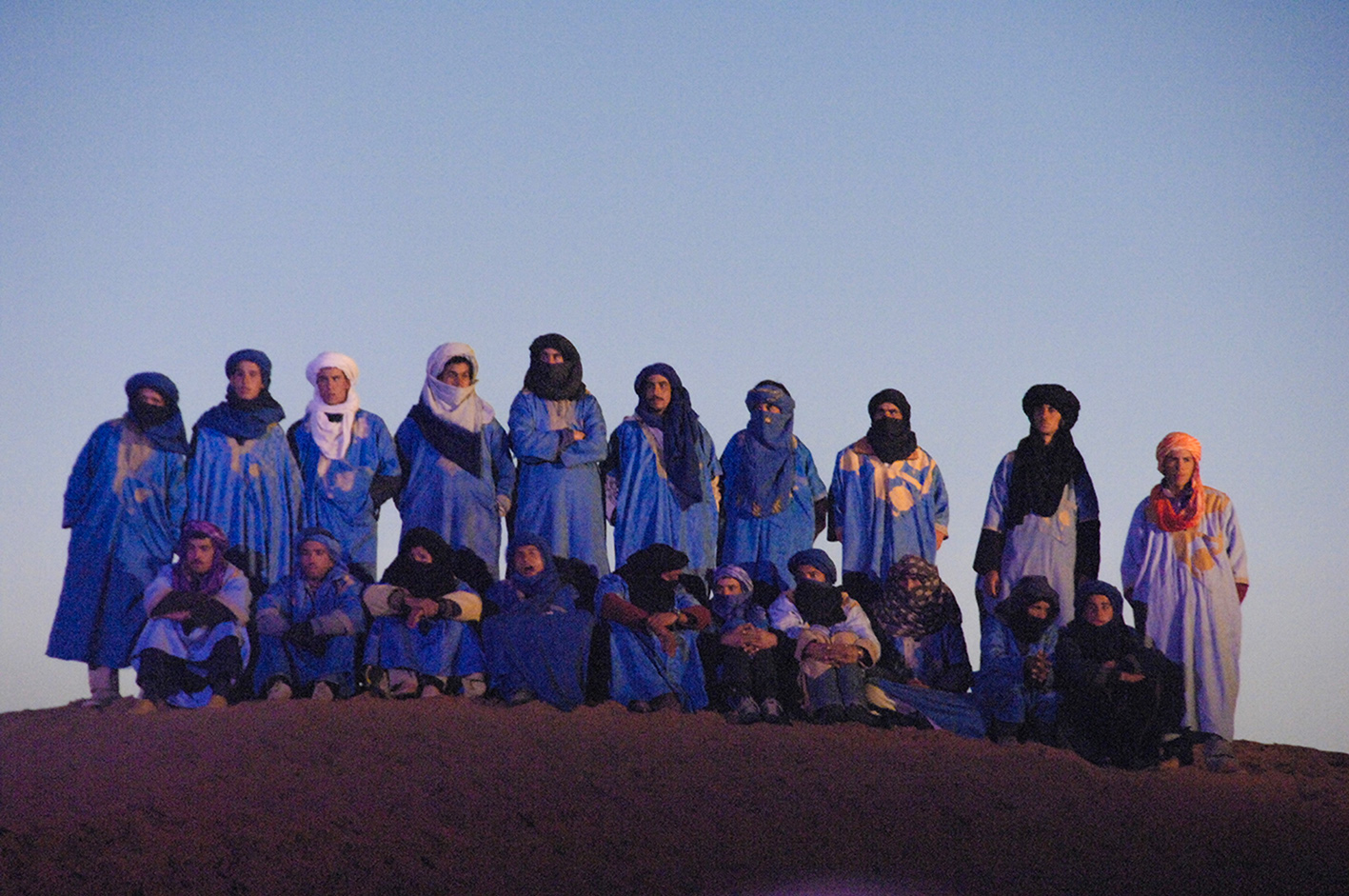
You have several performers who won’t have performed in such a big show - what special allowances do you need to make for this?
Some of the artists who performed in this show had never performed to such a large audience in such an important event, without even considering that the show was broadcast live all over the world. It was therefore very important to help lift the artists’ confidence by working with them during their rehearsals before rehearsing with Jean Michel Jarre himself. I also found it helped to talk through their performance with them several times and generally try to be as friendly and helpful to them throughout the process.
What did you take away with you from the show in Merzouga?
I was very happy to work with my friends in the production team and all the artists on this great adventure in Merzouga. One should not forget the people that work behind the scenes. I am always grateful to be able to provide my help in the realisation of Jean Michel Jarre’s concerts, because he realises millions of people’s dreams and defends human values all over the world.
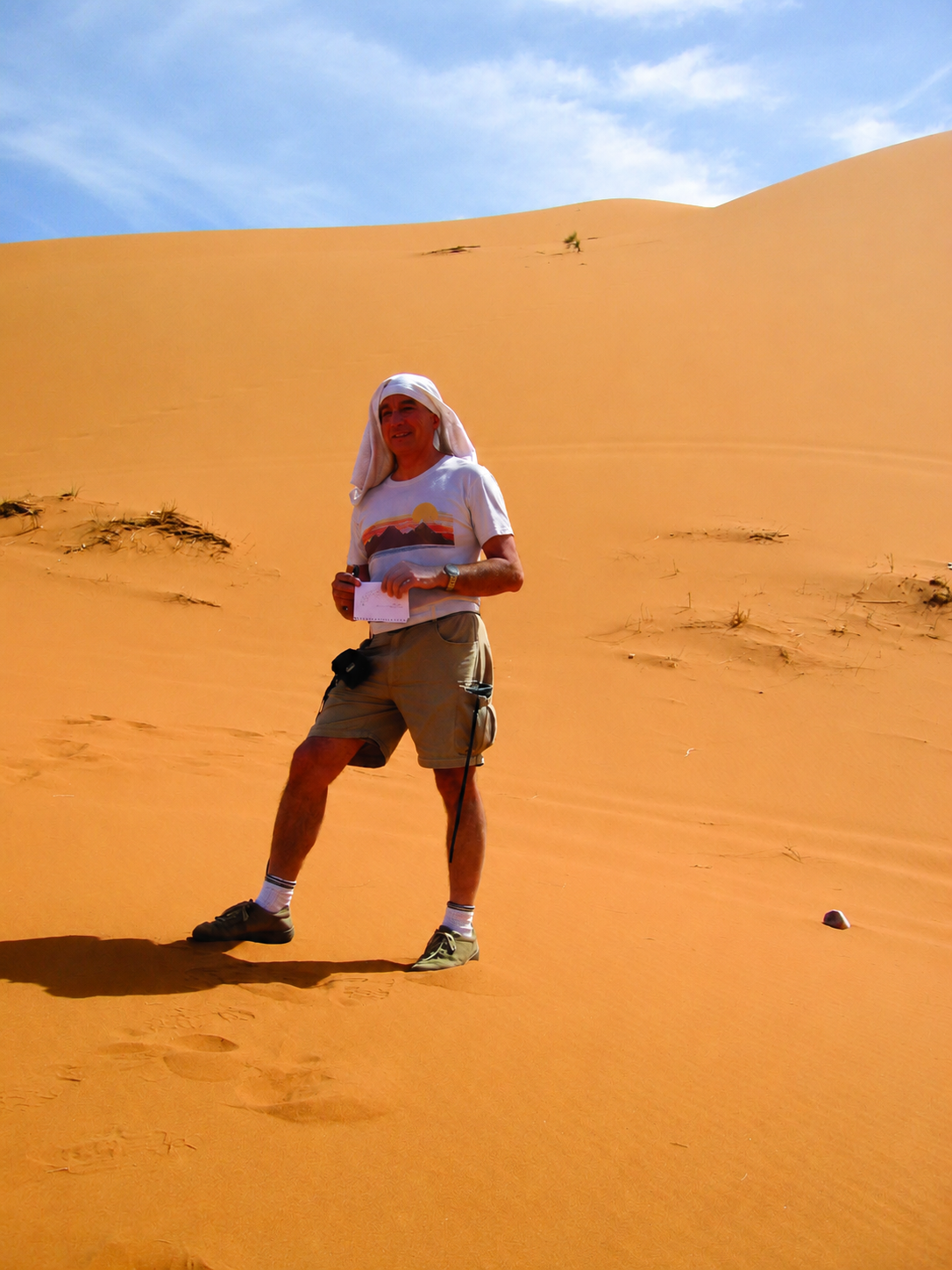
15/Interview
Claude Devernois
Pyrotechnics Director
Lacroix-Ruggieri have been working with Jean Michel Jarre for a number of years, providing the direction and team for the pyrotechnics for some of his biggest shows around the world. Its mission is to conceive and produce emotive pyrotechnic displays and has a team of what it describes as “sky artists” that have been built from various artistic disciplines. Major public bodies and international agencies have commissioned Lacroix-Ruggieri and thus some of the world’s most prestigious sites have been the venues for their inventive pyrotechnic displays
Alongside the sites they’ve worked with Jean Michel Jarre on, they have produced spectacles in countries around the world, including Buenos Aires, the “Longship of Fire” in Denmark, the 100th anniversary of the Statue of Liberty in New York, the inauguration of the world’s longest and highest aqueduct at Millau in France, and a spectacular multi-media show on the ocean in Tahiti to name but a few.
Fireworks can produce changing scenes that light up the heavens, thrill the senses and delight the audience. Their motto is “Fire fascinates, it knows no limits, and absorbs our souls”.
We spoke with Claude Devernois from Lacroix-Ruggieri, who designed the fireworks for Merzouga and has worked with Jean Michel Jarre now for a number of his concerts.
Can we start by asking how you first got into the pyrotechnics industry?
I started handling fireworks towards the age of 14-15 years old with my father who was a fireman. He occupied himself by putting on fireworks shows for the 14th July and 15th August within the local community.
From around the age of 18 years old, I worked as an outdoor fireworks expert, which became my passion. It was an era that easily allowed me to work with fireworks. I participated in some very big shows in France and abroad in Australia, Saudi Arabia, Argentina, Canada and Japan. For 12 years, I also organized the Nights of Fire at Chantilly and the Night Parties at the Château de Versailles. In 1989, the management of Ste Ruggieri offered me the post of technical and artistic director.
Are there any projects you have worked on that you are particularly proud of?
Yes, I am particularly proud of certain festivals that I carried out in Montreal, in Japan and some very big spectacles in France, such as the Fête du Lac in Annecy, Bastille Day in Paris and the Nights of Fire in Chantilly
Can you tell us how you approach designing the pyrotechnics effects for such a show in Merzouga? Did you get to visit the location before the show?
Yes, two months before the concert, we visited Merzouga to choose the setting of the concert site and stayed there for three days. From that moment, we were excited by the concept of installing the stage in the dunes and from my own perspective, I had the idea to surround the stage with fireworks.
I know Jean Michel Jarre very well as I have already worked on five concerts with him - Moscow, the pyramids of Giza in Cairo for the Millennium, Denmark, Poland and now Morocco. The design is architected based on the wishes of Jean Michel at the level of the colours, lighting, video caption and especially the music.
There are numerous techniques involved in Jarre’s show, such as video, lighting and of course, sound. How do you work with the other designers to ensure the show is integrated?
For this concert, we worked in perfect harmony with the teams responsible for the sound, the light, the projection of pictures and the video. We had preparation meetings directly on site. Each person conceived his or her effects and then we debated the overall design in a kind of committee with Jean Michel Jarre, who gave his agreement on the chosen effects. The night before the show, we did some test shots for the light so the video team could appreciate the different colours used, the degree of luminosity and the different heights of the projectiles for the movie cameras.
How closely do you work with Jean Michel Jarre on the design for the show?
One month before the concert, I received the soundtrack of the concert; this gave me some ideas where I could intervene during the musical pieces. Jean Michel and I discussed the design together twice. I proposed a few different concepts to him and as he knows fireworks well and I know which types of effects and colours please him, we work well together.
From there I was left with a free reign on the design. I hope the result was a sensitive and emotional pyrotechnic display, integrating with the music, the light and the image projections.
What challenges does a show like Jean Michel Jarre’s in Merzouga bring to you as the pyrotechnics designer?
There were no particular obstacles for my team, except for a couple of days in the week before the show we suffered a sandstorm that slowed down the preparations on site.
As soon as the exact location of the stage was chosen, the collaboration and logistics with the assistant directors worked very well and on time, including the construction of the structures. We normally adapt ourselves well to all the risks linked to the environment, the weather and the security constraints around both the artist and the public. The aim is to stage an artistically successful show but at the same time ensure the total safety of the audience and crew with the fireworks.
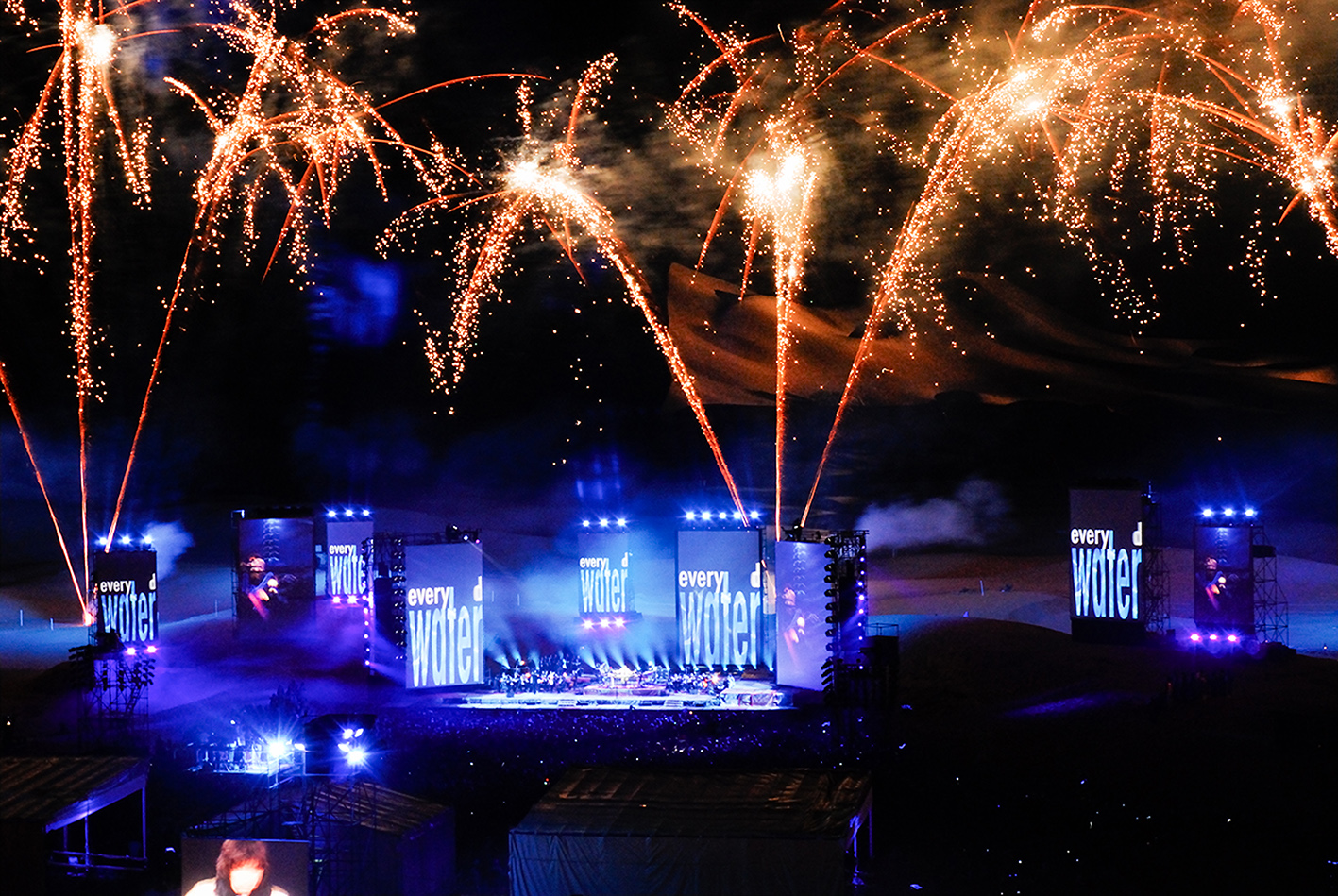
Can you tell us about how the pyrotechnics are technically synchronised with the various effects to ensure it all runs in unison?
We work with computerized systems that synchronize the fireworks with the soundtrack, thanks to a time code specific for each launch. The computer also has some design software that can reproduce the desired effects so that we can review the show beforehand.
I need about one week for the planning and preparation of the concert, and then three days for preparation of all the documentation. For the Merzouga show itself, I worked with my team - composed of six explosives experts - for six days on the site.
Did the location itself influence the design of the show? For example, the fireworks at ground level were spectacular and blended very well with the stage.
The setting lent itself very well to the spectacle in three dimensions since the stage was surrounded by fireworks. The height difference of the dunes allowed us to create surreal moods and shadows of lights in perfect harmony with the music.
This is the first concert where the audience has experienced an almost 180 degree-effect created by the pyrotechnics. Was this is a first for you? It encapsulated the show very, very well.
Yes, that was an innovative effect in the design of the spectacle, I’ve only used this technique of 180 degrees once before - on a spectacle in France, and I re-used it for this concert. The landscape there lent itself very well, with all these sand dunes, which contributed to the beauty of the show.
Pyrotechnics are a very traditional form of art. How is technology assisting in the progression of the art form?
I believe that the ultimate technology has been attained for the design of the products, ballistics, colours, fizzing effects etc. There isn’t much else to invent on these products! The final visual success is based more now on the manner with which one can implement the different products, the mixing of the colours, the arrangement around the concert site and the geometric features which we are able to create with the fireworks.
The future research nowadays for pyrotechnics focuses more towards the impact on the environment, bio-degradable products, reducing the levels of smoke and for concerts, less noisy products.
And finally, what does the production of such spectacles mean to you?
I have great memories of this concert which in my opinion has been the most successful one of all those that I have worked on with Jean Michel Jarre. There was a very good ambiance between the artists, the musicians, the sound technicians, lighting, video pictures and the local authorities.
I could talk about pyrotechnics for hours - it is a true passion of my life. I am often on the move through the world, and nothing is more beautiful than to give happiness to the millions of people that come to attend firework spectacles.
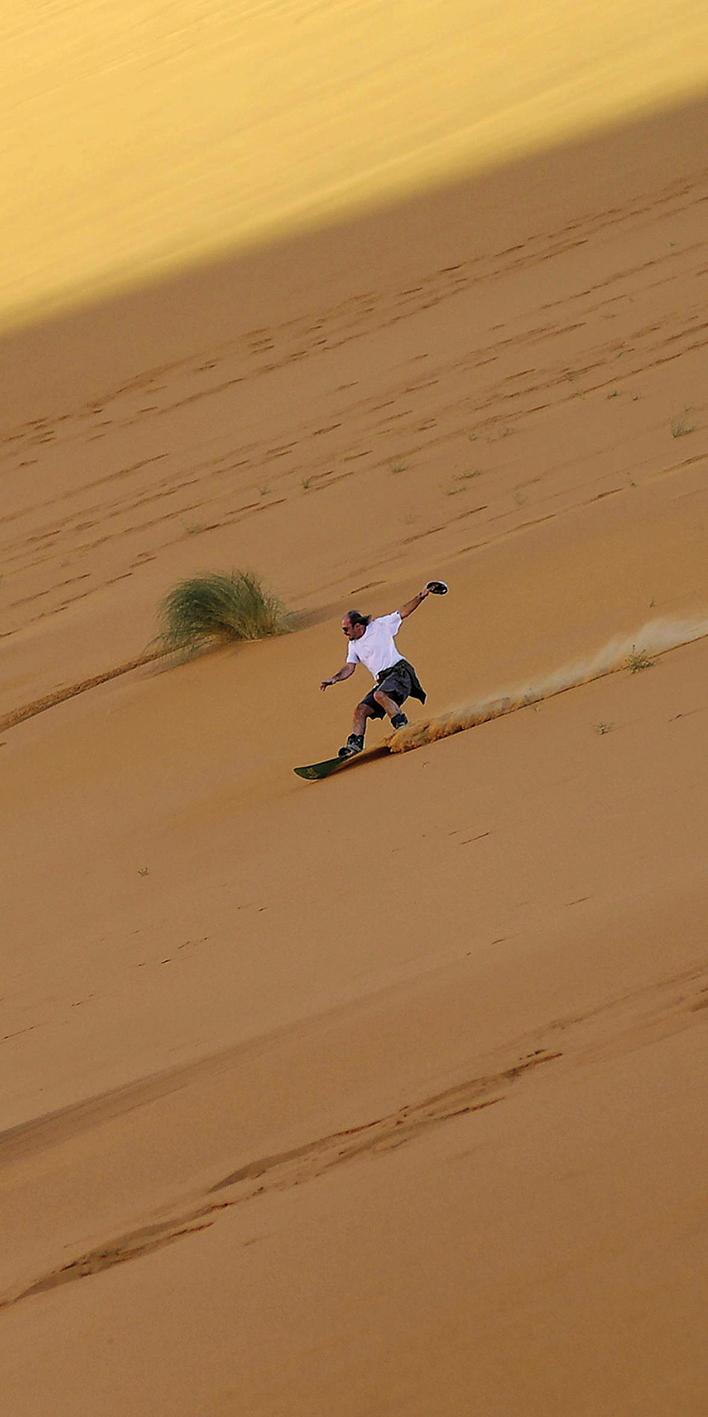
16/Interview
Philippe Barguirdjian
Sound Engineer and Live Mix
Philippe Barguirdjian has been working with Jean Michel Jarre since his ground-breaking 5.1 audio outdoor performance at the Forbidden City in Beijing in 2004. This performance was a world-premiere event for this type of 5.1 sound and as Jarre proclaimed at the time, “To test [5.1] in the oldest country in the world which is on the road to modernity is a symbol in one-self.”
In Morocco, Christophe Dupin was responsible for the sound concept and was the coordinator with the technical team. Alain Courieux worked on the sound design and Philippe Barguirdjian was the sound system and network engineer.
Philippe is the Sound Production Manager at Arpege-Son-Lumiere and he was more than happy to discuss his work in Merzouga, as well as divulge more about how he, along with the rest of the team, achieved the amazing sound in Beijing.
How did it come about that you started working with Jean Michel Jarre?
During the summer of 2004, we were contacted by the sound designer working with Jean Michel Jarre, Christophe Dupin. He asked us to study the possibility of running a 5.1 PA system in China for about 18,000 people.
Can you tell us about your role during Jean Michel Jarre’s concerts in Beijing, Gdansk and Merzouga?
I was in charge of providing all the audio equipment, studying the different network configurations that were possible (digital audio and data) and designing all the redundancy solutions that were necessary – this is critical as Jean Michel Jarre’s shows are always broadcast live for television, no failure in the sound broadcast at all can be tolerated, so the redundancy solution is always very important. The redundancy system allowed any one of the three mix systems to fail without interrupting the show. Also, the entire sound digital network was automatically secured in case of failure. Then as in Gdansk, I was also in charge of the final mix for the various media outlets in Merzouga - the international and local TV stations and radio stations.
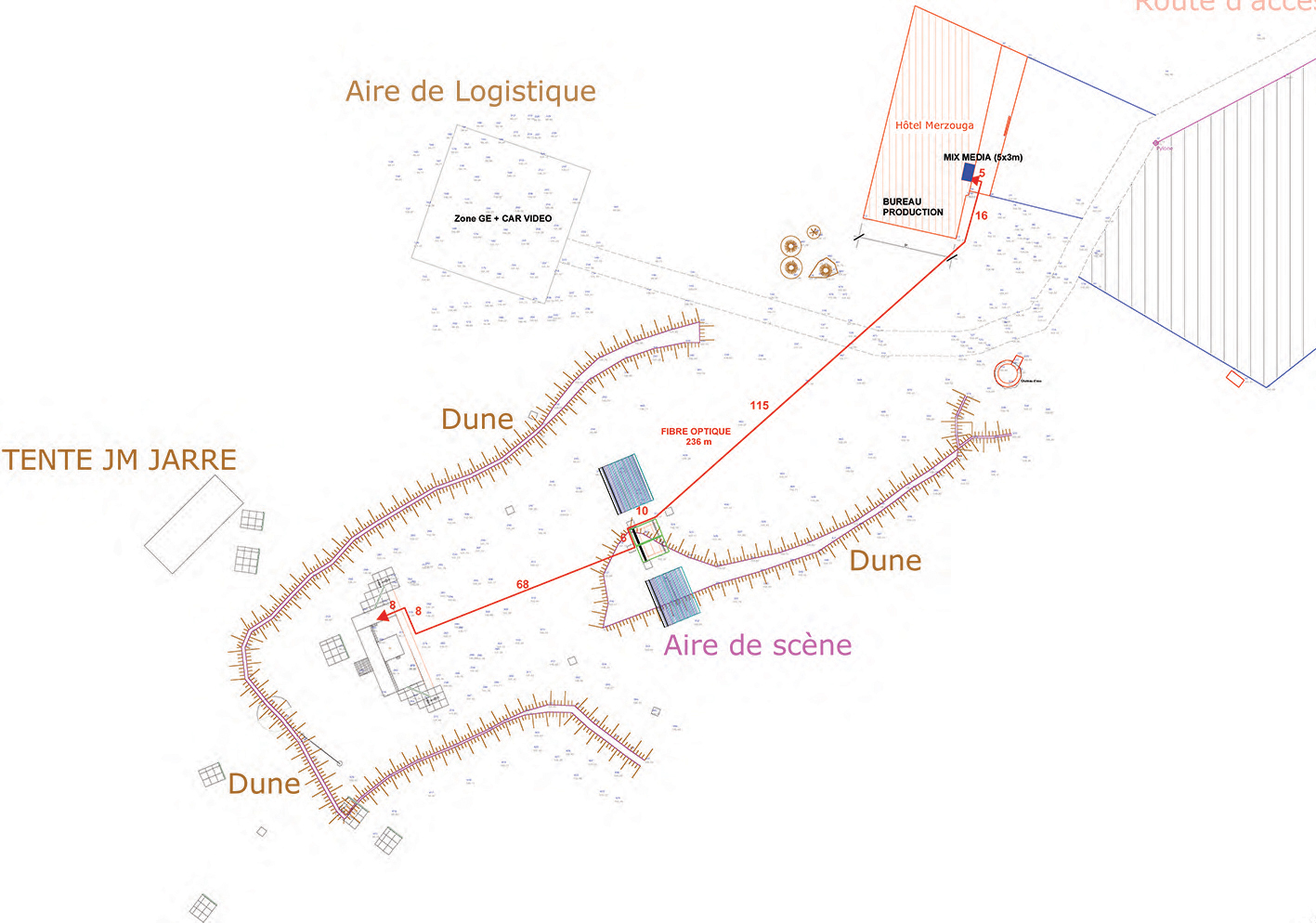
The Sahara Desert is a very unusual location. Can you tell us more about how the planning and execution of the sound for this project in Merzouga came about?
Well, you need to anticipate all the various problems when working in the Sahara Desert that you may encounter and will have to work with throughout the project. Sand and dust can cause you problems that can interfere with the show’s audio broadcast. We had to create a protection system for our equipment, and Jean Michel Jarre’s production crew had to take charge of the construction of a hermetically sealed room for our expensive and sensitive audio equipment.
How did the conditions in Merzouga influence your preparations?
The first measurements we took during the advance technical visit in early autumn 2006, made us realise that the temperature and humidity can change and swing by a huge variation in a very short period, so we had to fix that to keep the equipment conditions constant. Also, the sand and low humidity needed an unusually high power for lower frequencies.
We also realised that no backstage structures could be built behind or around the stage due to the constraint of the location, so the media mixing desk had to be located about 400m from the stage, as shown on my plan [see over page]. We ended up implementing a fibre optic solution to allow a remote mix with no delay.
How long did it take to set-up the sound system in the Merzouga location?
The build of the sound system took about five days to complete, longer than planned due to the sandstorms, rain and difficult weather.
Jean Michel Jarre’s concert in Merzouga featured some unusual instruments, such as the Theremin. Are these difficult to make provision for?
Those old instruments need constant servicing, and Patrick Pellamourgues was the guy for this! He has worked with Jean Michel Jarre for many, many years, and knows all his “antiques” by heart now, so he could resolve any problems!
The concert you worked on in Beijing featured 5.1 surround sound. How did you achieve this in the Forbidden City?
Well, this is a long story, but I’ll summarise! As you may know, fifty metres is the maximum that our ears can support between two sound sources without making your brain crazy! About 18,000 VIP guests were invited into the area which was about 200m x 300m. So, we divided the area into six zones to keep within the maximum limit, each with a dedicated L’Acoustics DVDOSC 5.1 sound system. All the audio distribution was digital by cat-5 network cables, and the 228 speakers were Wi-Fi touchscreen controlled.
Do you think that as more people bring 5.1 sound into their homes, then the expectation of the experience at public concerts increases?
Home cinema sales are increasing year after year, and I think therefore audiences will appreciate 5.1 live performances. However, due to the human hearing process (as I have already explained), the 5.1 sound area cannot cover more than 1200 square metres (approximately 3,000 people). That is not at all convenient for a huge audience except, as in China, where you duplicate areas for the sound, and that costs money.
Also, real true 5.1 is not an updated stereo with effects at the rear of the area. Real 5.1, as we experimented with Jean Michel Jarre in China, is when you have different sounds dispatched all around the audience to different speakers, so the music has to be composed this way from the ground up.
Was there any consideration to broadcasting the Merzouga concert in 5.1 to the audience?
Many special musical arrangements were worked on with the Moroccan musicians, and Jean Michel Jarre did not plan to perform 5.1 this time. This also helped to reduce the mountain of problems that already had to be worked out by the production. We decided - let’s do it simple, with only 130 French technicians and the Moroccan crew!
The shipyard at Gdansk was a large area, with an equally large audience. That must have been an unusual sound design to execute?
You are right, yes. In fact, it was vast, 140,000 tickets and then the guests in addition to that! The sound design took us a long time because of the extremely complex organisation of the various audience areas and the VIP zone too. We solved that problem with a “classic” front line with four towers of V-DOSC, one first delay line with eight towers of DVDOSC in an arc, each tower was GPS marked, and a second delay line with local PA about 240 metres from the stage.
How closely do you work with Jean Michel Jarre on the sound design for the show?
Jean Michel Jarre is very involved in all the elements of his shows. Designing a picture is the key starting point of each production, so once the stage set design is completed, we then discuss how the PA can fit into it. We try to find a solution that works with the initial design and gives us the possibility to rig our PA in a state-of-the-art way. Also, during the sound check, Jean Michel Jarre spends a lot of time with us working on the exact mix and getting the precise sound that he wants.
What future do you think lies ahead for audio at concerts?
Over the last ten years, the Christian Heil revolution (the creation of V-DOSC and cylindrical wavelengths) has changed professional PA systems all over the globe. Since this revolution, digital equipment and computers have given us the opportunity to predict, be precise and to produce sound of a much higher quality. However, computers have also given audiences MP3, which is very useful but doesn’t educate the audience to high-quality sound. So, we have to consider all these new technologies but only use the state-of-the-art parts of them.
What will you remember most from Merzouga?
Primarily I will remember the incredible colours of the sand and the amazing sunrise. And of course, my sand surfing …
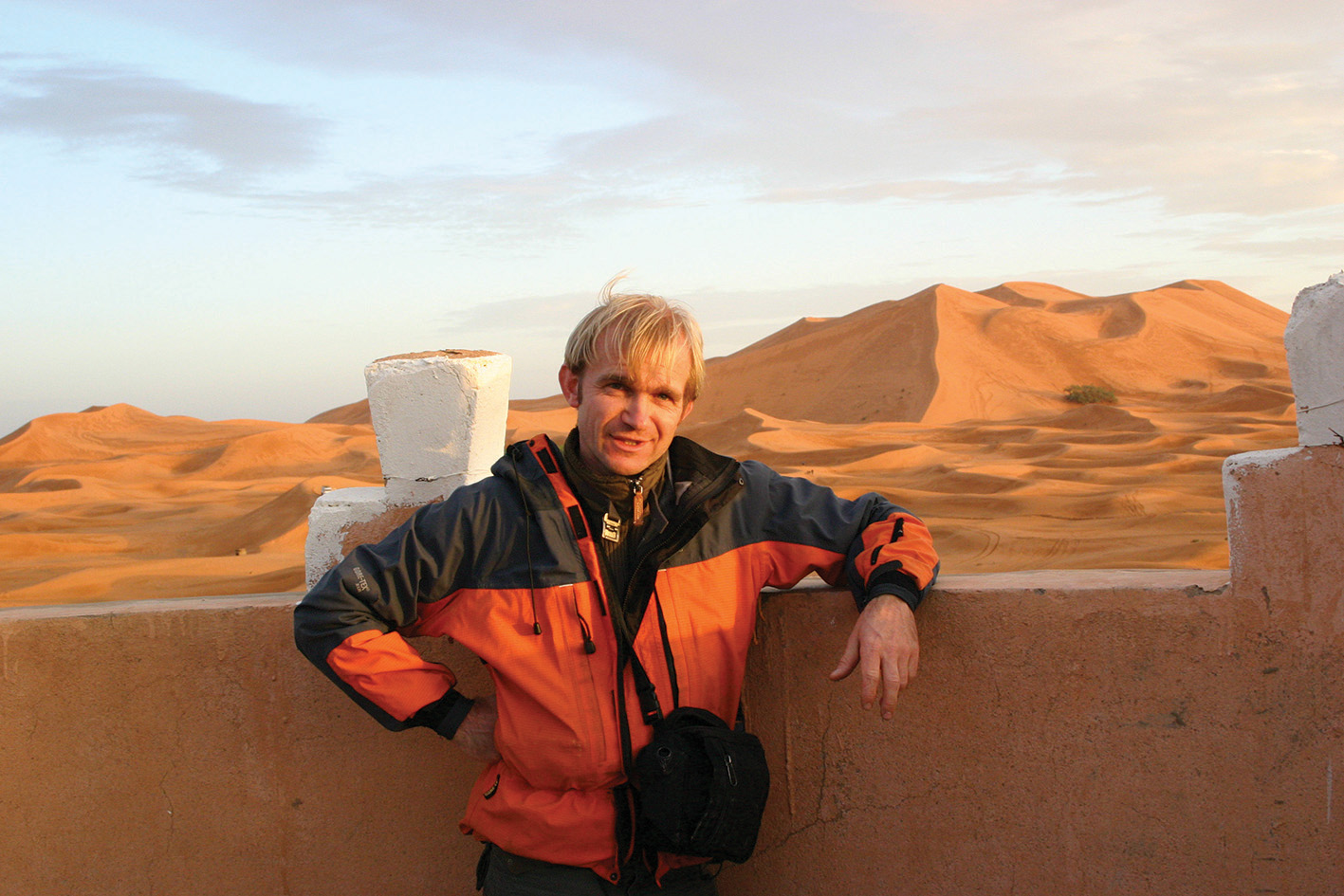
17/Interview
Chris Demeulemeester
HD TV Production Manager
The Water for Life concert was Jean Michel Jarre’s fourth performance which was filmed and produced by Alfacam. In 2004, Alfacam filmed his spectacular concert in the Forbidden City in Beijing (China) and in August 2005 the company recorded the Solidarnosc Concert at the historical Lenin Shipyards in Gdansk, Poland. A few weeks later Jarre gave a stunning performance at the opening night of the Eurocam Media Centre in Belgium, where Alfacam is based.
One Outside Broadcast vehicle (OB22) and one assistance truck (A14) were shipped to the Sahara, and the concert was recorded in full High Definition with 14 cameras and transmitted live via satellite. Euro1080, Europe’s first HDTV media company that belongs to the same group as Alfacam, broadcast the concert in January 2007 on HD1.
Before the show, Chris Demeulemeester, operations manager of Alfacam, noted that this concert was not to be an easy task: “Merzouga is just a small village. The concert stage will be set up amongst the Saharan dunes itself. Apart from some small grocery and carpet stores there is practically nothing. The surroundings are quite different than those which most of our crewmembers are used to. After sunset, it becomes rapidly pitch dark and temperatures descend below zero. Although the winds and sand are omnipresent, our team is well prepared, and we look forward to completing this prestigious job successfully.”
Alfacam are again post-producing the film of the concert, just as the company did for Jarre’s Beijing and Gdansk concerts. We caught up with Chris after the show, just as the film master of the event was being edited and prepared for mastering.
How did it come about that Alfacam started working with Jean Michel Jarre?
Jean Michel Jarre is always aware and curious about new technologies. For a couple of years we have been introducing the High-Definition recordings into Europe and therefore we were the first company ever to be able to record in a multi-camera environment.
Can you tell us specifically about your role during Jean Michel Jarre’s concerts in Beijing, Gdansk and Merzouga?
I was the unity and operations manager, so I set-up the budget, introduced it to Jean Michel Jarre’s management, advised the optimal way of recording the shows introduced the director to the management and advised on the logistics and production crew.
Can you tell us more about how the planning and execution of the video production for this project in Merzouga came about?
It all started with the creative idea of Jean Michel Jarre. We then did a “freewheel session” somewhere in a rainy Paris bistro - on how and with what kind of equipment we could work and use. Then we all planned a technical visit with the lighting designer, the riggings/staging company and the projection company.
Travelling to Merzouga was always going to be difficult. However, heavy rain showers blocked the road to the site and even our Land Rovers got stuck in the mud. We all visited the venue for two days, sat in the sand and ‘invented’ the plan on the spot.
The main recording is a standard HD multi-camera recording, but the way we build and work is very different.
The Sahara Desert is a very unusual location. What challenges did it bring you?
The wind and the sand are the natural enemy that will always win the battle. It was very difficult for the crew to set-up grips and cranes in a windy environment.
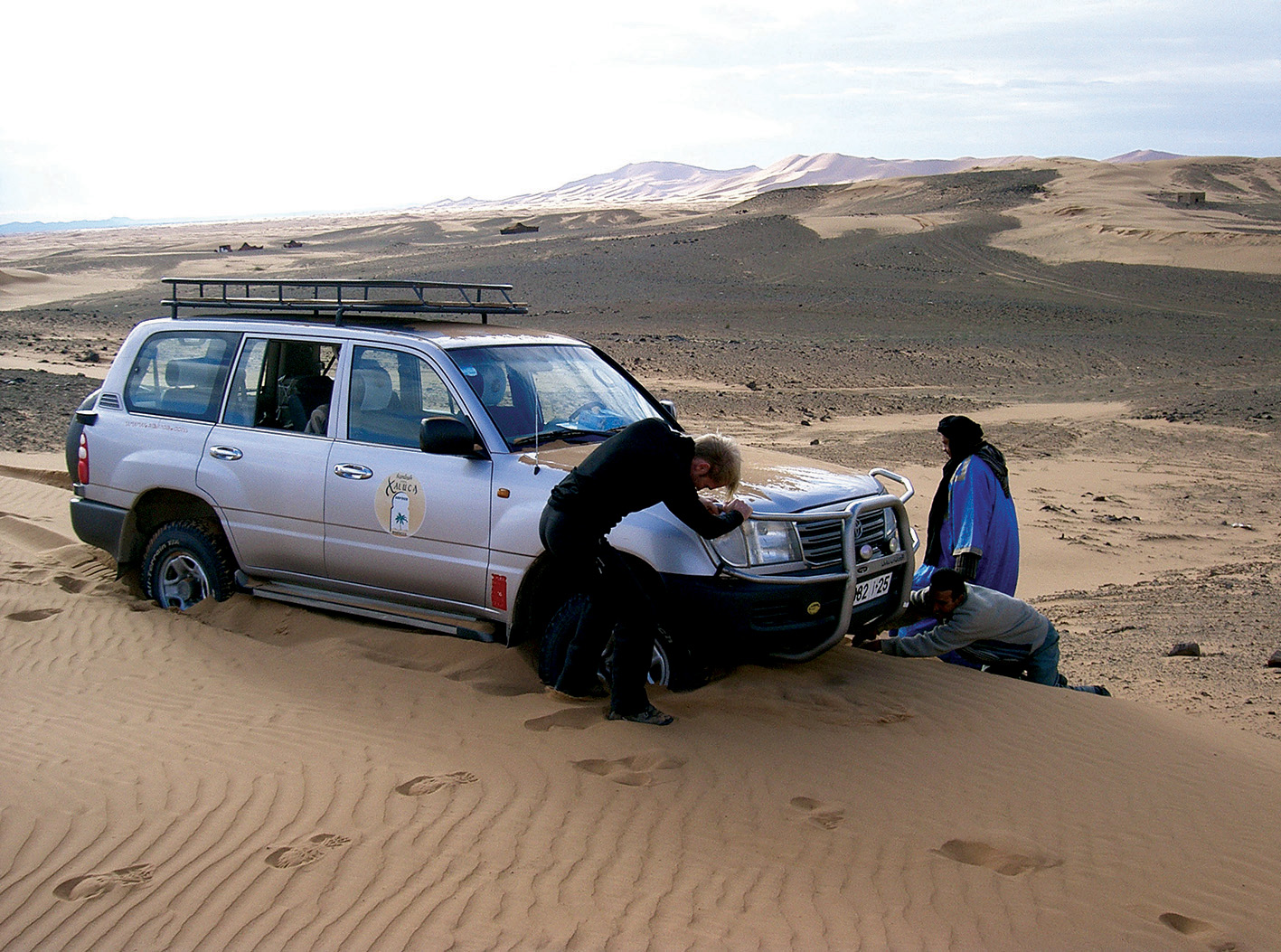
With all the sand and harsh conditions, did you have to take out specific insurance against damage to your equipment?
All our equipment is normally insured for the various risks for transporting to locations. It is not the first time we have worked in Africa though, as we produced the Judo World Cup in Cairo, the Handball World Cup in Tunis, the Mediterranean Games and Coup Africa des Nation. However, we did take out special risk insurance for this event. The biggest problem of transporting equipment via a roll-on, roll-off ferry to Africa is theft on the vessels. Very often we arrive with computers and loudspeakers stolen from the OB truck.
Is a Jean Michel Jarre concert different from the normal productions that you work on?
It is a pleasure to work for Jean Michel Jarre. He is hands-on throughout the production and wants to know everything - you really get a team spirit; he is Director, Artist and Executive Technical Team Lead, all wrapped up in one. A lot different from filming Oasis in Manchester Stadium …
How did you decide on the number of cameras that this production required and the location of each?
Well, the decision was made by me, the director and Jean Michel Jarre. It is a function of the set, stage, the number of scaffoldings that we could bring in with trucks - the total weight and load was limited due to the distance and environment. Apart from a couple of special placements of camera angles, it was all straight forward, you cannot re-invent TV.
We just tried to be as precise as possible and work hard on the basic shots - they should be clean with exact lens type, have the right background and with only one goal - tell the right story.
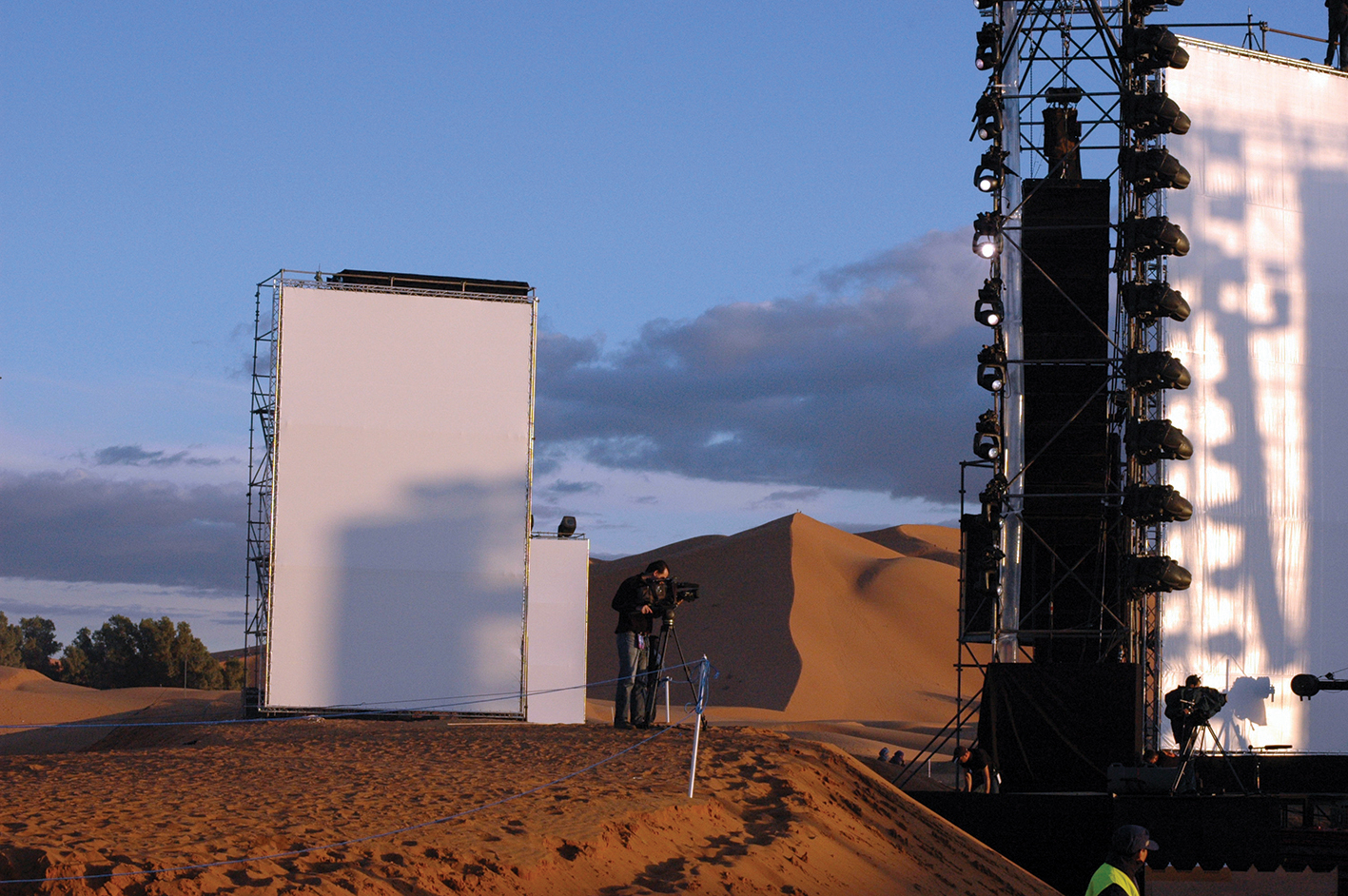
Jean Michel Jarre’s ‘canvas’ was huge for this show – how do you ensure you capture the show in its entirety?
The biggest challenge was the amount of power we needed for the pyrotechnics. If fireworks explode too high, you don’t see them in the shots. So we launched a couple of pyrotechnics during the rehearsals to check the height and played with different lenses and zoom ranges.
How closely do you work with Jean Michel Jarre on the television production?
Very close – he is very accessible; we eat together, rehearse together, we brainstormed together in Paris. Let’s say that Alfacam and Jean Michel Jarre have a very good relationship together.
Can you tell us about the live broadcast and how that is organised?
I rented a digital SNG truck from the public Moroccan TV broadcaster [SNG provide satellite uplinks]. We up linked the signal on satellite, and we also played out a news package for dedicated news stations after the concert.
The Jean Michel Jarre concerts you’ve filmed are single one-off events. Do you treat the filming of the dress rehearsal as a back-up for the “live” event?
We recorded the full-dress rehearsal with all VTR’s and with a different camera set-up. We had the cranes on the stage, and we also had more close-up cameras on stage between the dancers because there was no public to worry about so we could also tape more close-up shots. The next day we re-built the camera positions and moved a couple of cranes to the sides. Each camera is recorded on an ISO HDCam VTR.
When filming on location, do you use local cameramen or your own crew?
We used a full Belgian camera crew for the show and film recording. I also hired three local Moroccan EFP cameramen to shoot atmospheric shots, the video screens shots and the backstage shots.
The images that you captured were stunning and a great representation of the event. Were you pleased with the result? Is technology improving how you can capture these types of events?
Well, simply the more detail in the picture, the more information. Shots are steady. We were really pleased by the pre-recording [on the concert day] at 5pm. We started the show with the first three songs during the sunset in order to capture this light on film. The live show started at 8pm in the dark, but on the film master and future DVD you will see a great sunset and light effect in high definition.
You are producing a DVD of the event. How important is post-production on events like these?
The post-production is even more important; you must give the director the right tools and time to create a well-developed film master for posterity and of course eventually DVD. We are editing this show on Avid Nitris at Alfacam’s post-production centre in Lint, Belgium.
Jean Michel Jarre has already made his selection and provided a recommendation list for the editing process. We are working to this and then we plan some viewing and cleaning-up sessions. Finally, we’ll colour grade and master it with the right audio tracks.
You have also worked on Gdansk and Beijing. How were these shows different for you from Merzouga? Was the bureaucracy in China a challenge for you?
Working in China or Russia is so different. You don’t understand the local crew, you don’t understand the rules - why cable X or Y cannot run a certain way, but others can. You need a big flight case of extra time and a box of nerve-pills. But thanks to our Belgian diplomacy we succeeded in the end.
But sometimes the impossible is simpler … we filmed the Victory Day on Red Square in Moscow. The Russians insisted that cabling ourselves was not possible, so not a problem, I made a cable-plan weeks before the event, I shipped our fibre cables and when we arrived the local security had taken our cables and installed them very professionally in the drainage pipes under the Red Square.
Is high-definition recording important for Jean Michel Jarre?
Very, he wants top technology and top quality as a tool for his message and that was: Water for Life!
You seem to have a very close partnership with Jean Michel Jarre. What is next for Alfacam and Jean Michel Jarre?
Well next month again, I’m invited to Paris to his studio to brainstorm about some ideas, again it will be a challenge to accept this assignment.
18/Feature
A Global Pilgrimage
Water for Life turned out to be somewhat of a “pilgrimage” for fans from all cultures and all around the world. Countries as far away as Brazil, South Korea, United States as well as nearly every Western European Country were represented. Some had organised their own trips and arrived days before the concert. You could see them wandering around the dunes with excitement in their eyes, armed with cameras and some wearing Jarre T-shirts.
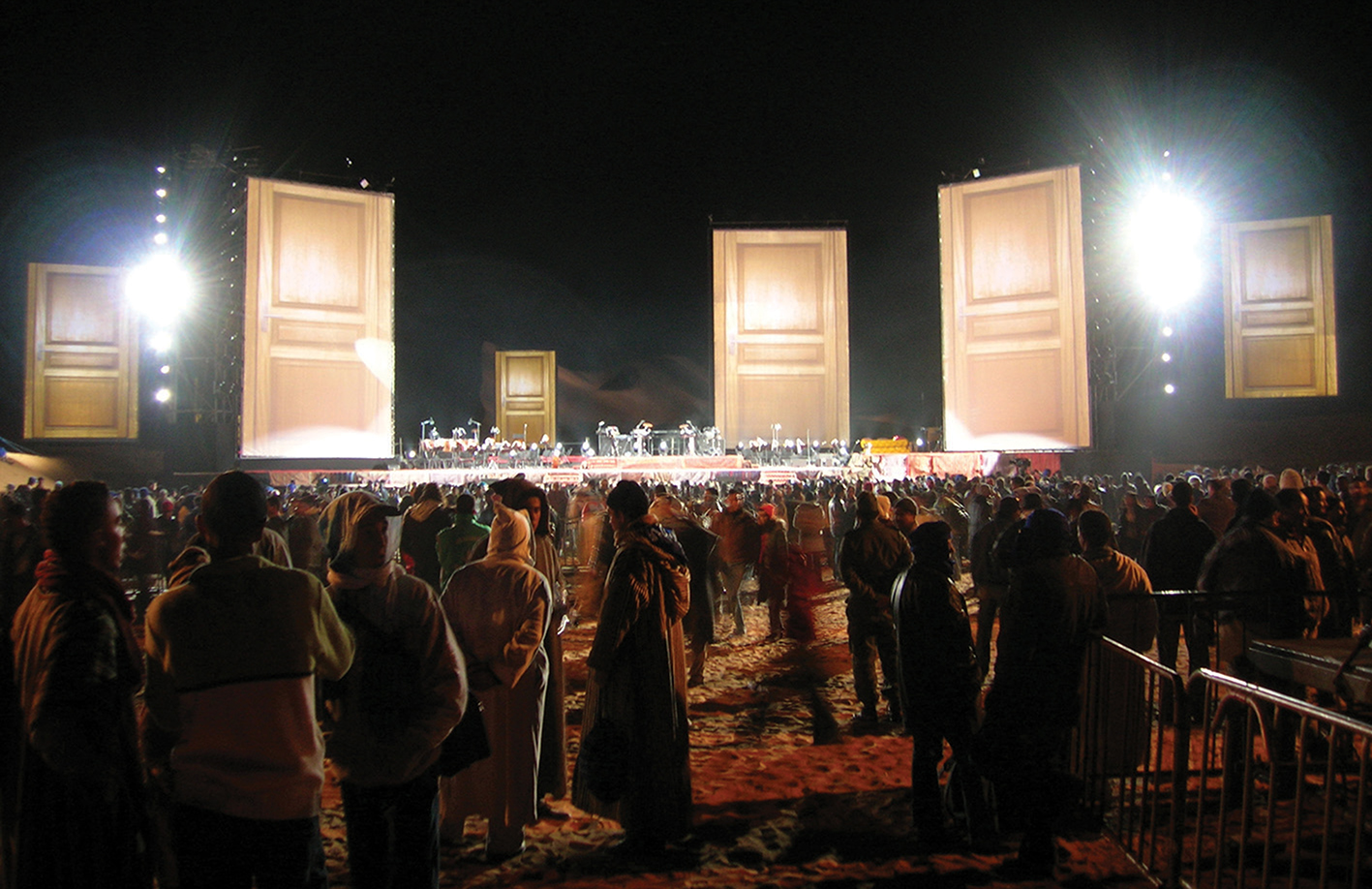
Approximately 600 fans from all over the world had bought a package from the Moroccan agency Atlas Travel. They landed in Casablanca and were brought by chartered airplanes to the city of Errachidia and were then transported through the desert in a long caravan of about 100 4x4 cars with Jarre - Water for Life posters on the side of the cars. They arrived just a few hours before the concert.
All different countries, religions, races, ages and sexes were united in front of the beautiful dunes of Erg Chebbi for this one-off event. The Moroccans greeted the travellers with their exceptional kindness and hospitality – although the locals appeared poor, they seemed to enjoy meeting these strangers who would travel this far for lasers, music and an artist they knew little of. During the concert the lights of the strangers’ camera screens replaced traditional lighters and stressed the difference between rich and poor, between urbanism and desert – every single person embraced the new world with tolerance and curiosity.
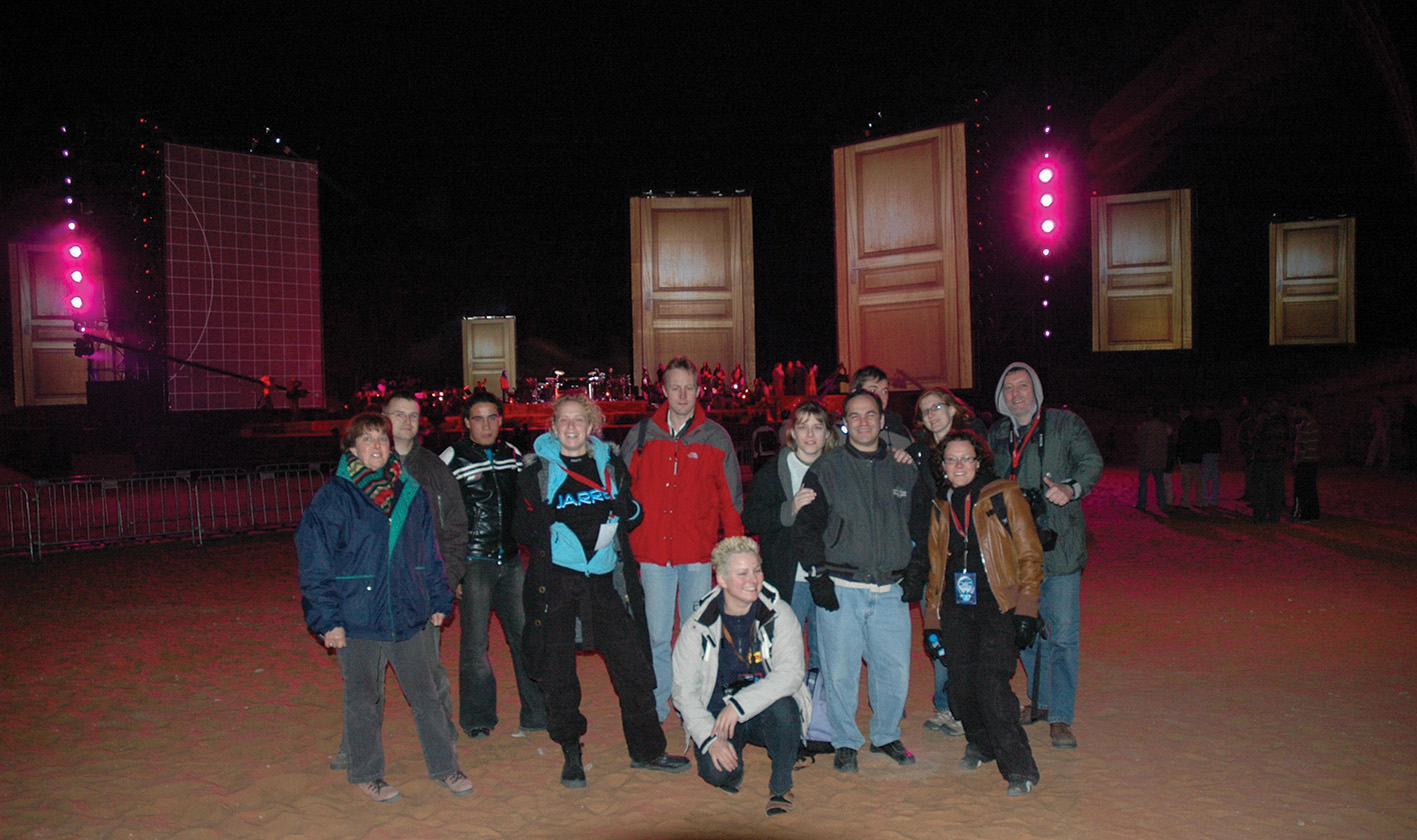
Here are some of their impressions.
Sweden
To travel to Morocco and to visit the desert of Merzouga made me think how lucky we are to have water and energy in our homes. To witness Jean Michel Jarre’s concert in Merzouga united us all, not only by music, but also with the people around us. The message to the world was strong and clear. I am happy to have met many fans and Moroccan people and I believe we are all in this together. We all need to take care of our world.
Lina Panova, Sweden
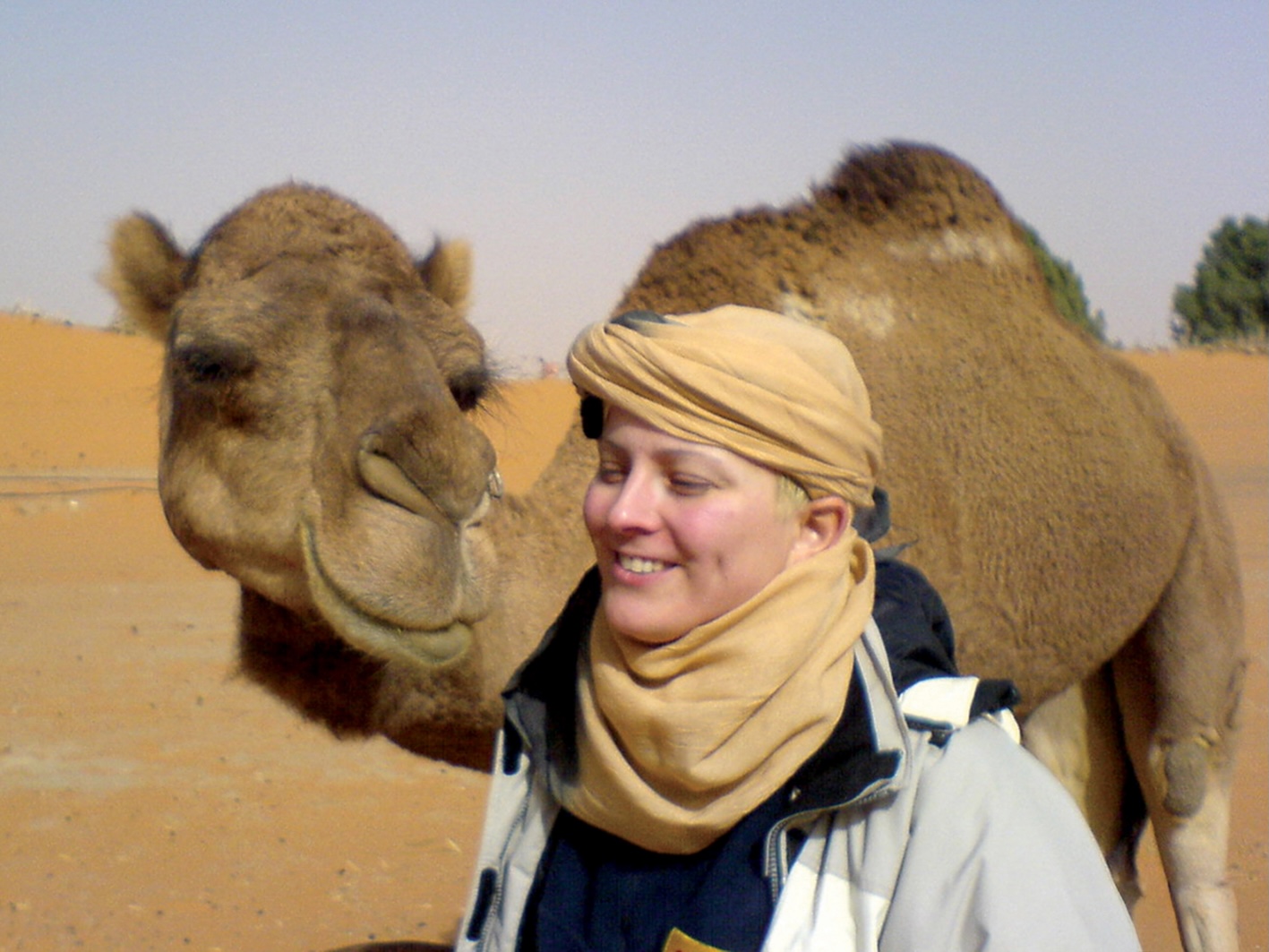
United Kingdom
Jean Michel Jarre was in fine form, excellent arrangements of the music, wonderful lights and lasers and a superb concert atmosphere. JMJ was back at his best, with one of the finest concerts to date. What a night to remember!
Tim Page, London, United Kingdom
Italy
Western control freaks, afraid of losing touch and time, arrived at the concert site and lost all sense of time and schedule paranoia when in the complete darkness of the desert without moon light, suddenly in the horizon three or four floating dunes appeared as if they were hanging from the sky. The magic starts.
The six of us: Giovanni, Giorgio, Francesco, Marcelo, Pascoal and I, Fabio (fans, but not fanatic) got together on the web site of jarre.it and we are still to this day delighted that we decided to cross a continent for a concert. Even though, logically we could have got lost between sand and stones, the inhabitants of Merzouga greeted us and made us feel at home. After this concert we see the world as smaller, thirsty and without defence. Thanks to all Merzouga with beautiful colours, people and silence that the rest of the world had forgotten and to Jean Michel who continuously accompanies our lives with his music; through tolerance, knowledge and friendship.
Fabio Cat, Venice, Italy
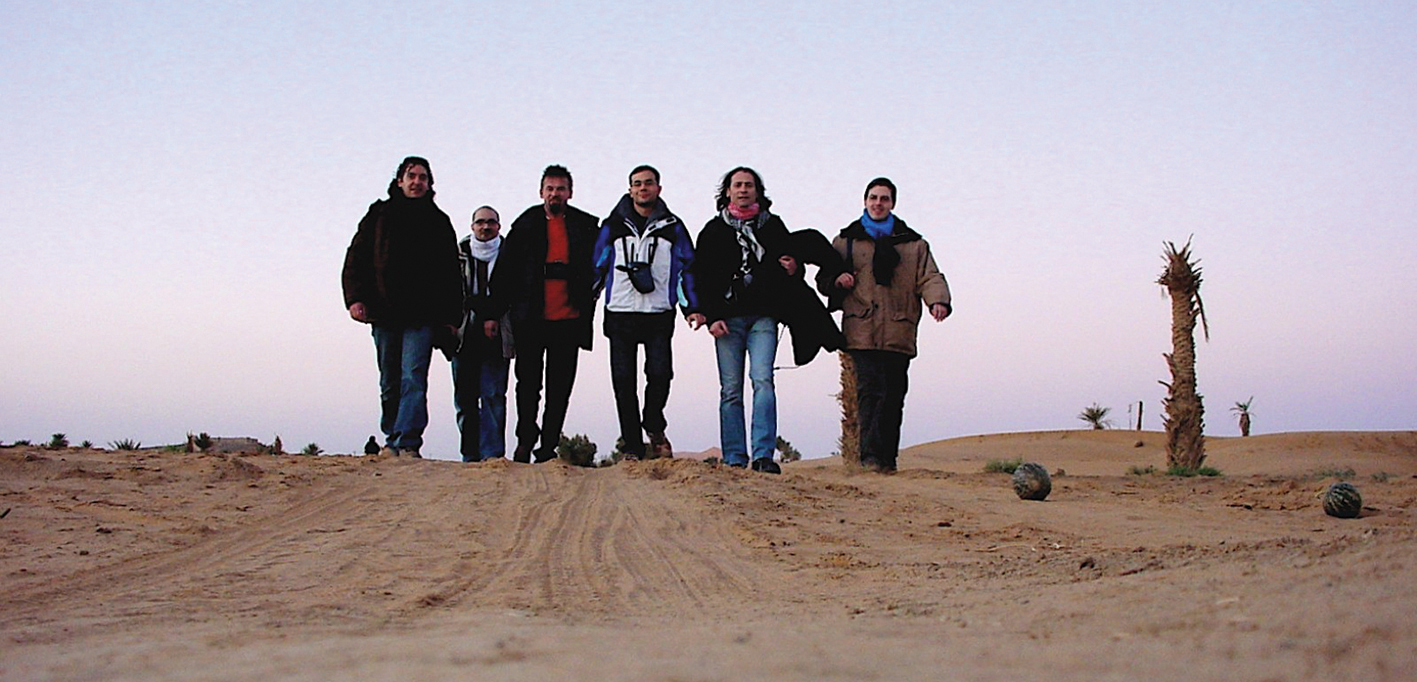
Denmark
A steam of excitement and tension is liquefying in a cloud above our heads - just waiting to release an experience that will last a lifetime for every mind and memory present in this valley of the Erg Chebbi dunes.
And off we go. The doors open and drops of the Jarre-universe fall upon us, blowing away all worries of yesterday, leaving only a silent scream inside my head. The concert is underway and a wonderful journey is beginning. The unity of the scenery, the theme of concert, the sound, the lights, the fireworks and the enthusiasm of thousands of spectators is almost unbearable. Millions of stars shining above and are only intensified by the billions of flashes from the fireworks.
In retrospect this was a concert of contrasts. Contrasts so extreme that all sensibility and rational concept was blown away and the only thing left was a highway of emotional outburst and astonishment.
Hanne Lobedanz, Copenhagen, Denmark
United Kingdom
The concert itself was probably the best since Jarre last performed in the desert. Strong performances of C’est La Vie, Oxygène 7, Chronologie 2 and a new track contributed to the freshness. Visually the projections were the best yet, being all brand new and the fireworks were very well choreographed. Like Gdansk the year before, Merzouga had an exceptional audience. At times it was more like watching Orbital at Brixton Academy than a traditional Jarre concert. It’s also good to see Jarre in such high spirits again. The amount of effort he spent speaking to and motivating the individual performers and his passion for this project were evident and resulted in a great performance.
Colin Neal, Reading, United Kingdom
Argentina and Brazil
I’ll have this concert forever in my heart. One night with Jarre in the dunes of the Sahara. His music evoked changing feelings with every song, as I was sinking into the sand as it progressed. I was happy because of this experience and also because of the topic of this concert: WATER FOR LIFE. Jarre has never before projected such explicit images. I’d like to believe that the whole thing will not remain just a spectacle. I’d like to think that Water for Life will make people more conscious; I’d like to think this will be just the first step.
Marcelo Daniel De Simone, Argentina with Pascoal Rogaleski, Brazil
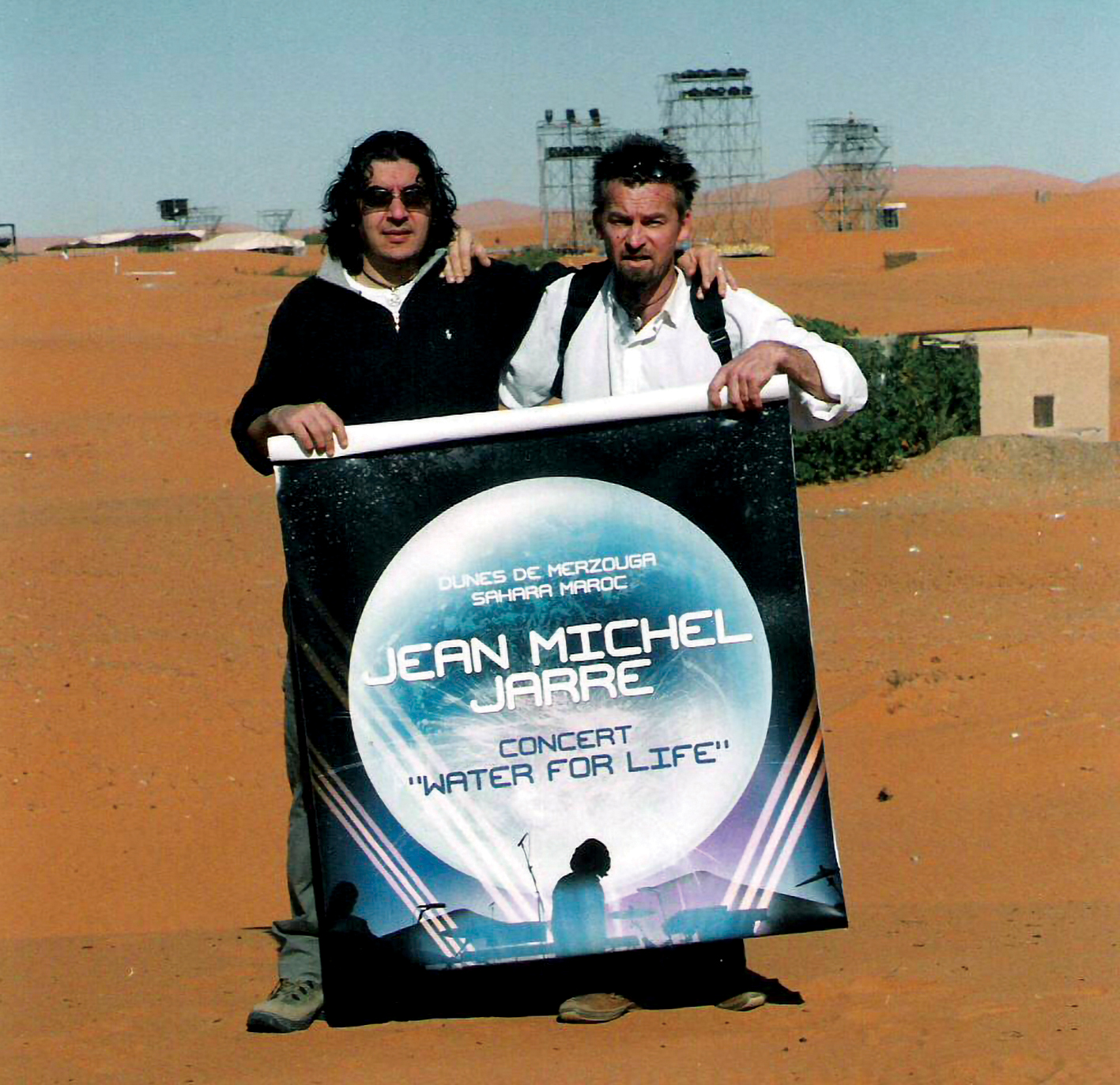
United States
One of the best parts of attending a JMJ concert is meeting the fans from all around the world. As this was my sixth Jarre concert, I was fortunate to be joined with friends, both new and old, from many parts of Europe and the US. I was especially impressed with the fans from Asia. It is so great to connect with others who are just as fervent about Jarre’s music as you and feel comfort that there are no borders when it comes to sharing your passions.
The concert itself was spectacular. The combination of the sun setting over the 350m sand dunes, the robed Berbers watching intently alongside their austere camels, the briskness of the desert air, the drumming and cheering from the crowd, and of course, the sights and sounds of Jarre….was a memory NEVER to forget.
Robyn Goldstein, New York, USA
The Netherlands
My Merzouga Experience started with the rehearsals. The music really got me into a happy mood and made me “conduct” Jean Michel. Then it was concert day! The most difficult track was C’est la Vie: would the female soloist get it right? She did! She was smiling, asking the audience to clap, and sang it wonderfully. It made Jean Michel smile at her! And of course there were fireworks (I loved them!). They were very gentle during Souvenir of China, very abundant during Fourth and Second Rendez-vous. And then it was over :-(. Only memories and lots of photos remain.
Marco Blom, Voorburg, The Netherlands
Spain
People from the Sahara were surprised. They did not understand why people had come from so far away to Merzouga in order to see the concert.
Pedro Parrilla Garcia-Calvo, Ciudad Real, Spain
Germany
Entering the concert site was unbelievable: in front of the sand dunes of Merzouga thousands of people had arrived; at the rehearsals I saw maybe one hundred people. Next surprise: the show started on time AND with a newly composed fantastic track which reminded me of “Bells” (Millennium/Egypt) and “Shipyard Overture” (Gdansk). But the concert was continuously marked by surprises, such as the new arrangement of Oxygène 7. Not to forgot the absolutely fantastic fireworks, with styles of cascades and sky fires that I have never seen before. In the background of the stage, the fantastic view at the sand dunes of Merzouga. Meeting fans from all over the world and the adventure to travel to this extraordinary place made the concert unforgettable.
Michael Kaschel, Germany
Spain
To be at the Jarre concert - Water for Life, with people of the Desert and Morocco, at the Doors to the Desert, was like living a dream. The images from the concert could never express the true feeling of it. Your own dreams about what a Jarre concert is, if you love his music, will talk to you better than anything else; the things which one feels during one night like this, in a place like this, with the music of a guy like Jean Michel Jarre.
Eugenio Santiago, Spain
Spain
The journey began two weeks prior to the concert, when eight strangers from different cities of Spain got in contact to go together and share an adventure of three days that we’ll never forget. It is difficult to describe the sensations that we have with words as we’re approaching the zone of the concert; the sounds, the giant screens, the sand of the desert, the enormous dunes on the horizon. And then comes the tension, time stands still; each one of us trying to find the best place to watch everything from. Suddenly the music begins, the screens are invaded by images and texts. Jean Michel Jarre is standing on a dune to the right and from this moment for two and a half hours, it will be an incredible concert, an incredible party. The music, the fireworks, the lights, and sharing all of this with thousands of Moroccans who were discovering the music of Jean Michel Jarre remains a beautiful memory for all eight of us.
Pedro Garcia, Murcia, Spain
South Korea
I was hoping to travel to Europe at the end of 2006 and then I heard the news that Jean Michel Jarre was going to stage a concert in the Sahara Desert in Morocco – what a lucky guy I am! So I changed my schedule to accommodate this concert. And what a show. The event seemed to be a giant festival for the locals – when Jarre played Gagarin, the Sahara Desert seemed to change into a huge discothèque. The whole audience was dancing along to Jarre’s music and lasers – myself included! It was a great concert.
Park Nam-Gon, Seoul, South Korea
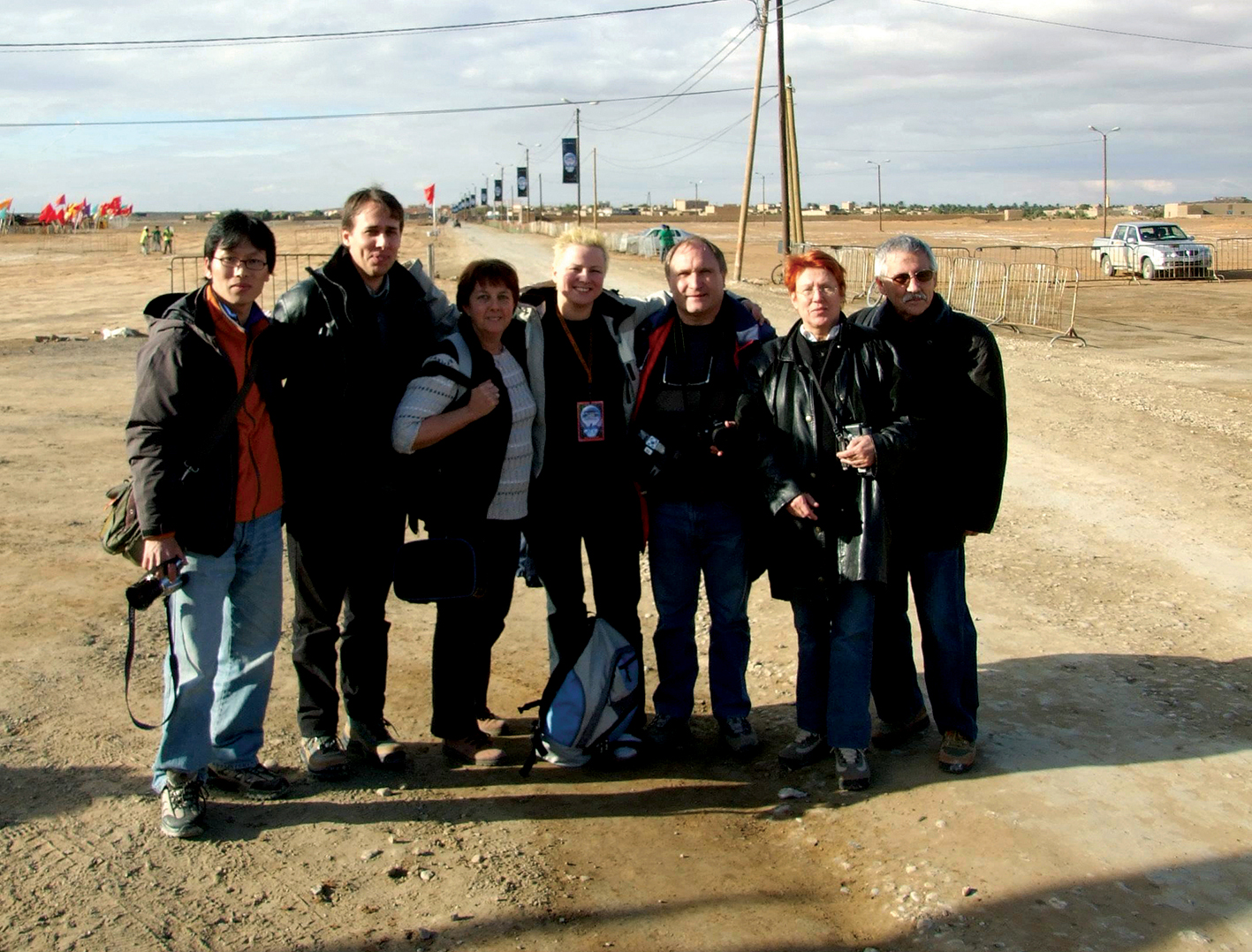
France
Yet again Jean Michel Jarre made us travel to a fantastic place where we met welcoming and pleasant people who embraced Jarre’s music with joy and enthusiasm. The rehearsals had some really moving moments like Eldorado and the Moroccan percussionists playing with Jarre. The female soloist, who at first encountered some difficulties, was superb during the actual concert.
A delirious ambiance reigned on the night of the concert and we notably enjoyed hearing Hey Gagarin and Eldorado. Being able to share all of this with fans from the whole world was a great experience as well. Never forget “Water for Life”. Take care of water – it’s essential for our world.
Marianne and Michel Arnaud, Cherbourg, France
Portugal
We arrived just in time to what was my first JMJ concert. When Intro Saturée’s first notes made the ground vibrate under my feet, I felt like a little child, my dream was becoming real, twenty years on!
Jarre, from the top of a sand dune, clapped his hands vigorously, until the melody started, just like his strong solo. More than two hours passed by so very fast. When I eventually went to sleep, the adrenalin of this memorable night kept flashing in my head despite the fatigue of two days of travel and partying. The night was filled by an unreal dream, but not even close to the reality of this adventure. The Jarre fans from all around the world are quite an unusual community - always willing to follow this man, wherever he decides to go...
You don’t need to be rich to live intense moments of joy, you only need to leave behind all the negative weight and live the moment. And what a moment in time when Jarre took us to Merzouga!
Luís Garcia, Portugal
United Kingdom
What began as a potentially very bad idea resulted in one of the greatest live events I have ever witnessed. Jarre’s grandiose electronic compositions were augmented with the delicate power of the Moroccan Philharmonic Orchestra, and the highlights, at least for myself, were many; Chronologie 2, Millions Of Stars, Light My Sky and a truly explosive Rendez-vous 2 which was accompanied by what seemed like every firework on earth being discharged simultaneously; they were momentous, immersive feats of musical and visual engineering.
Gilez Moorhouse, London, United Kingdom
Germany
Morocco was for me something like a mixture of Beijing and Gdansk. Great fireworks and beautiful videos (like in Gdansk), foreign culture and an exciting journey there. The scenery of the concert was really amazing. I will remember the concert for the great pleasure of meeting a lot of Jarre fans from different countries. I had the feeling of staying in a big international family!
Gerhard Wingender, Germany
19/Feature
Planes, Trains and 4x4’s
I must admit, when the Water for Life concert was announced a mere few weeks prior to the event, I was sceptical that I’d be able to attend. Not only did I have to figure out how to schedule time off with such short notice, but I also needed to find some sort of arrangement to get to the far reaches of Morocco that’s not well connected to the world transit system. As I worked day after day to try to figure out how to arrange this trip, I began referring to Merzouga as being in the middle of the middle of nowhere.
While the concert organisers provided a fantastic service for concert participants by partnering with the Atlas travel agency to get people to/from the event location for a very reasonable price, the language barrier and the lack of ability to attend the dress rehearsal limited my interest in this option. So, with the help of the global network of smart, resourceful Jarre fans contributing to the Jarre forums, a number of us found another agency that was willing to customize our itineraries to get a taste of provincial Morocco as well as flexible access to the concert site to satisfy our unique, Jarre-centric itinerary.
One of the great things about the Jarre fan network and the Internet is that, together, we were able to achieve more than the sum of everyone. Thanks to openness, trust, and savvy utilization of technology, Jarre fans throughout the world worked together, coordinated, and negotiated on-line to reduce costs and share in the Morocco and Water for Life experience together. This approach helped make this trip even more fun and rewarding than anticipated.
After about 50 emails to the travel agency and Jarre fans from New York to Copenhagen, we finally locked in our itinerary just two days before we left. I’m sure it wasn’t simple for anyone to get to Merzouga, but coming from America, it was a long haul. First, we drive 2.5 hours to JFK airport in New York, then a 7.5-hour overnight flight to Madrid, arriving around 9am local time. However, our connection to Casablanca wasn’t until 8pm that night, so we locked up our luggage at the airport and ventured into Madrid for the day. Madrid was beautiful and the weather was just about perfect. We did make our flight out though, and got to Casablanca airport, which felt like we just time-travelled back to 1963 – the airport was dark, brown, narrow, and almost claustrophobic. A bit freaky, but before we knew it, we were on another plane to Ouarzazate. Arriving at 12 midnight, after 36 hours of travel and walking around Madrid, I thought I might just be hallucinating from exhaustion because we exited the airplane onto what seemed to be a large parking lot for a post office. As it turns out, this post office was, in fact, the Ouarzazate airport. And the parking lot was, in fact, the end of a runway. Honestly, it could have gone either way.
Once we finally got settled with a night’s sleep, we continued our quest to the Water for Life concert. This quest included exploring the town of Ouarzazate and its Kasbahs, then strapping in for a five-hour “4x4” drive over semi-paved roads through the stunning landscapes and tiny towns of south-eastern Morocco and settling in at a hotel (Haven La Chance) in Merzouga that blurred the lines between a hotel room and a tent.
The Haven La Chance hotel consists of seven rooms and seven tents – and all occupants were Jarre fans. As a result, the hotel owners and transport concierges were essentially dedicated to helping us get to and from the concert site whenever we needed to and feeding us whenever necessary to ensure that our trip remained Jarre-centric. I’m sure they thought we were crazy, and they were probably not mistaken! Merely hours after we arrived, we were off again to see the dress rehearsal on Friday night.
We arrived at the dress rehearsal site at around 5pm, and they were already in the middle of rehearsing C’est la Vie. Those who were there will quickly recall the struggles Jarre was having with the singer, who really wasn’t getting into the vibe of the tune, and didn’t seem to know how to improvise naturally. You could see Jarre gesturing “improvise” with his hands, arms, and eyes. But I guess if one were not a natural improviser, these gestures would appear foreign. After seeing this challenging exchange several times, we headed back to the hotel for dinner.
We returned to the concert location at around 9pm the same evening, and this time, the sun has set, the screens and stage were fully lit, the performers were practicing, and we had pretty much full access to any areas of the concert location. It was approximately at this moment when a feeling started overcoming me that is honestly hard to describe. But let me try: There was this dry desert mist, these huge skyscraper-style screens, the music playing with surprising clarity and quality, this huge dune lit up in the distance, and Saharan desert all around. There was a salient synergy in these elements that gave me goose bumps. The last time I had a feeling like this was at Jarre’s Millennium concert at the Pyramids in Egypt. You must wonder if there is some kind of existential connection between Jarre and the Sahara that, when brought together, evoke new dimensions in each.
On the morning of the concert, we got a glimpse of how the locals live with a tour around Merzouga and surrounding villages. It is hard to describe because it is not as simple as saying that “they’re poor and desperate”. In fact, I would not say that they’re desperate at all. I would say that they have established a sort of harmony with their environment. And although it certainly does not seem like a very fun existence by Western measures, there is a feeling of “OK-ness”, if you will, that does not turn their situation into anger or outward jealousy. For instance, in the States, poor people in the inner city appear to be angry and frustrated with their environments, and it shows: buildings are eviscerated, filth is everywhere, and people resort to violence at the slightest provocation. It’s life out of balance.
In Merzouga, and indeed in other areas of Morocco as well, the lack of material things feels more natural and integrated into the environment. Additionally, it was striking to me how people-oriented the Moroccans were – they were not only very customer-service oriented with us, but they also seemed to all know each other and helped each other out in a seemingly large support network. They all seemed to know and work with each other! Maybe when lacking wealth and materials, people compensate by relying more on each other, forging closer relationships and wider networks, and using trust more liberally.
Having decided to get to the site early at 5pm on the day of the show, we were surprised by the number of people already there, and even more surprised that Jarre was on stage performing a sunset concert. I heard that Jean Michel Jarre was keen to record some of the show at sunset and so he played the opening few tracks whilst the sun gently slid down behind the dunes.
At 9pm, the concert began to a full house. The crowd at the concert was unique for a Jarre concert for a few reasons. First, it was open admission, so if you could get there, you could get in. There were many interested locals who really had nothing to base this concert on. Second, I guess based on the location and local culture, the crowd closer to the stage was surprisingly vibrant for a Jarre concert in a desert! While most Jarre concerts are full of swaying and dancing fans, the people at this concert were up on each other’s shoulders, swinging their towels in the air. Maybe a first at a Jarre concert, we even spotted people crowd surfing!
The crowd did help make this concert unique and fun. As I’m sure you’ve already heard or read, the concert was spectacular and a unique moment in Jarre’s career. The social message, the desert, and the crowd together gave this concert a unique feel that was at once palpable and intangible.
Being an American, you might imagine that I had very little prior knowledge of Morocco as a country and culture. And you’d imagine correctly. So I was pleasantly surprised to learn how friendly, courteous, and customer-focused the Moroccans we met were at every turn. Overall, Moroccans impressed upon us a sense of trust, pride, and respect that stood out from most other countries we’ve visited throughout the world.
I have decided to refer to this as a “trip” for a very specific reason: I cannot in all honesty call it a holiday or vacation because it lacked two distinct features of a holiday: rest and relaxation! Every day represented a new set of uncertainties and challenges, which always kept us on our toes, and almost always ended up making the days a series of ad-hoc adventures that ended up much unlike we could have imagined that morning!
Planning this trip was trying and stressful. Getting to Morocco was exhausting. Overcoming the language barrier was challenging to say the least. The long ride to and from Merzouga in a 20-year-old squeak-machine was less than ideal. The hotel in Merzouga had no heat. We got almost no sleep the entire trip (I haven’t even told you about our 4.30am rise for a camel ride to watch the exhilarating yet serene sun rise over the Sahara). Yet the trip was fantastic!
In the end, all of the above problems quickly become insignificant when I think about the pleasant and accommodating Moroccans we met along the way, the fantastic, friendly and passionate cadre of Jarre fans, the amazing scenes and sights of central Morocco, the great weather, and, of course, an exceptional Jarre concert.
Jon Deutsch, Philadelphia, USA
20/Gallery
Photography
The night as it was photographed, from the stage and from the front of house.
21/Gallery
Pre-Viz
The show was pre-visualised in 3D before it was built in the desert: renders and wireframe studies of the stage, the lighting rig and the crowd, worked out ahead of the build.
22/Gallery
Artwork
The show's marks and motifs.
23/Feature
World Water Assessment Programme
Founded in 2000 as a collective response of the 24 agencies comprising UN-Water to assist countries in reaching their commitments in key water-related challenge areas, the UN World Water Assessment Programme (WWAP) creates a sustainable mechanism for reporting on progress made in these areas through the production of a series of World Water Development Reports (WWDRs).
Produced every three years, the Reports draw on the expertise and knowledge of the UN system in partnership with governments and other entities concerned with freshwater issues. It presents a comprehensive picture of freshwater resources in all regions and most countries of the world as it tracks progress towards the water-related targets of the UN Millennium Development Goals (MDGs) and examines a range of key issues including population growth and increasing urbanization, changing ecosystems, food production, health, industry and energy, as well as risk management, valuing and paying for water and increasing knowledge and capacity.
The first Report, Water for People, Water for Life (WWDR1, 2003) produced a momentum for the creation of the International Decade for Action ‘Water for Life’ (2005-2015). ‘Attitude and behaviour problems lie at the heart of the crisis,’ says the report, ‘inertia at leadership level, and a world population not fully aware of the scale of the problem means we fail to take the needed timely corrective actions’.
The second Report, Water, a shared responsibility (WWDR2, 2006) is the most comprehensive, up-to-date overview of the state of the resource. WWDR2 concludes that at this rate of progress, regions such as sub-Saharan Africa will not meet the UN Millennium Development Goal of halving, by 2015, the proportion of people without sustainable access to safe drinking water. The MDG target of halving, by 2015, the proportion of people without basic sanitation will not be met globally if present trends persist. According to the report ‘mismanagement, corruption, lack of appropriate institutions, bureaucratic inertia and a shortage of new investments in building human capacity as well as physical infrastructure’ is largely responsible for this situation.
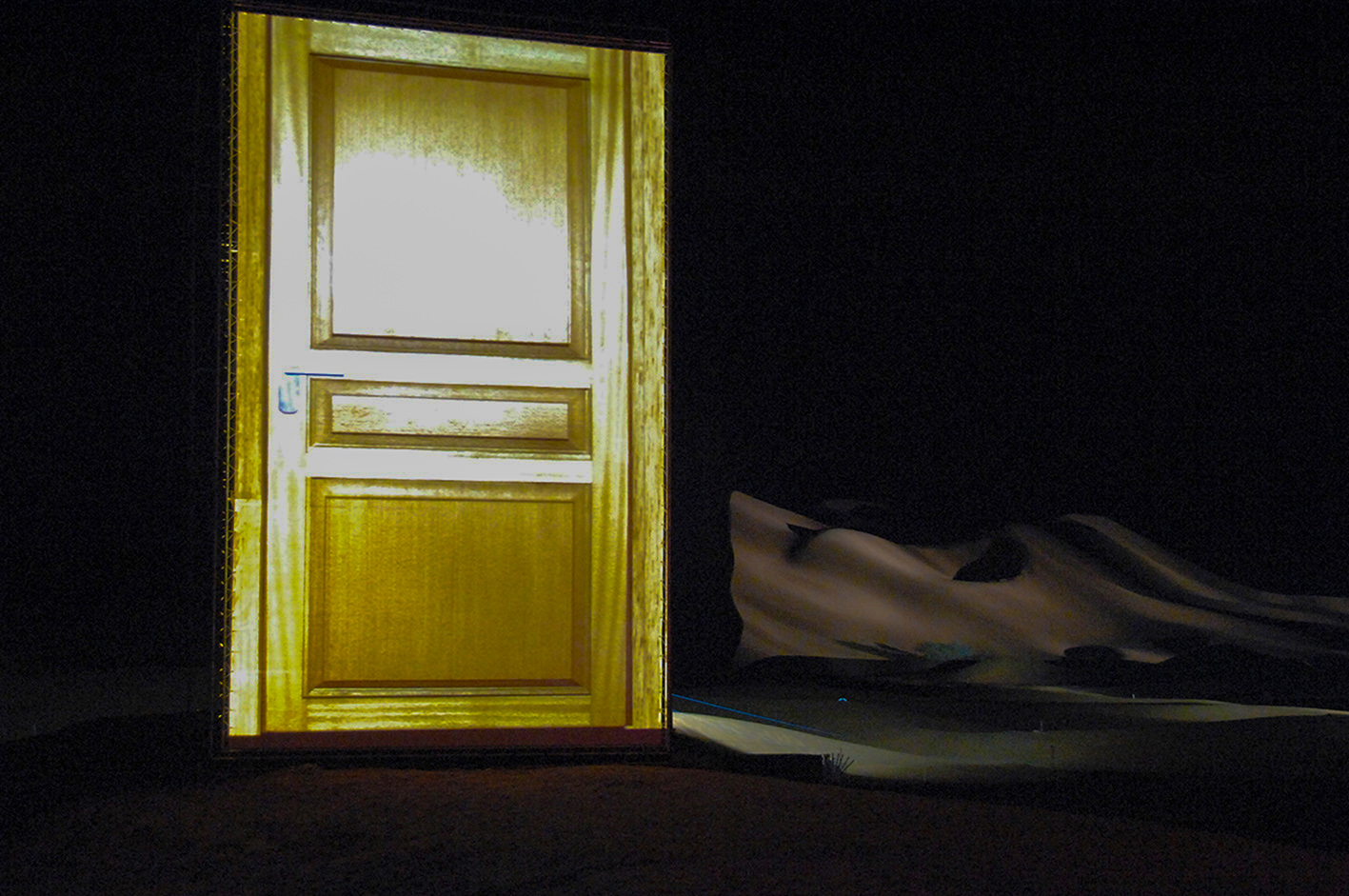
This piece is about
