
Access All Areas / Words Mark Gidley
The Making of Oxygene
The full story of the ground-breaking Oxygene album and how it has been re-imagined for Dolby Atmos
01/Feature
Oxygene - The History
In late 1976, an album was released which re-wrote the rulebook of synthesizers and electronic music and captured the hearts and imagination of the entire world. Composed by the then unknown 28-year-old French artist Jean-Michel Jarre, the album Oxygène broke out of France to become a top 10 album in seven different countries, spending a remarkable 24 weeks in the UK album charts and selling now close to 20 million copies worldwide.
Uniquely, the album consisted of just six tracks, numbered Oxygène Parts 1 through 6, and was entirely instrumental with no acoustic instruments whatsoever, which was unheard of in 1976.
Jean Michel Jarre tells the story of the making of his ground-breaking album in his own words.
"Around 1969, I felt that the world of classical music, the world of rock and other forms of music were a bit narrow and living in their own worlds. I had the feeling it was the right time to explore other fields to perhaps see if a combination of different styles were possible.
“The main difference with electronic music is that you create music in terms of sound, not just notes. It’s something else entirely. When I was a teenager, I always liked processing my guitar or organ or whatever, playing the tape backwards and changing the speed. Then the drummer in my band said, ‘You should meet with these crazy guys at Groupe De Recherches Musicales [GRM] in Paris who are working in French public radio. They’re doing the same kinds of things as you, and they have labs.’
“When I first went there, I was immediately seduced by what they were doing. Electronic music owes a lot to public radio stations - the BBC Radiophonic Workshop, the German lab where Stockhausen was working and, of course, the one in Paris.
"Pierre Schaeffer was one of the most brilliant guys of the century in terms of what he brought to the music world. He created the notion of Musique concrète and influenced me a lot in this direction. Saying that, I felt that contemporary music had got a very elitist attitude - a bit too intellectual vis-à-vis the music and it created barriers between the audience and yourself. I wanted to be much more open to the audience.
"I stayed with Pierre Schaeffer [and Pierre Henry] for three years and I also went to Cologne to work with Stockhausen. He was totally crazy, but a real genius. He considered himself to be made of sound, biologically, so he had a kind of surrealistic approach. Crazy, but realistic at the same time. It was very interesting.
"When I left GRM and through to 1976, I did production work for some rock artists, earning enough to set up a studio in my kitchen. I didn’t have much equipment, though, just a few guitar pedals and my first synthesizer, the VCS3, which looked like a telephone exchange. I realised that using a Revox tape machine to delay the sound that came out of one loudspeaker created a huge sense of space.
“The British-made VCS3 from EMS [Electronic Music Studios, based in London] was created by a genius called Peter Zinovieff. It was a kind of poor European version of the Moog. In those days Europe was not as rich as the States, so the sound was drier. In a sense, it was a kind of punk synthesizer - there was something very harsh and rough about it. I loved it; I still take one on stage with me today.
“At the time, I was obsessed with this idea of creating a bridge between experimentation and pop melody. I liked this kind of challenge, playing around with sound design and integrating melodies. Oxygène was a new start for music with analogue synthesizers"
The album was recorded on a Scully recorder with just eight tracks, and all through a home-made mixer. On top of the VCS3, Jarre had managed to add some other classic equipment including EMS Synthi AKS and ARP 2600 synths, an Eminent String Ensemble, an RMI Harmonic Synthesizer, and Farfisa organ, while an RMI Keyboard Computer was used for some sequencing.
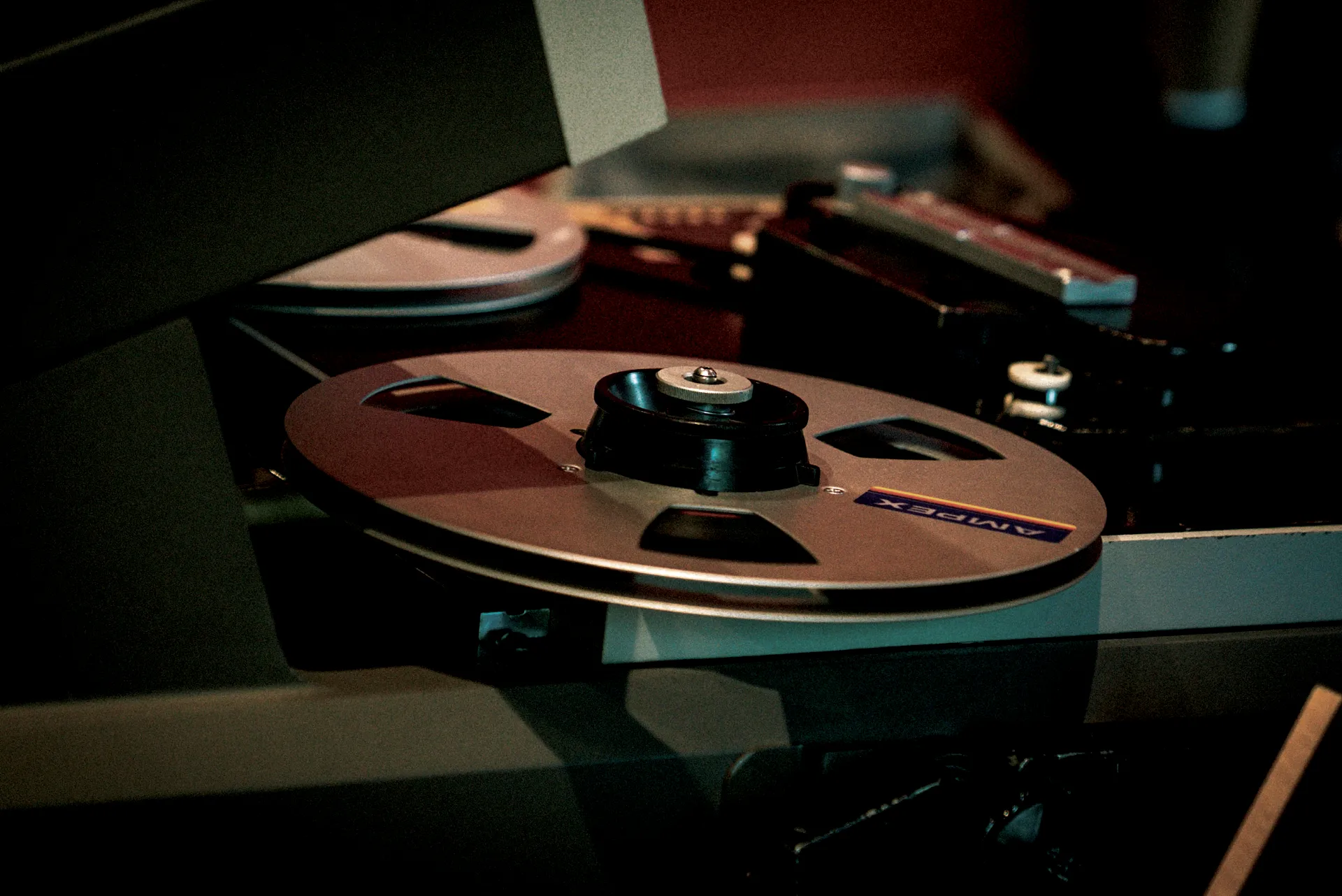
Jarre continues, “I really did it in a kind of home way using what, I think, was one of the first home studios. I had just three or four synthesizers and was using a Scully eight–track and a mixture of Ampex 256 and 3M tape. The whole album was done on just one eight–track and you can hear that in the piece — it’s quite minimalist and I think that contributes to its timelessness.
“Nothing is repeated the same way. Each sound, even if appears to be the same, has a slightly different attack and release, and, as the sequences are being made by hand, by definition they are not the same. Even the sounds of the drum machines were filtered in a very subtle way to give life inside the patterns.
”Michel Geiss was a maintenance technician, at a famous French record company at that time called Barclay and I met him because he was very interested in electronic instruments. He visited my home and we started to experiment. He was teaching me to use the first semi-modular synths I could put my hands on. And then step by step we worked together, Michel mainly as a kind of sound engineer for me.

“For Oxygene, he was working at his record company as a maintenance guy during the day, and he was coming to work with me at night. In those days I probably had the first home studio in France, when the serious music was done in serious recording studios with a window where God was the sound engineer behind the window, and we were just on the other side as musicians. For electronic music you need to match the mixing area with the main studio to record your own sounds.
“So, I had this home studio in a kitchen in the flat I had in Paris, and Michel joined me, using one of the first eight-track tape recorders to record my music. I only had two tapes. So, I had no choice if I was not happy with something to erase what I'd done the previous day, and this is the reason why I have no archive of material from Oxygène. It's such a shame.
“And that is also the reason why if you take the master tape of Oxygène, it is made up of two different tapes. Right in the middle of part one of Oxygène, I had one piece I really liked, where suddenly in the first part you have this kind of brassy, quite epic brassy moment. This is coming from another tape that I recorded another time.
“I thought to myself that it's really matching very well. So, I did a very strong edit, quite dramatic edit, by cutting the two tapes together, even the colours are different. One is pink, one is black. It's totally crazy. And whilst you can't hear the edit, it's quite challenging to cut an eight-track tape like this.
“With so little to work with, I had to be creative. My old Mellotron only had a few working keys, but I still managed to write Oxygene Part II on it. My primitive drum machine - a Korg Mini Pops was the sort of thing people played in pubs, but by using Sellotape I could make it play two preset rhythms at the same time, creating cool beats. Oxygène Part IV, which became iconic, was a mixture of [presets] Slow Rock and Rock, while Part VI combined Rumba and Bossa Nova.
“But when I finished the album, because Oxygène consisted of entirely instrumental music, none of the record companies thought it would work. The only people who took the risk were a small French company called Dreyfus Music. Even after it had become a hit in France, people said it couldn't possibly be a success anywhere else. Then eventually, after it got to the top of the charts in Britain and all over Europe, the critics explained that it was successful because of its originality and because of its use of melody. It's easy to be wise after the event!
“I made the first album back in the days of vinyl, when we were always thinking about sides one and two. The other characteristic of Oxygène is that it has sunny melodies but it’s also quite dark, like the cover artwork.”
Studio engineer and would-be long-time collaborator Michel Geiss, has fond memories of his first encounter with Jean Michel Jarre, recalling, "Oxygene marked the beginning of my collaboration with Jean-Michel. At the time, I was working during the day at a large studio complex in Paris called Studios Barclay. I was employed there as a technician. The recording studios were located on the upper floors, while I worked in the workshop downstairs. My body was downstairs, but my mind was upstairs! I felt strongly attracted to the world of music engineering, although I wasn't particularly interested in the equipment I had been assigned to work with.
"In fact, I found the right balance when I began working with Jean-Michel at his own studio around the same time. Every day, once my working day at Barclay had finished, I would join Jean-Michel in his studio, at his request, to work on his album. We would continue until I had to catch the last train home. I remember him calling me every afternoon to ask if I could come over.
"This was my first real opportunity to work in a studio as a sound and music collaborator, and I thoroughly enjoyed it. Jean-Michel would also occasionally ask for my musical opinion on various matters. I programmed some specific sounds on the ARP 2600, including the main theme sound in Oxygene IV and the sound of the waves in Part VI.
"It was a close working relationship, and I felt that I had finally found my rightful place. It suited me much better than simply being an electronics specialist, which was my background before I met him.
"My main role during the recording of Oxygene was to record Jean-Michel while he played his instruments, as he needed someone to handle the recording process.
"At the time, he was also keen to expand his relatively limited collection of instruments in order to explore new sounds. I suggested that we take a look at the RMI keyboards, which were sold in France by Piano Center in Montreuil. Jean-Michel immediately agreed, saying, 'OK, let's go!'
"When we arrived at the music shop, Jean-Michel discovered the two instruments I had suggested: the RMI Harmonic Synthesizer and the RMI Keyboard Computer. The latter used punched cardboard cards to store its sound information. The Harmonic Synthesizer had a truly distinctive sound and featured an arpeggiator. It would later prove to be a key instrument on the album, particularly on Oxygene IV."
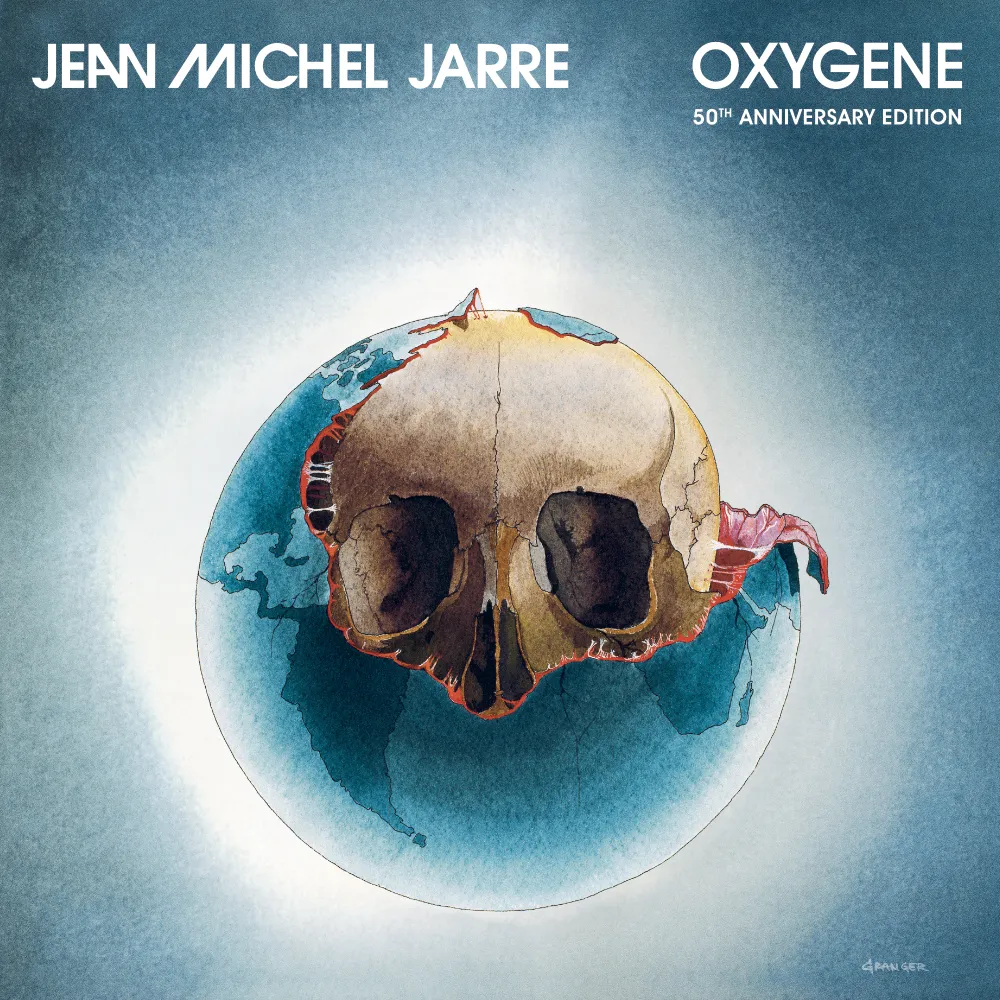
The album’s iconic artwork came about when Jarre was visiting Marquet Gallery in Paris and a piece caught his eye that he was instantly drawn to. A painting of a skull hidden within the Earth. The painting was created by young artist Michel Granger, titled Oxygène. By chance, Granger happened to be in the gallery at the same time and the pair spoke and Jean-Michel bought the painting to use as the album cover and adopted its title.
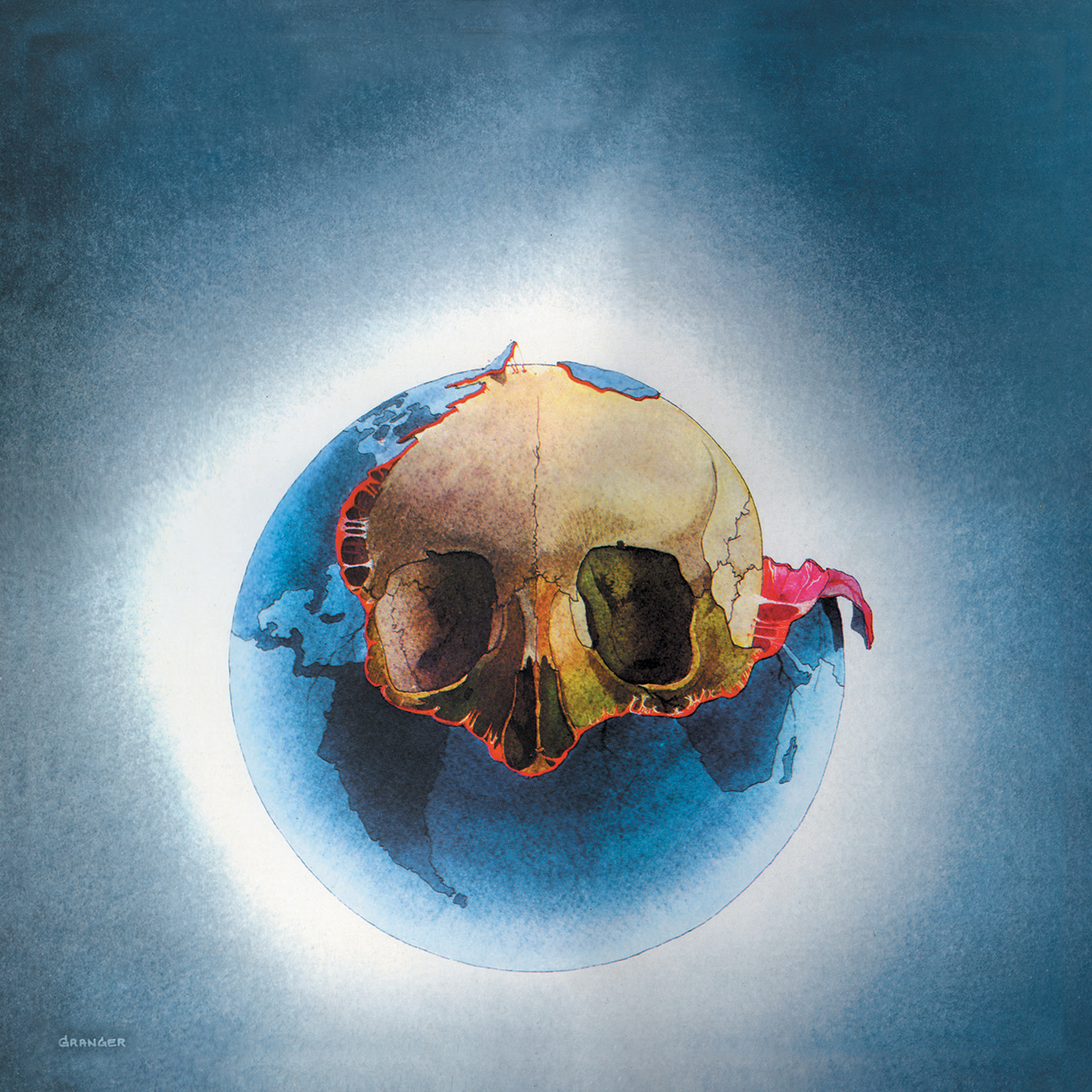
Michel Granger recalls, “I was having my first major show in Paris. On display was a 30x40cm watercolour called Oxygène and Jean-Michel bought it, telling me he’d love to use it as an album cover. Oxygène was part of a series about the damage being done to our planet. It was quite a violent image for a record sleeve.
“The only change I made was to the background, making it square to fit the album shape. Jean-Michel and I chose the typography and that was that. We were both similar ages and he was very passionate about music and painting. We would have long conversations in the evenings, always at the same pizzeria, then he went home to compose all night.”
Jean Michel Jarre commented on the artwork,"What I like about this picture is that it isn’t necessarily pessimistic. It rather poses the question: where are we going?”
With its iconic title and cover set, and after the album was mixed at Studio Gang by Jean-Pierre Jeannode, an accomplished engineer, Jarre took the album to Francis Dreyfus, owner of the Disqus Motors record label, who he had worked for during his songwriting days with Christophe. Dreyfus loved the album and was convinced it could be a success.
Dreyfus pressed 50,000 copies on his own label to sell in France and released the album in December 1976. Uniquely and a brainwave of Dreyfus and Jarre, they offered the album to nationwide hi-fi shops, given the album's innovative use of stereo. The idea being that high-end hi-fi buyers would buy a copy of the album to go with their hardware purchase. By April 1977, sales in France had reached 70,000 copies despite very little promotion. Legend has it that some people returned the LP believing the iconic white noise was a manufacturing defect.
Finding an international label to distribute was harder. Initially no record company was interested in the album, citing no singer, no guitars, no drummer, no proper track titles, no obvious singles, and to round it off, it was French.
Everything changed when Fred Haayen, the new head of Polydor Records in London discovered the record in a French record store and signed it to the label. He was instrumental in persuading BBC Radio 1 to play the album in full the week of release. The only other album to ever receive such an honour was Pink Floyd's Dark Side of the Moon.
The album was mostly slated by the UK's mainstream music press, with the NME calling it “another interminable sonic cruise and infuriatingly derivative.” but the public loved the album and on August 23rd 1977, Oxygène entered the UK album charts at number 19, climbing and remaining in the top 10 for the next 11 weeks. After moving to the United States to lead Polydor USA, Haayen also spearheaded the launch of the album in the US, to achieve official platinum status.
We’ll let Jarre conclude the story, “It’s now sold something like 18 million copies and, no matter what I do, I am defined by Oxygène. But that’s OK. It’s funny. At first, the album was played in hi-fi shops as an example of 'state-of-the-art sound'. I didn’t tell them I made it in my kitchen.
“When you’ve been lucky enough to have some kind of success with your first project, it will always be part of your DNA, no matter what you do afterwards. It’s like the first movie for Tarantino or Kubrick. For me, it’s the same with Oxygène. I love many other things that I’ve done and I’m very proud of them all, but Oxygène is something unique.”
When you’ve been lucky enough to have some kind of success with your first project, it will always be part of your DNA, no matter what you do afterwards. I love many other things that I’ve done and I’m very proud of them all, but Oxygène is something unique.
02/Feature
Oxygene 50th Anniversary
Jean-Michel Jarre will release a 50th anniversary edition of his breakthrough album, Oxygene, on November 20 2026.
Jarre originally released the album in France in 1976, ahead of its international release in 1977, Oxygene helped bring electronic music to a global audience and established Jarre as one of the figureheads of the genre.
At the heart of the anniversary edition is a new 2026 remaster of the original stereo mix, created from the original tapes to restore the full dynamics and character of the recording.
“When I created Oxygene, I was working directly with analogue instruments and tape, and the sound had a particular depth, movement and life of its own," he recalls. "For this anniversary edition, we returned to the original tapes with the aim of preserving that character rather than changing it”.
The release includes a 180g black-vinyl edition, half-speed mastered and cut by Miles Showell at Abbey Road Studios; CD; limited-edition coloured eco-vinyl; digital editions; and a deluxe Blu-ray mediabook featuring Oxygene in Dolby Atmos for the first time, alongside a new 5.1 mix, the 2026 stereo remaster and selected archival material.
03/Feature
Oxygene - Dolby Atmos release
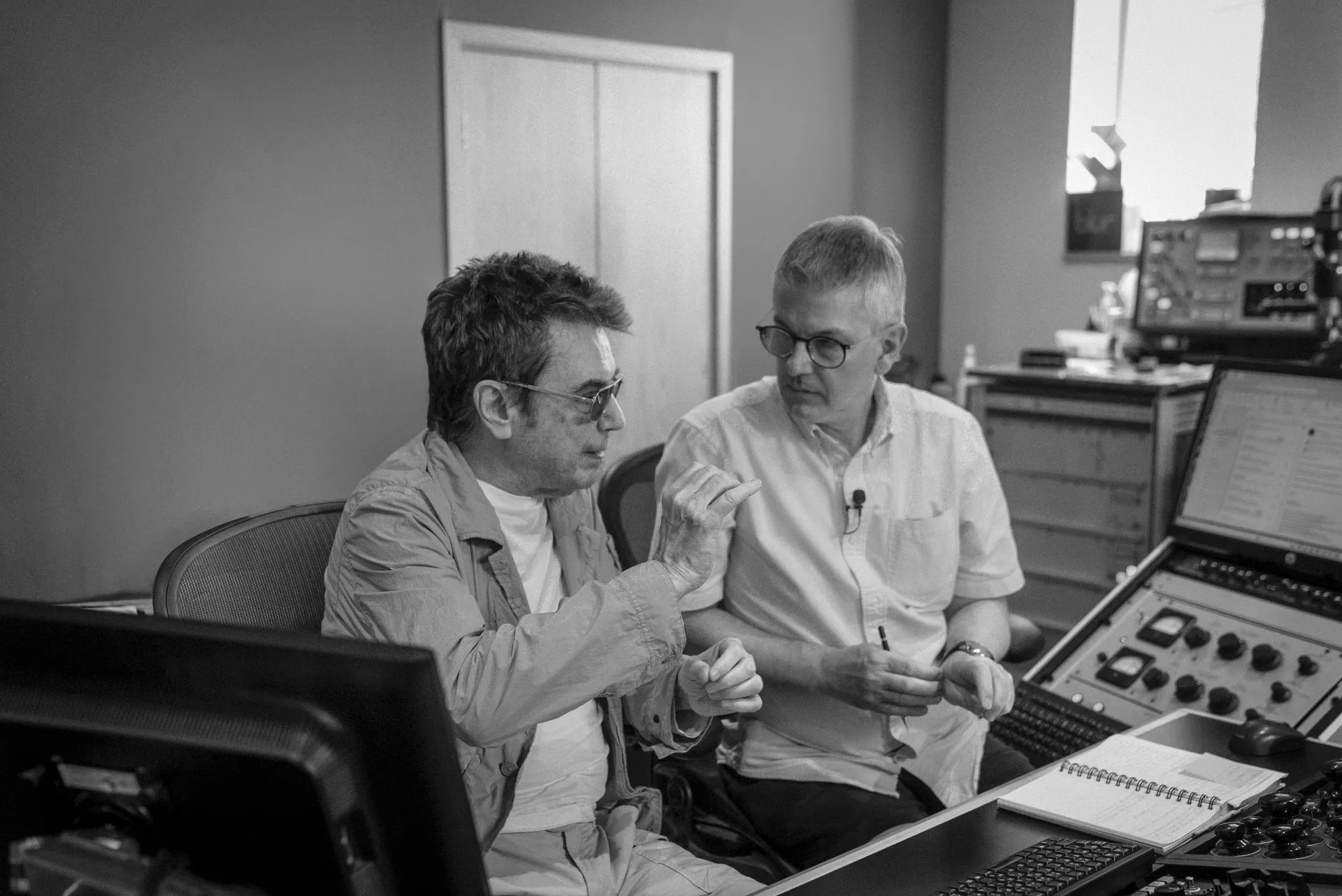
Oxygene has been mixed in Dolby Atmos and 5.1 Surround by David Kosten, Steven Wilson and Jean-Michel Jarre, from the original multi-tracks, with sessions in Paris and London to perfect these immersive mixes.
Speaking about the process, Jean Michel Jarre observed, "It was quite challenging for David because I originally recorded Oxygene on eight tracks, and because you have a lot of things going on on the same track, you have lots of different elements. You can go from a bass to a sound effect to some pads. And David had to separate all this coming from the same original track and after that then the next challenge was to put the different audio objects into space."
David Kosten reflected, "Once the hard work of recreating the original mixes is done, I start to think about how to present the music in three dimensions. Any sound can be placed anywhere so there's a lot of choices to make across an entire album! With Atmos we have speakers in front, to the side, behind and above the listener. It's actually all too easy though to take a coherent and brilliantly mixed original track, and reduce it to a collection of disparate sounds, and lose the coherence and emotional impact of a piece. So the first thing to make sure of is to "do no harm"! But with care and lots of time, you find a way to present the music in a new way that holds together - and potentially even adds a wonderful extra layer of depth, excitement and emotion."
In addition to the Atmos and 5.1 mixes, the blu-ray also features a Miles Showell 2026 remaster of the original 1976 album made from a new transfer of the original stereo tapes (recently unearthed from Jean-Michel Jarre’s archive). This is unlimited audio presented at the highest possible resolution (192 kHz / 24 bit) – the original version has never sounded better, and possibly never will!
Audio streams on the SDE exclusive Oxygène blu-ray:
• Oxygène – 2026 Dolby Atmos Mix (48 kHz / 24 bit)
• Oxygène – 2026 5.1 Mix (48 kHz / 24 bit)
• Oxygène – 1976 Stereo Mix – Unlimited Miles Showell 2026 Remaster (192 kHz / 24 bit)
• Oxygène – Binaural Mix (headphones only) (48 kHz / 24 bit)
Additionally, the blu-ray includes Oxygène (Part IV) original music video, upgraded to HD, and an exclusive 30 minute video interview with Jean-Michel Jarre, David Kosten and Steven Wilson conducted at Abbey Road Studios earlier this year, during the remastering sessions.
The blu-ray is a hardcover deluxe presentation and comes with 48-page booklet featuring essays from music journalists Alexis Petridis (The Guardian, UK) and Alma Rota (Rolling Stone, France) and David Kosten’s notes about mixing in Dolby Atmos (all three in both French and English). It also includes rare images from the forthcoming book Machines: A History of Electronic Music by Jean-Michel Jarre (to be published by Thames & Hudson on 29 October).
The Oxygene blu-ray containing the Doly Atmos mix is released on 4 December 2026.
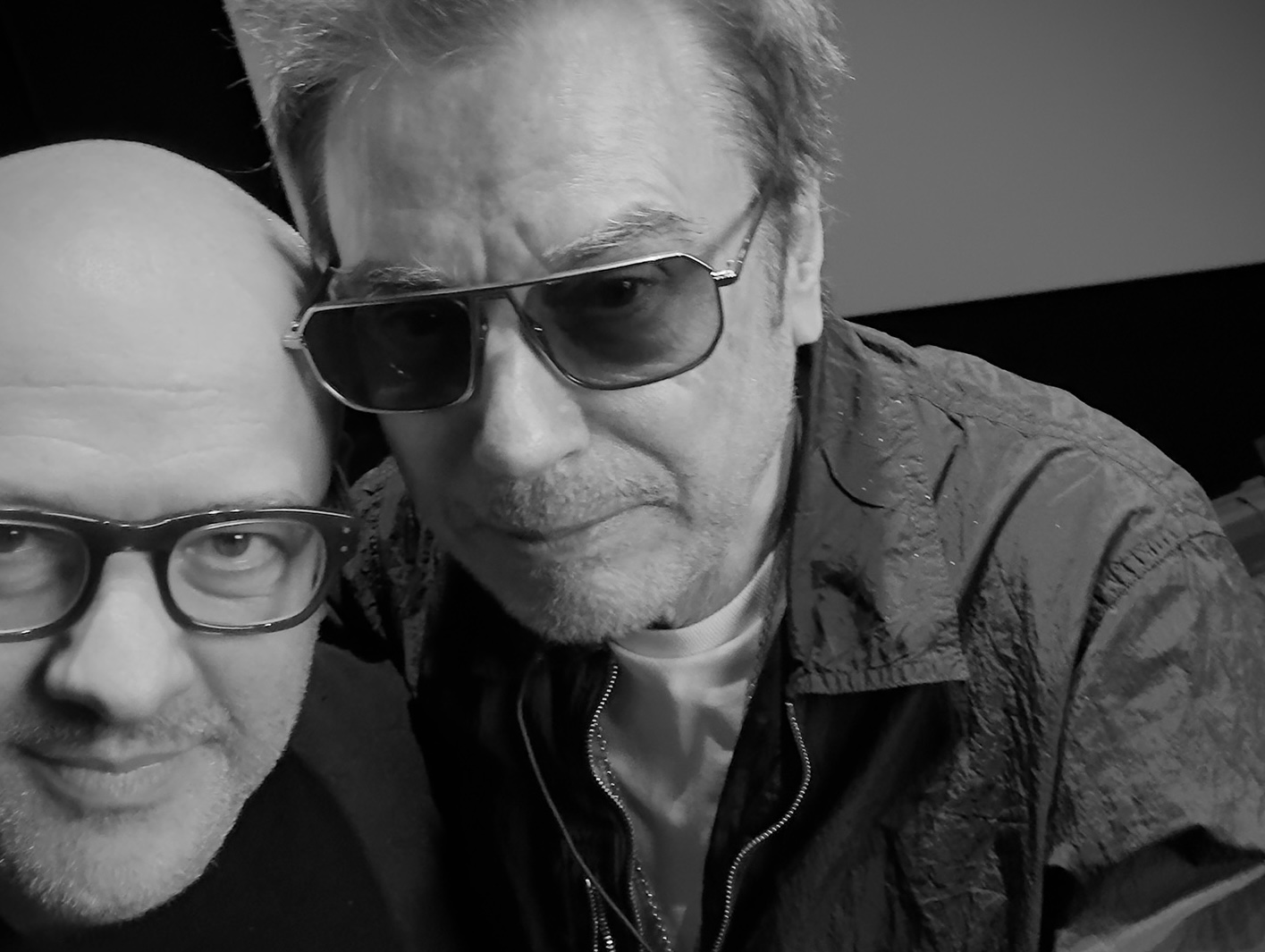
04/Interview
David Kosten
Dolby Atmos Mix
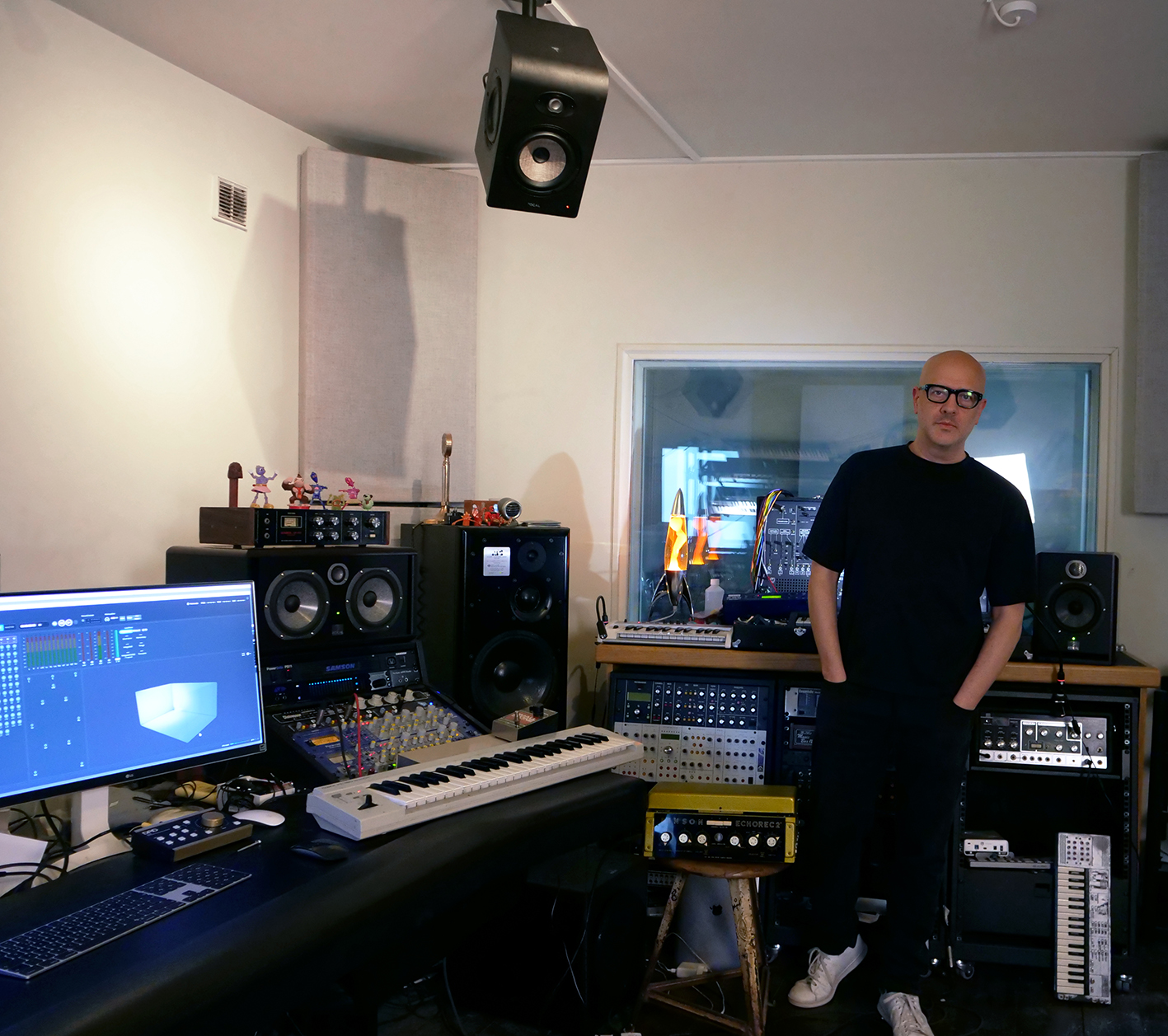
How did you first become involved in music production and specifically what sparked your interest in immersive audio and Dolby Atmos?
After making my own music under the name Faultline, (mostly instrumental music, with occasional guest vocalists including Chris Martin, Michael Stipe and The Flaming Lips) I moved into producing and mixing other artists. I've worked with a really wide range of acts including Keane, Bat For Lashes, Everything Everything, Marina and the Diamonds, Enter Shikari and Steven Wilson.
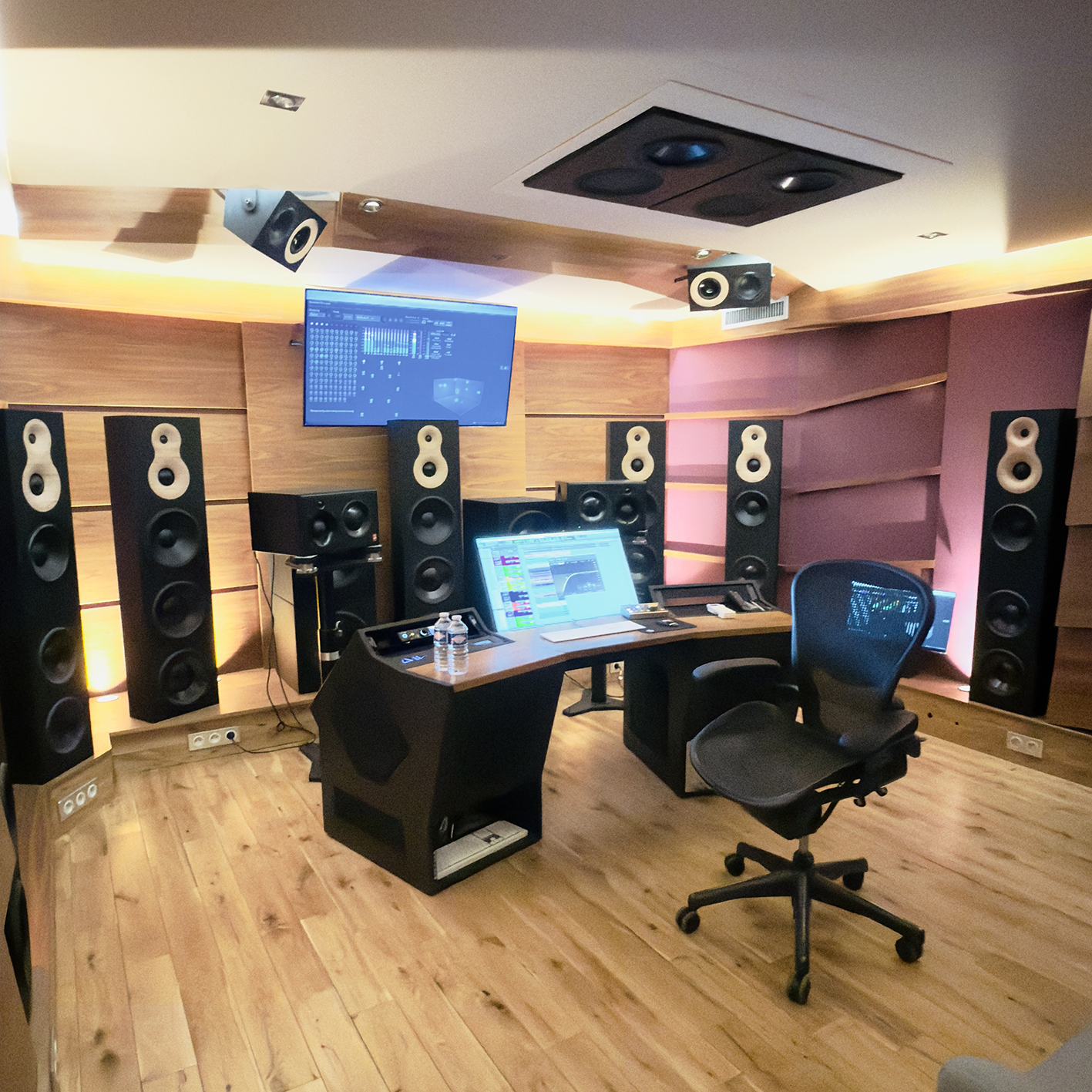
It was a visit to Dolby HQ with Steven, where we had help mixing his The Future Bites album in Dolby Atmos, that sparked my interest in the format and immersive music in general. I was blown away by the fun sonic possibilities, both for my own music which I'd started to create again, and for the acts I was producing. I was also looking for some new avenues to explore and enjoy, after a long period of really intense work as a producer. Once I'd installed an Atmos speaker rig in my studio, I also started to consider the idea that maybe I could work with classic albums, re-imagining them in an immersive format.
My first commercial job doing this was re-mixing Tubular Bells in Atmos for its 50th anniversary re-issue, and since then I've taken on a few more projects - including Thompson Twins, Heaven 17, Propaganda, Paul Young, Fine Young Cannibals, Keane and Mike Oldfield's second album Hergest Ridge.
Were you aware of Jean Michel Jarre’s music and career ahead of working on Oxygene?
The first record I ever bought was the 7" of Oxygène Part 4. I must have been nine years old. I had a little record player with a built-in speaker, and played the single over and over again. The b-side was Oxygène Part 6 - my favourite track on the album. His music became part of my DNA - every synth sound I make is through that prism and early discovery of Jean-Michel, The Human League, John Foxx, Kraftwerk etc in the late 70's. Nine year old me didn't foresee working with JMJ on Oxygène immersive mixes almost 50 years later of course...
How did the opportunity to create a Dolby Atmos version of Oxygene come about?
Early in 2025 I started sending speculative emails to JMJ's (very patient) manager! I knew the 50th anniversary was coming around, and really wanted to be the person JMJ turned to if this dream project became a reality.
In spring 2026, we started having some serious discussions about getting a demo made, to show how this potentially might sound. And then as soon as JMJ heard the work in progress, it was all systems go...
When dealing with such an iconic album, how do you approach the challenge of respecting the original while bringing something completely new to the listener?
I'm a music fan much more than I am a technician - respecting the source material is vital for my own enjoyment of the end result. And in fact, this was a big reason why I got involved in making Atmos rebuilds of classics - I'd just heard too many average, bland or poor mixes! Either where the new version sounded nothing like the original and hadn't had the love and care needed to bring it back to life accurately, or where the immersive mix was barely a step up from stereo, or a mess, and ruined the original intent of the artist. Or all the above!
I spend hours and hours in the studio fine tuning my work to reflect the original release mix, in as much detail as my ears can detect. The balance between instruments, the tone, use of effects and where the sound sits in the stereo spectrum - I try very hard to bring this all back to life from the raw multitrack data, using my production and mixing experience. This part of the process is a real grind, but if you're lucky enough to be playing with iconic, precious cargo like Oxygène, it's not exactly a hardship!
Often I find that the technical limitations of music originally made primarily for vinyl mean that the lowest (and sometimes highest) frequencies on the master tapes never made it through to the listener, so it's fun to bring those back to life. There's some incredible low bass frequencies on the Oxygène multitracks that have probably never been heard before - with digital there are no limitations regarding low frequency reproduction, so that's often a wonderful and satisfying new thing to capture and reveal. The Atmos format is new too of course - hearing the music completely surround you is an astonishing experience for someone used only to stereo - so even this on its own is a wonderful new prize for a fan of the recording.
I am primarily interested in recreating the original mixes and intentions of the artist, so am not trying to make a 'David' version or 'remix' of it at all - each mix I do of a classic really should sound pretty much like the original - but in a brand new 'exploded three dimensional view'.
What original recordings and source material were available to you, and how did you go about reconstructing the album for an immersive environment? How important was it to preserve the original character and sonic identity of the album?
I was given a digital copy of the original 8 track tape multitrack, from 1976. This had all of JMJ's synth parts and drum machines, in isolation on separate tracks, and also included some of the effects he used too, like the echoes.
This is actually incredibly complex, time consuming and delicate work - many weeks of intense listening to try to recreate the spirit, tone and balance of original mixes, using only raw original multitrack materials, and a final stereo mix as a listening reference to recreate the new mixes from.
I have access to every individual sound and effect used on the tapes to make an album. In essence, I listen to a final stereo mix, and then recreate every nuance of that, using the raw data on the multitrack. I balance the individual sounds, add effects, equalisation and stereo positioning to rebuild an album like Oxygène from scratch, before I move onto the immersive / three dimensional part of the process.
Can you describe some of the creative and technical decisions you made when positioning the sounds around the listener? And the technology you are using?
So this is the really fun part of the process! Once the hard work of recreating the original mixes is done, I start to think about how to present the music in three dimensions. Any sound can be placed anywhere so there's a lot of choices to make across an entire album! With Atmos we have speakers in front, to the side, behind and above the listener. It's actually all too easy though to take a coherent and brilliantly mixed original track, and reduce it to a collection of disparate sounds, and lose the coherence and emotional impact of a piece. So the first thing to make sure of is to "do no harm"! But with care and lots of time, you find a way to present the music in a new way that holds together - and potentially even adds a wonderful extra layer of depth, excitement and emotion.
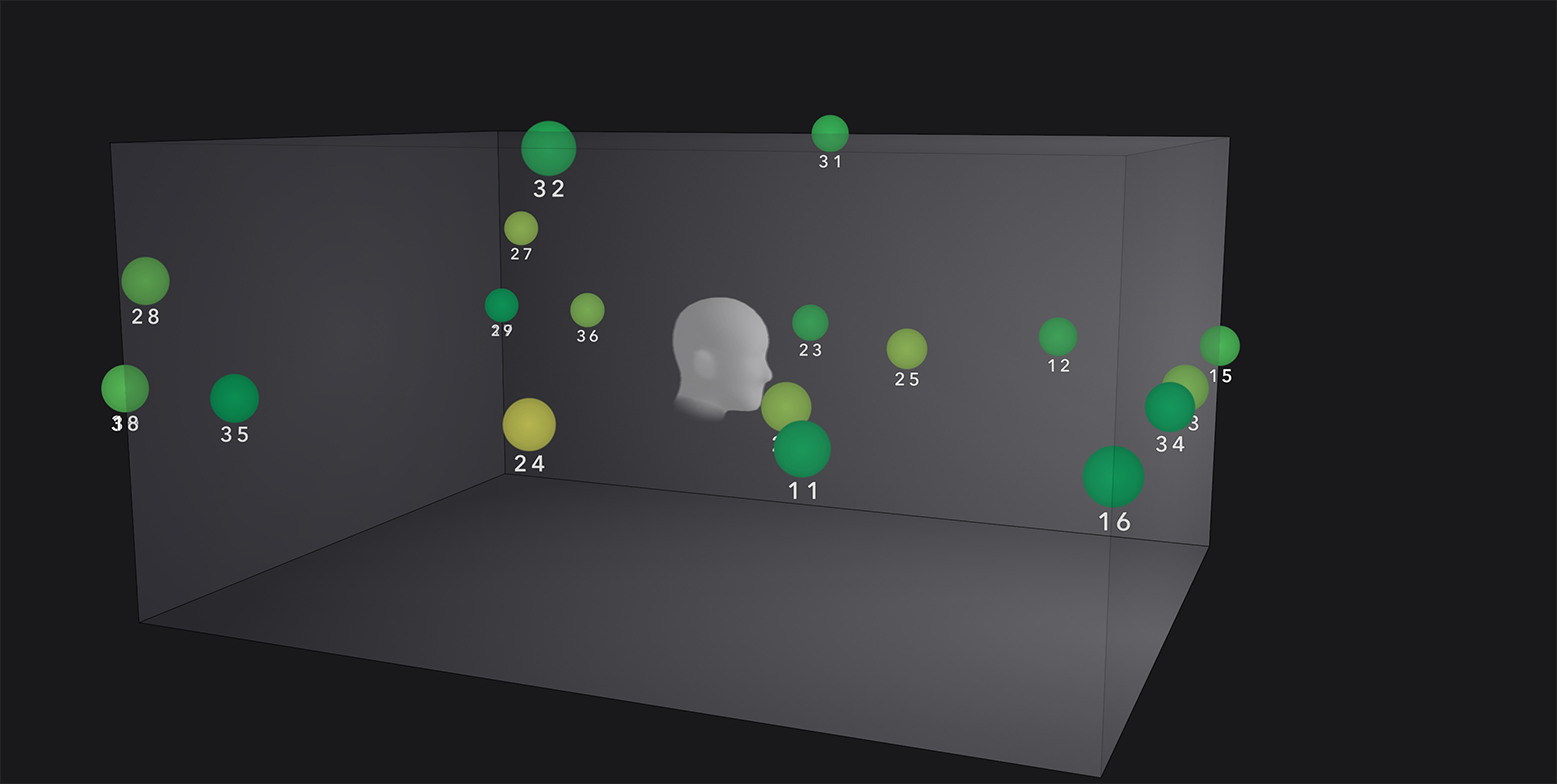
Oxygene 4 imagined in three dimensions
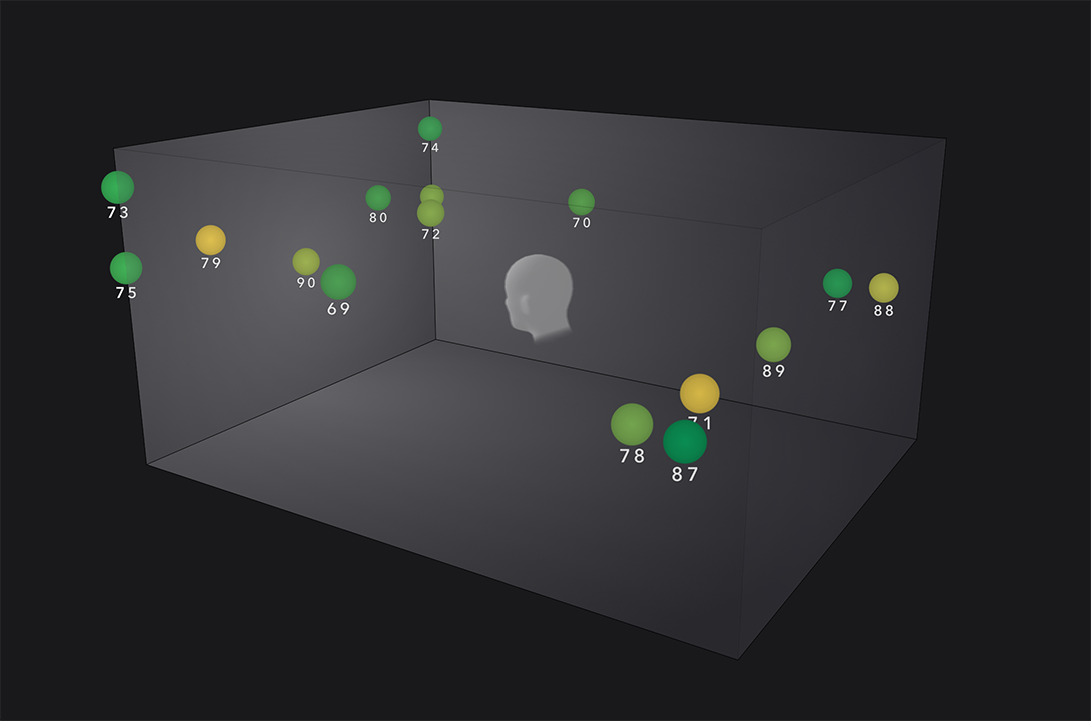
Oxygene 3 imagined in three dimensions
What was the biggest challenge you encountered, and were there any unexpected discoveries in the original recordings?
There were loads of technical challenges - things are never quite as straightforward as one might hope. I had a few missing sounds or parts that were in need of some sneakery to make work. The birdsong at the end of Part 3 for instance - I had to take that from the original stereo tape as it wasn't on the multitrack. But through that limitation came one of my favourite mix ideas - all the sounds at the end of Part 3 disappearing down the hole of the mono centre speaker - and then the birdsong reappearing overhead.
For a music and synth obsessive like me it's just wonderful hearing the individual elements that go to make up an iconic recording. Often things are much simpler than you realise. Or perhaps a part you've known most of your life is revealed as a combination of two or three different sounds. Also, it's a lot easier to hear the hand-played nature of the synths when you hear them in isolation. Loads of wonderful human timing discrepancies and character are there that kind of dissolve when mixed with other sounds.
How closely was Jean-Michel involved, and what was his reaction when he first heard the finished Atmos mix? Did he give you any specific instructions about how certain sounds or musical passages should be treated?
Neither Steven nor myself have ever had this level of input with a mix from the original artist before. It was just wonderful to have Jean-Michel's ideas and changes, and they made a huge positive impact on the end result. In our Paris sessions together we worked for many hours on detailed changes. How the synths moved in the 3D space, the positioning of the sounds, the tone and balance of the music etc. He was involved in every single second of this mix in one way or another. He would make tons of suggestions about how the sounds should sit together, or work in the immersive space. The idea of having the waves in Part 6 crash from front to back rather than side to side was his for instance. We'd play and keep adjusting detail, fine tuning it until we both were happy. He's an incredibly able listener and instinctive mixer. Do meet your heroes: this one was hilariously funny and kind too. He knew how nervous I must have been, especially in our first session, but he put me at ease and allowed me to work at my best.
There was an enormous amount of work to do before we got to a finished piece. But we shared a satisfied look, and were probably both exhausted at the effort it had taken! We were making changes right up until the final moment before we had to deliver all the files.
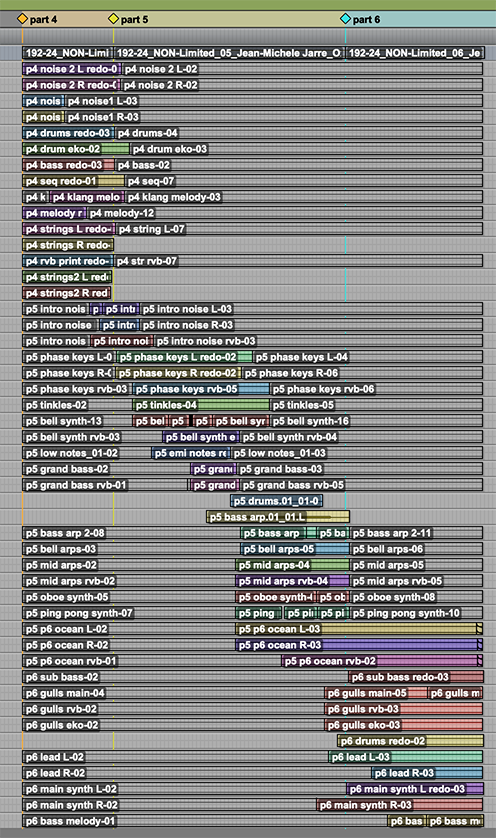
Dolby Atmos structure of Face B of Oxygene
Did you ever find yourself having to step back and remind yourself that you were working on an album that millions of people already know and love?
No - it's constantly on my mind - it's a truly daunting responsibility! These are important, iconic pieces of our shared culture. There will be fans who've listened to this record every week for 50 years. They want to know that their beloved music is in safe hands, and I really try to make sure I give them as much respect as the music.
Were there any particular moments where Jean-Michel's reaction surprised you or where he asked you to change something?
After our first few minutes in the studio together I knew what level of attention to detail I was going to get from JMJ, and just how much of a unique experience I was in for. He's a fearless and brave creator, and being in the studio with him was of course an astonishing thrill for me as a fan. I loved every minute, and was kind of sad when we got the album over the line, as I'd enjoyed the project so much!
Having demonstrated the mix to audiences, what has been the most memorable reaction you've witnessed?
It's just enormously satisfying to see people so moved by this work. It can be quite overwhelming to hear your favourite music played in a completely new way - so it's a joy to hear about that afterwards. Once the blu ray and streaming versions come out and everyone can experience it, I hope the reaction remains as positive, and all the work and effort we put into Oxygène simply gives people enormous pleasure!
Do you think immersive audio reveals something about the original recording that simply wasn't possible to appreciate through conventional stereo?
Absolutely. It can and should, otherwise there's not a lot of point in all that effort haha! I guess the experience will be different for every listener, but aside from being able to hear more detail and dynamics, weight and space, the most obvious change would be in the power of the immersive experience. It's thrilling and moving in equal amounts.
If you could take another Jean-Michel Jarre album into Dolby Atmos, which one would it be and why?
Hmmm - isn't Équinoxe going to be 50 quite soon....?!
This piece is about
