
01/Mark Gidley
The Twelve Dreams of the Sun
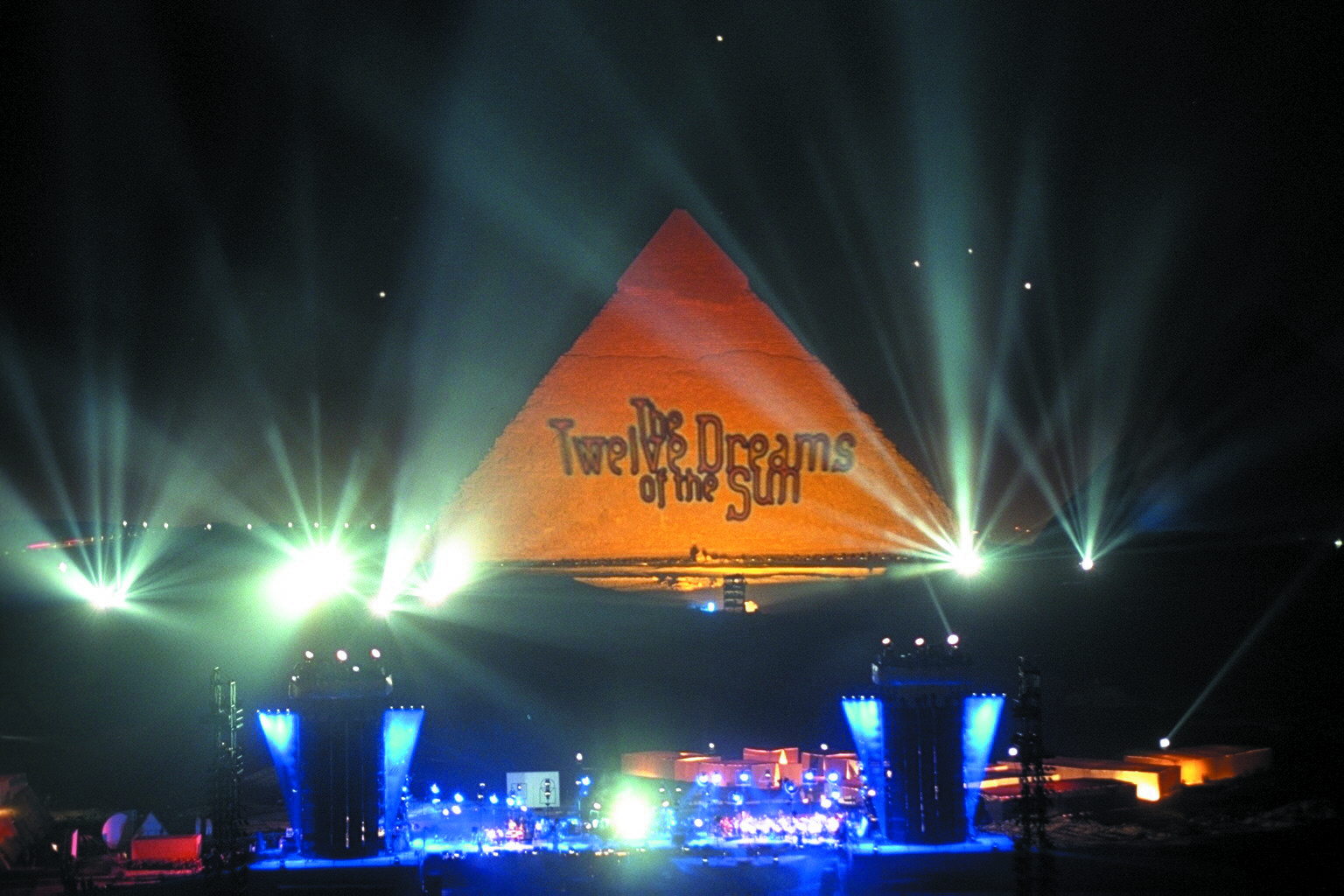
When Jean Michel Jarre stepped out on stage at 10.30pm on New Year's Eve 1999, it was the culmination of over a year's work for the French musician and his team. In October 1998, he announced to the world that he would perform 'The Twelve Dreams of the Sun' at the foot of the Pyramids and declared, "There is only one place to celebrate this occasion, namely the Giza Pyramids plateau. It will be the very best of the glamour of the Occident and the Orient."
The show was split into three main acts. The first act, in respect of Ramadan, started in a low-key way at sundown with discrete lighting and music inspired by the mystical Muslim Sufi chants. The plateau was bathed in a green light, welcoming the visitors to the site. The main act lasted three hours and portrayed the concept of the Twelve Dreams of the Sun, taking the audience through the new Millennium. For the dawn act at sunrise, Jean Michel Jarre returned on stage again, for a performance to welcome in the light of this new era, ending with a parade of the artists into the desert.
Of all the logistical and diplomatic problems one could foresee performing a concert over the Millennium in the desert in Egypt, one problem that no-one had really thought about was the weather. Surely safe from a downpour of rain, a la Docklands, the Giza plateau must be one of the safest places to perform a Millennium concert? Think again. During the concert, a thick curtain of fog descended on the plateau, rolling in after midnight, obscuring the view of the Pyramids and also providing camouflage for the multitude of fireworks towards the end of the second act.
Capping the Pyramid
So how did it come about that Jean Michel Jarre was to perform at the foot of the Pyramids for the Millennium ?
Minister of Culture Farouk Hosni explained, "The idea of Egypt's millennium celebrations reached a turning point when French musician Jean Michel Jarre came to Cairo and we met coincidentally. When I mentioned that Egypt was celebrating the millennium at the foot of the Pyramids and showed him the plan, he was impressed. He had been fascinated by Egyptian civilisation and was very enthusiastic to work here and be part of a team to produce the grand ceremony. After lengthy discussions, the idea took shape. Jarre sat with Egyptian archaeologists who suggested that the central theme of the festivities be the 'Twelve Dreams of the Sun', whose origins are Pharaonic. Jarre began transforming each of these dreams into a musical and visual performance."
The Construction
More than 1,000 Egyptian workers and Egyptologists, as well as 30 French technicians, worked daily at the site to meet the deadline. The celebration was not just entertainment; it was the consummation of the state's efforts to promote Egypt's cultural image and tourist appeal. Hence the fury of polishing gates, erecting tents and installing lamps along the roads leading to the concert arena.
Unfortunately, what was intended to be the "crowning glory" of the whole celebration - the four-minute episode of placing a pyramidion on top of the Great Pyramid - was eliminated from the programme. Farouk Hosni announced the week before the show that the decision had been made in order to put a stop to the circulation of controversial rumours, which threatened to cast a pall on the event during the final preparations. "The placing of the pyramidion would not affect the pyramid," Hosni said. "The high-ranking committee, consisting of the Remote Sensing Authority, the Architectural Department of the Ministry of Defence and geologists, engineers and archaeologists, have carried out in-depth technical, scientific and archeological research and assured us that the plan is feasible. The decision not to carry out this short but crucial episode was considered necessary in order to put an end to all the talk about the celebration by people who want to diminish the role of Egypt."
As for the plateau, "The sand and the desert nature of the site is one of the main problems we are facing during our work," said Bill Bhoquet, the French technician responsible for the site. Additionally, workers struggled with how to properly install the performance equipment and the wooden platform of the stage without disturbing the archeological area.
"It took us a lot of time to agree with the SCA on the exact location of the stage," Bhoquet said. "We have fully respected what was agreed upon."
A make-shift arena was constructed in the desert to accommodate the audience. In front of the stage, the area was covered with wood in an attempt to protect the sands of the archaeological area and high on the sand dunes, wooden bases were erected on which impressive, covered tents were constructed for around 20,000 VIP visitors.
The most difficult part of the work was the installation of the lighting system and projectors in the area between the stage and the pyramids. The area being an archaeological site, no one was permitted to use any vehicles to cross it.
As the site is so vast, huge electronic equipment was required. Jarre's technicians used 20 kilometres of cable to connect the musical instruments to the sound and light technology, as well as to the projectors installed in the area between the stage and the pyramids. Addressing the concern that the sound equipment used would affect the monuments, the loudspeakers were placed in such a way that the sound waves would be emitted away from the pyramids, rendering the vibrations of the musical instruments harmless.
The fieldwork started early on November 5th and was scheduled to be completed by December 17th. Most of the equipment and materials used were imported from France, but some electronics and materials had been brought from Brazil, England, Switzerland and Belgium.
"Preparation for the millennium celebrations and drawing up an outline of the concert took one year of studies and research," said Christian Bouret, the executive performance director. The fantastic - and unparalleled - location of the site was chosen by Jarre and approved by the SCA after a week-long scrutiny of the plateau, searching for the ideal spot from which spectators can view the three famous pyramids, as well as three smaller pyramids, while hearing Jarre's electronic opera.
"Celebrating the new millennium at the footstep of the pyramids of Giza is unique," said Bouret, who extolled the fact that the site is the only one that can boast one of the seven wonders of the world. "It is the only place from which we could pass to the new millennium."
The Performance
The actual performance was full of highlights from start to finish. From the very moment when Gary Wallis opened the show with the first notes from Bells, the audience knew that they were in for a special night.
Highlights included the performance of Magnetic Fields 2, with wonderful whirling dervishes on stage with fabulous multi-coloured costumes; Oxygene 4, when the desert turned into the Antarctic for a few minutes, with snow falling and a multitude of penguins roaming the sands; Hey Gagarin, Jarre’s favourite live track, with the light beams dancing perfectly in time with the music and pointing to the sky; a fantastic and unexpected fully orchestral version of Gloria, Lonely Boy - giving the feeling of being in the middle of a David Lean movie.
And not to forget Salma Ya Salama, a local piece of music that the whole audience was able to join in; a revised version of Revolutions, entitled Evolutions; Rendez-Vous 2 ended the show with accompaniment from the Cairo Symphonic Orchestra; and finally, probably the highlight of the event, the Millennium itself, with a wonderful countdown reliving some of the momentous occasions from the previous millennium, ending with the year ‘2000’ exploding in the sky from special pyrotechnics.
Spread amongst all these highlights were contributions from a number of local guest artists, playing Egyptian instruments such as the rababa, the lute and the oud.
Joining Jean Michel Jarre on stage were his band of musicians, Christopher Papendieck, Francis Rimbert and two new faces Gary Wallis (who previously played live with Pink Floyd) and Joachim Garraud, Jean Michel’s co-producer on his Metamorphoses album.
Natacha Atlas, vocalist on C’est La Vie, the first single from the new album, was on-stage with Jean Michel and performed the track to welcome in the new Millennium. She was also joined by Amal Maher for the occasion.
The Egyptian army and airforce also contributed to the event. The previously mentioned penguins were none other than army soldiers, and a variety of costumed characters on stage, such as walking Anubis’ were from the airforce.
One of the characters rehearsed during the days prior to the concert but didn’t make it onto the actual show was a huge snake, which ran the length of the stage. It was decided on the night of the show not to include it in the performance.
And finally
In the end, the projection effects on the pyramids were obscured by the fog that descended on the night and that was disappointing, especially having seen them being rehearsed in the days leading up to the show. However, as Jean Michel Jarre pointed out before the event, the Twelve Dreams of the Sun was always going to be an adventure and stated, "If you want to go to a concert, don't come to the show, because it is something else."
An adventure it was and I’m sure that the audience who attended that night would not have wanted to be anywhere else on Millennium night and morning, fog or no fog.
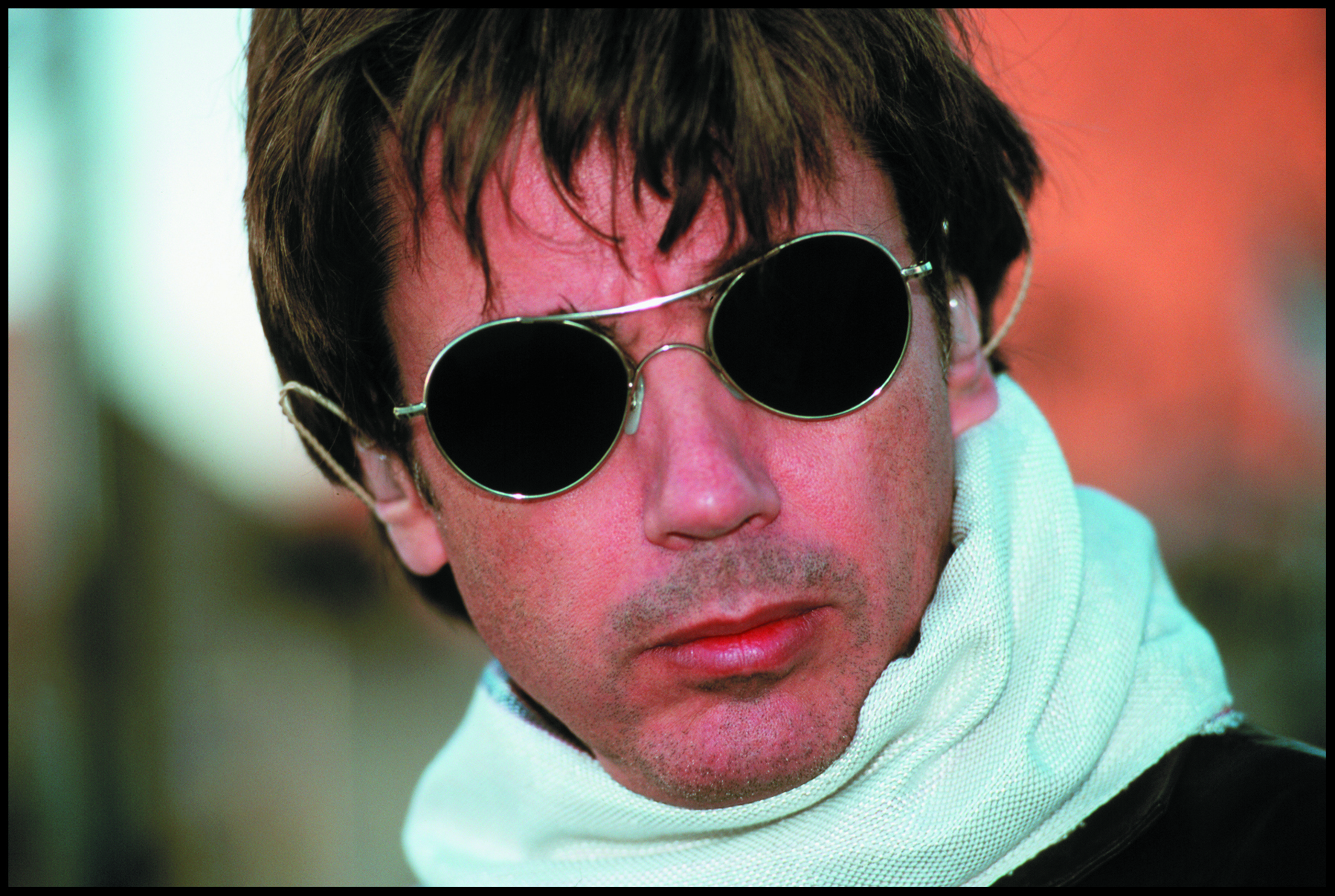
02/Interview
Jean-Michel Jarre
Before and after
Jean Michel Jarre talks about his Millennium concert at the Great Pyramids of Egypt, before and after...
The organisation and preparation for the Egypt concert must have been some of the hardest to date for Jean Michel Jarre. The site was in the middle of the desert; it was Ramadan in Egypt and the Millennium worldwide and a live television broadcast to 3.5 billion viewers. So, here’s what he had to say about the experience, before and after the event.
On how he ended up as the millennial act at the Pyramids ...
I was commissioned by the state of Egypt to do the show. I actually didn't want to do anything for the millennium in Paris, London or New York or some such place, because of the rather cynical view we have in the West of the millennium. But I was excited by the invitation to put on a show at the Pyramids, because if there is one place to celebrate the millennium, it should be at the Pyramids.
On ‘The Twelve Dreams of the Sun’
The idea of the show being from sunset to sunrise is based on three things. First, no matter what we say, the sun will set in 1999 and rise in 2000. Another reason is to connect with ancient Egyptian mythology, specifically the legend of the sun travelling every night. I thought it would be interesting to follow the dreams of the sun, linking the celebration to the site in this way. Also, we must respect Ramadan, and of course sunset and sunrise have specific meanings for Muslim people.
On the controversy surrounding the golden pyramidion idea ...
The pyramidion has never been my idea. This was an idea from the state of Egypt. I agreed to incorporate this idea into my show, but the state of Egypt was in charge of it, and they decided not to do it because it was too difficult technically. It will not affect my show in any way.
On working with the Egyptian government to co-ordinate the show ...
Everyone has an idea about how to achieve something. The main problem is how to work together in complementary ways. Cairo is not more difficult than London, New York or Paris … Ramadan makes things a bit more difficult, because everyone is tired, and you have to respect that. But I've always been amazed at the ability of the Egyptians to achieve things. Even though it has been a nightmare so far just to get the production together - we are really running late everyday - suddenly things happen. I call it 'the Egyptian miracle'.
On the secrecy of elements of the show ...
There is no secrecy. I just don't want to give away the story - like if you were writing a book. It is unfortunate that the press starts imagining all kinds of things, which is what happened. I will say that it is not like there will be superstar Vegas-type performers - no pop stars. On stage with me will be the Symphonic Orchestra of the Cairo Opera and some other very interesting Egyptian artists.
On the overall experience he wants people to have ...
The main thing is to involve Egyptians and Egyptian culture. This is not a concert for the elite. I have insisted from day one that it would be accessible to the Egyptian community. I wanted to make it free, and I can tell you I have worked very hard to get the fees reduced to where they are now. The show includes a fusion of traditional Egyptian music, using instruments like the zababa (a two stringed fiddle), with modern synthesiser sounds. We try to respect the traditions of Egypt, and give them a contemporary image as well.
The real adventure is to celebrate time by spending twelve hours in the desert. I think this is interesting, because it is going to be long, difficult, and chilly. I tell people, "If you want to go to a concert, don't come to the show, because it is something else."
But for me it was important that the event runs from sunset to sunrise. It is, after all, taking place during Ramadan. Nor can you ignore the setting, the myths and legends of Ancient Egypt. So when I began to think of a scenario, I thought of the sun, which has a specific meaning for the Muslim community during Ramadan, but which also ties in with ancient themes.
On the different levels of the spectacle ...
The spectacle will operate on many levels. It must involve someone sitting in Manchuria, or in Texas, purely televisually, but most importantly it must have resonance for the local audience. So I have attempted to project music that has meaning for Egypt, and also for the rest of the world. This is one of the most emblematic millennial projects, there is interest all over the world. But it was important to avoid the showbiz approach, an American approach... there are the Pyramids, so you can dispense with the razzmatazz.
And his reaction after the show to the weather in Egypt on New Year’s Eve ...
The fog contributed to the mystery of the whole night, a sort of Egyptian Woodstock. It was an unforgettable moment. At the end of the night, we had a bit of rain and snow: the best omen in Egypt is to start a New Year with snow.
The fog was a mist that added some magic and a poetic aspect to the night. Over 120,000 people gathered for an Egyptian Woodstock all night. It was probably the most unforgettable concert I've ever done, very emotional and very special.
On being afraid of the Y2K bug happening whilst on stage ...
I was more afraid of camels walking on the cables.
His vision of music in the 21st century.
I think that the 21st century will be a connection of traditional instruments - acoustic, ethnic - with modern technology. What I wanted to accomplish with the concert in Egypt was a vision of computers on a stage next to ancient instruments - playing the same music. This is my vision - mixing technology with tradition. Hieroglyphs on the Internet.
I was more afraid of camels walking on the cables.
03/By the numbers
Show Facts
- 39
- Forty-foot containers shipped from Europe
- 400 tons
- Equipment freighted into the desert
- 6,000 kVA
- Power, gathered from 17 generators across the region
- 20 km
- Cable run between the stage and the pyramids
- 250
- Crew from France, Germany, Switzerland, the USA, Belgium and the UK
- 1,000
- Egyptian artists and performers on stage
- 100 × 50 m
- The four-level stage
- 50,000
- In the arena
- 22 m
- Speaker stacks
- 4,000 litres
- Water cooling the laser harp
- 5 tons
- Ice fed to the cooling unit through twelve hours
- 10 tons
- Fireworks over the plateau
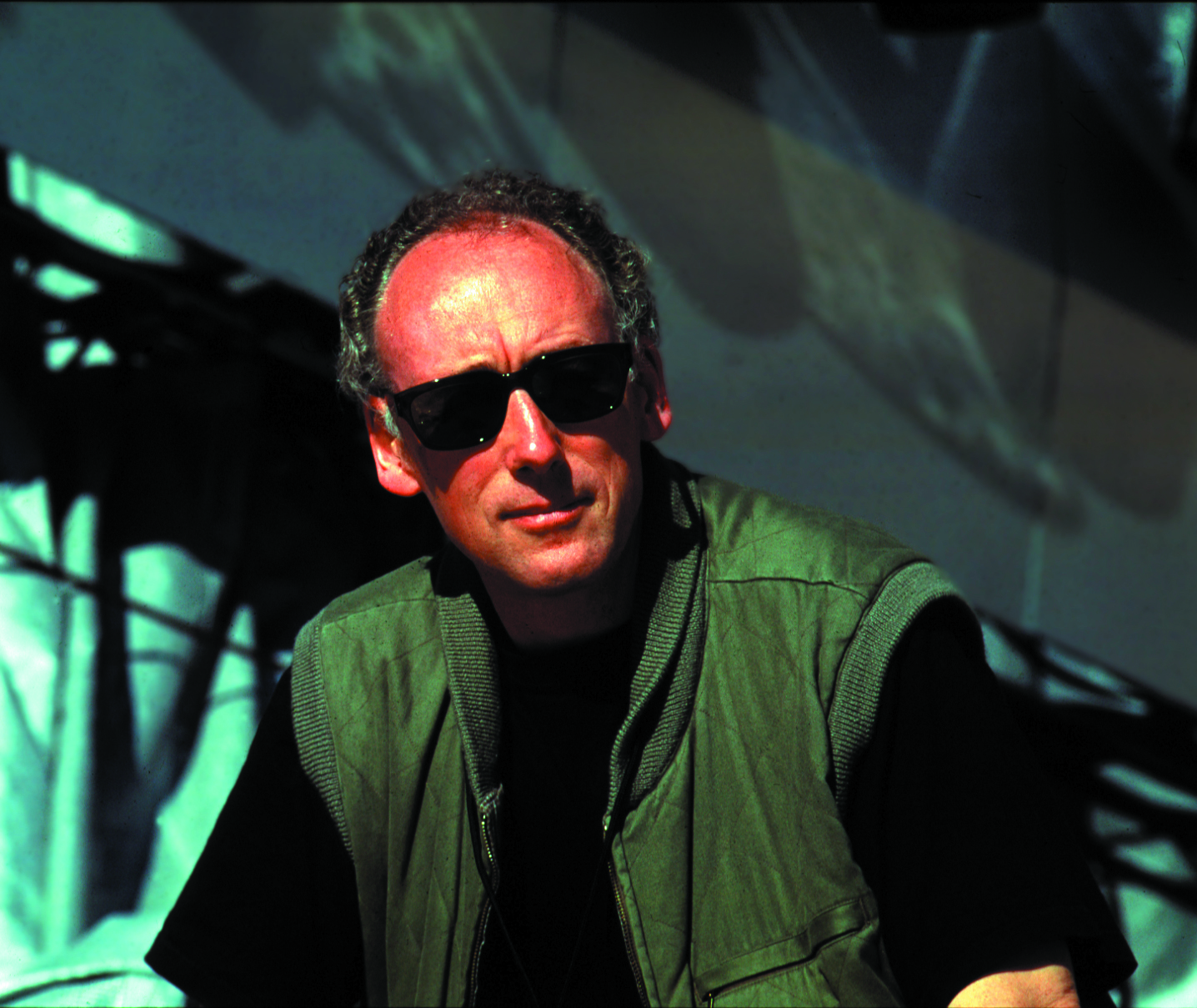
04/Interview
Mark Fisher
Stage design
ONE OF THE MOST INVENTIVE CONCERT DESIGNERS IN THE WORLD
Jean Michel Jarre's city-scale concerts are much more than a simple live event, they are a combination of sound, visual drama and total architectural experience. Many of these landmark performances have taken place on the astonishing sets created by Mark Fisher, a London architect who can lay undisputed claim to being one of the most inventive concert designers in the world.
As well as his work with Jean Michel Jarre, he has been instrumental in designing historic shows including Pink Floyd's The Wall and its revival in Berlin by Roger Waters, The Rolling Stones many tours and ‘Zoo TV’ and ‘Pop Mart’ for U2, as well as the opening celebrations and daily Millennium show staged in London's controversial Millennium Dome.
We caught up with Mark Fisher in early February at his London studio, just outside Islington. The previous day, a South Bank documentary had been broadcast on UK television, centred around his work on the Millennium Dome opening show, which features collapsing architecture and multitudes of acrobats, so we were fairly well versed on his recent work.
What followed was a fascinating insight into his work on designing these monumental shows, his great friendship with Jean Michel Jarre and why on earth he describes his friend as a 'raving mad meglomaniacal dictator'. Oh, and we were only interrupted once by a call, direct from the Dome!
As we left, Mark explained that he was off to Paris the next day to speak with Roger Abriol from Camus and Camus, Jarre's concert producers, to discuss the next adventure being planned.
You've been described as an 'architect of pleasure'. How does your work differ from that of an architect as people would understand the term?
I don't see it differing at all. I have relationships with clients and create things that exist in the public domain, in order for the clients to present themselves to the public. This is not very different to the way that most public architecture is done. There is a long history of architects much more eminent than myself doing public entertainment, fireworks and big displays, starting in the 18th / 19th century, so I'm just part of that tradition.
How did you get to where you are today?
It started when I was in college, in the Sixties, and of course that meant there were a lot of things going on in popular culture. Things like club experiments with sound and light workshops, which the Floyd used to do in Notting Hill. Also architecture experiments with lightweight structures and conceptual groups like Archigram, proposing moving cities and portable structures, and things like that. I got very involved in the practical side of doing lightweight structures, inflatables and actually set-up a company with some other students and did projects building these things in order to learn about them.
Inevitably, a lot of the work we got was from the entertainment industry because they were the sort of people who wanted the novelty. There has always been a connection between entertainment and novelty, way before people like P.T. Barnum. The idea of the newest gimmick being presented to the public. The entertainment industry has always had the tradition of trying new things so as student architects, we were tapping into that as a way of getting money to experiment. In a way, part of my life has always been that, sort of using the entertainment industry to get money to muck about !
Many people think of architecture as long term structures, whereas you are designing for rock shows which tend to have a short life span. Would you not like to design something more permanent?
I suppose it is a kind of vanity thing, but the structures that I do get seen by loads of people so my vanity, such as it is, is pretty satisfied. I am actually interested in the whole idea of permanence and things in our modern society, there being too much emphasis on permanence and longevity.
You have been working with Jean Michel Jarre for two decades now. How did you first meet him?
It was in 1979 when I was working on the original Wall show and he got in touch as he was going to China and was putting a China show together and was looking for people to talk to about it. My name must have come to his attention, doing the Floyd, and I got this invitation to go over to Paris and we just got on well.
We're not that far apart in age and we have similar backgrounds. Whilst he was experimenting musically in Paris, in the sixties, early seventies, I was doing practically the same thing in the design world, so we had a lot of similar ideas about how you might do things with entertainment. Ever since then, we have had a kind of love/hate relationship.
When did you start getting involved in the Egyptian Millennium project?
It started nearly a year ago and of course, I was deeply enmeshed in Dome-world. In a way that was quite good as it forced me to have a bit of distance from it and only work on the ideas with him for quite a while, though eventually my assistant Ray did quite a lot of the execution drawing work. But in the early stages, we were just really talking ideas. So, I went out to Egypt with Jean Michel in late April, early May and sat in a meeting at the Cairo Opera and basically did the drawings for what the stage was going to be like whilst Jean Michel talked. It was very funny, it was like "just keep talking, keep talking" and at the end of about two hours when he finished, we showed them the drawing. It was a completely mad situation, but then they were convinced that it was alright.
Where do you get the inspiration from for this kind of event?
I think that a lot of the work that I do involves researching things that are going to work as symbols because a lot of the time, whether it is a design for the Stones or the show at the Dome, it is trying to make stuff that is legible to the public. Gilbert and George had a nice phrase for their art where they said it was colloquial. I think they are trying to describe it as being very accessible and so you are always trying to look for things that translate that. So when the audience stand in front of the thing for a short time, they understand what it is about, that is all it is. In a way whether it is a show in Egypt or a show in the Dome, it involves the same process as in trying to understand what everybody is about, what they are trying to do, who is going to look at it and then just by finding the initial symbol that can connect it all, so that people can understand it.
How do you rate the Giza plateau and the Pyramids as a location?
Symbolically, it is fantastic. If you were trying to think of any iconic location for an outdoor spectacle, it would have to be one of the most identifiable ones in the world, right up there with the Eiffel Tower or the Taj Mahal, and a few others. It comes with a lot of symbolic associations. I mean people think they knew what the Pyramids mean, whether they actually do or not is an irrelevance, but they have a kind of sense of the Pyramids being connected to eternity because we all know whatever else, they are very, very old. So they give a sense of the profound to the decision to do a concert there, which is absent if you go and do it in front of your local Tesco, to be absurd about it.
The whole stage design was very 'transparent', what was the reason for this?
We were trying to make it as invisible as we could, yes, quite consciously. The major work that we did here in the studio was in finding a way of lighting the stage so that the camera had views of the Pyramids, which became a bit ironic given the fog. So we spent a lot of time studying how we could light the stage without getting in the way of the views of the Pyramids from where the cameras were going to be. Basically, that was the major issue, finding a way of presenting the artist on stage, lighting and still get a clear view of the Pyramids.
Do you work closely with the lighting designer to design the staging?
Oh yes. Most of the work that I do as stage design is done very closely with lighting designers, in this case Gary Westcott, because of the way that I approach the design is trying to bring everything together. It is not trying to design something and then saying to the lighting designer, "Oh, now get on with it", it is very different to that.
How do you interact with these people, given that it would appear likely you are never in one location together?
I've been using email and now the Internet. I've had a Compuserve account for about ten years because I'm always travelling. Ever since laptops became powerful enough to have CAD [computer-aided design] on them, I've always travelled with a laptop and designed on it. Then either email or fax the stuff straight off the laptop to people. Now with the Internet, we have secure areas on the the web site so we just post the job files straight onto our web site so anyone with the password can look at the drawings and download them. So it means that wherever someone like Gary is, it doesn't matter. He can get the files and work on them and email them back.
So, do you go through many iterations of a design?
Yes, and it is very easy to do and there are examples on the public area of our web site, where we are outputting camera views of what the stage set will look like. We can fiddle around with it and so we are not just designing it, it is like we are standing there and walking around on the stage with bits of scenery.
Technology for design has moved on over the years, how has this changed the way you work?
Well, it has certainly speeded it up. Design has always been two separate parts. One part is talking to the person that you are designing for, finding out what it is you are trying to do and then making your own input in the form of having ideas and then the part that is the very public part, where you communicate that. So, the public face of the designer has always been drawing or rendering pictures and that part has been hugely speeded up by all these modern techniques. But it hasn't actually changed the fact that we still have to understand what we are doing and have the ideas about it and that those ideas have to be practical. But it does mean that once you've got that clear, the downstream process of getting that communicated is hugely speeded up. You can say the technology is enabling technology, but they are tools and it doesn't actually replace the creativity but it sure as hell makes it easier to do it quickly and spread everybody out. So obviously we had people all over Paris, people in Egypt, logging onto the web site, Gary wherever the hell he was doing all his Nine Inch Nails stuff.
All the projects that I do follow the similar pattern. Also, most of the projects that I do I design while I'm working on something else, because the pattern of my working life is designing and rehearsing and getting things built and they all overlap. So whilst the Dome show was in rehearsal, Jarre was being built in Egypt and I was designing for Tina Turner, who’s show is now being built, ready to rehearse in Miami and the next show that Jarre and I are talking about will probably be being designed while I'm sitting in Miami rehearsing with Tina. The international quality of that overlap is the thing that the Internet has made seamless. It doesn't matter where you are.
Did you see the finished staging in Egypt?
No, I never saw that except for camera pictures that I had sent back to me. That was because it was always a Faustian deal doing the Dome, selling your soul basically. Also, I did the opening night of the Dome so I was never going to get away but Ray was down there, mucking around in the sand!
Designing a stage to be constructed in the middle of a desert must have had its difficulties?
No, not really. You just have to have a clear idea of what you are going to do and make it so strong that if it is only 80% done, it doesn't make it difficult, it is still alright. They got very close to that in Egypt. I've done a number of shows in silly locations. I've done shows in India, Russia, Japan and Turkey and it's always the same. We are very spoilt with the infrastructure we have in the developed world. You go to these other places and it is completely crazy. You just have to accept that that’s the way it is going to be.
In the video biography of Jean Michel Jarre, you described him as a raving mad megalomaniacal dictator. Do you want to expand this?
He's an artist and the thing about artists in our society is that they have to be very focused on their own vision because they are constantly buffeted by people who want to change it. People like me, for example, who will always say it will be easier if you did this and they have to strike a balance. The important thing for people in their 'court' as it were, is striking that balance between when it really is impossible and then delivering the unpleasant news so that you don't get fired, and recognising when it is really worth pushing and making the effort. In the end, it is extraordinary to look at something like the concert in Egypt or the concerts in China and it is a completely pyramidal organisation with one figure at the top who is ultimately carrying the entire thing. The bottom line is that if Jarre was run over by a bus, the whole thing would stop. So they have to have this extraordinary outward confidence in their own ability and significance which in the end is a kind of form of megalomania. I don't believe in individual genius and I'm not prepared to subscribe to the proposition that he is a more remarkable person than many other people who don't achieve the same things, except for the fact that he has this drive, this absolute focus on being successful at what he is trying to do.
That is really the thing that sets people like Peter Gabriel, Jagger, Roger Walters apart. I go through the list of people that I've been lucky enough to work for and it is the one trait that they all have, which is this conviction that they know what they are trying to do, and that they are going to carry everyone behind them, making them do it. It requires a real strength of character to keep that up, year after year, with all of the knocks and buffeting that you get. You can be lucky and get away with it a few times in your twenties when you are young and sexy but to keep it going is a remarkable feat of work and it requires a lot of willpower to do it.
You must have some fond memories from your first project with Jean Michel Jarre in China?
Oh yes. It was very funny working with the French. I was there with my engineering friend Jonathon Park at the time, and we were the only two English men on the project so we were having this great cross-cultural experience. I think that is also what Jean Michel enjoys about these adventures. Trying to make things happen in this lunatic environment. For me, the great parts of it were the early visits. We went out several times together and sat through these mad banquets and I think the skill of negotiating, persuading and convincing that Jarre has, and that I've been able to play a part in with him is why we are quite a good team. Whenever we've actually worked on things like that, it has been very successful. So those are most of my really good memories, the early meetings where we would go and meet all these officials who just had no idea what they were getting involved in at all. They were in the middle of the cultural revolution and really had no experience of people coming to do rock shows, it was really off-the-wall.
Did the finished show relate much back to the original designs ?
Well, we made huge changes which is characteristic of these things. You go in so high and when finally, you end up lower down, it is still a good show. I don't think we ever thought it wasn't going to happen. Of course, in a way you always understand it might not happen but you never let that appear in the discussion because it would be the crack that they would drive the wedge into.
When you were producing the designs for the Houston show, did you know you were involved in something that would be so historic in concert production?
Yes, and I know for that reason it was really interesting because it was coming right back to the most provocative of the Sixties ideas of urban architecture and transforming cities, a fantastic idea. At the time, no-one had ever done anything like that, so it was a remarkable project to work on.
Why do you think that other people don't stage concerts similar to Jean Michel Jarre's?
There have been, such as a guy who put on the same kind of show in New York harbour and in Tokyo, so it's not as if urban shows on this scale have not been done by anyone else but clearly the opportunities are quite limited.
It's probably the same reason as to why doesn't every band do a stadium show. To some extent, he is a kind of brand for doing that and he's managed to get there over a period of time to achieve a level of brand penetration for that form of production, in the same way as the Stones or U2. So it means if people are thinking, he's high on their list of people to go to and he knows how to deliver it. He also goes into quite a detailed intellectual level, he does actually try to do stuff with the visual material and he does in most cases write material that connects to the idea of what the concert is. So you get songs for Egypt that connect to the Arabian music and for China it was the same. Houston had all the ideas connecting to the Shuttle launch, Docklands had songs about the Industrial Revolution. He constantly engages intellectually with ideas of doing the concert so he has a lot to talk about on a lot of levels with the officials. They feel quite secure about the idea of doing it and it is not entirely exploitative, even though it is building his career. I think that has been the key to it.
The next show you designed for Jean Michel Jarre was in London's Docklands - a memorable experience?
It was much messier than it ever needed to be because of the way the thing was financed. It would be charitable to say of the people who were involved in producing it, that their means of approaching the organisation was eccentric and optimistic. Basically, the site was a wasteland and the people who decided to put the show on imagined that in some way they could let the great British public onto this site without any significant investment in infrastructure which the local authority was never prepared to agree to. The collision of the two totally contradictory forces led to the huge amount of unexpected (by the promoters) expenditure which anyone else could have foreseen. That was the thing that was so ridiculous about it was that it was going to cost a large amount of money to get the site ready, it was just that the people who were promoting it in the UK imagined that they could bamboozle Tower Hamlets into giving a licence without spending and Tower Hamlets of course called their bluff. And so in the end, there was a huge fiasco associated with the money.
You incorporated a floating stage into the show, that was not the easiest option?
No, but is was just a floating stage. We just rented some barges, tied them together and put a stage on top of it. In the end, once you'd tied the barges together, it might just as well have been on dry land. It wasn't technically difficult. It seems very exotic until you realise that once you go down to the Dock and start talking to people who do dredging and dock maintenance, there is a whole culture of people who think it completely straightforward to put cranes on barges and swing them around. That was just another example of doing the local research.
Of all the projects you have designed, which has been your favourite?
It's an awkward question to answer because although I'm not glad I worked on every project I've done, most of the big ones have something very special and the only real answer I can say is that several of Jean Michel's shows live in my fondest memory, along with several Stones and several Floyd shows. The answer would be that in my early life as a stage designer I would rate the China concerts along with doing the Wall and doing the Steel Wheels for the Stones. In recent times, obviously doing Egypt was very interesting but so was doing the Stones or doing the Dome. I get so involved with these things and they make a large part of my life and it is hard to separate them.
I would describe Jean Michel as a friend, socially as well as someone I work for. But at a really personal level, we have a very close rapport which goes beyond work and that is special.
Are you ever surprised at the end result, compared to what was down on paper?
No, but usually when you see it you wished you had done it differently ! They are usually pretty much what I expect, as I've been living inside them by then but the trouble is it is very hard to avoid this process in which decisions justify decisions, justify decisions and you get there and then you realise that there was this parallel path over here that was completely different and probably better, now you see it clearly and you are standing back. It is very hard, especially with the kind of pressure of time which surrounds putting these kinds of show together, it makes it very hard to stand back and assess things.
The world is constrained by budgets, surely this is one of your major headaches?
No, as long as there is enough money. You constantly run into people who want to do things with unrealistically small amounts of money but there is a sort of medium amount of money which is about right and as long as you have that, it is pretty easy to shape the creativity to fit the budget.
Of course, you could always do more but then actually part of the creativity and part of the game is to not have an infinite amount of money. In a way, if you take away most of the constraints, you take away most of the difficulty and the thing about doing stuff is that sorting out the difficulties is part of the game. Take those away and you've taken a lot of the fun out of it.
You've designed projects for Jean Michel Jarre that have never happened, such as one in Tokyo. Do you get frustrated when projects don’t go ahead?
Oh no, I do a lot of things that never happen. I'm very happy when they do happen.
The fog was a mist that added some magic and a poetic aspect to the night. Over 120,000 people gathered for an Egyptian Woodstock all night.
05/Interview
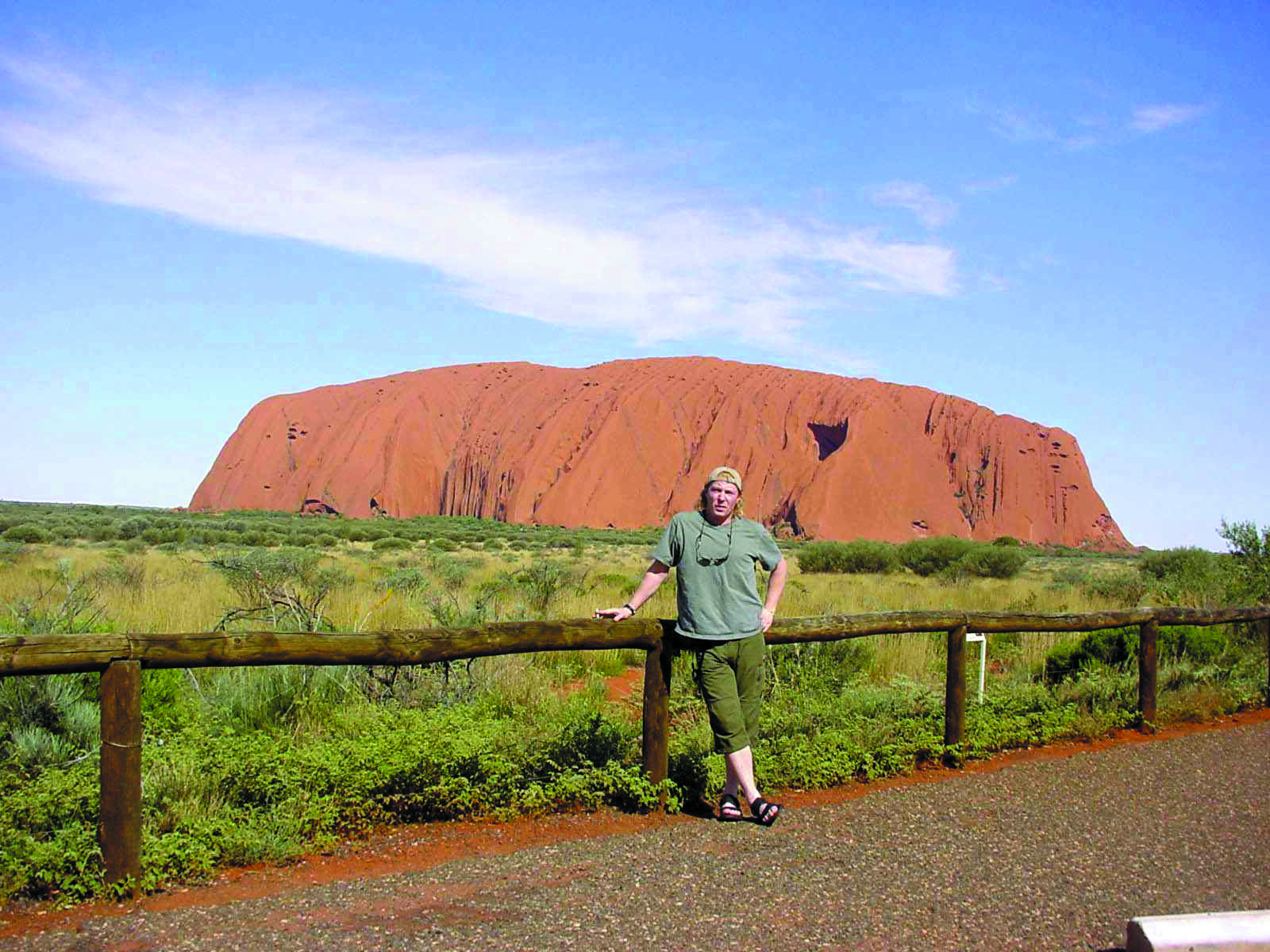
Gary Westcott
Lighting design
We speak with the lighting designer for Twelve Dreams of the Sun and talk Lollypops
One of the difficulties about interviews with key crew members of Jean Michel Jarre’s team is tracking them down. The preparations and rehearsals are usually so complicated and hectic that it is impossible to schedule interviews during the concert ‘experience’. Therefore, you have to speak to them when they have dispersed around the globe. A classic example of this is Gary Westcott, Jarre’s lighting designer for the Egypt show.
Gary was off travelling for various projects and proved difficult to contact at his US base. When we finally tracked him down after a number of weeks, he had just returned from Tokyo and Australia but was happy to share some of his experiences with us.
WHEN WAS THE LAST TIME YOU WORKED WITH JEAN MICHEL JARRE?
My last project with Jean Michel Jarre was at the Eiffel Tower on Bastille Day, 14th July 1998 for Electronic Night. I designed the stage and lighting and worked with Christian Bourret and Jessy Deep who did the video and staging.
It was a very emotional show, as you can imagine. We only had four days to expedite the whole staging, load in and rehearse on site, which is very little time for a show as large and complex as this celebration of new dance and evolving club music. The bonus of this show was the fact that France won the World Cup and it turned into a massive celebration for France.
Since the Moscow show [in 1997] I have been rather busy, working on various projects. I continued working with David Bowie as Lighting Designer and Video Director on his Earthling and Outside Tours, concerts with The Cure, the Kiss Psycho Circus Tour, Janet Jackson's Velvet Rope Tour, Marylyn Manson's Mechanical Animal Tour and Nine Inch Nails Fragility Tour 1999/2000. I've also done some charity work for an Aids Project in Los Angeles.
When did you start getting involved in the Millennium project?
Jean Michel had mentioned that he was pursuing his dream of performing at the Pyramids quite some time ago actually. I received a call in January 1999 and promptly jumped on a plane to Cairo to meet the team of Jean Michel Jarre, Fiona [Commins], and Christian Bourret to look at the possibilities and survey the site for an initial impression to realise the potential of what we could achieve.
Whilst at the ruins we discovered very quickly what a humungous task lay ahead. From this point forward negotiations and design concepts took place over the next ten months.
How do you go about 'designing' the lighting for such a momentous event?
The show was designed with Jean Michel's whole concept in mind. The original idea for the Twelve Dreams of the Sun came from Jean Michel's concept of tying together twelve themes from one of his recent musical pieces with spoken wordscapes. Laurie Anderson and the twelve gates of passage from Ancient Phaoronic mythology, this plus the passing of twelve hours of the show, from sundown 1999 to the new sun of 2000.
The show was to be a special event on behalf of the Egyptian Government, to celebrate the dawning of the new Millennium for the World. The show was held under the auspices of President Mohamed Hosny Moubarak of Egypt and working in conjunction with the Ministry of Culture and Cairo Opera house.
We decided to use a position in the south that faced the northern side of the Pyramids.
A perspective that was not the traditional photo opportunity Pyramid scene, but one that hadn't been explored before and allowed an amazing perspective of the whole Giza platform.
The site lends itself to viewing as there is a natural dessert bank and ridge that make a perfect audience viewing area, a kind of sand amphitheatre about 1.2 km x 0.5km.
Only one little problem, there is nothing there, except sand, and the odd camel and donkey! Nothing like starting the hard way, but then Jean Michel Jarre has never undertaken any small project and is known for pushing the limits.
This meant that my responsibilities for lighting included not just lighting the Great Pyramids and the stage, but the sand and tomb area in-between. About 1.2KM x 600m.
The idea was to use the Pyramid, tombs and dessert as a complete canvas to make the most of the natural beauty of the incredible Giza platform and surroundings.
We started on the ideas of the stage and how to create a statement and scene to work the characters and props that would be involved with the show. This then led to the logistics of how to introduce the various dancers, video and props into the big picture.
We had many, many meetings and discussions over the next ten months to refine the concept, staging and approach of the show.
The main consideration for stage design and lighting was the fact that there couldn't be a roof structure of any kind as this would block the view to the backdrop of pyramids. From this point Mark Fisher and I worked on the principle of making a stage that was as open as possible, avoiding the traditional 'Rock'n'roll' stage roof structure.
For lighting, this made things a little difficult and we had to rethink our approach regarding the stage. The lighting for the stage video screens and the cameras broadcasting the event live around the world had to be as precise as humanly possible.
Meanwhile Mark Fisher was creating very accurate drawings in 3D so we could work out the exact angles for cameras and positioning of people relative to the Pyramids onstage.
We added Lollypop lighting poles to the stage area. This would allow me to have contra-jour on the musicians and a little more dynamics for the cameras.
This we achieved and made the lollypop rigs into a design based on one of Jean Michel's themes from his UNESCO concert, of triangles, circles and squares.
All of the other stage lighting was placed under, on-stage and on stage-left and stage-right towers and of course around the sandy dessert area and Pyramids.
The area and coverage is immense given the desert area and the sizes of the pyramid. In a word … HUGE!
How would you rate the Giza Plateau and Pyramids as a canvas for your lighting designs?
A dream come true and a logistical nightmare! The dream is to explore Jean Michel's music with this canvas for interpretation and to be involved in such a special event for the people of Egypt. The shapes and textures of the area lend itself to wonderful opportunities and different types of effects.
The logistics for cabling, positioning, differing heights in the sand, historic monuments, antiquities and lots of sand made it a very long process indeed though. Then there were the power generators and their reluctance to work a full day! Throw in the sun, sand, camels and donkeys by day and very cold, moist atmosphere and packs of wild dogs by night and you get the idea!
This was also all taking place while the country was celebrating Ramadam, so the local labour force was only working short days.
The lighting, staging, power, carpenters, riggers, site production crews and technicians made all this happen against many odds sometimes!
The show was a labour of love for everyone involved and I would like to thank again everyone who helped make this very special event happen - a cast and crew of hundreds.
There were some wonderful effects on the sands beneath the Pyramids. It must be rare that you get the opportunity to use these types of designs?
Yes, on such a scale with these types of graphics where people can see down onto the site as well as looking up to the awesome backdrop. The idea was to texturise the sand with graphics and to echo the imagery projected on the pyramids. I also used the same images projected onto Jean Michel and the stage.
The site was chosen because its natural embankment is a perfect viewing point for the audience.
With Jean Michel's shows, you have to worry about not only the actual stage lighting but also the surrounding landscapes too. Is this a challenge to you?
It's not so much a challenge as a natural consideration. The idea is to translate the imagery and effects out from the stage onto the environment so that those that cannot actually see Jean Michel in detail will sense the landscape is changing with his actions and music in perfect syncopation.
Turning Jean Michel's music into artscapes, lightscapes and soundscapes, giving a complete aural and visual link to the environment.
Do you work closely with the music in order to design the lighting?
Absolutely, music is aural colours, just as colour is visual music.
How do you decide which colours to use between your lighting and the pyrotechnics?
With this show I worked closely with Mark Jaumont, the pyro chief, to make sure that the colours used on the stage and scene were either complimentary to each other or contrasting enough to create a good juxtaposition for the camera and light levels.
Can you tell us a bit about the moods and themes you created with the various tracks?
Well, the different tracks and songs in this instance lend themselves to different environments. We looked at the meaning of colour to the Pharaohs and their beliefs. We also looked at building the colours during the show, so the relevant tracks would have contrast to build the intensity of the individual pieces and make them stand out individually. I also coloured songs to compliment the projection on the Pyramids.
For instance, C'est la Vie starts with lavenders, purples and blues in its Arabesque intro and builds into a warmer vibrant mix of magenta's and amber's for the chorus which then builds to a fiery crescendo as the orchestra builds.
The colour Taste Police was definitely on duty.
Jean Michel and I discussed all the colour combinations to be used during the show with regard to all aspect of the staging, set costumes and props. We didn't want it looking like a bad Variety show.
Colour, contrast and angles of light sources were and are very important considerations.
What memories do you bring back with you from Egypt?
Well, I guess the food and spending three weeks in a freezing tent in the desert is one I won't forget in a while! Watching the sunrise over the Pyramids every morning to reveal their splendour and stark beauty is another.
Watching thousands of people from all over the planet pay homage to this amazing testament of how far humanity has come and the dawn of a new age.
Having the opportunity to work in this environment with such an intelligent and talented artist makes me feel very privileged and my involvement with this project will stay with me for a very long time, after all it's not every day you get to light the Great Pyramids of Giza!
It's very hard work to achieve your ideas sometimes, and Jean Michel knows this only too well in his pursuit of pushing the edge of theatre and music on such a grand scale. But there is a reason why we work so hard for our goals, and I hope that the people who witnessed this special event will cherish the experience we helped to colour and make more memorable.
Where do you think he should perform next? Are there any particular locations in the world that you would choose?
Well, I wouldn't want to start a rumour, but I just returned from Australia and had a very interesting visit to Uluru, the Great Red Aboriginal Rock!
Well as each experience and challenge is undertaken, the world seems smaller, so I'll pass that one onto Jean Michel!
06/Interview
Mike Mansfield
Television direction
An exclusive preview of The Twelve Dreams of the Sun film
Meeting up with Mike Mansfield in London in February 2000 seemed like perfect timing. He was putting the finishing touches to the edited version of the film from the Egypt show and we got an exclusive preview, before even Jean Michel Jarre had seen it.
Mike and the show's producer Hilary Tipping had been editing the film for two solid weeks on the top floor of the aptly named Evolution Studio, in the heart of London's Soho district. When we were invited into the studio, they were wrapping up the final few shots of the film, with Jean Michel Jarre thanking the crowd. There was still work to do, such as complete the sound mix, but the hard work had effectively been completed and by the end of the next day, the finished film would be sent to Paris for Jean Michel Jarre to see.
We took a brief stroll back to the MMTV offices where we chatted with Mike about the Egypt experience and the other films he has produced for Jean Michel Jarre.
How did you get started in the business?
I left school at 14 because I just didn't understand any of it and I was bored! I got a job in the Theatre - at the Theatre Royal, Drury Lane - running around for the stars. I went to Drama school and after that I went into Repertory Theatre as an actor and moved on from there to television.
You seem to be Jean Michel Jarre's first choice for filming his large-scale projects. How did you get involved with Jean Michel in the first place?
I've always been involved with music. Jean Michel Jarre saw something I did and rang me and asked me whether I would like to work with him. I had no idea what that meant and foolishly and youthfully, I said yes.
Let's talk about that first foolish experience in London’s Docklands then…
A triumph over adversity. We had everything against us when we did that show. Right up until the last minute, Jean Michel was buzzing around England looking for another location, as you'll remember. It was all on a raft virtually, on the river, with a force 10 gale, or whatever it was, with the rain throwing itself at us, and the wind. My camera cables were snapping all over the place, I think I lost 2-3 cameras. But, the texture of that show was, I believe, the best one of all the shows I've done with Jean Michel. I consider it to be the most dramatic and most evocative, the roughest show.
I remember the shot of the camera being wiped…
Actually, there's some of that camera wiping going on in Egypt because when the fog came down, there was a moisture in the air and it was all wet, dank and damp. That was how you got the effects in Egypt because when the fireworks went up, the smoke mixed with the fog and created this kind of fug. None of the pyrotechnics were really totally consummated because you saw them going up but you didn't quite know what happened up there. In the end, that has got a textual quality to it rather like Docklands.
How involved did Jean Michel get in the filming of the show?
With Egypt, the cards were so stacked against Jean Michel with the bureaucracy, the diplomatic problems that were happening all the time, our camera equipment was stuck in the airport and they wouldn't release it until the night before the show. So I couldn't ever rehearse the show. We had the cameras but because they were so badly tuned, the whole of the night before was spent re-aligning the cameras to make sure we could actually see something. Although Jean Michel was performing on and off stage, there was no rehearsal for me. You simply have to be very aware of what was happening on the night.
So it really was a live edit in more ways than one?
Totally live. When I'm doing these shows, I have a lot of camera views in the truck and they are all there and you kind of know where your stage cameras are and your major pictorial cameras, Jean Michel has his own dedicated camera. It's like conducting an orchestra really, you kind of know where your strings are, where your brass is and you work it.
I'm in an OB [outside broadcast] truck, with a vision mixer beside me and I have all the cameras in front of me. You are looking for shots. On the night of the Pyramid concert, it became a nightmare, because we lost three cameras on the night due to cabling problems. We then had a major problem with talk-back, so the cameras were wobbling all over the place. This is why I kept hitting the drums because that was one of the few shots that we could see that was properly lit, so I kept going to that. It was a major, major problem, of course. One of the camera men, for example, between the stage and the Pyramids, kept saying to me, "Mike, Mike, they are telling me it is really dangerous out here, the pyrotechnics are going up and dropping metal and it is very dangerous for me, can you please pull me back". I was saying, "Alright, come back". But he couldn't hear me. In the end, suddenly that camera went black, so I knew I'd lost camera 13. I lost camera 11, I lost camera 4.
For that particular shoot in Egypt, because it cost such a horrendous amount of money and everyone was charging an arm and a leg, I could only take 14 cameras with me. In the end, I only had eleven cameras, compared to La Defense, when I had 32.
And of those 11 camera, they were all searching for shots in the dark and they couldn't hear me, so it was a very traumatic situation.
When did you first start working on the Millennium project?
I went out to Egypt twice to find out where it was going to be and where the shots were. In an ideal world, there were going to be images of the Pyramids and so I had a dedicated camera on the Pyramid that night, which was a total waste of time, because nothing appeared on the Pyramid. So that was one of my eleven cameras left that was a total waste of time.
You had to work out the angles because it was lit without an overhead rig because Jean Michel didn't want the view of the Pyramids to be interrupted. So the lighting director came up with the idea of putting lights in the lollypops on the stage. Which, at a production meeting, sounds like quite a good idea !
Nothing is easy in Egypt. The Egyptian authorities suddenly decided that they were not going to give us the satellite the night before the show. So we said, if you are not going to give us the satellite, I'm going back to London and Jean Michel said he was going back to Paris, and Jean Michel and I said we were leaving town. So they said we could have our satellite. It was important because it put Egypt back on the map in a very big way.
However, I really don't know how Jean Michel does it. I think he is this musical magician. He is able to conjure these extraordinary, impossible situations and actually make it possible to happen. I actually said in Egypt to someone that for someone who can always make the impossible, possible, this is the one case where he is actually not going to do it this time. But he actually did it.
They were all there. The orchestra was there, the penguins happened, these extraordinary shots of the Egyptian army in wonderful white cloaks, carrying these lights, across the desert. Very evocative, magical moments.
And then the fog came down - cold, clammy and damp and the desert was held captive in its silent, still embrace. Before the show the stillness was eerie, nothing moved, only the tiny droplets of moisture that played in the lights around the empty stage, the Pyramids were ghostly outlines and all of the amazing projections that Jean Michel had so carefully chosen had to be scrapped. Nothing could penetrate that fog.
When your crew were in Paris for the Concert for Tolerance show, they wore T-shirts predicting that Jean Michel Jarre would play on the Moon for the year 2000. So, were the Pyramids a good second best?
I didn't know I was going to be doing this concert until 2-3 months before Christmas. I got this telephone call from Jean Michel, "Hello Mike, how are you? I need my Field Marshall. We are going to be together in the land of the Pharaohs for the Millennium." I hadn't got anything booked so I said ok.
It was an extraordinary concert, it was battling the elements, battling the political intrigue in Egypt, battling the budget, battling the technical problems and it was a good battle and fight, and I enjoy a good fight.
Why did you decide not to film the show in widescreen?
It was a co-production between O21 and ETV, and Egyptian television doesn't have widescreen, so we had to go normal format. I wanted to go widescreen because it was crying out to be widescreen. I'm going to give Jean Michel a letterbox version for non-digital broadcast, as well as a normal format.
Have you ever thought of using the IMAX format?
The problem as always is budget. I not only had to direct the concert, I had to raise the money for the shoot. I did that by doing a deal for it on the Internet. So it went out on the Internet that night live to 1.7 million people. It also went live to M6 in France and a live input into the BBC Millennium Night show. But it was the Internet deal that financed the concert film.
There was one particular shot that I remember from the Tolerance concert where the camera pulls outs perfectly at the start of Souvenir of China, seemingly timed to complete at the very start of the music. How much pre-design work/scripting is done prior to the event?
You don't script a concert like this. I go through every shot with every camera man, which we did in Egypt. Every camera man went to every camera position, and you talk them through the concert (when you have talk back!). It is like you are all part of an orchestra and you tell them what to do. However, camera men need a director to tell them what to do. It was interesting looking at it, during that killer twenty minutes, when we had no talk back. Looking at it, it is fascinating to see what camera men do when you are not telling them what to do. You don't have to be a demon, but you have to make absolutely certain that they know what you want. It is like a tapestry really, you are weaving all the time. Once you do the 5,4,3,2,1, you're on and it's a one-way trip and you don't even think about life, you concentrate totally.
Do you ever want to abandon the camera and experience the event through your own eyes?
No, I quite enjoy seeing things through a camera really, because television and music is the third corpuscle in my blood stream. I am totally unforgiving with myself, if I make a mistake, I find it very difficult coping with that.
How do you go about editing so much footage?
It isn't that difficult. I know, for example, that I've got one of those cameras on the drums. So I know for all of my drum fills, I feel safe, and I need those drum fills because they create the energy and the movement and I need them to punctuate the rest of it. I know that I've pretty well got Jean Michel on another camera and I know I have wide angles. I lost some of the panoramic shots and I lost two of the cameras on stage of the other musicians, which I really missed. For example, one of the cameras, upstage camera right, I needed him to cover the upstage and downstage, so that he could cover Francis. Whilst I was looking around the stage, I saw a little hole in the stage and I thought I'd get a second camera cable positioned for him there where he could actually un-cable and re-cable and cover Francis. That was fine until on the night, he came downstage and the camera cable had disappeared under the stage, which I lost.
Do you have the final cut of the edit?
For all of the other films, Jean Michel has edited it with me, and we would do it together. For this one, Jean Michel is launching the album and is on a European tour and we have to get the edit out for the BBC and they are screaming for it. So I have to do it on my own.
I set out to create a wild scenario of anarchy and chaos, the unrelenting desolation and celebration of a pyrotechnic battlefield. Purists may not approve of the wild, sometimes raw, effect of the camera work and the editing technique, but Jean Michel wanted the viewer to experience some of the drama of that night in the desert and I hope we have achieved that.
If you want to go to a concert, don't come to the show, because it is something else.
07/Interview
Philippe Pontonne
Video effects
Catching up with Egypt’s video effects magician
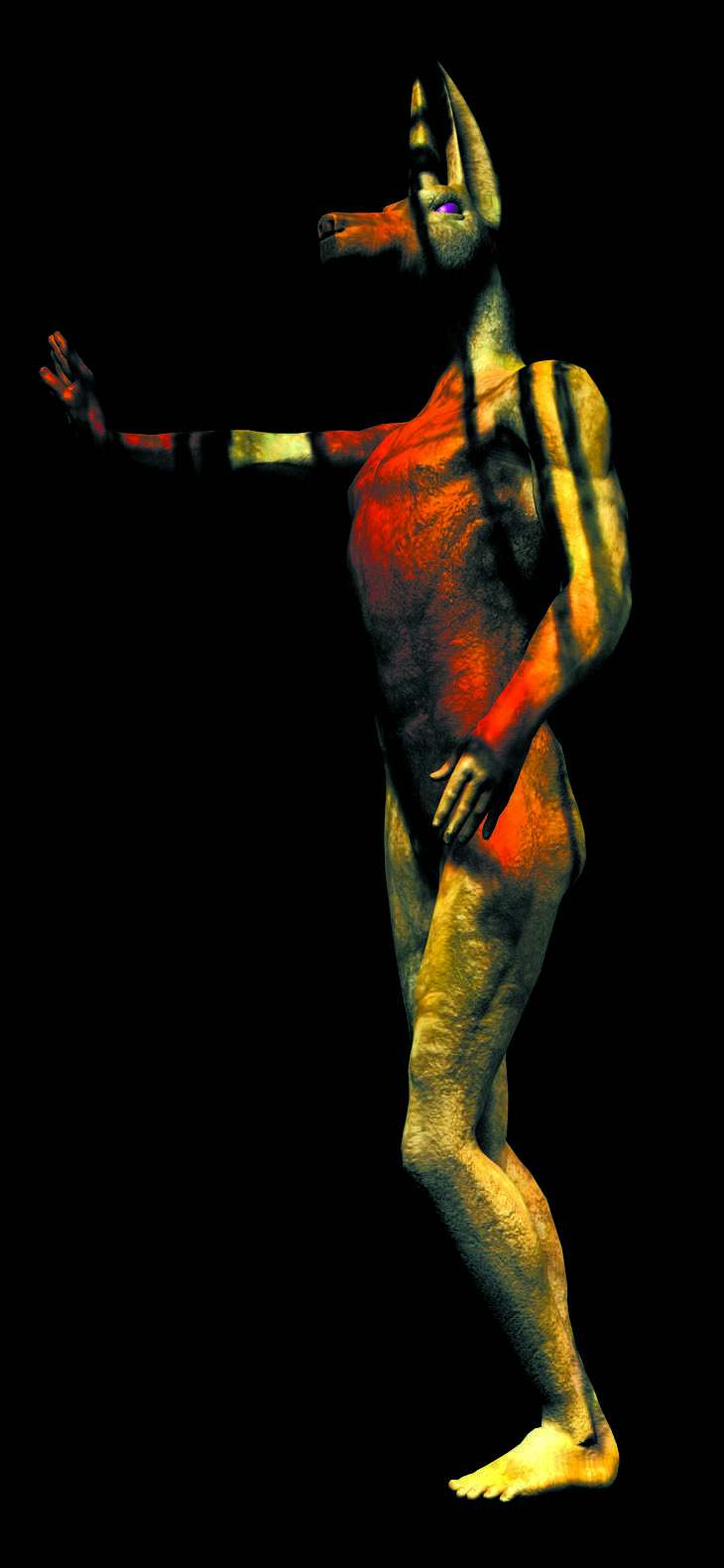
One of the striking moments during the start of the Egypt concert was the animated Anubis that could be seen walking across the virtual stage during the opener ‘Bells’, looking out over the crowd. We decided to track down the man responsible for putting this together, plus much, much more.
The man was Philippe Pontonne and he was the supervisor of the visual effects for the show. He was a new member of Jean Michel Jarre's team for Egypt and specialises in special effects for films, television programs and advertisements.
The exciting visuals continued throughout the show, including an animated journey through an Egyptian ruin during Oxygene 8, a planetscape during Hey Gagarin (pictured below) and a snow-effect in the middle of the desert during Oxygene 4.
We spoke with Philippe in Paris about how he put the concert visuals together and just how he came up with the Anubis concept!
This was your first project with Jean Michel Jarre, how did you meet?
I got involved with Jean Michel through the production team Camus and Camus, with whom I worked on a concert for Johnny Halliday at the Stade de France last year. Jean Michel wanted someone to work on the Egyptian project, and they put us in contact with each other. I presented him with my demo tape, which he liked, and most importantly we got on very well immediately. I was very keen to get involved because Jean Michel is such a legend. I would not have called myself a real fan at the time, but Oxygene and Equinoxe were something that we all listened to all those years ago and I have been interested in his work ever since. There was also the symbolism of the whole event which meant that I wanted to get involved - that it was the event of the new Millennium, and I was sure that we could put on a fantastic show. I am also personally interested in Egyptian art, which gave me some ideas for the video effects. All of these things came together and attracted me to working on this project.
What technology was used to create the effects?
We use a whole range of equipment. During the preparation for this concert, we used Apple Macs a great deal running Photoshop and After Effects. Macs are perfect for anything like this that involve high levels of graphic manipulation, particularly when you are working with geometric shapes that can be modelled mathematically. All of the backgrounds were done first in Photoshop, then I took them to Jean Michel to get his approval. We then used After Effects to loop the images together into animated videos. As Jean Michel's tracks are quite long by animation standards, and these images have to fit in with quite complicated timing requirements, we then loaded them all onto a system called Inferno from which we could trigger the effects. We also did two videos in 3D, that was the piece with Anubis walking and also the tunnel that we used for Oxygene if I remember rightly. We had fun doing this tunnel which had Egyptian hieroglyphics on the walls. We did these images on a system called 3DMAX. So, depending on the effects that we were trying to create, we had many different systems at our disposal.
How did you get the ideas for the video and how did you work together with other people like Mark Fisher doing stage design etc.
My major contacts during the design of the effects were Christian Bourret and Jean Michel who co-ordinated all of the different teams working on the concert. I am amazed at how involved Jean Michel gets in each of the different domains. He also has some very clear ideas about what he wants to achieve. He gave me his brief at the beginning and also showed me Mark Fisher's stage designs, which I had to work into. Jean Michel told me what ideas he had, and I put these into images. I also had my own ideas and inspiration, and we worked together to combine these into the show.
For example, the Anubis idea was originally based on an idea of Jean Michel's to make a video based on the photography of a photographer from the turn of the century who used time-lapse photography to study man's movements in a book called "The Human Motion". Although interested by the concept, I did not feel that this would fit particularly well with the rest of the music and video effects. I therefore proposed that we could combine this with an Egyptian feel by transforming the man into Anubis walking with hieroglyphics on his body. We tried it out and both agreed to proceed like that. That's one great thing about working with Jean Michel is that he is open to taking on board new ideas in his shows.
How long did you spend working on the project?
My first meeting with Jean Michel was about two months before the event, but by the time I had completed my existing work, and we had come up with the main ideas. I think that I had no more than a month to do all of the work. It was a real rush as you can imagine and made for some very long days.
The stage design for Egypt was different to standard concert stages. Did this effect the video designs at all?
The design was all done in relation to the stage and site layout, but where that site is does not have a large effect. I just had to work into the brief given by Jean Michel and the stage design from Mark and Christian. The fun was working in tracks like Hey Gagarin where we had a design of five huge screens behind the stage and where I had to create a video background of a planet as a backdrop. This is where the different elements of concert design really come together. The only stage problem that I was aware of was that the stage was quite heavily lit-up so this had an effect on the visibility of the projections.
Due to the time pressure, not all of the work was finished by the time we flew out to Egypt, so some of the preparation was done on-site. Jean Michel wanted us to have the freedom to continue to change and adapt our work on-site to make the videos as interactive as possible, for example filming the site and integrating this into the video montage. I was very glad about this, as I wanted to be there for the concert and to be able to work with the other team members to integrate each of our parts into the overall effect. Mind you, Jean Michel got his money's worth and worked me very hard while I was out there! The last week before the concert was a mad rush to be able to offer the results that Jean Michel wanted, which were both physically exhausting and also now a great memory.
My memories of the event and the concert come back to me whenever I listen to the music. It was a fantastic event, and when you add in the symbolism of the millennium and of the Pyramids, it is not something that I shall ever forget. Then there was the fog and mist which although it made it very difficult to project on the Pyramids, gave a magic and mysterious aspect to the evening. My memory is of being able to hear the fireworks exploding and not being able to see a thing, so thick was the fog. Everything was soaked even though it was not raining as the fog swirled around.
I certainly hope to work with Jean Michel again on a future project.
How has the new video technology affected the way you work on these types of project?
Today there are two different approaches to video effects for concerts. The work that I do involves careful planning to work effects that are inspired by the music, and which can use special affects to enhance the visual impact. As computing power has increased, you also get the second approach, which is live video such as the Arkaos system. Such live video allows you to create effects quickly and cheaply and to adapt to many different locations. As such, it is absolutely ideal for techno music where you want fast, dynamic visuals. As machines get faster and faster, they will be able to manipulate even more complex effects, but they will still not be able to match the artistic approach which I am mostly involved in.
08/Interview
Gary Wallis
Drums
Welcome to Gary Wallis, master of the drums
Gary Wallis is best known for his work with Pink Floyd, notably The Division Bell, Momentary Lapse of Reason and the Delicate Sound of Thunder. He has an impressive track record and brings a new edge to Jean Michel Jarre’s show.
Gary trained at the London Symphony School of Music and along with Pink Floyd, has toured with the likes of Nick Kershaw, Power Station, the Style Council, Duran Duran (Live Aid) and Jackie Graham. He is a man who lives by the motto “Life is not a dress rehearsal” and he took time out to share his thoughts with us on Jean Michel Jarre, the Egypt show and the art of massage ...
How did it come about for you to play with Jean Michel - how did you get together?
He got in touch with me. A good friend of mine is a good friend of Christopher Papendieck, same old story. He talked about me often to Christopher as I mix a lot of records for him and Jean Michel said to Chris, "Look, I'm putting a band together for Egypt, I want something a bit different". Chris being Chris, a bright boy, put two and two together and said to Jean Michel "How about the guy from Pink Floyd? A friend of mine knows him, I can get his number and see if he fancies it". So sure enough, Chris got in touch with my friend, got my number and gave me a call and said, "Well look, do you fancy it ?". So I said, "Well, I've got nothing else to do New Year's Eve, takes away the party options".
Jean Michel gave me a call when he was in London and only had five minutes to meet with me. He was on a photo shoot, so I met him there and he described the whole Twelve Dreams of the Sun to me. I said "I'm going to play drums like you've never seen in a whole different space, man. You know what I've done with Pink Floyd - I'm going play your music, it'll be much harder with a lot more edge" and he said that was what he was looking for. So, he looked up and said, "OK - welcome, you're on. We start rehearsals in six days". So, I said OK and that's kind of my opening gag.
Did you know about Jean Michel before he got in touch with you, did you have any preconceptions of what he might be like?
None, no more than anyone else in the general public, Equinoxe, Oxygene, general bits. I knew about him artistically quite a lot because I move in that world - weird and wonderful concerts - so I kind of kept abreast of that. Not musically, I've never leant towards electronic music, to be honest with you I've always been like a band player and that means someone singing. I've always leant towards that, whatever the combination, but I do like that thing with a song and we all get to the chorus and we all play the chorus. I love that, I kind of grew up with that so most of my record collection is generated by that kind of concept.
How difficult is it to learn music for a four-hour show when you've only got about a month to do it?
It's all right - it's my job, I'm a professional, it's what I do. But a month, that isn't long, or is it?
If you'd said maybe four days, I would concur but within a week you should be able to know it. You don't actually learn music as it were. It's a concept of not learning the drum music, you learn the song and you apply what's appropriate. It's like an artist's canvas, you have an outline, you're given an outline and you must fill in the colour. It's not a question of what colours you know to put in, it's what the actual canvas needs.
We do have a kind of skeleton, and we agree on a groove and then the rest is pretty much up to you. It's very much about feeling, a song's got to feel right. It's all about making a proper feeling.
So, if it sounds right, you go with it?
Well, you know I'm not exactly a youngster anymore so you kind of get to know what sounds right and the way it works and the mechanics of it. I'm old enough to know now, I'm not a spring chicken.
How did you get on with the Giza show as a little birdie told me you were a bit ill ?
A bit? You mean like a lot ! The problem was that we rehearsed the night before all night. We rehearsed and we rehearsed and we rehearsed until five o'clock and we'd been on stage for twelve hours. I was on stage for twelve hours hitting drums, really tired, really soaking with sweat and then the freezing fog came down. I came off and everything I had was wet. I was wet through and we kept stopping and starting, getting cold. I woke up the next day with the most horrendous flu. They got the doctors in and I couldn't walk; I lost the use of my legs and arms - it was really bad and I had a temperature of 39 degrees which is kind of hospitalise. I had to be carried down to the doctor, as I couldn't actually get out.
This guy came round and he gave me twice the legal amount of B12. He gave me antibiotics, which were so strong you only get to take three ever in a course, so I had two of those and then a pile of other stuff. I was absolutely flying.
Before I went on, I was dying so they found two Egyptian girls to come and give me a massage, which perked me up no end, I have to say.
But we got about an hour in and the world nearly collapsed. "Oh **** I'm going to die here". You know when you've got flu and it kind of gets you. I was hitting, really wet and cold in the desert, all the people and cameras in your face - I'm going to pass out, I'm going over now, that's it.
This is probably not a good time to say you seem to be the star of the live broadcast?
There is a reason for that. Behind me there were two desert cameras, which were going to film, the army and all the penguins running about in the desert, but both links broke for most part of the show. So, it was "Who've we got - we've got Jean Michel and the bloke on the drums." Francis' [Rimbert] camera went down, they kept the camera between Francis and the orchestra and that went down. Chris got a few shots with his little plug-in keyboard thing.
What would have happened if you hadn't been able to get up and perform?
It would have been very quiet.
What did you think of the location for the show?
I thought it was tremendous. I mean if you're going to do it, do it big and that's about the biggest. I really admire the man for actually having the balls to do it because it took some big balls to do that show. There was so much that could go wrong in an environment like that and I really admired him for that. I wouldn't have missed it for the world.
Did you find Jean Michel as much a perfectionist as other people say?
Very much towards the show, the music he left really in our hands. I don't know, maybe because he felt very comfortable, it was "Look gentlemen, you know what you're doing, I've got so much else to attend to with pyramids and penguins and deserts and lots of stuff” - he had his hands really full. He paid great attention to detail with the show, I think he got very comfortable with the music.
Your contribution to "Bells" was acclaimed as the starting point to the show - did you have any other favourites?
Bells is my favourite track from the new album anyway; I really like that one. At the start of the show, you're pumped up like hell, it's pulsing through your veins like there's no tomorrow. And it was great with Bells, it's just me playing at the beginning, opening a big show - lots of adrenaline, all the lights are on you, the Boss is off stage, and you've got two minutes of your own. The cards are kind of stacked in your favour - you know, if you're going to do it, you get a chance to show your pants off.
You're not aware of people watching because you've got so much to get your head round and be putting out. The funny thing is when you're putting out, there's not much coming in. Believe me, when you're up there, you really are putting out all your worth - there's not much coming in to you as a person, it's all flying out of you.
Do you find it difficult to keep that level of output up for three hours?
No. It's conditioning, like if you're going to run a marathon, you spend ten years training for it and build the stamina. If you were a seventeen-year-old kid who'd never played before, you'd find it really hard. You need stamina for the really big shows.
Pink Floyd are famous for big stage shows as well but very different kind of music to Jean Michel Jarre. Are there any similarities / contrasts?
Chalk and cheese really. The only part that crosses over is the ethereal part, the long spacey kind of interludes when the light show takes over. No, they're worlds apart, essentially coming from such a different planet. Pink Floyd is a guitar-based rock band with a real message to get across while Jean Michel has got his musical concept of space that he's achieving whereas the Pink Floyd thing is very vocal and quite nasty. There's a lot of angst involved and a lot of points to be raised which is quite good. I like that.
Is it true that the bell used for the Egypt show was the bell, used for the Pink Floyd shows?
The Division Bell, yeah. Jean Michel said we needed a bigger one so I said "I know, I'll call my mate Dave [Gilmour] and get the one from the tour". So yes, it was the one from my kit from the Pink Floyd shows. I just said could I borrow the bell?
It sounds like the Egypt experience was very memorable for you?
Well, the massage was good. The massage was great! My big memory was getting to midnight and not actually being blown up because we had a lot of death threats and they were real, real death threats. I was laying on my bed being sick on the day of the show and CNN kept saying Cairo was the most dangerous place to be on the Millennium, which didn't make me feel great either. We discussed this quite a lot - me, Christopher and Joachim had all taken out a will and final testament because the death threats were quite serious, they were very serious. I thought "I'm bloody British, I'm not going to be bloody scared, I'm going over". It wasn't going to scare me but it was a reality that we could get shot at or the stage could get blown up. It was a real serious possibility, and it was going to happen at midnight when we were live on TV around the world. We were all very, very frightened. When nothing happened, I looked at Christopher and grabbed a glass of champagne and said "Cheers" and the relief on both our faces was visible. Fear and relief, not celebration - fear was the pinnacle of my memory.
The other great memory of it was when we walked on stage, we walked into complete darkness, and I remember the countdown and the crowd was warming up. All of a sudden in my ears I hear like "Attention Bells, start show - one, two" as they count it in and I hit the first drum and the place exploded. That was pretty magnificent - I had every bodily hair standing up completely erect at that point, which was quite tremendous.
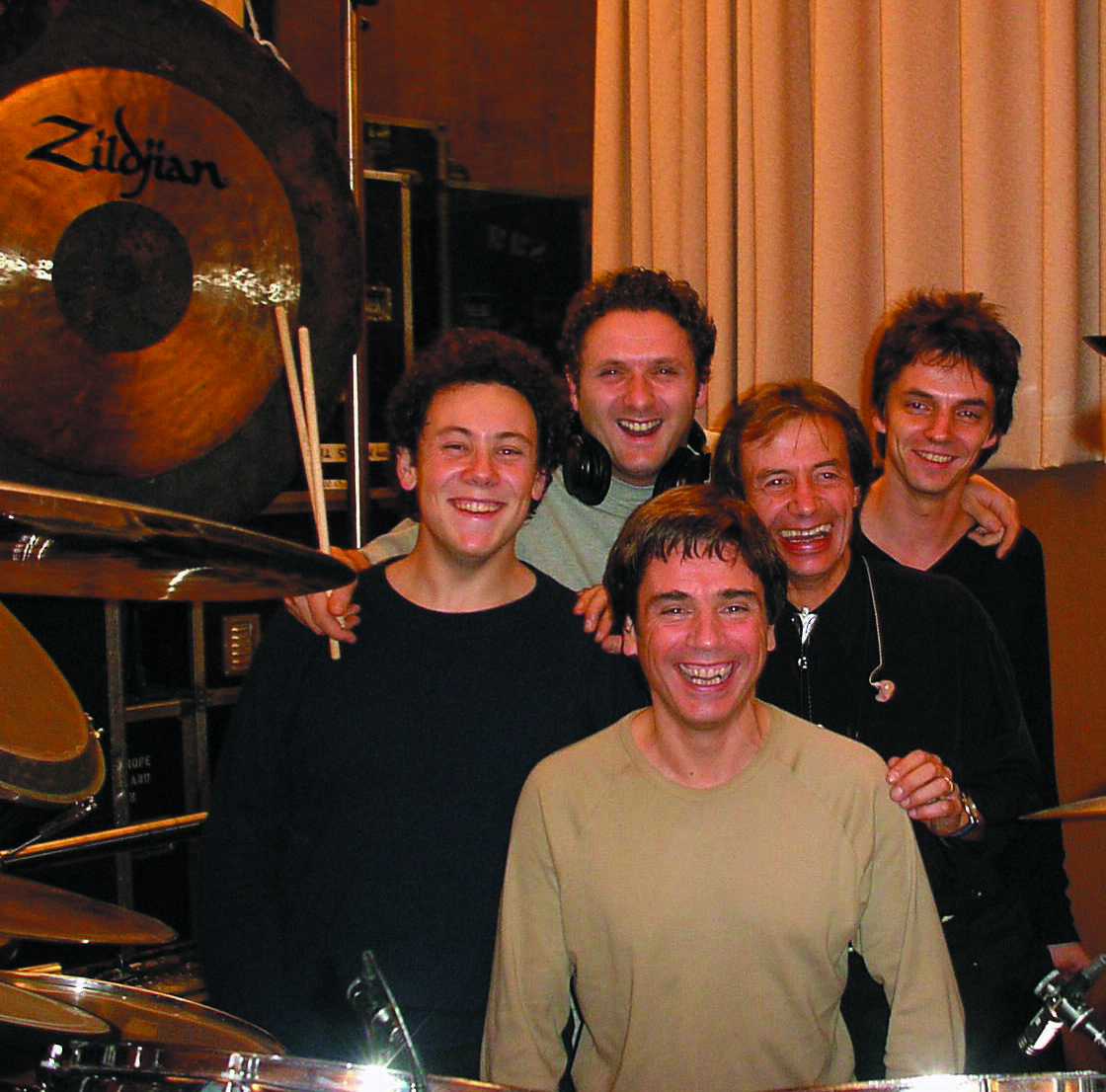
09/Interview
Joachim Garraud
Keyboards
One of the most stunning aspects of the Egypt concert was the musical arrangements. Many of the older pieces had been altered to fit in with the tracks from the new album and also the oriental pieces.
Memorable pieces include the very start of Oxygene 8, Equinoxe 4, Gloria Lonely Boy and Bells. We caught up with Joachim to see how he found his first experience of a full-scale Jean Michel Jarre concert.
On stage we could see you using Pro Tools, but you also had a turntable up there with you. What was your role on stage?
I was looking after the master Pro Tools software which was controlling the main concert elements - pyrotechnics, television, lights and the cues in different languages. I also had control over the order and the length of each track so that midnight struck at midnight! The second Pro Tools instance was used to trigger live sound samples and to manipulate live voices. For example, I was managing the sound treatment of the Vocoder on Revolutions for Jean Michel's voice. I could also use Pro Tools to add effects and control the different plug-ins which were used in preparing the album.
The turntable allowed me to scratch live on different tracks - live Souvenir of China and the vinyl effects in Je Me Souviens. I also used the turntable to do an hour of pure live DJ between 1:00 and 2:00 in the morning.
The keyboard gave me the chance to play a few live synth elements too.
Did everything go ahead as planned musically in Egypt?
No. The track in honour of Uum Kulthum went on far longer than we had planned from rehearsals. This put us four minutes behind the schedule needed to hit midnight. I had to shorten Hey Gagarin at the last minute to put us back on track. Apart from this, it all went quite smoothly. The equipment was reliable and the crowd enjoyed the show.
How did you feel as the clock reached towards midnight?
First of all, I was panicking because we were running so late. When I realised that we had got things back on track, I was very relieved, as I had succeeded in one of the most important parts of my job. I was still slightly concerned about problems with the famous Millennium Bug, but come midnight, we were all very happy…
What memories do you bring back with you from Egypt?
Memories of a fantastic adventure in the desert. An incredible feeling of power and for me, the successful conclusion to a year of work and preparation with Jean Michel - being able to finally perform the live tracks on stage that we had been preparing was a magical feeling.
You produced a very ethnical-Egyptian mix for the show. How did you go about getting inspiration for this mix?
During the months running up to the concert, I listened to a lot of oriental music, some of which I was already familiar with. I arrived in Cairo three weeks before the concert and this gave me time to rehearse with a number of local Arabian musicians and to choose those that we wanted to work with.
The orchestral rendition of Gloria Lonely Boy was amazing. It was like being in a David Lean film in the middle of the desert - are you used to producing this kind of re-orchestration?
The instrumental version of Gloria Lonely Boy was arranged by Yvan Cassar. We wanted to give the audience the feeling that they were part of a gigantic film set… I often work on this type of music for the cinema.
The countdown music for the Millennium was fantastic. Can you tell us what the ideas were behind this?
I wanted to fill the last 100 seconds of the Millennium with a medley that would bring together some of the most memorable and historic moments of recent years. That is why I sought out the historic extracts that I used - Martin Luther King/JFK/the Lumiere brothers/Marylyn Monroe/Freud…
You also performed at the Man Ray Club for the launch of Metamorphoses. How did you find that?
A fantastic evening. The atmosphere was hot and it was a real pleasure to play. It was a great opportunity to be able to play the tracks from the new album in a smaller, more intimate setting than in Egypt.
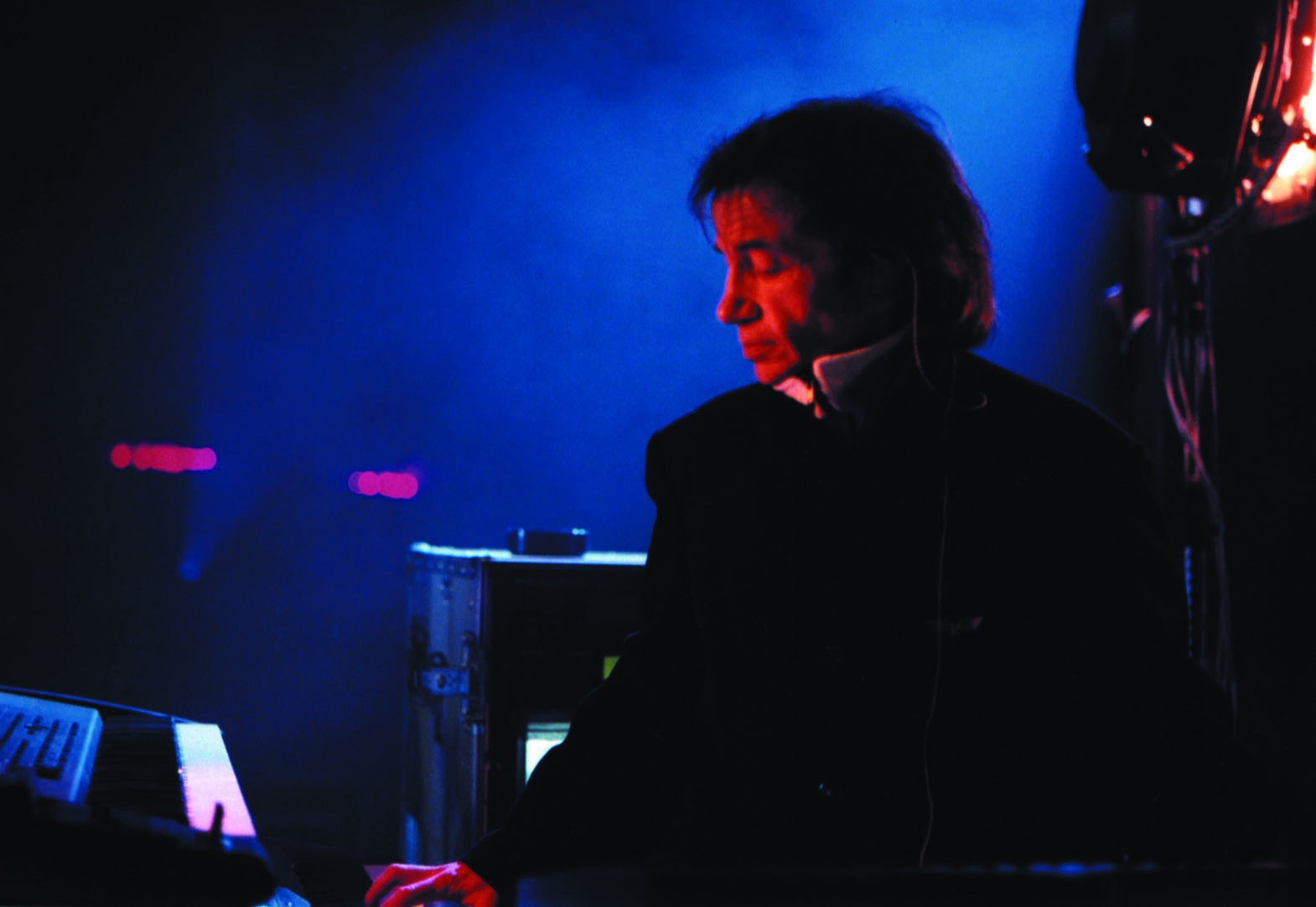
10/Interview
Francis Rimbert
Keyboards
Francis Rimbert is long-time collaborator of Jean Michel Jarre and we caught up with him just after the concert in Egypt to find out how he found the experience.
Francis Rimbert has been performing live with Jean Michel Jarre ever since the Rendezvous Houston concert and so this has meant travelling to events in Moscow, Hong Kong, Mont St Michel, London’s Docklands and Lyon.
You've performed with Jean Michel Jarre around the world. Do you sometimes have to pinch yourself when you arrive in these special venues?
That is exactly the way that I felt at the Cairo concert. When I first arrived, I had the opportunity to take some time and to go to the concert site by myself. The question which came into my head was "are we really worthy of doing a concert in this place?".
A lot of the tracks this time were heavily re-orchestrated with an Egyptian feel. Which tracks did you enjoy performing most?
Bells is my favourite, although I particularly enjoyed all of the tracks where we had been able to incorporate typical Egyptian instruments. I am fascinated by these and by the style in which they are played. I have taken the opportunity to greatly increase my personal samples library!
The reaction from the audience was very positive. Were you surprised by this?
During the show, it was very difficult for me to gauge the reaction of the public, for several reasons. For starters, I had to be very careful to follow the lead of Jean Michel in order to be able to back-up any improvisation that he did. Second, I was literally pressed against the drums of our friend Gary, and you may have noticed that he drums pretty hard! Finally, I was dreadfully nervous!
We've heard about musical rehearsals inside hotel rooms - is this usual for such an event?
These were not musical rehearsals as such, rather meetings of Jean Michel's Commando team! Jean Michel Jarre is constantly improvising, changing, improving, building, knocking down, right up to the last minute before the show. It is not unknown for him, at the very last minute, to decide to include a new track or completely change an existing one. That is why it did indeed happen that I would be in my hotel room with a small keyboard, practising parts for new versions developed that day.
You had a break of about four hours between the two performances. How did you fill the time?
We found ourselves behind the scenes with the Boss, under a really basic tent, sitting on mats on the ground. The only food available was a few dry biscuits and litres of coffee. But I can tell you now that this will remain with me as one of the best New Year's Eve meals ever.
What memories did you bring back with you from Egypt?
I brought back a number of questions, to which I do not have all of the answers yet. I brought back questions about the Egyptian people, about the gigantic edifices, which they managed to build, and also about our show.
As regards this last point, I can tell you that when you are in the middle of an enterprise like this concert, it is sometimes difficult to know, for example as you asked earlier, what effect you are having on the audience, or whether we had chosen the right tracks etc. The only certainty that I have is that Jean Michel always wants to follow his dreams right to the end, and that his attitude so easily manages to clear any doubts that I might have.
It always surprises me how such a large production as Egypt comes together. With all the various techniques working furiously to achieve the end result of the concert, how do you ensure it all ties together with the music?
Behind this "magic" there is an extremely organised production effort being managed by Jean Michel. Nothing is done without the careful consideration and input from the Boss. He has to invest an enormous amount of time and energy in this. Each team member is chosen as a particular subject matter expert. We relied on that most advanced of technologies, our vocal cords! Mind you, the amount of paper generated by the faxes flowing between the team members could rival the total output of Victor Hugo!
Jean Michel told us that the mist added mystery and magic to the concert. Did it also cause you particular problems on stage?
That is exactly what Jean Michel's mother said to me during the four-hour break. On stage, it did not really create any problems for us, except for the humidity which quickly made the keyboards damp. Luckily, Patrick Pelamourgues and my back-liner "Super Luc" are always working to minimise any problems.
11/Gallery
Photography
The night as it was photographed, from the arena and from the front of house.
12/Gallery
Pre-viz
The show was pre-visualised in 3D before it was built in the desert: renders and wireframe studies of the stage, the lighting rig and the crowd, worked out ahead of the build.
13/Gallery
Storyboards
Sketches from the design of the show — including the giant snake that ran the length of the stage in rehearsal and was cut on the night.
14/Gallery
Artwork
The show's marks and motifs.
This piece is about

